
Tracheal tube: buying guide
12 products in the catalogue
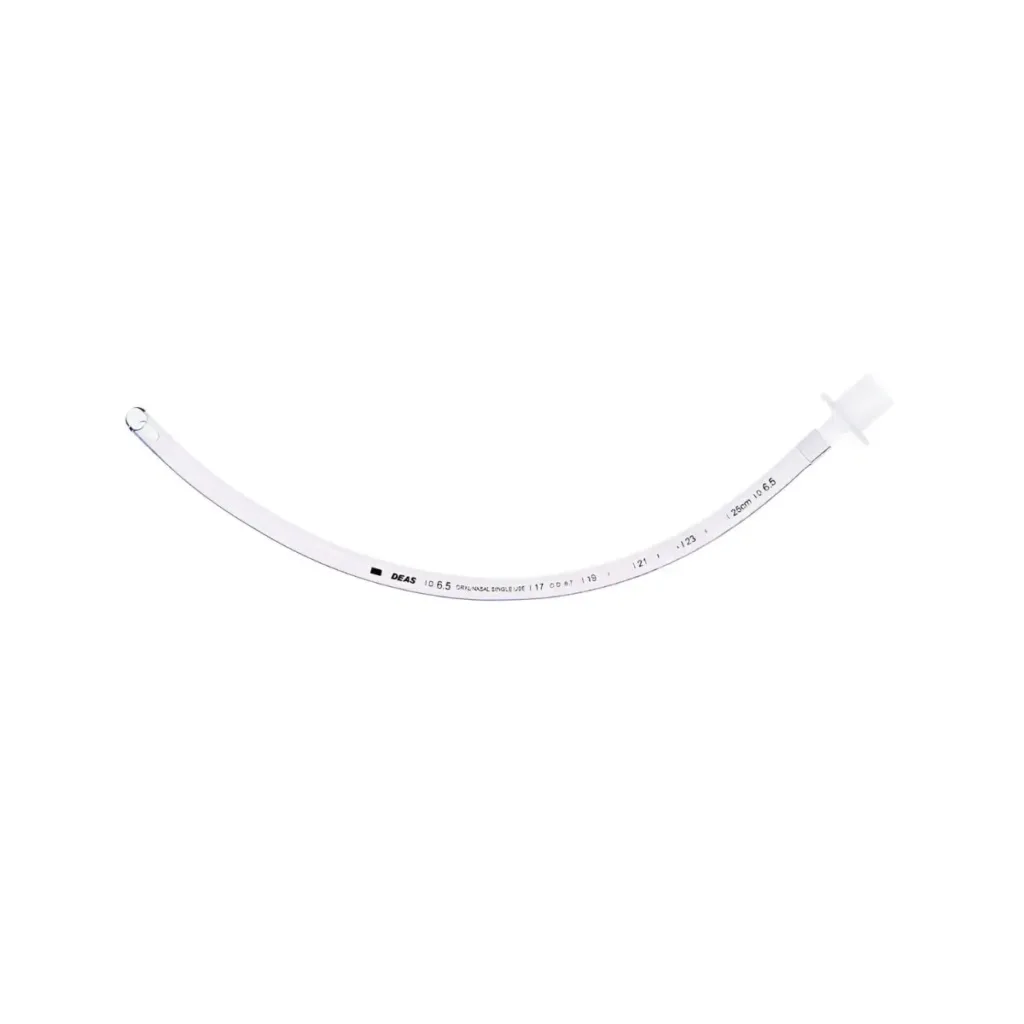
The tracheal tube, also called the endotracheal tube, is an airway device used with invasive mechanical ventilation, in anaesthesia and in emergency care, placed orally or nasally. Among its technical characteristics, diameter, length and material are the figures compared when buying.
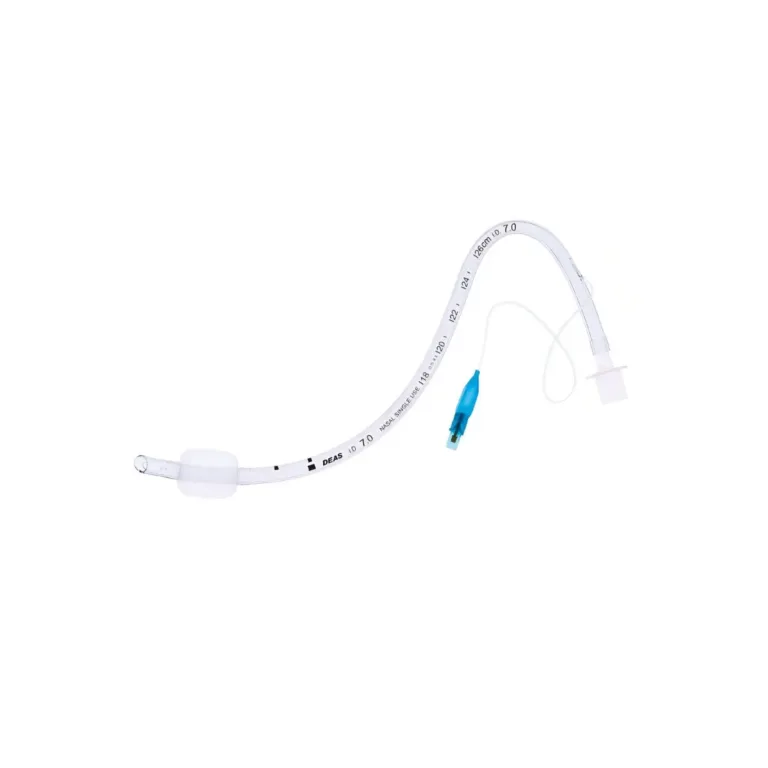
Several configurations coexist: oronasal tubes with a heat-sensitive PVC cuff, uncuffed oral tubes with a Murphy eye, and preformed nasal tubes with a low-pressure cuff. The choice rests on a few fields: inner and outer diameter, presence or absence of a cuff, Murphy eye, and whether the tube is preformed for oral or nasal use. The inner diameter is the standard size of the tube, but it does not by itself determine the outer diameter, which varies between models.
Other related families
-
 Cuffed Endotracheal Tubes
Groups cuffed tracheal tubes, including oronasal tubes with a cuff and preformed nasal tubes with a low-pressure cuff.
-
 Uncuffed Endotracheal Tubes
Covers uncuffed tubes, such as oral tubes with a Murphy eye offered in several inner diameters.
-
 Preformed Endotracheal Tubes
Brings together preformed tubes, which in this case are nasal tubes with a cuff and Murphy eye.
-
 Endotracheal Tube Guides
A direct complement to the tube: endotracheal tube introducers are supplied in 6, 10, 12 and 14 Ch sizes.
-
 Intubation Stylets
An accessory ordered together with the tube when the presentation allows it.
- INTENSIVE CARE General category where intubation and the bronchial suction associated with the tube are located.
Products in this guide
- PVC 11
- Latex 1
- Polyethylene 1
- 3.3 cm 1
- 21 cm 1
- 22.5 cm 1
- 24.5 cm 1
- 28.5 cm 1
- 29.5 cm 1
- 40 cm 1
- Box OF 10 11
- Unit 1
-
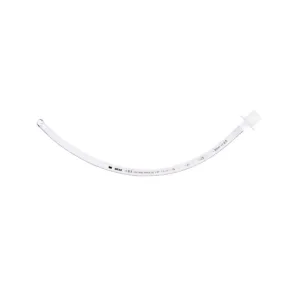
Oral Tracheal Endotracheal Tube without Cuff with Murphy Eye – ID 5.5 mm (Medical Grade PVC) | Box of 10 Units
16,05 € In stockAdd to basket -
Oral Tracheal Uncuffed Endotracheal Tube with Murphy Eye – ID 6.0 mm, Medical-Grade PVC (Box of 10 units)
16,05 € In stockAdd to basket -
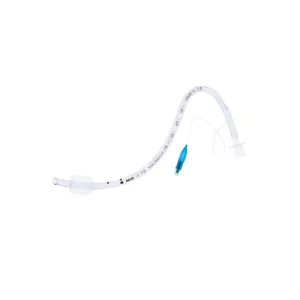
Preformed Nasal Tracheal Tube with Cuff and Murphy Eye – ID 3.0 mm | Medical-Grade PVC, Single-Use, Box of 10 Units (Ref. ETPN30C02)
36,45 € In stockAdd to basket -
Preformed Nasal Tracheal Tube with Cuff and Murphy Eye – ID 3.5 mm | Medical PVC, Single-Use, Box of 10 units (SKU ETPN35C02)
36,45 € In stockAdd to basket -
Preformed Nasal Tracheal Tube (RAE) with Low-Pressure Cuff and Murphy Eye – ID 4.0 mm (Ø ext. 5.3 mm) | Ref. ETPN40C02 | Box of 10 units
36,45 € In stockAdd to basket -
Preformed Nasal Tracheal Tube with Cuff and Murphy Eye – ID 4.5 mm (Ø ext. 6.0 mm) | Ref. ETPN45C02 | Box of 10 units
36,45 € In stockAdd to basket -
Preformed Nasal Tracheal Tube with Cuff and Murphy Eye – ID 5.0 mm (Ø ext. 6.7 mm) | Ref. ETPN50C02 | Box of 10 units
36,45 € In stockAdd to basket -
Preformed Nasal Tracheal Tube with Cuff and Murphy Eye, ID 5.5 mm – Medical-Grade PVC, Single-Use, Box of 10 units (SKU ETPN55C02)
36,45 € In stockAdd to basket
Buying and selection tips
-
Inner and outer diameter are not the same
The inner diameter is the standard size of the tube, but the outer diameter varies between models for the same inner diameter. For preformed nasal tubes the outer diameter is declared alongside the inner one, and that pair of figures is the one to compare before ordering.
-
Cuffed or uncuffed: decide first
The presence or absence of a cuff is a critical field in the choice. There are oronasal tubes with a cuff, uncuffed oral tubes with a Murphy eye, and preformed nasal tubes with a low-pressure cuff; the inner diameter alone does not settle this decision.
-
Check the Murphy eye
A Murphy eye, as opposed to the Magill type without one, is another field that changes the reference. Preformed nasal tubes expressly include it and it is also declared on uncuffed oral tubes; do not assume it for every reference.
-
Oral or nasal preformed
The preformed tube is chosen in an oral or nasal version and its curvature is fixed. Treat it as a different reference from a straight tube of the same diameter, not as an equivalent.
-
Check material, length and presentation
Before closing the order, check for each reference the tube material, the relationship between inner diameter, outer diameter and length, the 15 mm universal connector and the X-ray contrast stripe, together with the presentation.
Compatibility
- 15 mm universal connector
- The proximal end of the tube connects to the breathing circuit through a 15 mm universal connector; confirm that the reference declares it before combining it with the circuit.
- Endotracheal tube introducer
- Endotracheal tube introducers are supplied in 6, 10, 12 and 14 Ch sizes; the size must match the diameter of the tube it will be used with.
Frequently asked questions
How do I choose between a cuffed tracheal tube and an uncuffed one of the same diameter?
They are independent decisions: the inner diameter is the standard size, but the presence of a cuff is a separate field. Set it according to the reference the department needs.
Why do two tubes with the same inner diameter have different outer diameters?
Because the outer diameter varies between models for the same inner diameter, and reinforced tubes have a larger outer diameter. Always compare the inner/outer pair declared for each reference.
What is the difference between a preformed nasal tube and a straight oral one?
It is a difference in shape, not diameter: the preformed tube has a fixed curvature, oral or nasal, and is not interchangeable with a straight tube. Choose according to the reference being replaced.
What should I check before ordering tracheal tubes?
Tube material, inner and outer diameter, length, presence of a 15 mm universal connector and the X-ray contrast stripe.
Which introducer size do I need to go with the tube?
Endotracheal tube introducers are offered in 6, 10, 12 and 14 Ch sizes; choose the size according to the diameter of the tube you will be working with.
Common questions
Confusing inner diameter with outer diameter
The inner diameter is the standard size of the tube; the outer diameter changes with the model and is larger on reinforced tubes. The same inner diameter does not guarantee the same outer diameter.
Taking length as the size of the tube
The standard size is the inner diameter; length is a different field and is declared separately for each reference.
Assuming all tubes have a Murphy eye
Some references have an eye and others do not, and the description declares it: check before ordering.
More products in this guide
-
Preformed Nasal Tracheal Tube with Low-Pressure Cuff and Murphy Eye – ID 6.0 mm (Ø ext. 8.0 mm) | Ref. ETPN60C02 | Box of 10 units
36,45 € In stockAdd to basket -
Preformed Nasal Tracheal Tube (RAE) with Low-Pressure Cuff and Murphy Eye – ID 6.5 mm (Ø ext. 8.7 mm) | Ref. ETPN65C02 | Box of 10 units
36,45 € In stockAdd to basket -
Preformed Nasal Tracheal Tube (RAE) with Low-Pressure Cuff and Murphy Eye – ID 8.0 mm (Ø ext. 10.7 mm) | Ref. ETPN80C02 | Box of 10 units, Sterile
36,45 € In stockAdd to basket -
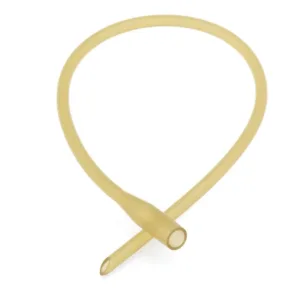
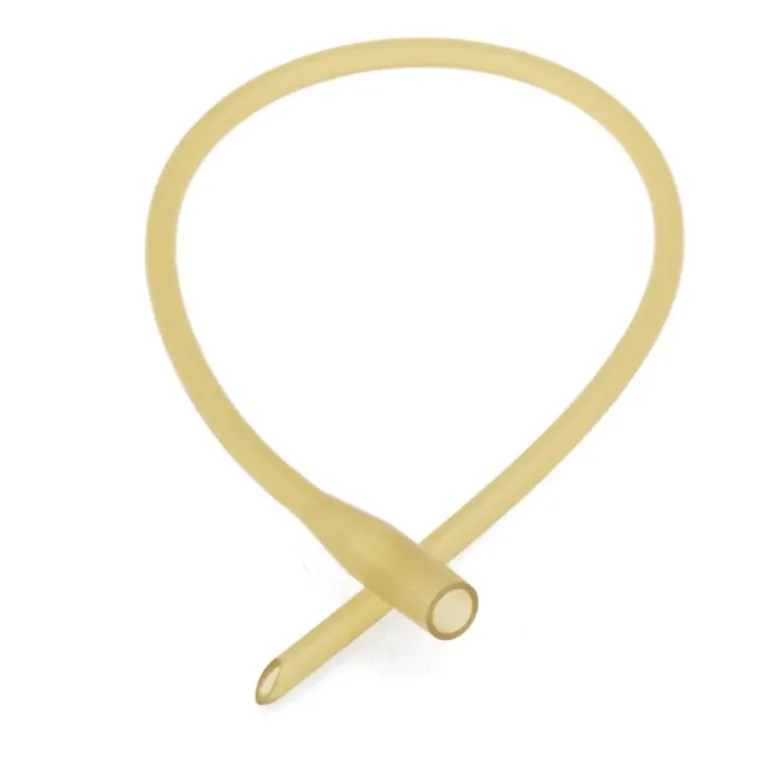
Sterile atraumatic bevelled latex tracheal suction tube for tracheostomy – 6 diameters (2.6–6 mm)
In stockRequest a quote
Keep exploring
- How to choose an endotracheal tube
- Intubation tube: buying guide
- Nasopharyngeal airway: buying guide
- Orotracheal tube: buying guide
- Preformed oral tracheal tubes: buying guide
- Subglottic suction: buying guide
- Murphy eye
- Anaesthesia
- sleeve
- Medical-grade PVC
- intubation
- latex-free
- secretions Suction
- Sterile