
Intubation tube: buying guide
166 products in the catalogue
The intubation tube is a single-use medical device that forms part of the airway equipment in operating theatres, emergency departments and intensive care. The selection is dominated by reinforced oral endotracheal tubes, cuffed or uncuffed and with a Murphy eye, as well as emergency kits that group the tube with other components.
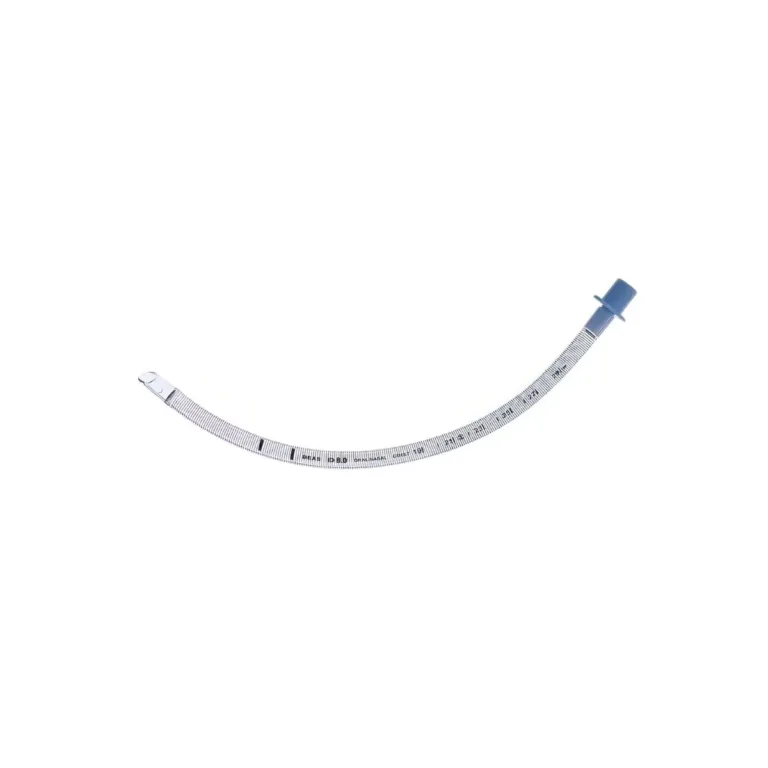
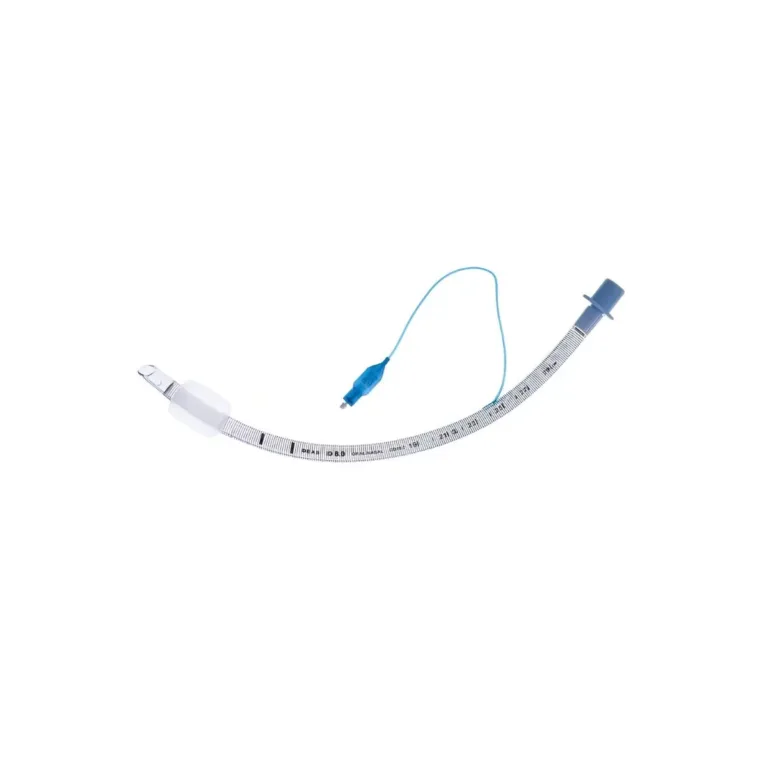
The purchasing choice rests on data stated in each reference: the inner diameter in millimetres, which acts as the standard size; the presence or absence of a cuff; the Murphy eye; the type of tube, whether straight, preformed or reinforced; and the type of connector. To these are added the commercial presentation and the accessories needed separately, such as introducers and stylets. This guide sets out those criteria for comparing similar references.
Other related families
-
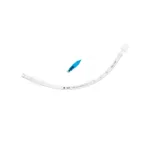 Cuffed Endotracheal Tubes
Groups the cuffed references, for those looking for a tube with this feature.
-
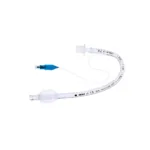 Preformed Endotracheal Tubes
Brings together the curved-shape tubes, for those who need a preformed tube.
-
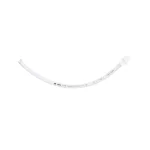 Uncuffed Endotracheal Tubes
An alternative for those looking for an uncuffed tube, with inner diameters from 2.0 mm.
-
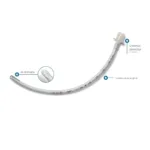 Emergency Endotracheal Tube Kit ENDOSID
Sets that group the tube, stylet and syringe in a single box.
-
 Endotracheal Tube Guides
Introducers graded by size, for matching the size with the inner diameter of the tube.
-
 Intubation Stylets
An accessory to plan for separately when the tube is bought on its own.
Products in this guide
- PVC 148
- Plastic 3
- Latex 1
- Polyethylene 1
- Conical ISO 15/22 mm 145
- Luer 2
- With Murphy's eye 97
- Without Murphy's eye 14
- Box OF 10 147
- Box OF 100 14
- Unit 1
-
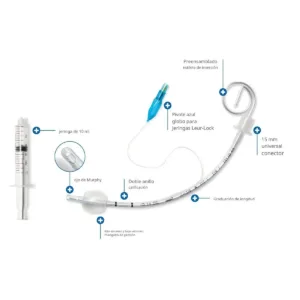
Emergency Endotracheal Tube Kit Endosid 7 mm – Box of 10 Units
25,10 € In stockAdd to basket -
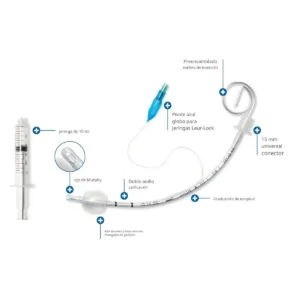
Emergency Endotracheal Tube Kit Endosid 7.5 mm with Murphy Eye and Cuff – Box of 10 Units
25,10 € In stockAdd to basket -
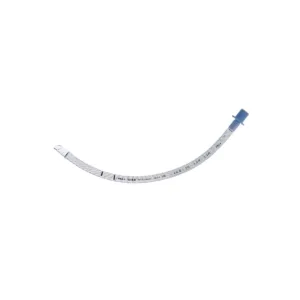
Oral Reinforced Uncuffed Endotracheal Tube with Murphy Eye – ID 10.0 mm (Medical-Grade PVC, Single-Use) | Ref. ETA010002A2 | Box of 10 units
108,00 € In stockAdd to basket -
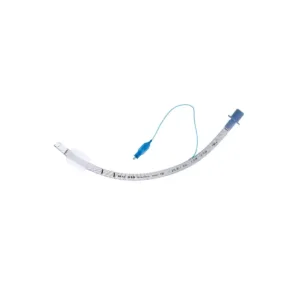
Reinforced Oral Endotracheal Tube with Cuff and Murphy Eye – ID 10.0 mm | Medical-Grade PVC, Single-Use | Ref. ETA010C02A2 | Box of 10 units
99,80 € In stockAdd to basket -
Reinforced Oral Endotracheal Tube, Cuffless, with Murphy Eye – ID 3.0 mm (CH 12) | Medical-Grade PVC, Sterile, Box of 10 Units (Ref. ETA030002A2)
108,00 € In stockAdd to basket -
Reinforced Oral Endotracheal Tube with Cuff and Murphy Eye – ID 3.0 mm | Medical-Grade PVC, Sterile, Single-Use | Ref. ETA030C02A2 | Box of 10 units
99,80 € In stockAdd to basket -
Oral Reinforced Uncuffed Endotracheal Tube with Murphy Eye – ID 3.5 mm (Ref. ETA035002A2) | Medical-Grade PVC, Sterile, Single-Use | Box of 10 units
108,00 € In stockAdd to basket -
Reinforced Oral Endotracheal Tube with Cuff and Murphy Eye – ID 3.5 mm | Medical-Grade PVC, Sterile, Single-Use | Ref. ETA035C02A2 | Box of 10 units
99,80 € In stockAdd to basket
Buying and selection tips
-
Fix the inner diameter first
The inner diameter in millimetres is the standard size of the tube and the first figure to settle before comparing references. The outer diameter varies between models for the same inner diameter, and reinforced tubes have a larger outer diameter. It is therefore best to choose the inner diameter and then check the outer diameter of the specific model.
-
Cuffed or uncuffed, according to the reference
The selection includes reinforced tubes both cuffed and uncuffed, all with a Murphy eye. The cuff and the Murphy eye are features stated in the name of each reference; check both before closing the order.
-
Oral or nasal preformed
Preformed tubes are offered in an oral version and a nasal version, and are distinguished by their curved shape compared with the straight tube. Before ordering, check in the name of the reference whether the preformed tube is oral or nasal, because they are not the same product line.
-
Presentation and expected consumption
The presentation (single units or box) affects storage and expected consumption. Some emergency kits come in a box of 10 units. Check the presentation of each reference before comparing the cost per unit.
-
Tube connector
Before combining the tube with the breathing circuit or other airway items, check that both parts declare the same connection. If they do not match, an adapter will be needed.
Compatibility
- Endotracheal tube introducer
- Introducers are graded by size (Ch 06, 10, 12 and 14), each associated with a range of tube inner diameters. Match the size of the introducer with the inner diameter of the chosen tube.
- Intubation stylet
- Emergency kits group the tube, stylet and syringe. If you buy the tube on its own, plan for the stylet separately.
- Flexible intubation introducer
- Flexible introducers are supplied for tubes with a minimum inner diameter of 7 mm and have graduation marks in centimetres, which limits their combination with smaller-diameter tubes.
Frequently asked questions
How do I tell a preformed oral tube from a nasal one when ordering?
The preformed tube is offered in an oral version and a nasal version, and the difference lies in the shape of the tube, not its size. The name of the reference must indicate which of the two versions it is.
Can I compare two tubes from different manufacturers by inner diameter alone?
No. The same inner diameter does not imply the same outer diameter between manufacturers or between models, and reinforced tubes have a larger outer diameter. It is best to compare both diameters.
What does an emergency endotracheal tube kit include compared with the tube on its own?
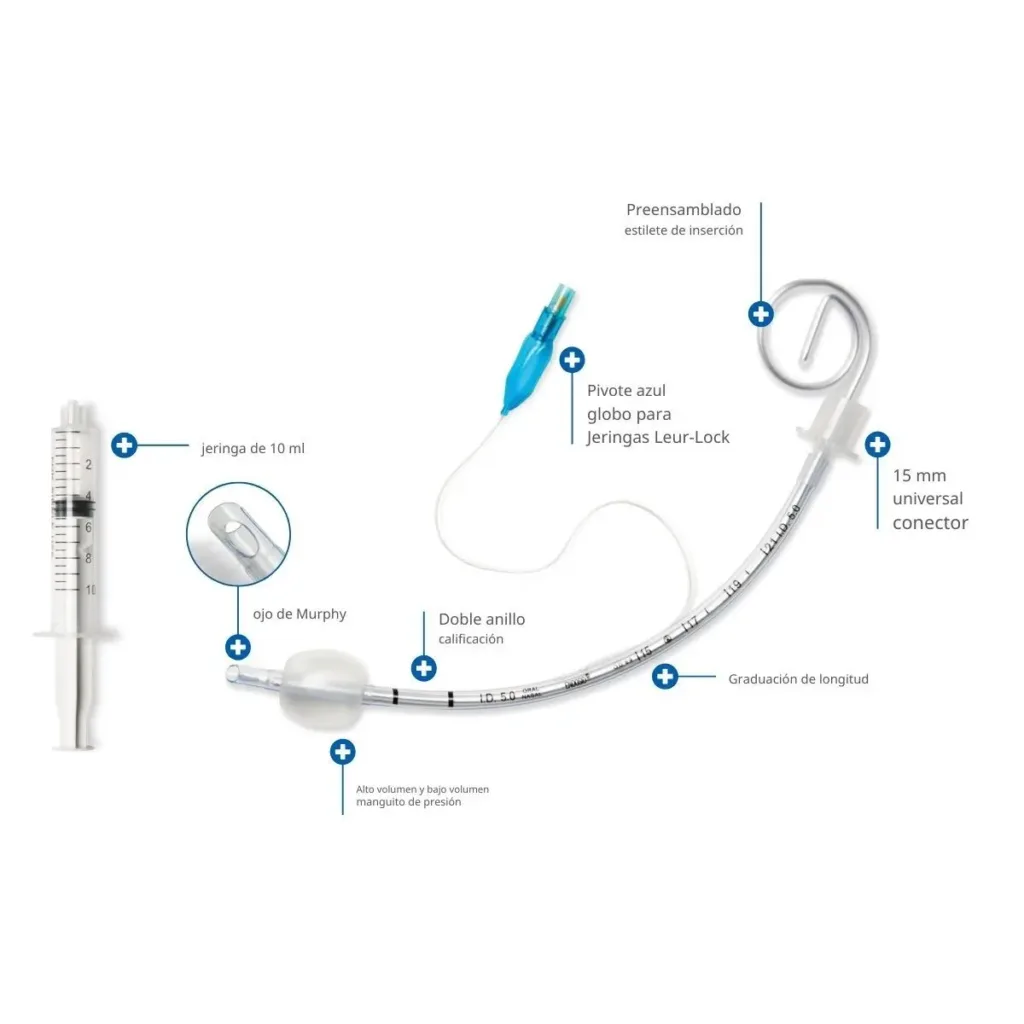
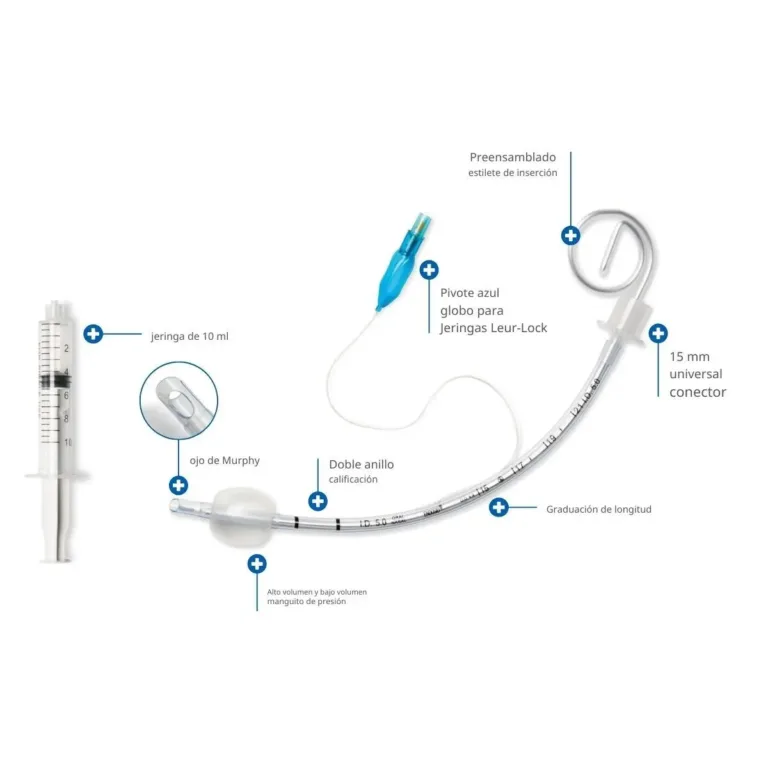
The kit adds to the tube a pre-configured intubation stylet and a 10 ml syringe, with the tube already assembled. The tube on its own does not include those accessories.
What should I check in the name of a reference before ordering it?
The inner diameter, whether it has a cuff, whether it includes a Murphy eye, whether it is reinforced or preformed and, where applicable, whether it is oral or nasal. All of this is stated in the name of each reference.
Common questions
Supposing that a reinforced tube has the same outer diameter as a straight one of the same size
Reinforced tubes have a larger outer diameter for the same inner diameter, so comparing by size alone can be misleading.
Thinking the same introducer suits any tube size
Endotracheal tube introducers are graded by size (Ch 06, 10, 12 and 14) and each corresponds to a different range of inner diameters.
Confusing the French size with the inner diameter
The French measurement corresponds to the total outer diameter and is not directly comparable with the inner diameter of a simple tube. Check which measurement each reference expresses.
More products in this guide
-
Reinforced Cuffless Oral Endotracheal Tube with Murphy Eye – ID 4.0 mm | Medical-Grade PVC, Box of 10 units (Ref. ETA040002A2)
108,00 € In stockAdd to basket -
Oral Reinforced Endotracheal Tube with Cuff and Murphy Eye – ID 4.0 mm | Ref. ETA040C02A2 | Box of 10 units
99,80 € In stockAdd to basket -
Reinforced Oral Endotracheal Tube with Cuff and Murphy Eye – ID 4.5 mm | Medical-Grade PVC, Single-Use | Ref. ETA045C02A2 | Box of 10 units
99,80 € In stockAdd to basket -
Reinforced Oral Endotracheal Tube without Cuff with Murphy Eye – ID 5.0 mm | Medical-Grade PVC | Box of 10 units (Ref. ETA050002A2)
108,00 € In stockAdd to basket -
Reinforced Oral Endotracheal Tube with Cuff and Murphy Eye – ID 5.0 mm – Box of 10 units (Ref. ETA050C02A2)
99,80 € In stockAdd to basket -
Reinforced Orotracheal Endotracheal Tube without Cuff with Murphy Eye – ID 5.5 mm (PVC, Box of 10 units) Ref. ETA055002A2
108,00 € In stockAdd to basket -
Reinforced Oral Endotracheal Tube with Cuff and Murphy Eye – ID 5.5 mm | Medical-Grade PVC, Sterile, Single-Use | Ref. ETA055C02A2 | Box of 10 units
99,80 € In stockAdd to basket -
Reinforced Oral Endotracheal Tube with Cuff and Murphy Eye – 6.0 mm ID | Medical-Grade PVC, Single-Use (Ref. ETA060C02A2) | Box of 10 units
99,80 € In stockAdd to basket
Keep exploring
- How to choose an endotracheal tube
- Nasopharyngeal airway: buying guide
- Orotracheal tube: buying guide
- Preformed oral tracheal tubes: buying guide
- Subglottic suction: buying guide
- Tracheal intubation: buying guide
- Murphy eye
- Anaesthesia
- intubation
- Medical-grade PVC
- emergency care
- sleeve
- paediatrics
- paediatric
- airway