
How to choose an endotracheal tube
121 products in the catalogue
The endotracheal tube is the interface used in invasive mechanical ventilation. In a healthcare setting it is used in anaesthesia and emergency care, in oral or nasal versions, and is connected to a ventilator or a resuscitation bag.
Different presentations coexist in this category: loose tubes and kits that add a stylet and a syringe, cuffed and uncuffed versions, with a Murphy eye, preformed or with a subglottic suction lumen. The products cover diameters from 3.0 mm up to 10 mm. Choosing well means first settling the size, then deciding whether a cuff is needed and of what type, and lastly checking what the pack includes and what it will be connected to.
Other related families
-
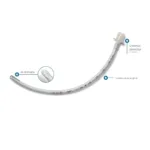 ENDOSID Endotracheal Tube with Cuff and Murphy Eye
Groups the products with a cuff and a Murphy eye.
-
Endotracheal Tube ENDOSID Magil
Covers Magill-type tubes with a cuff.
-
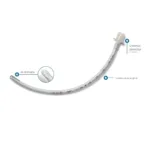 Uncuffed Endotracheal Tube ENDOSID Magil
Offers the uncuffed alternative within the same line.
-
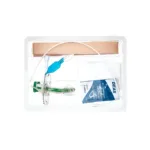 Intubation Stylets
Stylets that are ordered separately when the chosen tube does not include them in the pack.
-
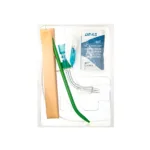 Endotracheal Tube Guides
Guides for endotracheal tubes, which are selected by size before confirming the order.
Products in this guide
- PVC 120
- Aluminium 1
- Plastic 1
- Polyethylene 1
- Conical ISO 15/22 mm 99
- Luer 2
- With Murphy's eye 78
- Without Murphy's eye 2
- Box OF 10 105
- Box OF 100 15
-
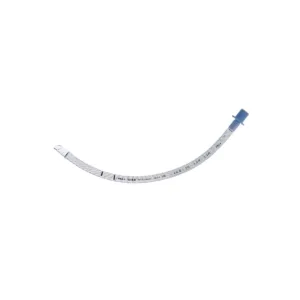
Oral Reinforced Uncuffed Endotracheal Tube with Murphy Eye – ID 10.0 mm (Medical-Grade PVC, Single-Use) | Ref. ETA010002A2 | Box of 10 units
108,00 € In stockAdd to basket -
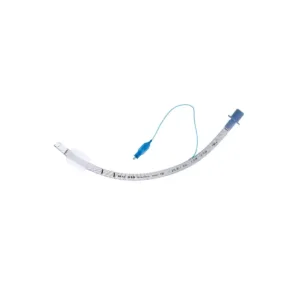
Reinforced Oral Endotracheal Tube with Cuff and Murphy Eye – ID 10.0 mm | Medical-Grade PVC, Single-Use | Ref. ETA010C02A2 | Box of 10 units
99,80 € In stockAdd to basket -
Reinforced Oral Endotracheal Tube, Cuffless, with Murphy Eye – ID 3.0 mm (CH 12) | Medical-Grade PVC, Sterile, Box of 10 Units (Ref. ETA030002A2)
108,00 € In stockAdd to basket -
Reinforced Oral Endotracheal Tube with Cuff and Murphy Eye – ID 3.0 mm | Medical-Grade PVC, Sterile, Single-Use | Ref. ETA030C02A2 | Box of 10 units
99,80 € In stockAdd to basket -
Oral Reinforced Uncuffed Endotracheal Tube with Murphy Eye – ID 3.5 mm (Ref. ETA035002A2) | Medical-Grade PVC, Sterile, Single-Use | Box of 10 units
108,00 € In stockAdd to basket -
Reinforced Oral Endotracheal Tube with Cuff and Murphy Eye – ID 3.5 mm | Medical-Grade PVC, Sterile, Single-Use | Ref. ETA035C02A2 | Box of 10 units
99,80 € In stockAdd to basket -
Reinforced Cuffless Oral Endotracheal Tube with Murphy Eye – ID 4.0 mm | Medical-Grade PVC, Box of 10 units (Ref. ETA040002A2)
108,00 € In stockAdd to basket -
Oral Reinforced Endotracheal Tube with Cuff and Murphy Eye – ID 4.0 mm | Ref. ETA040C02A2 | Box of 10 units
99,80 € In stockAdd to basket
Buying and selection tips
-
Settle the internal diameter first of all
The internal diameter (ID) is the measurement that identifies the size of the tube, whereas the outer diameter may change between models with the same ID. It is advisable to decide the ID and only then compare the other features.
-
Choose between cuffed and uncuffed
The category includes cuffed and uncuffed products. It is a criterion that changes the whole product, not an accessory that is added afterwards.
-
Consider the subglottic suction lumen
Some cuffed products have a suction or subglottic aspiration lumen. If you need this function, filter for it, because not all products include it.
-
Check the connector
Check in the description the type of connector on the tube and that it is compatible with the ventilator circuit or the resuscitation bag used by your facility.
-
Distinguish a complete kit from a loose tube
Some products are presented as a kit with tube, stylet and syringe; others are supplied with the tube only. If the order must arrive complete, the contents of the pack are the deciding criterion.
-
Check material and single use
The tubes in the category are made of PVC and are single-use. Check the material, sterility and presence of a Murphy eye in the description of each product against the requirements of the purchasing specification.
Frequently asked questions
What is the difference between an emergency kit and a loose tube?
The kit brings together the tube, a stylet and a syringe in a single product; the loose tube is supplied without those accessories.
Does the tube include a syringe and stylet in all presentations?
No. Only the kit-type presentations include them; check the contents of each product before ordering.
Which material and sterility should I require in the tube description?
Check that the product states the material (PVC), that it is sterile and single-use, and that the internal diameter is given.
Can I compare tubes of different products by their outer diameter?
Compare by internal diameter, which identifies the size. The outer diameter may vary between models with the same ID.
Common questions
Taking it for granted that the same internal diameter means the same outer diameter
The outer diameter varies between models for the same ID. Size is always compared by ID.
Assuming that all tubes have a Murphy eye
The Murphy eye is present or not depending on the product. Check it in the description.
Believing that the stylet and syringe always come in the pack
Only in kit-type presentations; in other presentations only the tube is supplied.
More products in this guide
-
Reinforced Oral Endotracheal Tube with Cuff and Murphy Eye – ID 4.5 mm | Medical-Grade PVC, Single-Use | Ref. ETA045C02A2 | Box of 10 units
99,80 € In stockAdd to basket -
Reinforced Oral Endotracheal Tube without Cuff with Murphy Eye – ID 5.0 mm | Medical-Grade PVC | Box of 10 units (Ref. ETA050002A2)
108,00 € In stockAdd to basket -
Reinforced Oral Endotracheal Tube with Cuff and Murphy Eye – ID 5.0 mm – Box of 10 units (Ref. ETA050C02A2)
99,80 € In stockAdd to basket -
Reinforced Orotracheal Endotracheal Tube without Cuff with Murphy Eye – ID 5.5 mm (PVC, Box of 10 units) Ref. ETA055002A2
108,00 € In stockAdd to basket -
Reinforced Oral Endotracheal Tube with Cuff and Murphy Eye – ID 5.5 mm | Medical-Grade PVC, Sterile, Single-Use | Ref. ETA055C02A2 | Box of 10 units
99,80 € In stockAdd to basket -
Reinforced Oral Endotracheal Tube with Cuff and Murphy Eye – 6.0 mm ID | Medical-Grade PVC, Single-Use (Ref. ETA060C02A2) | Box of 10 units
99,80 € In stockAdd to basket -
Reinforced Oral Endotracheal Tube with Cuff and Murphy Eye – ID 6.5 mm | PVC, Box of 10 units (Ref. ETA065C02A2)
99,80 € In stockAdd to basket -
Orotracheal Endotracheal Tube Reinforced Without Cuff with Murphy Eye – ID 7.0 mm | Medical Grade PVC | Ref. ETA070002A2 | Box of 10 units
108,00 € In stockAdd to basket
Keep exploring
- Intubation tube: buying guide
- Nasopharyngeal airway: buying guide
- Orotracheal tube: buying guide
- Preformed oral tracheal tubes: buying guide
- Subglottic suction: buying guide
- Tracheal intubation: buying guide
- Murphy eye
- Anaesthesia
- Medical-grade PVC
- intubation
- sleeve
- emergency care
- paediatrics
- paediatric
- airway