
External defibrillator: buying guide
15 products in the catalogue
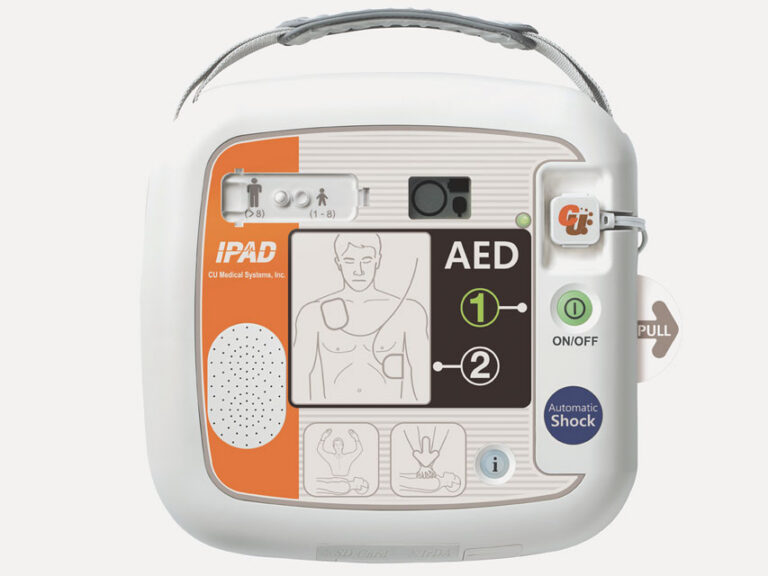
An external defibrillator is an electromedical device installed at public access defibrillation sites, such as corporate offices, sports facilities or public buildings. The range includes automatic and semi-automatic units, several of them biphasic, with different battery formats, electrode pad sets and degrees of protection against dust and water.
The purchasing decision turns on the type of unit (automatic or semi-automatic), the kit contents (with or without pads, with a case or carry bag), the type of electrode and the conditions of the place where it will remain installed. This guide sets out the criteria that can be checked in the technical information: what each pack includes, what IP protection the manufacturer states, what service life is attributed to the battery and the pads, and what connector the pads have. With those details you can draw up a comparable specification and avoid incomplete purchases.
Other related families
-
 Automatic and Semi-automatic Defibrillators
Groups the references for automatic and semi-automatic defibrillators, which is the core of this purchase.
-
 Compatible Electrodes for Defibrillators
Useful for buying pads compatible with the unit already installed, checking the connector and model.
-
 Defibrillator Cabinets
Complements the purchase of the unit with the cabinet or mount where it will be installed.
Products in this guide
-
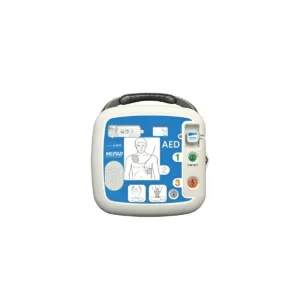
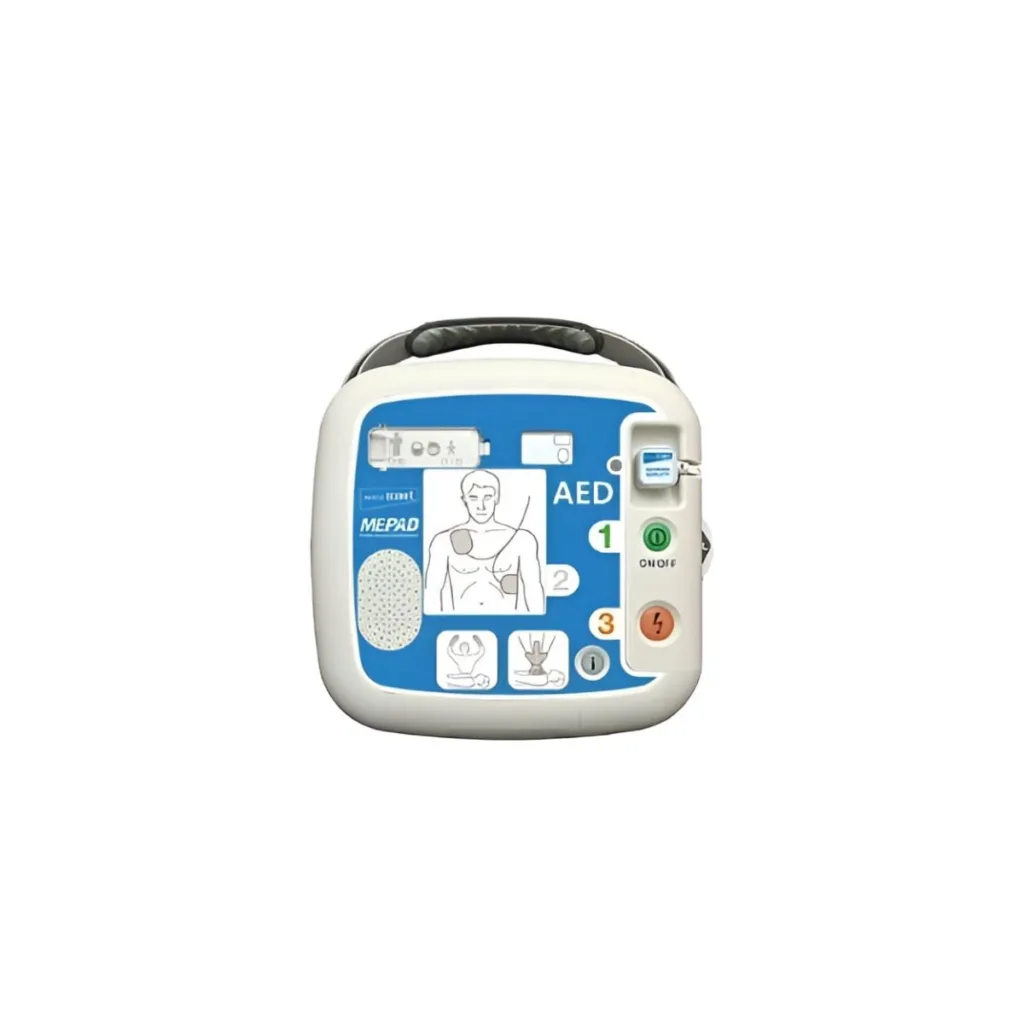
Semi-automatic external defibrillator (S-AED) ME PAD Semi – Li-Mn battery with 5 years or 200 shocks, voice prompts in 9 languages and SD card recording for heart-safe spaces (Ref. 30.10-4300)
1.438,20 € In stockAdd to basket -
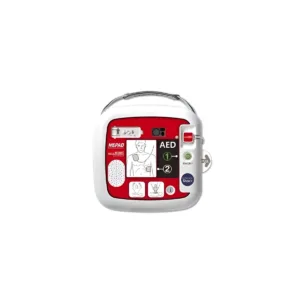
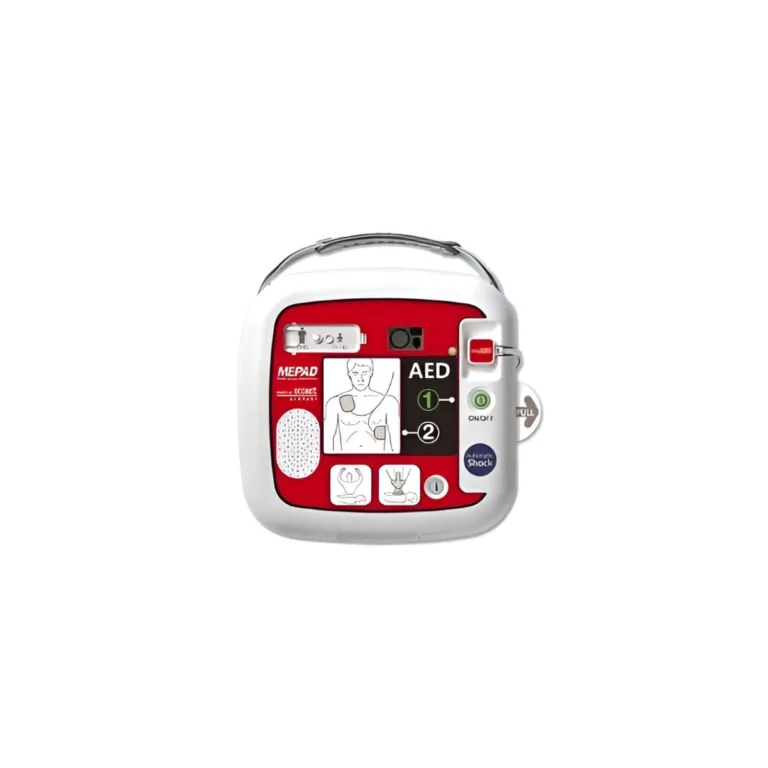
Automated external defibrillator (AED) ME PAD Auto – 5-year Li-Mn battery, multilingual voice and SD card (Ref. 30.10-4600)
1.438,20 € In stockAdd to basket -
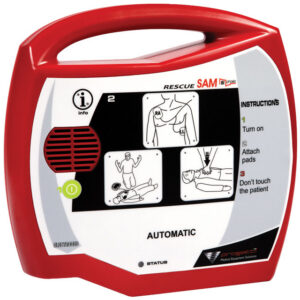
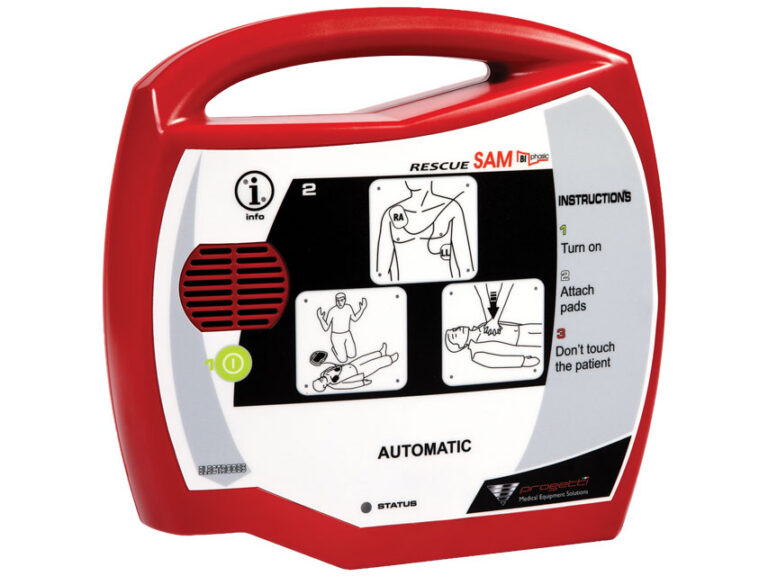
Rescue Sam Automated External Defibrillator (AED) – Automatic Shock, Biphasic Waveform 200 J and Long-Life Lithium Battery (Ref. GM33165-F)
1.567,50 € On orderSelect options This product has multiple variants. The options may be chosen on the product page -

Automated External Defibrillator (AED) PRIMEDIC HeartSave AED | Biphasic CCD 50-360 J with lithium battery (6 years) | Ref. 33391
1.890,50 € In stockSelect options This product has multiple variants. The options may be chosen on the product page -
Semi-automatic external defibrillator AED PRIMEDIC HeartSave PAD with lithium battery – Biphasic CCD up to 360 J – Italian version (Ref. GM33393-F)
1.700,50 € On orderSelect options This product has multiple variants. The options may be chosen on the product page -
Semi-automatic external defibrillator (AED) PRIMEDIC HeartSave AED-M with ECG monitor and 6-year lithium battery (Ref. GM33396)
Price range: 2.422,50 € through 3.135,00 € In stockSelect options This product has multiple variants. The options may be chosen on the product page -
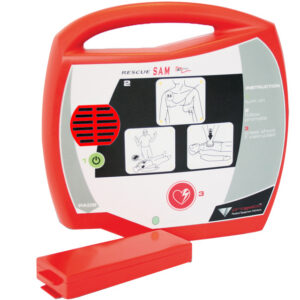
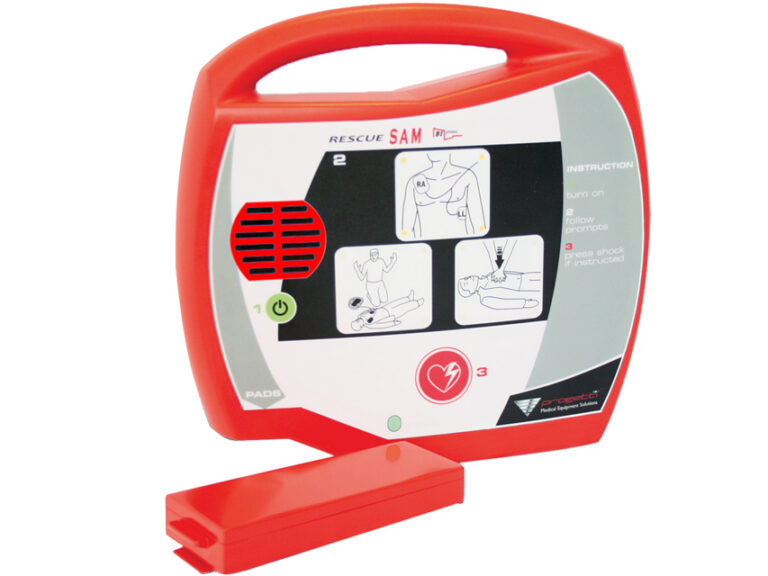
Semi-Automatic External Defibrillator (AED) Rescue Sam AED – Biphasic BTE 200 J for public use (Ref. 33425)
1.225,50 € In stockSelect options This product has multiple variants. The options may be chosen on the product page -
Semi-Automatic External Defibrillator (AED) Rescue Sam AED – Biphasic 200 J fixed for public use, multilingual (Ref. 33559)
1.225,50 € On orderAdd to basket
Buying and selection tips
-
Automatic or semi-automatic
They are different configurations and must be specified in the order. Some models are offered in both versions, with or without a screen; check the exact variant you need.
-
Kit with or without pads
Some units are offered without pads and as a complete kit with case, battery and pads. If the site already holds pads in stock, the version without pads avoids duplicating consumables; if the location is new, the complete kit includes the sets. State in the order which of the references you need.
-
Stated IP protection rating
Compare the IP rating stated by each manufacturer when the intended location is not a climate-controlled indoor space. Do not assume that all units share the same rating.
-
Battery and pad service life
Each model states service-life periods for the battery and the pads, which may differ from one another. Carry them into the multi-year maintenance budget and ask for them to be given in writing in the offer for the specific model.
-
Pad connector by make and model
Defibrillation pads are not interchangeable between makes without a validated adapter or cable. Before buying loose consumables, require a compatibility declaration by make and model of defibrillator, and also check the expiry date.
-
Carrying and installation accessories
Check whether the reference includes a case or carry bag, and whether you need a cabinet to house the unit in its final location.
Frequently asked questions
What is the difference between a unit without pads and a complete kit?
The reference without pads is supplied without electrodes. Complete kits add the pads, together with a case and battery. Specify in the order the reference you need.
Can I set up a defibrillator with pads from another make?
Not without a validated adapter or cable: pads are not interchangeable between makes and the connector must be compatible with the defibrillator model. Require the supplier's compatibility declaration.
What consumables replacement period should I budget for?
The one stated by each model for the battery and for the pads, which may differ from one another. Show them separately in the maintenance budget.
What IP protection rating should I require, depending on location?
It depends on the place of installation. Compare the IP rating stated by each manufacturer, especially if the unit will be kept outside a climate-controlled indoor space.
Common questions
Confusing automatic and semi-automatic when comparing offers
They are different configurations and must be specified in the order. Some models are offered in several variants, with or without a screen.
Assuming that one make's pads work with another
The connector is specific to make and model. When replacing, give the exact model of the unit and require the corresponding compatibility declaration.
Supposing that IP55 and IP66 are equivalent
They are not: they are different degrees of protection against dust and water. The comparison must be made using the figure for each model.
Comparing the weights of units that are not equivalent
The weight figure must be read together with the dimensions and with the contents of the reference. Confirm which items the stated weight includes.
More products in this guide
-
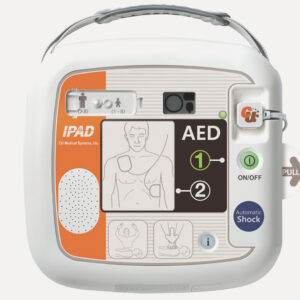
Automated External Defibrillator (AED) iPad CU-SP1 – Fully Automatic, e-Cube Biphasic Waveform
1.415,50 € In stockSelect options This product has multiple variants. The options may be chosen on the product page -
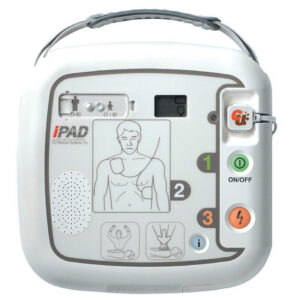
Semi-Automatic External Defibrillator (AED) iPad CU-SP1 – 150 J, Biphasic, Public Use (Ref. CU-SP1 semiaut.)
1.282,50 € In stockSelect options This product has multiple variants. The options may be chosen on the product page -
Semi-Automatic External Defibrillator (AED) iPad CU-SP1 Plus – Biphasic AED 200 J with Smart Electrodes and Lithium Battery (Ref. 35357)
1.282,50 € In stockAdd to basket -
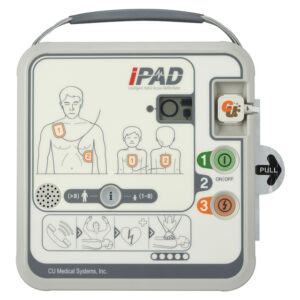
Semi-automatic external defibrillator iPad CU-SPR – Public access AED, e-cube biphasic with adult/paediatric mode and IP66 (Ref. GM35400-F)
1.377,50 € In stockSelect options This product has multiple variants. The options may be chosen on the product page -
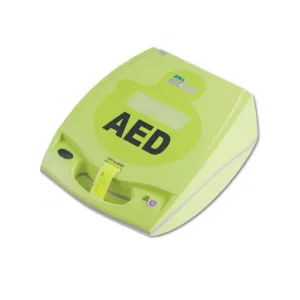
Automated External Defibrillator (AED) ZOLL AED PLUS with Protective Case and Disposable Lithium Battery, 3.1 kg – Without Electrodes (SER0A0PL000SE)
1.137,00 € In stockAdd to basket -
Automated External Defibrillator ZOLL AED PLUS – Complete Kit with Case, Lithium Battery and Stat-Padz II Adult Electrodes + Paediatric Pedi-Padz II (Semi-Automatic AED, 3.1 kg)
1.286,00 € In stockAdd to basket -
Automated External Defibrillator (AED) ZOLL AED PLUS – Complete kit with case, lithium battery, CPR-D-Padz electrodes with Real CPR Help and Pedi-Padz II paediatric electrodes
1.399,00 € In stockAdd to basket
Keep exploring
- How to choose an AED: automated external defibrillator
- Automated external defibrillators (AEDs): buying guide
- Automated external defibrillator (AED): buying guide
- How to choose a defibrillator
- Semi-automatic AED: buying guide
- Semi-automatic external defibrillator: buying guide
- cardiopulmonary resuscitation