
Description
1. Commercial Introduction
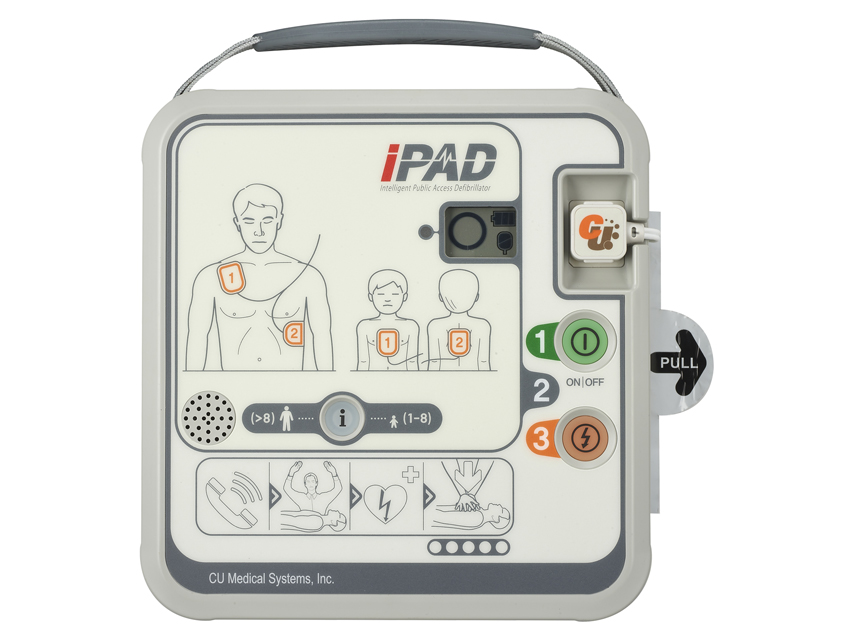
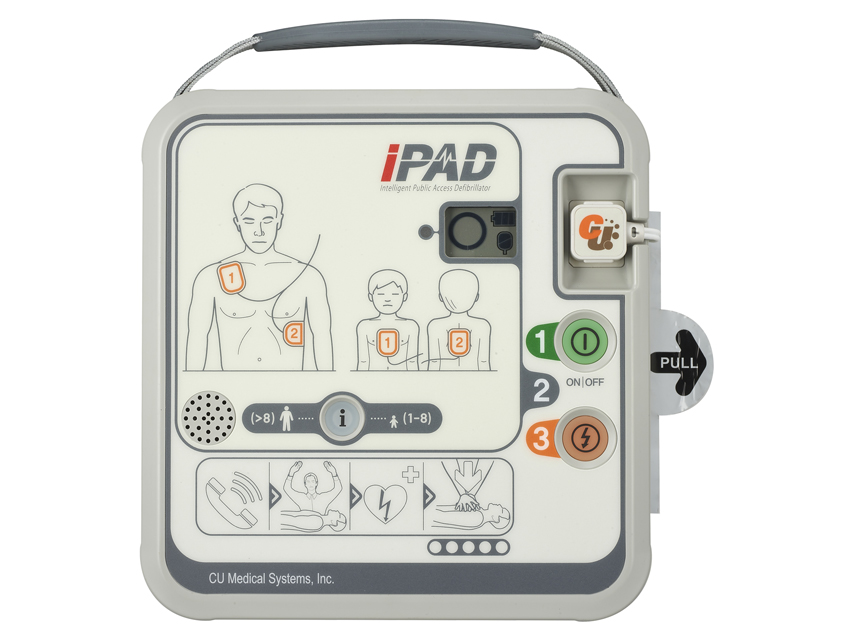
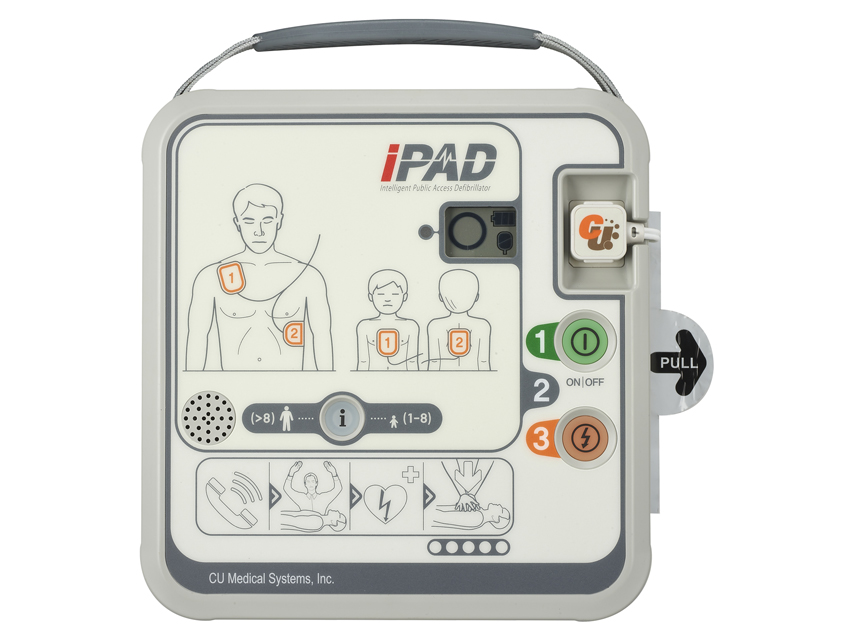
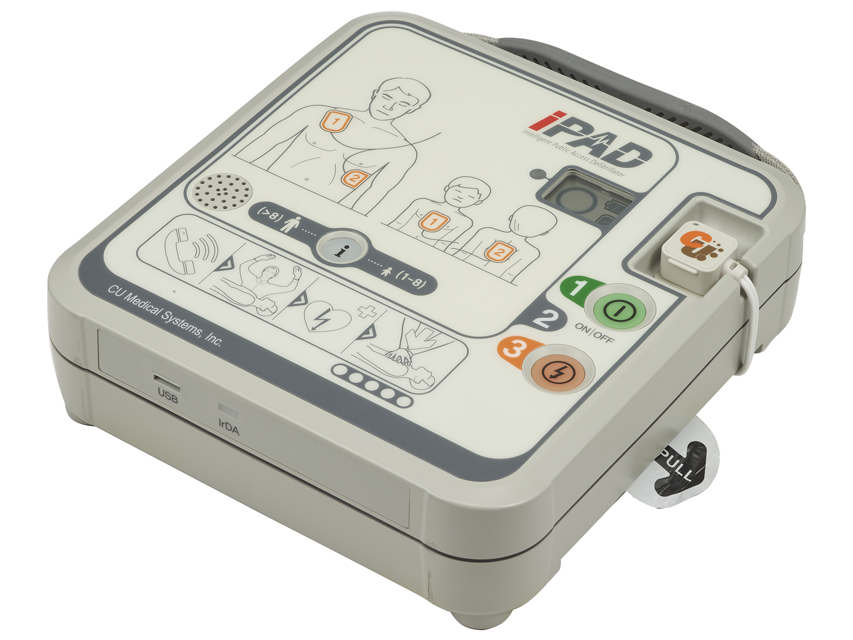
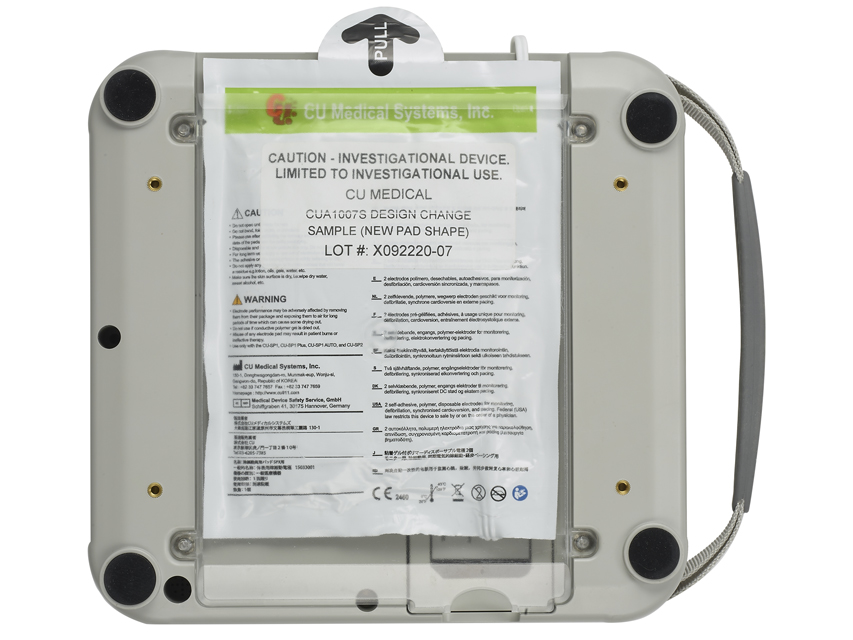
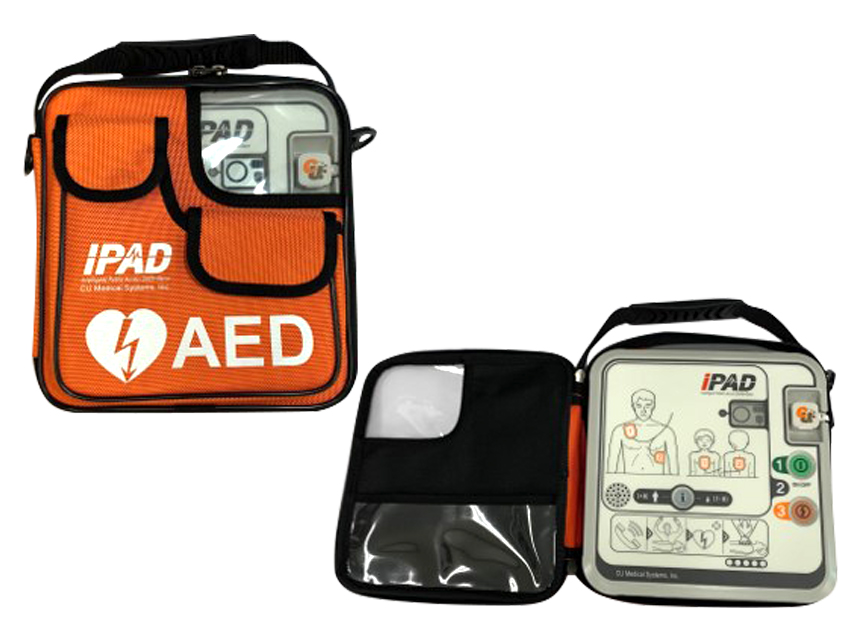
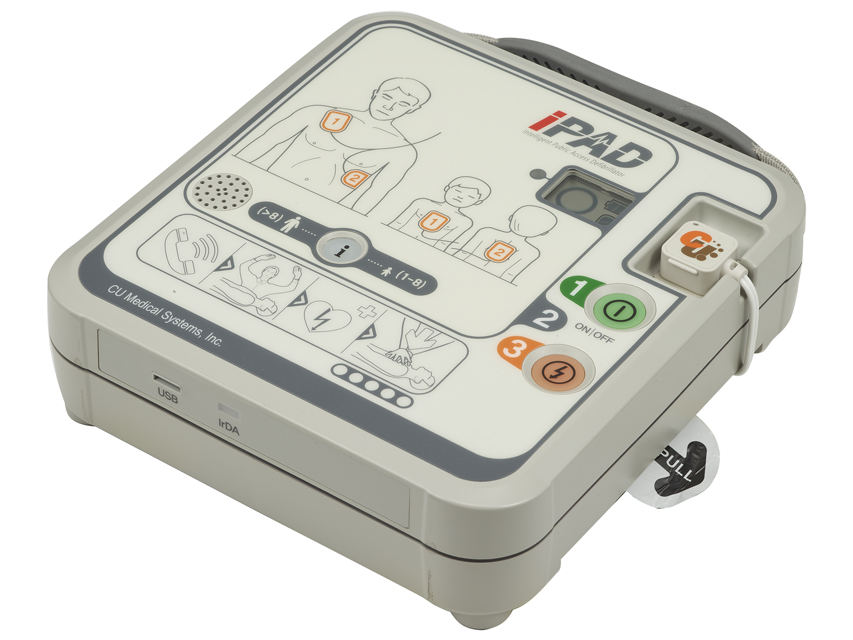
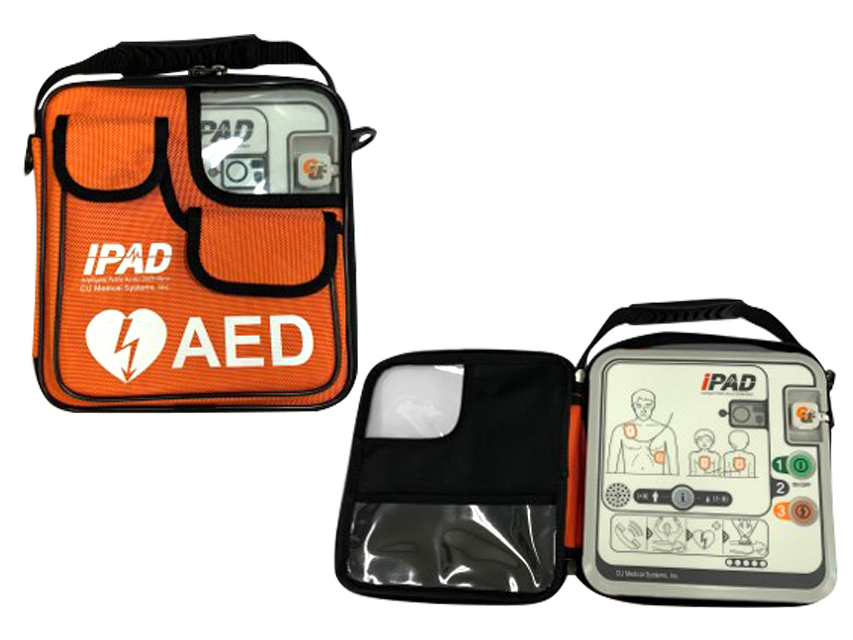
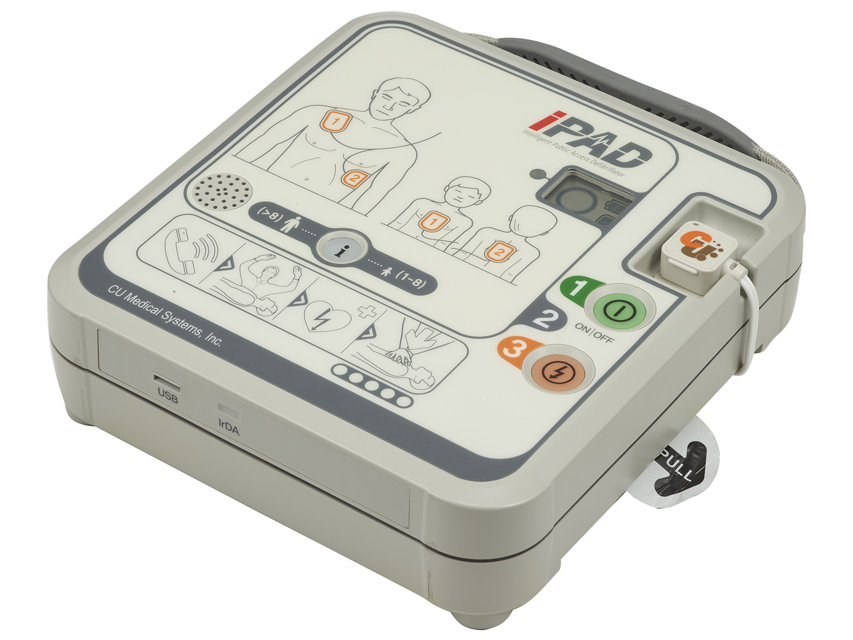
The semi-automatic external defibrillator (AED) iPad CU-SPR is the advanced and intuitive public access defibrillation solution that guarantees a fast and safe response to cardiac arrest. Easy to use, lightweight (2 kg) and easily portable, it treats both adult and paediatric patients in rescue operations, and its highly water and dust resistant housing (IP66) allows it to be used even in wet and adverse conditions. It is indicated for companies, educational centres, sports facilities, administrations and any heart-safe space where rescuers without medical training may intervene.
2. Technical explanation of the equipment
The iPad CU-SPR automatically reads the patient’s electrocardiogram (ECG) and determines whether a cardiac arrest has occurred and whether defibrillation is necessary. The unit integrates voice prompts, LED indicators and graphic guides that accompany the rescuer throughout the entire sequence: rhythm analysis, shock and CPR. Its biphasic e-cube waveform (truncated exponential type) delivers 200 J for adults and 50 J for paediatric patients, with a quick adult/paediatric change mode. It includes a CPR metronome, compression step detection for more effective resuscitation and an LCD screen where the status of the unit and consumables (battery and electrodes) can be checked at a glance, so that the device is always ready for use.
The unit performs automatic daily, weekly and monthly self-checks, automatic internal discharge and allows data transfer via USB port (requires optional key), with internal memory for 5 individual treatments of up to 3 hours each.
3. Technical Specifications
3.1 Product data
| Manufacturer | GIMA |
|---|---|
| Sales unit | 1 pc |
| Device type | Medical device |
| Device class | II B |
| CND | Z12030501 |
3.2 Defibrillator specifications
| Operating mode | Semi-automatic |
|---|---|
| Waveform | Biphasic e-cube (truncated exponential type) |
| LCD/LED screen | Unit status, battery level and electrode status |
| Output energy for adults | 200 J at 50 Ω load |
| Output energy for children | 50 J at 50 Ω load |
| Charge control | Controlled by an automated patient analysis system |
| Weight-bearing time | In less than 3 seconds from the voice shock command |
| Time from the start of rhythm analysis | 12 seconds with a new battery (even after 15 shocks at 200 J) |
| Time from power-on to shock | 25 seconds with a fully charged new battery (even after 15 shocks at maximum energy) |
| Time from CPR to shock | At least 6 seconds from the end of CPR |
| Shock deactivation | If the patient’s rhythm changes to a non-shockable rhythm or if the SHOCK button is not pressed within 15 seconds |
| Speaker | Provides voice prompts |
| Sound level | 80 ~ 90 dB (±3 dB) at 1 m above the speaker |
| Acoustic alarm | Provides various audible indications |
| Automatic self-check | Power-on self-test and daily, weekly and monthly operational self-test |
| Manual test | Battery pack insertion test |
| Battery type | 12 V DC, 4.2 Ah LiMnO2, disposable, non-rechargeable |
| Operating time | At least 150 shocks (200 J) with a new battery or 6 hours of operation |
| Battery service life | At least 5 years from the date of manufacture |
| Storage | Internal memory: 5 individual treatments, up to 3 hours per treatment |
| Dimensions – Weight | 240 x 230 x 70 mm – 2 kg |
3.3 ECG analysis system
| Impedance range | 25 Ω to 175 Ω |
|---|---|
| Shockable rhythms | Ventricular fibrillation or rapid ventricular tachycardia |
| Acquired ECG lead | Lead II |
| Frequency response | 1 Hz to 30 Hz |
3.4 Key points and safety
- Unit and consumables status on LCD screen for quick verification
- CPR metronome, voice guidance and graphic instructions
- Adult-paediatric mode with quick change button
- Data transfer via USB (requires optional key)
- Biphasic semi-automatic e-cube defibrillation
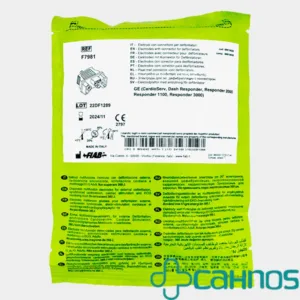
- Combined adult/paediatric electrodes with support for dedicated paediatric electrodes
- Automatic background noise analysis and unit volume adjustment
- Compression step detection indicator for more effective CPR
- Highly water-resistant IP66 housing
- Automatic internal discharge
- Daily, weekly and monthly self-test
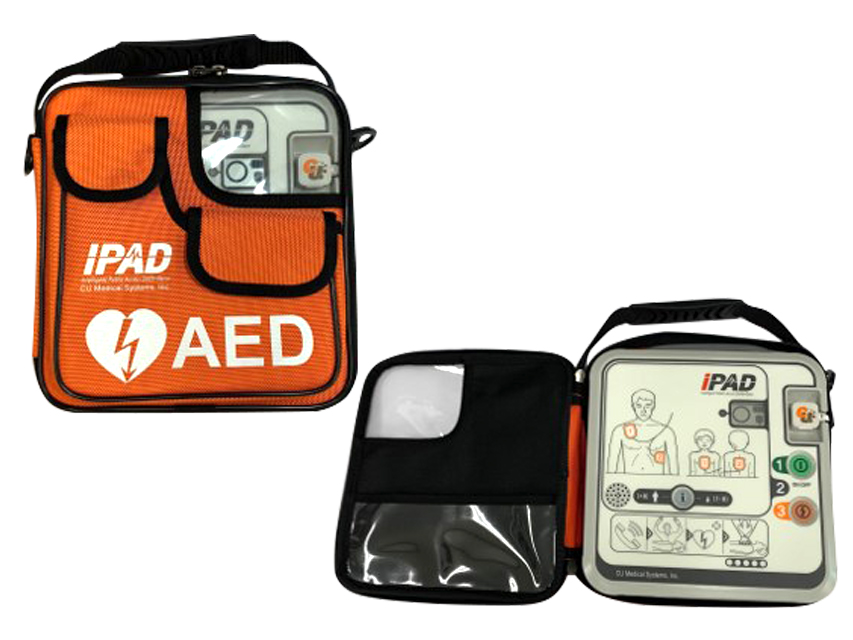
- Impact-resistant carry case
3.5 Included accessories
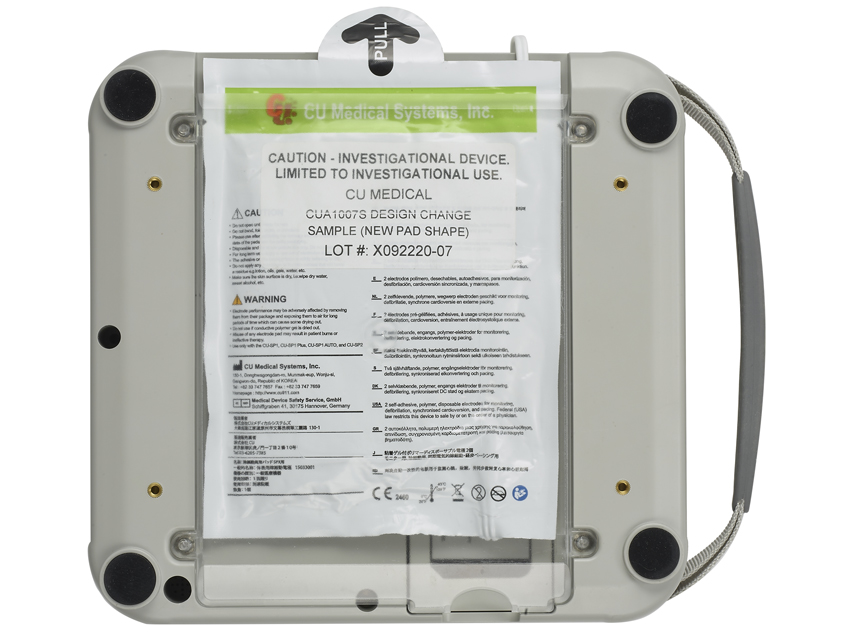
- Adult electrodes
- Carry bag
- Disposable lithium battery
- Paper manual (GB, IT)
3.6 Available references
| Reference | Language | Sales unit |
|---|---|---|
| GM35400 | GB,FR,IT,ES,DE,PL,US,KR specify language with order | 1 pc |
| GM35401 | US,SE,FI,NO,DK,SK,CZ,HU,KR specify language with order | 1 pc |
| GM35402 | GB,PT,GR,NL,RO,LT,RU,UA,KR specify language with order | 1 pc |
4. Equivalences and Cross-References
The iPad CU-SPR belongs to the i-PAD platform of semi-automatic defibrillators (manufactured by CU Medical Systems, Italy) and is marketed in three language variants: GM35400, GM35401 and GM35402. These references correspond to the same model with different voice and manual language sets, selectable when placing the order; they are not different products.
There is no equivalence table validated by the manufacturer that would allow replacing this device with defibrillators from other manufacturers: the electrode connector, rhythm analysis algorithm and energy management are proprietary technologies of the i-PAD/CU-SPR platform. Any comparison with other semi-automatic AEDs for public access (e.g. ZOLL AED, Philips HeartStart, Defibtech or Bexen) should be understood as comparable at category level and not interchangeable 1:1. Consult with the technical department of Cahnos before using the device in tenders or replacing consumables with third-party spare parts.
5. Selection tips and variants of interest
Confirm the language: the references GM35400, GM35401 and GM35402 are supplied according to the voice and manual software language indicated in the order (the device supports voice in US, GB, FR, IT, ES, DE, PL, KR, JP and Arabic).
Paediatric population: the device includes adult/paediatric mode with quick-change button and supports dedicated paediatric electrodes, provided that the original consumables of the platform are used.
Maintenance: the disposable lithium-manganese battery (12 V, 4.2 Ah) guarantees at least 150 shocks or 6 hours of operation with a service life of at least 5 years; periodically check the battery and electrode status on the LCD screen and comply with the daily, weekly and monthly self-tests.
Recommended environment: due to its lightness, portability and IP66 protection, it is ideal for public defibrillation points, transport, large areas and demanding environmental conditions. For specific configurations, accessories, consumables or bulk orders, contact the technical-commercial department of Cahnos.
Reviews
There are no reviews yet.