
How to choose a defibrillator
35 products in the catalogue
A defibrillator is electromedical equipment for external defibrillation. Under that name come automatic and semi-automatic external units, compact and with voice prompts, and monitor-defibrillators that combine defibrillation and ECG monitoring in a single unit and, depending on the model, external pacing, SpO2, non-invasive blood pressure and EtCO2.
The purchase does not end with the device. Each unit comes with its own set of consumables and accessories, such as electrodes or the unit's signage. Connectors, expiry dates and presentations change by model. This guide sets out the verifiable criteria: type of equipment, patient type, power supply, presentation and expiry of the consumable, and connector compatibility.
Other related families
-
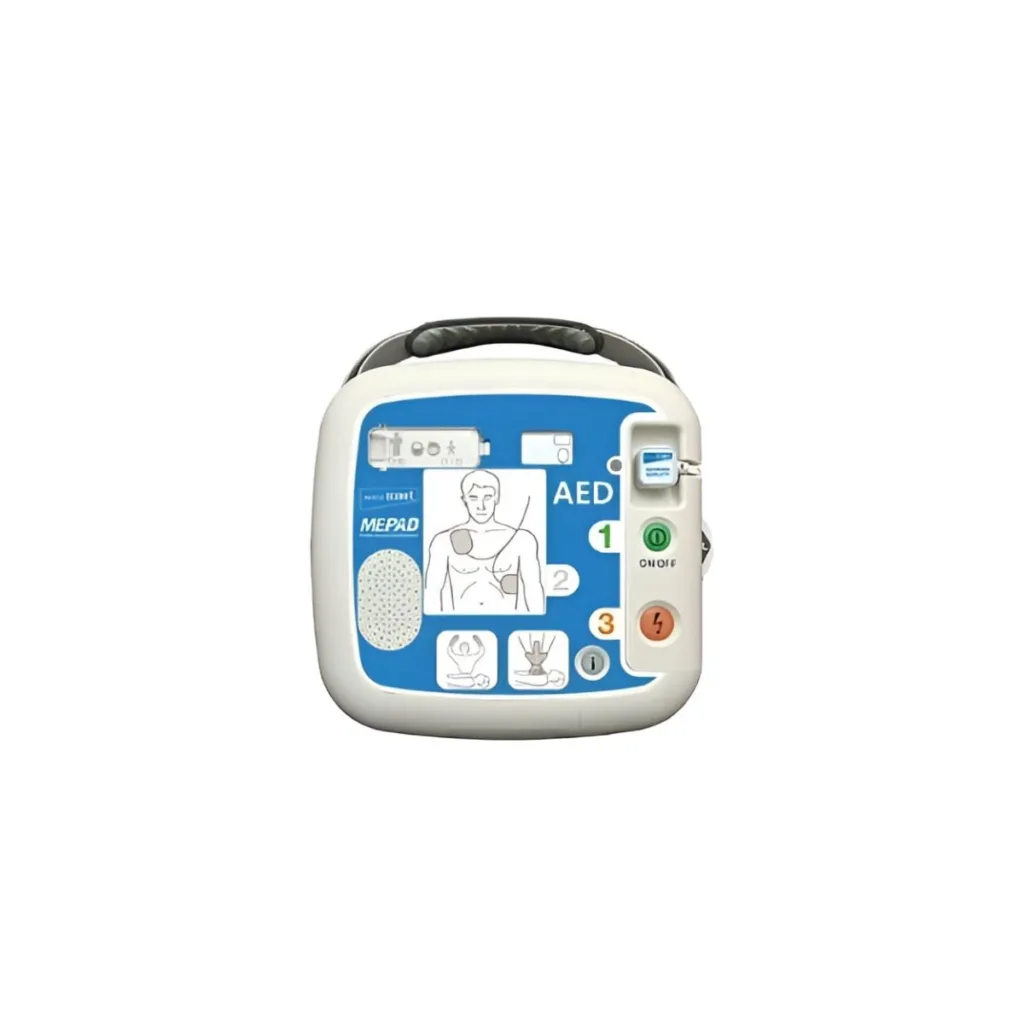
 Automatic and Semi-automatic Defibrillators
Brings together the automatic and semi-automatic units, which are compact, with a status display and voice prompts.
-
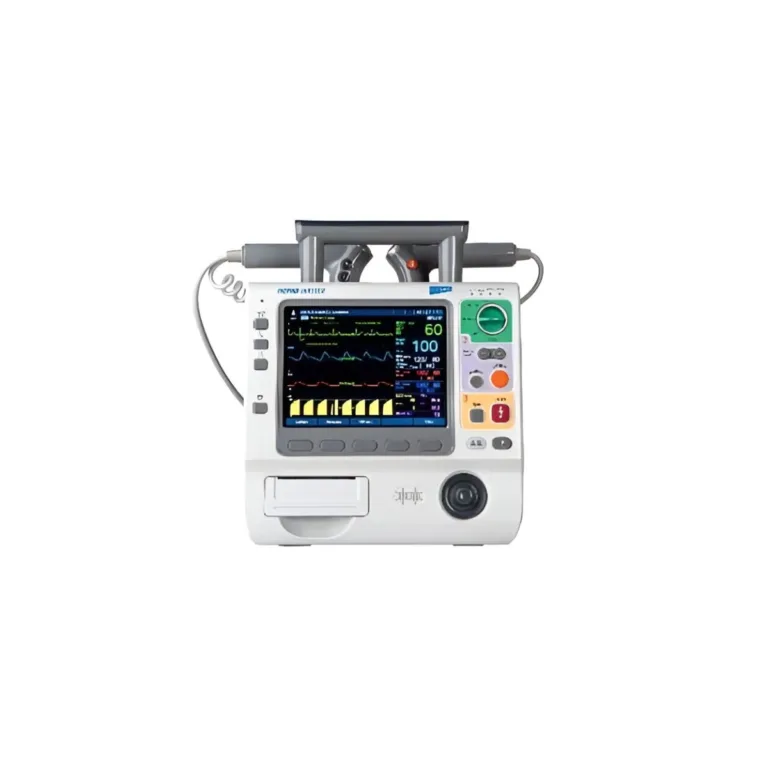
 Manual Defibrillators with Monitor
For those who need ECG monitoring and, depending on the model, pacing, SpO2 or non-invasive blood pressure in the same unit.
-
 Adult Electrodes
Adult electrodes; compared by the connector compatible with the make and model of the unit.
-
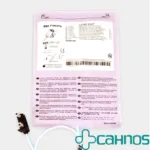 Paediatric Electrodes
Allows paediatric replenishment to be kept separate from adult.
Products in this guide
- Rechargeable battery 26
- Mains power 5
- Batteries 4
- Unit 21
- Kit 1
- Medical device 16
- Non-medical 2
-
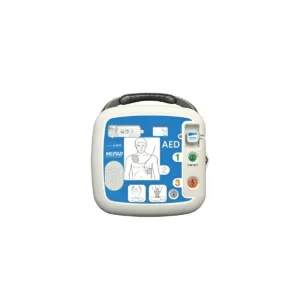
Semi-automatic external defibrillator (S-AED) ME PAD Semi – Li-Mn battery with 5 years or 200 shocks, voice prompts in 9 languages and SD card recording for heart-safe spaces (Ref. 30.10-4300)
1.438,20 € In stockAdd to basket -
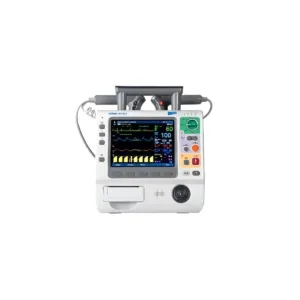
Defibrillator monitor ME PAD Máster Básico – Biphasic 1-360 J, 3/5-lead ECG, AED, pacing and integrated printer (Ref. 30.10-4451)
5.398,20 € In stockAdd to basket -
Monitor defibrillator ME PAD Máster Estándar I – Biphasic 1-360 J, ECG 3/5 leads, AED, pacing and integrated printer (Ref. 30.10-4452)
7.918,20 € In stockAdd to basket -
Professional monitor defibrillator ME PAD Master Advance – Biphasic 1-360 J, 3/5-lead ECG, AED, cardiac pacing, SpO2/NIBP/EtCO2 (Ref. 30.10-4450)
10.258,20 € In stockAdd to basket -
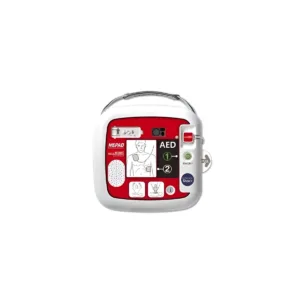
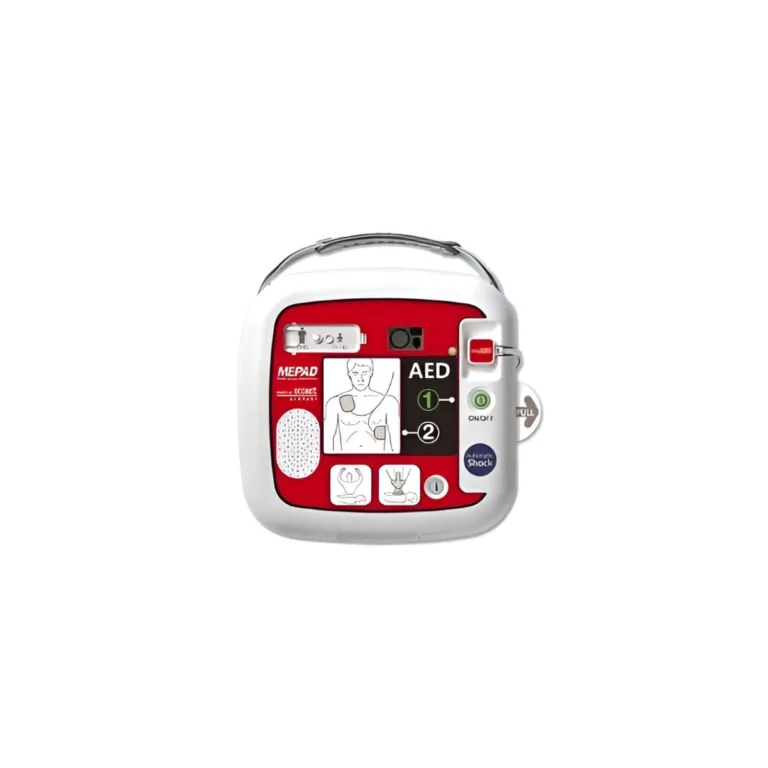
Automated external defibrillator (AED) ME PAD Auto – 5-year Li-Mn battery, multilingual voice and SD card (Ref. 30.10-4600)
1.438,20 € In stockAdd to basket -
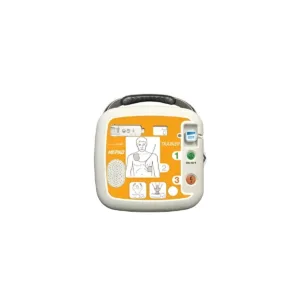
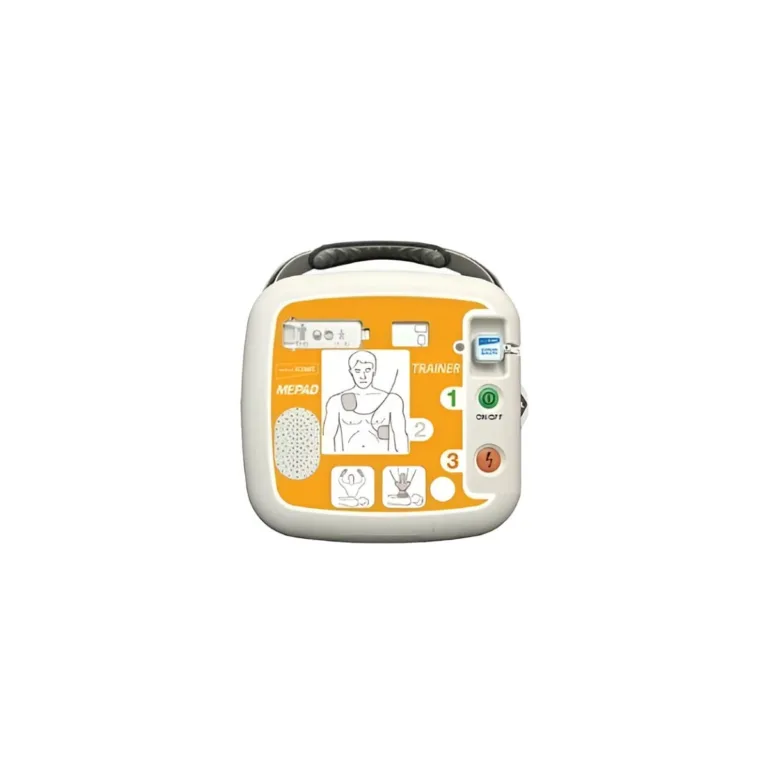
ME PAD Trainer defibrillator training kit – Multilingual AED simulator with 8 AHA/ERC scenarios, remote control and reusable pads (Ref. 31.10-4310)
538,20 € In stockAdd to basket -
Professional monitor defibrillator ME PAD Master Standard II: biphasic 1-360 J, 3/5-lead ECG, AED, pacing and integrated thermal printer
8.638,20 € In stockAdd to basket -
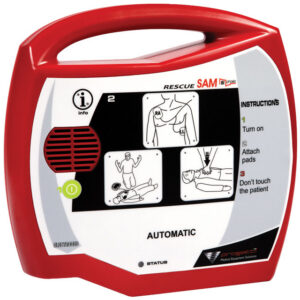
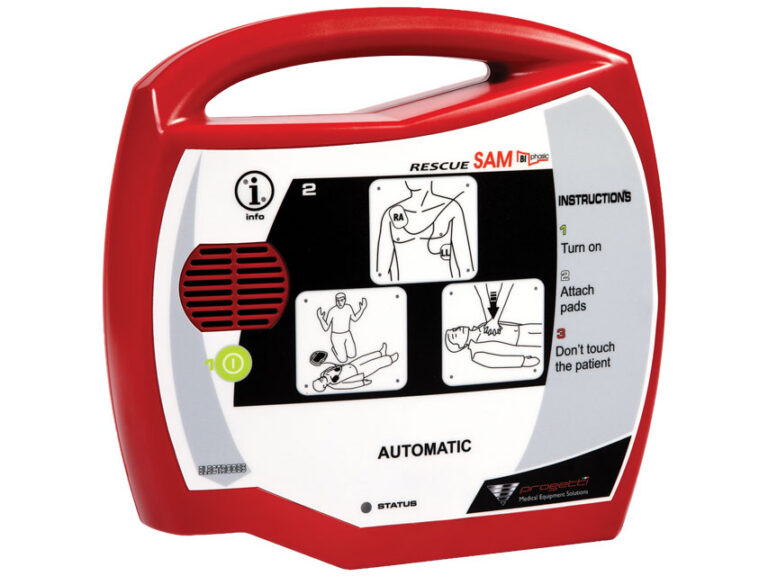
Rescue Sam Automated External Defibrillator (AED) – Automatic Shock, Biphasic Waveform 200 J and Long-Life Lithium Battery (Ref. GM33165-F)
1.567,50 € On orderSelect options This product has multiple variants. The options may be chosen on the product page
Buying and selection tips
-
Decide first between an AED and a monitor-defibrillator
The first cut is the configuration of the unit. A monitor-defibrillator adds ECG monitoring to defibrillation and, depending on the model, functions such as external pacing, SpO2, non-invasive blood pressure or EtCO2. An AED is a compact unit with voice guidance, without those added features.
-
Automatic or semi-automatic
Some units are described as automatic and others as semi-automatic. Settle the mode the department needs and make sure the product on the order reflects it.
-
Look at the electrode presentation and expiry
Electrodes are supplied in pairs or in boxes of several pairs, and the expiry date appears on the packaging. The format determines storage space and expiry control, so settle it before calculating replenishment.
-
Check the connector before restocking
Electrodes are not interchangeable between makes without an adaptor or a validated cable. Before a large restock, ask for the compatibility declaration by unit model.
Frequently asked questions
How do I check that an electrode fits my defibrillator?
The deciding factor is the connector: it must match the make and model of the unit. If you use compatible electrodes from another manufacturer, require the compatibility declaration by model.
What is the difference between a monitor-defibrillator and a compact AED?
The monitor-defibrillator adds ECG monitoring and other functions depending on the model, at the cost of greater size. The AED is limited to the compact unit with voice prompts.
How do I compare electrode expiry dates?
Each product states its own expiry date and its presentation in pairs. Compare both details and do not treat them as a constant for the category.
Common questions
Thinking that all defibrillation electrodes work with any unit
The connector ties the electrode to a make and model; without an adaptor or validated cable there is no interchange. Require the compatibility declaration by model.
Treating automatic and semi-automatic as the same when comparing
They are different modes of the unit, and the mode contracted must be reflected in the product on the order.
Assuming the battery lasts the same on all models
Each product states the life of its battery. Use the replacement interval for the specific model.
More products in this guide
-
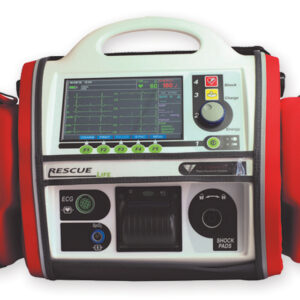
AED Defibrillator-Monitor Rescue Life 7 – Custom configurations (SpO2, NIBP, Pacemaker) | Ref. 33188 / 33189 / 33190
On orderRequest a quote -

Rescue Life 7 Defibrillator-Monitor with SpO2 and Pacemaker – Manual, AED and Advisory Modes, 7” Screen | Ref. GM33193
Price range: 7.410,00 € through 8.645,00 € On orderSelect options This product has multiple variants. The options may be chosen on the product page -
Automated External Defibrillator (AED) PRIMEDIC HeartSave AED | Biphasic CCD 50-360 J with lithium battery (6 years) | Ref. 33391
1.890,50 € In stockSelect options This product has multiple variants. The options may be chosen on the product page -
Semi-automatic external defibrillator AED PRIMEDIC HeartSave PAD with lithium battery – Biphasic CCD up to 360 J – Italian version (Ref. GM33393-F)
1.700,50 € On orderSelect options This product has multiple variants. The options may be chosen on the product page -
Semi-automatic external defibrillator (AED) PRIMEDIC HeartSave AED-M with ECG monitor and 6-year lithium battery (Ref. GM33396)
Price range: 2.422,50 € through 3.135,00 € In stockSelect options This product has multiple variants. The options may be chosen on the product page -
Semi-automatic AED defibrillator PRIMEDIC HeartSave AED-M with ECG and monitor – Biphasic CCD 50–360 J, 6-year lithium battery – Ref. 33399
2.422,50 € On orderAdd to basket -
AED PRIMEDIC HeartSave PAD — Semi-automatic biphasic CCD automated external defibrillator (50-360 J) with non-rechargeable lithium battery and multilingual voice guidance · Ref. 33402
1.795,50 € On orderAdd to basket -
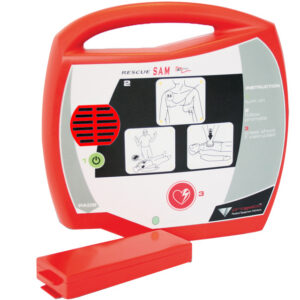
Semi-Automatic External Defibrillator (AED) Rescue Sam AED – Biphasic BTE 200 J for public use (Ref. 33425)
1.225,50 € In stockSelect options This product has multiple variants. The options may be chosen on the product page
Keep exploring
- How to choose an AED: automated external defibrillator
- Automated external defibrillators (AEDs): buying guide
- Automated external defibrillator (AED): buying guide
- External defibrillator: buying guide
- Semi-automatic AED: buying guide
- Semi-automatic external defibrillator: buying guide
- aluminium
- cardiopulmonary resuscitation