
Semi-automatic external defibrillator: buying guide
8 products in the catalogue
A semi-automatic external defibrillator is portable electromedical equipment designed for public access defibrillation sites: workplaces, sports centres, public facilities, transport and any location where it has been decided to provide quick-access equipment. It is sold as a carry case or as a compact unit, with its own battery and disposable electrodes.
Some references allow a choice between semi-automatic and fully automatic mode, so the mode must be fixed in the order before offers are compared. The data that most distinguish one reference from another are the energy per shock and the waveform, the weight and dimensions, the IP protection rating, the type and service life of the battery, the electrodes and their connector, the voice and text languages, the display, the data log and the contents of the pack. This guide sets out those criteria so that the comparison is made on verifiable characteristics.
Other related families
-
 Defibrillator Accessories and Spare Parts
Brings together accessories and spares for the equipment: batteries, carry cases and replacement consumables.
-
 Compatible Electrodes for Defibrillators
Allows you to find electrodes compatible with the specific reference chosen.
-
 Adult Electrodes
Adult electrodes, a replacement consumable that has to be planned for in the purchase.
-
 Paediatric Electrodes
Paediatric electrodes, necessary if the chosen reference requires specific electrodes.
-
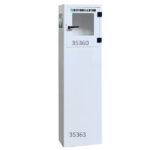 Defibrillator Cabinets
Cabinets for installing and protecting the equipment at the chosen location.
Products in this guide
-
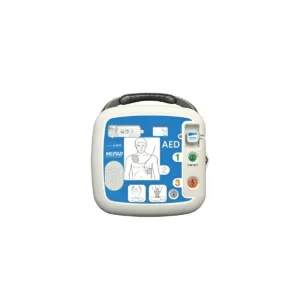
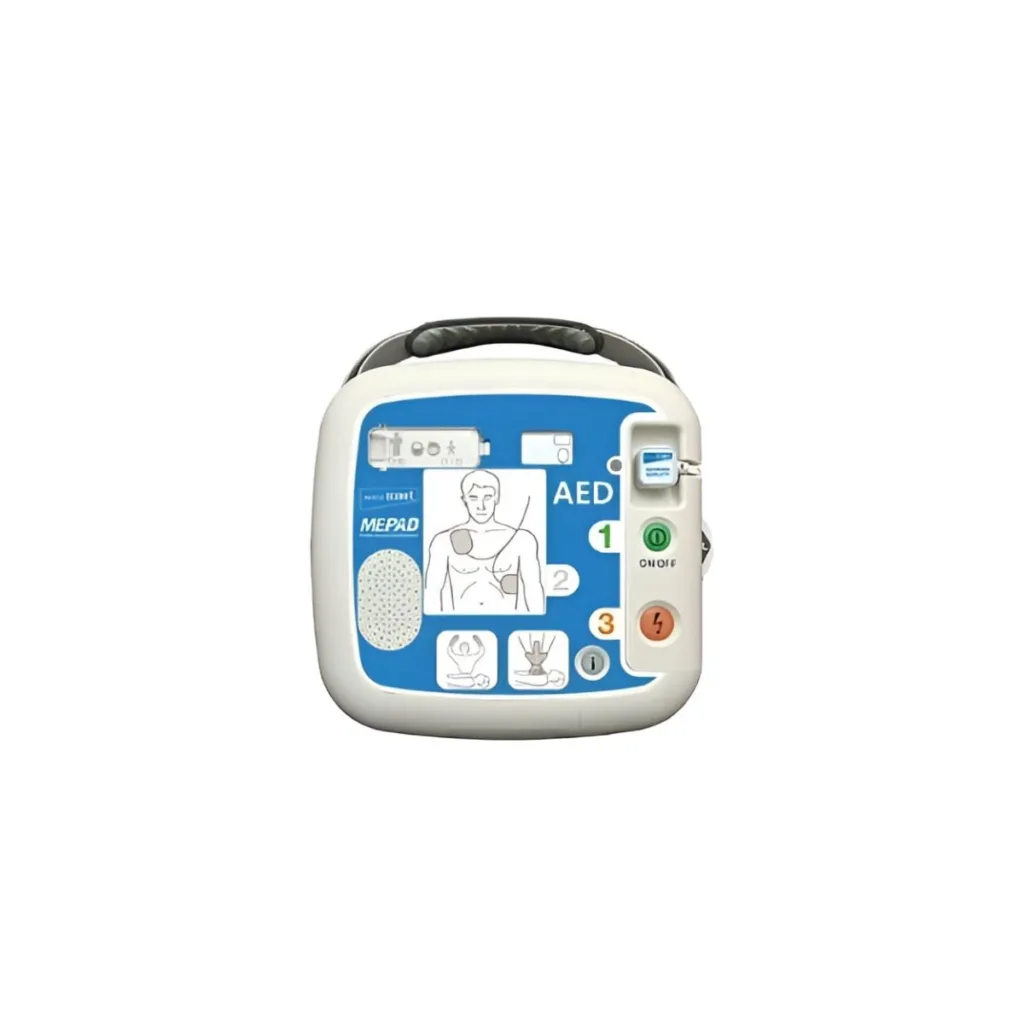
Semi-automatic external defibrillator (S-AED) ME PAD Semi – Li-Mn battery with 5 years or 200 shocks, voice prompts in 9 languages and SD card recording for heart-safe spaces (Ref. 30.10-4300)
1.438,20 € In stockAdd to basket -

Semi-automatic external defibrillator AED PRIMEDIC HeartSave PAD with lithium battery – Biphasic CCD up to 360 J – Italian version (Ref. GM33393-F)
1.700,50 € On orderSelect options This product has multiple variants. The options may be chosen on the product page -
Semi-automatic external defibrillator (AED) PRIMEDIC HeartSave AED-M with ECG monitor and 6-year lithium battery (Ref. GM33396)
Price range: 2.422,50 € through 3.135,00 € In stockSelect options This product has multiple variants. The options may be chosen on the product page -
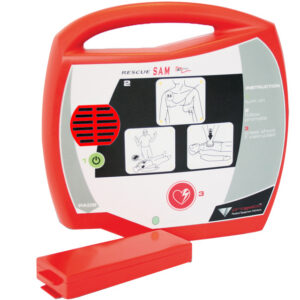
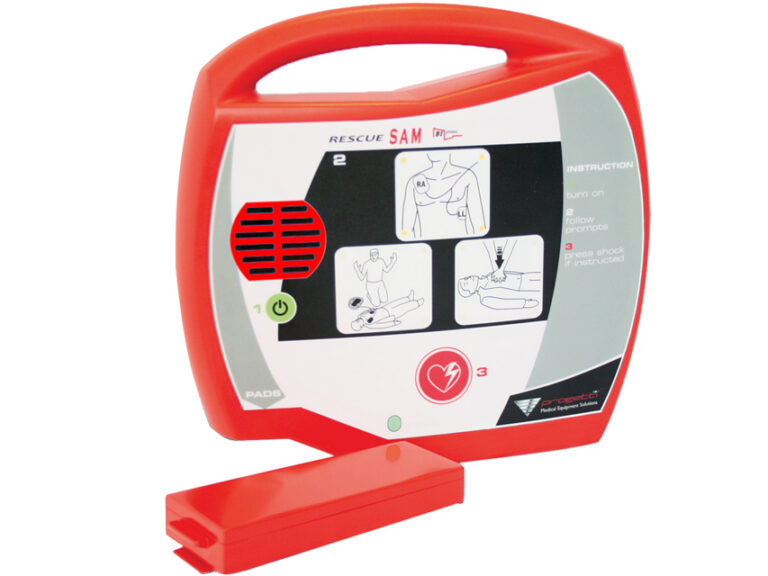
Semi-Automatic External Defibrillator (AED) Rescue Sam AED – Biphasic BTE 200 J for public use (Ref. 33425)
1.225,50 € In stockSelect options This product has multiple variants. The options may be chosen on the product page -
Semi-Automatic External Defibrillator (AED) Rescue Sam AED – Biphasic 200 J fixed for public use, multilingual (Ref. 33559)
1.225,50 € On orderAdd to basket -
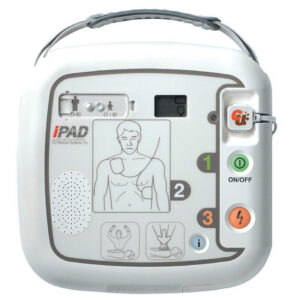
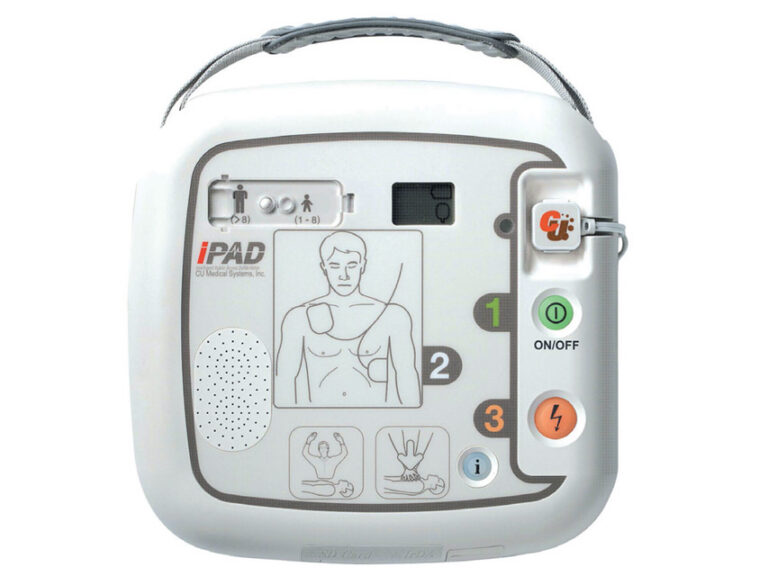
Semi-Automatic External Defibrillator (AED) iPad CU-SP1 – 150 J, Biphasic, Public Use (Ref. CU-SP1 semiaut.)
1.282,50 € In stockSelect options This product has multiple variants. The options may be chosen on the product page -
Semi-Automatic External Defibrillator (AED) iPad CU-SP1 Plus – Biphasic AED 200 J with Smart Electrodes and Lithium Battery (Ref. 35357)
1.282,50 € In stockAdd to basket -
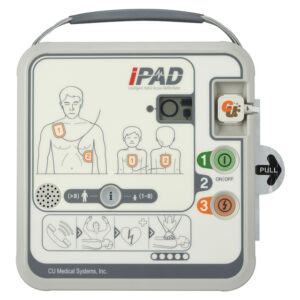
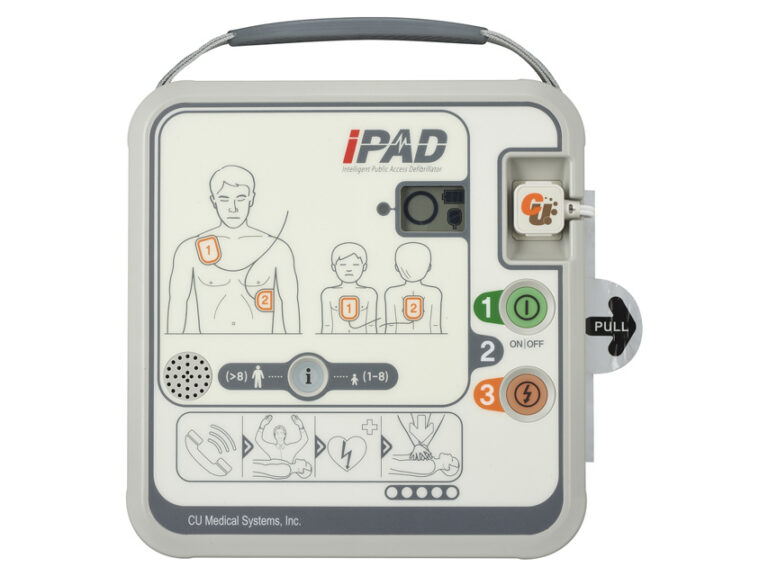
Semi-automatic external defibrillator iPad CU-SPR – Public access AED, e-cube biphasic with adult/paediatric mode and IP66 (Ref. GM35400-F)
1.377,50 € In stockSelect options This product has multiple variants. The options may be chosen on the product page
Buying and selection tips
-
Energy and waveform
Check the joules per shock and the declared waveform: there are references of 150 J, 200 J and up to 360 J, with a biphasic waveform. Ask for the data of the chosen reference in writing.
-
Weight and dimensions of the equipment
Weight affects where it is installed and who carries it: there are units of 2.4 kg measuring 260 x 256 x 70 mm and monitor configurations of 5.5 kg. Check whether the weight and dimensions are declared with battery and electrodes included.
-
IP protection rating
The IP rating indicates resistance to dust and water and must match the installation point: there are IP33, IP55 and IP66 references. The more exposed the equipment is, the higher the required rating should be.
-
Battery: chemistry, service life and shocks
Check whether the battery is rechargeable or non-rechargeable, its chemistry and its declared service life: there are lithium batteries rated for 5 years or 200 shocks, lithium batteries rated for 6 years, and models with an optional rechargeable battery and a continuous-charge base.
-
Languages, display and data log
If the equipment is going to a space with rotating staff, consider the number of voice and text languages: there are references with up to 4 languages, with up to 6, and with voice prompts in 9 languages. Also check whether it has a display and whether the event log can be exported by USB or on an SD card.
-
Pack contents and accessories
Confirm what each reference includes before closing the order: there are units with a soft carry case, with a backpack and with an accessory kit, and the electrodes and battery may be ordered separately. Separate the equipment from the consumables so as not to duplicate purchases.
Frequently asked questions
What is the difference between a semi-automatic and a fully automatic defibrillator when buying?
They are different modes, and there are references that allow a choice between the two. Fix the mode in the order before comparing offers.
What IP rating should I require depending on where the equipment is installed?
It depends on exposure: there are IP33, IP55 and IP66 references. For locations exposed to dust and water the rating needs to be higher, and you should check that the reference declares it.
How many voice and text languages should I ask for in a public space?
It depends on the expected public: there are references with up to 4 languages, others with up to 6 and others with voice prompts in 9 languages. Set the minimum in the order and check that the language can be changed on the equipment.
Are the battery and electrodes included in the reference?
Not always: there are references supplied without electrodes and with a non-rechargeable battery, and others with electrodes and battery included. Ask for a breakdown of the pack contents for each reference.
Do I need separate paediatric electrodes for child mode?
It depends on the reference: some units have a child button and others use specific paediatric electrodes. Ask the supplier to state which consumables the chosen reference needs.
How are the equipment's usage data recorded and extracted?
It depends on the reference: there are units with internal storage and USB export, others with logging to an SD card and others with 90 minutes of data accessible by cable or USB memory. Check the medium before buying.
Common questions
Confusing semi-automatic with fully automatic
They are different modes, and some references allow both, but not all. The mode must be fixed in the order.
Assuming all units weigh and measure the same
There are units of 1.1 kg and 15 x 15 cm, and the measurements are declared with battery and electrodes. Weight and volume change the intended mounting and location.
Believing the warranty is the same on all references
It is not stated on every reference; where it is, there are units with an 8-year manufacturer's warranty. Ask for the warranty in writing for the specific reference.
Thinking all units use the same electrodes
There are units with a child button and others with specific paediatric electrodes. This is a detail that changes the consumables over the life of the equipment.