
Braided sutures: buying guide
456 products in the catalogue
A braided suture is a multifilament thread: several filaments are interwoven to form a single body, unlike a monofilament, which is a single filament. The range includes braided absorbable sutures of polyglycolic acid and polyglactin 910, some fast-absorbing, with single or double needles.
The reference is defined by the combination of thread and needle: size, colour, needle shape and point, thread length and number of needles per packet. Braided absorbable sutures are made from resorbable polymers and may be coated, a finish that forms part of the thread's behaviour. Check these details before fixing the reference.

Other related families
-
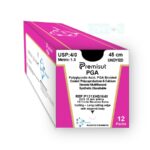 PGA - Polyglycolic Acid
Absorbable polyglycolic acid suture with a braided structure; it is the basis of synthetic resorbable braided sutures.
-
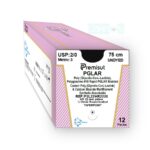 PGAR - Rapid Polyglycolic Acid
Fast-absorbing polyglycolic acid; of interest when looking for a thread that resorbs sooner than the standard version.
-
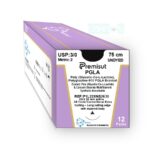 PGLA - Polyglactin 910
Polyglactin 910, a braided absorbable copolymer; an alternative to polyglycolic acid.
-
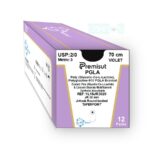 PGLAR - Polyglactin 910 Rapid
Fast-absorbing polyglactin 910, for those looking for a shorter resorption rate.
Products in this guide
- Prime 248
- Normal 209
- Prime Heavy 8
- 1/2 circle 246
- 3/8 circle 128
- Without Needle 37
- Straight Cut 16
- 5/8 circle 15
- Straight 12
- J Shape 11
- 1/4 circle 3
- Needle-free 37
- HR 36 27
- DS 19 25
- HR 26 21
- DS 16 19
- HR 40 15
- HR 22 14
- HR 48 14
- 10 cm 4
- 12 cm 6
- 30 cm 7
- 45 cm 58
- 50 cm 1
- 70 cm 122
- 75 cm 163
- 90 cm 79
-
Sale!
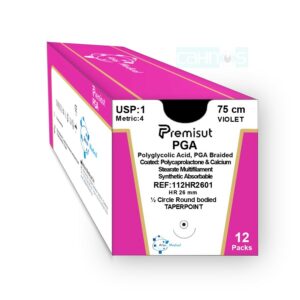
Absorbable Multifilament PGA Suture (Polyglycolic Acid) | ½ Circle Cylindrical Body Taperpoint Needle HR 26 mm | USP Gauge 1 (Metric 4) | Fluted Violet Suture 75 cm | Ref. 112HR2601 | Box of 12 units
Original price was: 34,90 €.27,40 €Current price is: 27,40 €. In stockAdd to basket -
Sale!
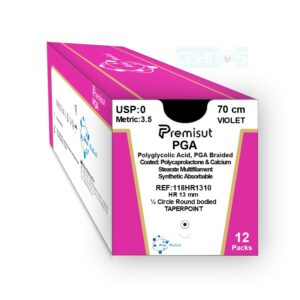
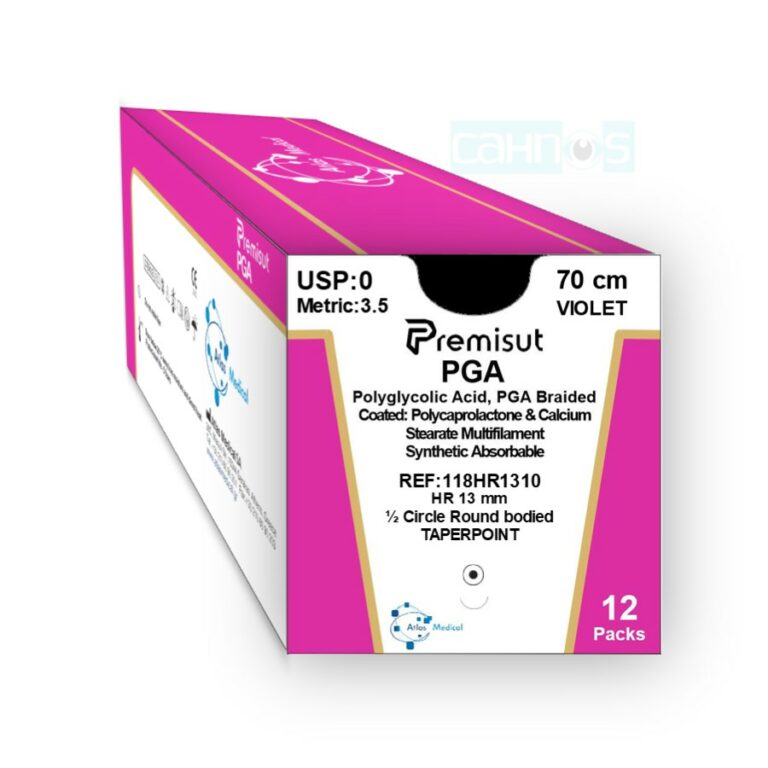
Absorbable Multifilament PGA Suture (Polyglycolic Acid) | ½ Circle Cylindrical Needle, Taperpoint Conical Point, HR 13 mm | USP 0 (Metric 3.5) | Violet Fluted Thread 75 cm | Sterile EO | Box of 12 units | Ref. 118HR1310 (AM118HR1310)
Original price was: 39,90 €.30,50 €Current price is: 30,50 €. In stockAdd to basket -
Sale!
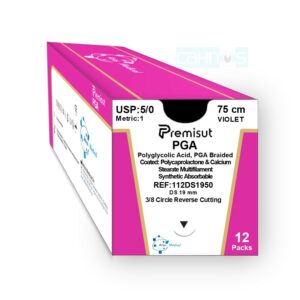
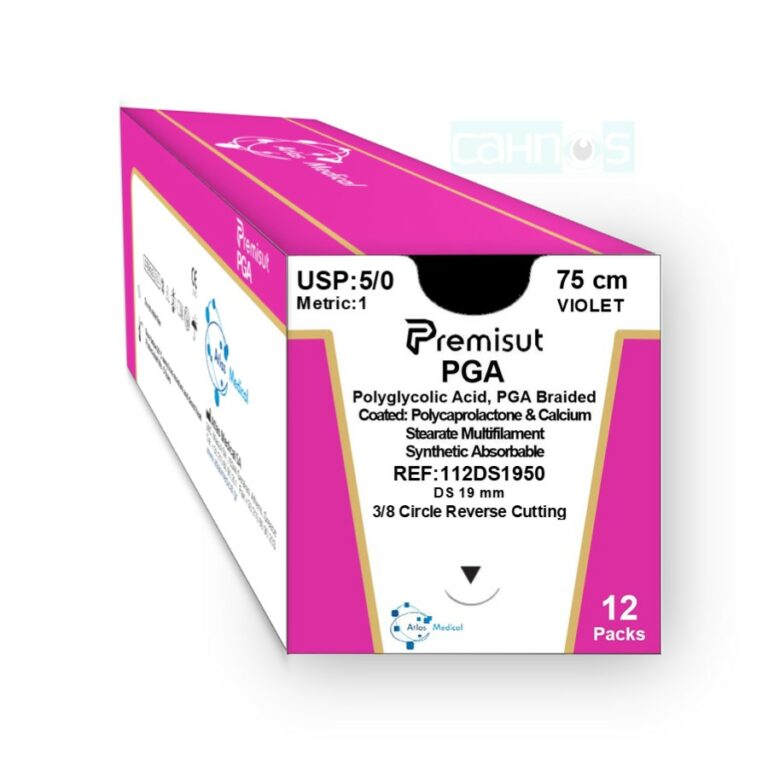
Absorbable PGA (Polyglycolic Acid) Multifilament Suture – 3/8 Circle Reverse Cutting Triangular Point Needle DS19 (19 mm) – USP 5/0 – Violet – 75 cm – Ref. 112DS1950 – Box of 12 units
Original price was: 34,90 €.26,90 €Current price is: 26,90 €. In stockAdd to basket -
Sale!
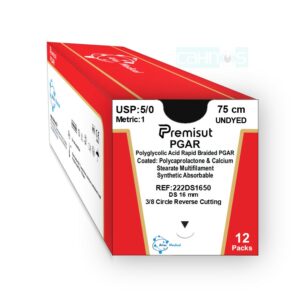
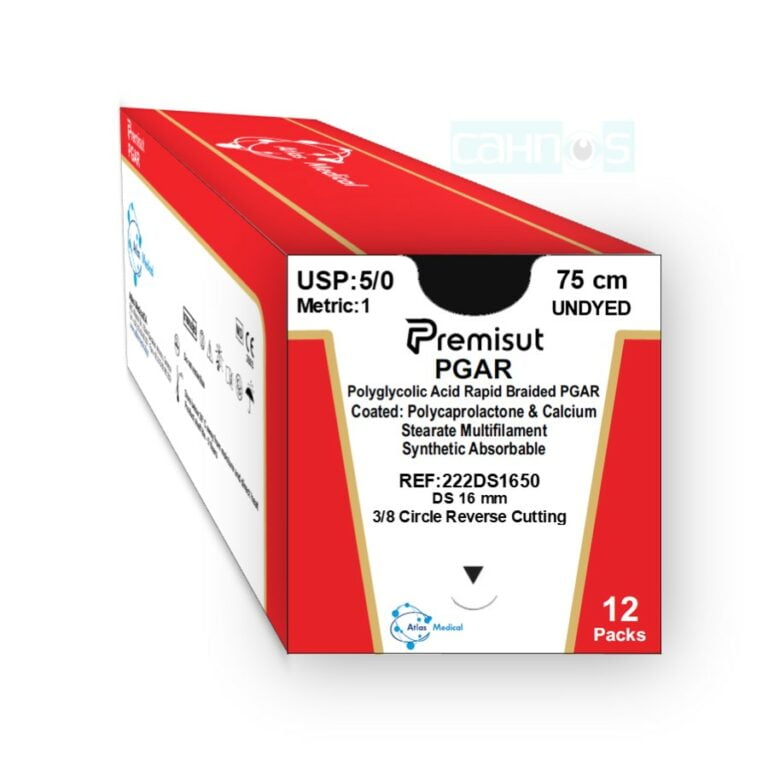
Multifilament Absorbable Suture PGAR RAPID (Polyglycolic Acid) | ⅜ Circle Triangular Reverse Cutting Needle DS16 (16 mm) | USP 5/0 (Metric 1) | Undyed · 75 cm | Ref. 222DS1650 · Box of 12 units
Original price was: 39,90 €.30,50 €Current price is: 30,50 €. In stockAdd to basket -
Sale!
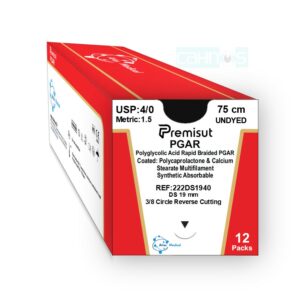
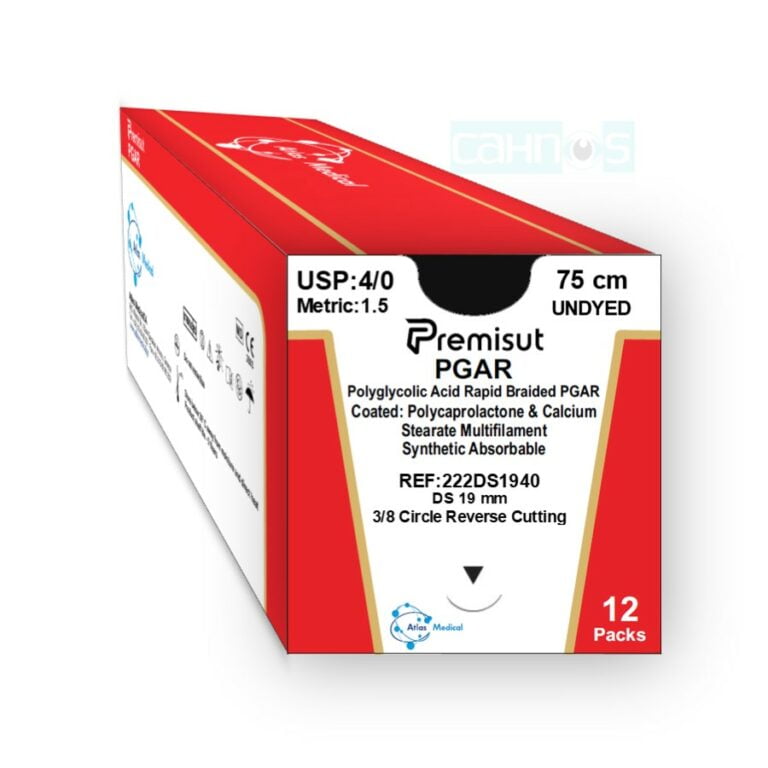
Multifilament Absorbable Suture PGAR RAPID · ⅜ Circle Needle Triangular Reverse Cutting Point DS19 (19 mm) · USP 4/0 (Metric 1.5) · Colourless Suture 75 cm · Box of 12 units · Ref. 222DS1940
Original price was: 34,90 €.26,70 €Current price is: 26,70 €. In stockAdd to basket -
Sale!
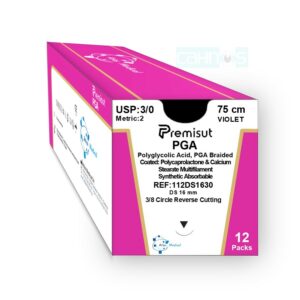
Multifilament PGA Absorbable Suture (Polyglycolic Acid) PREMISUT | ⅜ Circle Needle Triangular Point Reverse Cutting DS16 (16 mm) | USP Gauge 3/0 (Metric 2) | Violet Fluted Thread 75 cm | Ref. 112DS1630 | Box of 12 Units
Original price was: 34,90 €.26,90 €Current price is: 26,90 €. In stockAdd to basket -
Sale!
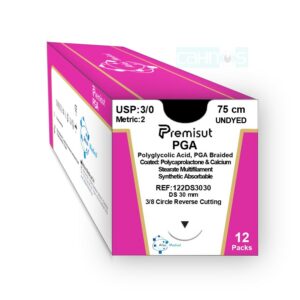
Absorbable Multifilament PGA Suture | 3/8 Circle Needle Reverse Cutting Triangular Point DS 30 mm | USP Size 3/0 (Metric 2) | Colourless Fluted Thread 75 cm | Ref. 122DS3030 | Box of 12 units
Original price was: 34,90 €.26,10 €Current price is: 26,10 €. In stockAdd to basket -
Sale!
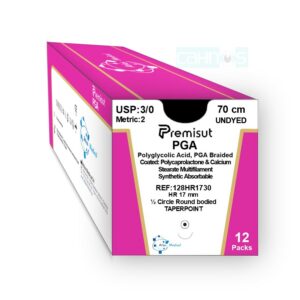
Absorbable Multifilament PGA Suture (Polyglycolic Acid) | ½ Circle Cylindrical Body Taperpoint Conical Point Needle HR17 (17 mm) | USP 3/0 Gauge (Metric 2) | Colourless Thread 70 cm | Box of 12 units | Ref. 128HR1730 (SKU AM128HR1730)
Original price was: 34,90 €.26,10 €Current price is: 26,10 €. In stockAdd to basket
Buying and selection tips
-
Thread structure: braided or monofilament
Braided thread is a multifilament: several interwoven filaments form a single body. A monofilament is a single filament. Even if they share the same size, they are different structures, and the reference should be ordered by the structure the department needs.
-
Material and absorption rate
The references in this guide are divided between polyglycolic acid and polyglactin 910, with fast-absorbing versions. If you need a different resorption rate, check the polymer and do not decide on size alone.
-
Thread coating
Some polyglycolic acid threads are supplied coated, and that finish forms part of their behaviour. Check the coating before treating another reference as equivalent.
-
USP size and its metric equivalent
The size is declared in USP and in European metric. When comparing two references, check that both values match.
-
Needle shape and point
The needle may be 1/2, 3/8 or 5/8 circle, straight or hook-shaped (J), with different types of point, and there are double-needle references. Fix the curvature and the point before searching for the reference.
Frequently asked questions
Is every braided suture absorbable, or are there braided sutures that remain?
Not all are absorbable: non-absorbable braided sutures exist. Check the material in the product description before ordering.
How do I check the USP size and its metric equivalent before ordering?
The size is declared in USP and in European metric; check that both values match on the reference you are ordering and on the one it is intended to replace.
What needle shape should I choose for a braided thread?
The references are supplied with a 1/2, 3/8 or 5/8 circle needle, straight or hook-shaped (J), with different types of point and with double needles. Fix the curvature and the point first and then search for the reference.
How does the coating affect the choice of a braided suture?
The coating forms part of the thread's behaviour. Check the finish before treating two references as equivalent.
Common questions
Assuming that every braided suture is absorbable
That is not so: non-absorbable braided sutures exist. It is the material, not the braided structure, that determines whether the thread is resorbed.
Mixing up USP size and European metric size
They are two different scales that are declared together; read both values in the product description so as not to order the wrong thickness.
Supposing that a braided suture and a monofilament of the same size are interchangeable
They are different structures: the braided suture is a multifilament and the monofilament is a single filament. The same size does not make one structure equivalent to the other.
Believing that all boxes contain the same number of units
Presentations are identified by the number of units per box. Check which applies to the reference before calculating how many boxes you need.
More products in this guide
-
Sale!
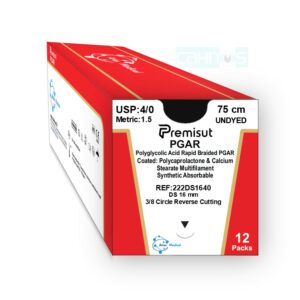
Absorbable Multifilament Suture PGAR RAPID (Polyglycolic Acid) | ⅜ Circle Reverse Cutting Triangular Needle DS16 (16 mm) | USP 4/0 (Metric 1.5) | Undyed · 75 cm | Ref. 222DS1640 · Box of 12 units
Original price was: 31,47 €.30,50 €Current price is: 30,50 €. In stockAdd to basket -
Sale!
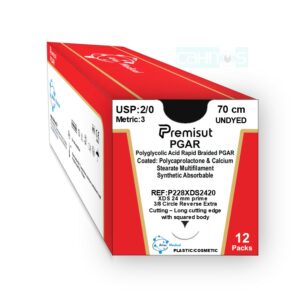
Absorbable Multifilament Suture PGAR RÁPIDO PREMISUT — Precision ⅜ Circle Needle Reverse Cutting Triangular Point XDS24 (24 mm) Square Body — USP 2/0 — Colourless 70 cm — Box of 12 units (Ref. P228XDS2420)
Original price was: 83,78 €.45,65 €Current price is: 45,65 €. In stockAdd to basket -
Sale!
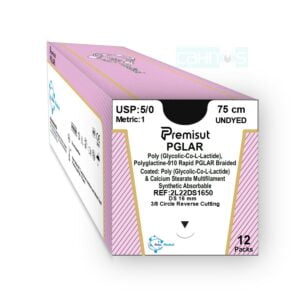
Absorbable Multifilament Suture PGLAR Polyglactin 910 RAPID | 3/8 Circle Triangular Reverse Cutting Needle DS16 (16 mm) | USP 5/0 (Metric 1) | Colourless Fluted Thread 75 cm | PREMISUT RAPID · Box of 12 units (Ref. 2L22DS1650)
Original price was: 37,94 €.30,50 €Current price is: 30,50 €. In stockAdd to basket -
Sale!
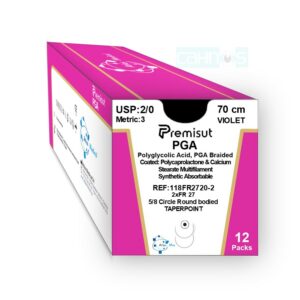
Absorbable Multifilament PGA Suture (Polyglycolic Acid) | Double Needle 5/8 Circle Cylindrical Body Taperpoint Conical Point 2xFR 27 mm | USP Gauge 2/0 (Metric 3) | Violet Grooved Thread 70 cm | Ref. 118FR2720-2 | Box of 12 units
Original price was: 44,45 €.27,60 €Current price is: 27,60 €. In stockAdd to basket -
Sale!
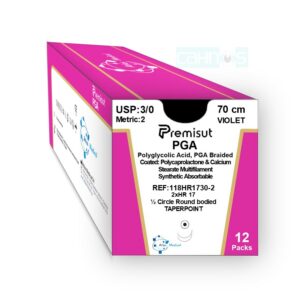
Absorbable Multifilament PGA Suture (Polyglycolic Acid) | 1/2 Circle Cylindrical Body Taperpoint Conical Point Double Needle 2xHR17 mm | USP 3/0 (Metric 2) · Violet Grooved 2×70 cm | Box of 12 units | Ref. 118HR1730-2 (AM118HR1730-2)
Original price was: 38,56 €.27,55 €Current price is: 27,55 €. In stockAdd to basket -
Sale!
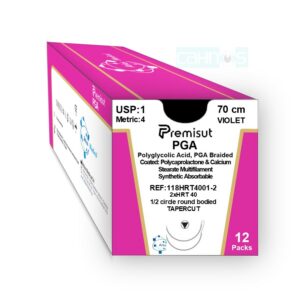
Absorbable Multifilament PGA Suture (Polyglycolic Acid) Premisut | Double ½-Circle Needle, Cylindrical Body, Trocar Point Tapercut 2xHRT 40 mm | USP 1 (Metric 4) Gauge | Violet Fluted Thread 70 cm | Ref. AM118HRT4001-2 – Box of 12 units
Original price was: 37,33 €.27,55 €Current price is: 27,55 €. In stockAdd to basket -
Sale!
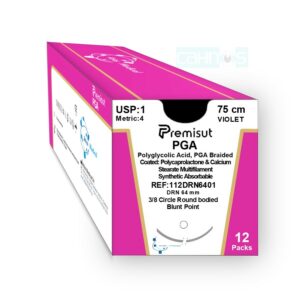
Absorbable Multifilament PGA Suture Premisut | Needle 3/8 Circle Cylindrical Body Blunt Point DRN 64 (64 mm) | USP 1 Gauge | Violet Thread 75 cm | Box 12 pcs | Ref. AM112DRN6401
Original price was: 44,90 €.36,30 €Current price is: 36,30 €. In stockAdd to basket -
Sale!
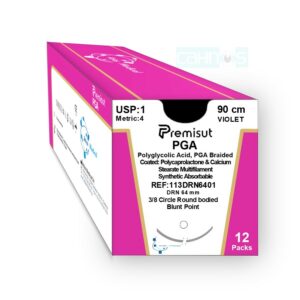
Premisult Multifilament PGA Absorbable Suture | 3/8 Circle Cylindrical Body Blunt Point DRN 64 (64 mm) Needle | USP Gauge 1 | Violet Thread 90 cm | Box of 12 units | Ref. AM113DRN6401
Original price was: 44,90 €.36,30 €Current price is: 36,30 €. In stockAdd to basket