
Pulse oximeters: buying guide
22 products in the catalogue
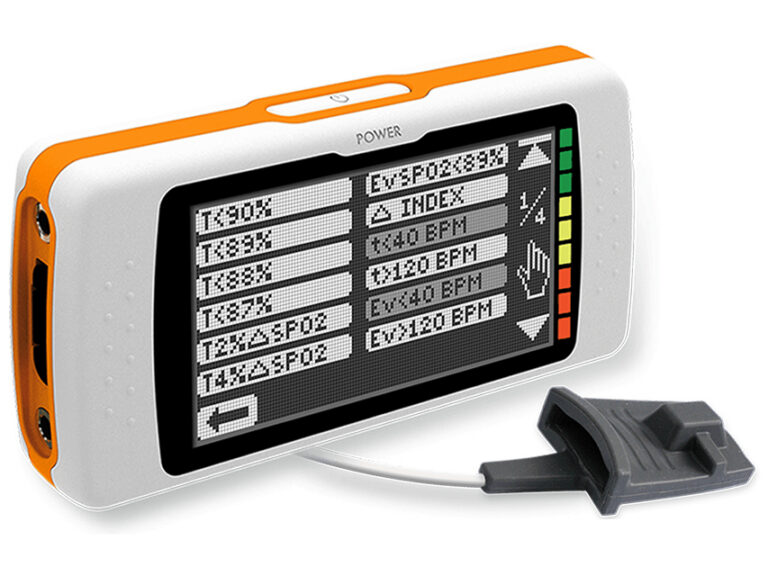
A pulse oximeter is a device that measures oxygen saturation (SpO2) and pulse rate. It is used in consulting rooms, hospital wards and home care. The range of formats is wide: fingertip, handheld, wrist-worn and ring devices for continuous monitoring.
The choice depends on the type of patient, the power supply, the need for memory, connectivity and alarms, which vary greatly from one model to another. It is advisable to separate spot-check measurement from continuous monitoring from the outset so as not to buy a device that does not fit the department's real routine.
Other related families
- DIAGNOSTIC DEVICES Heads the family of diagnostic devices in which saturation and pulse measurement sits.
-
 Vital Signs Monitors
Brings together the vital signs monitors with which a pulse oximeter is integrated or compared.
-
 Vital Signs Monitor Accessories
Groups accessories and sensors that affect the purchase of the main device.
Products in this guide
- Batteries 17
- Rechargeable battery 7
- Paediatric 5
- Adult 4
- II b 10
- II a 7
-
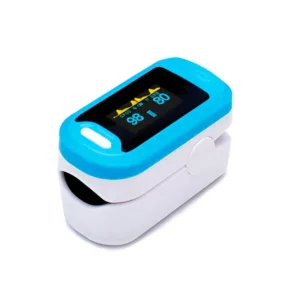
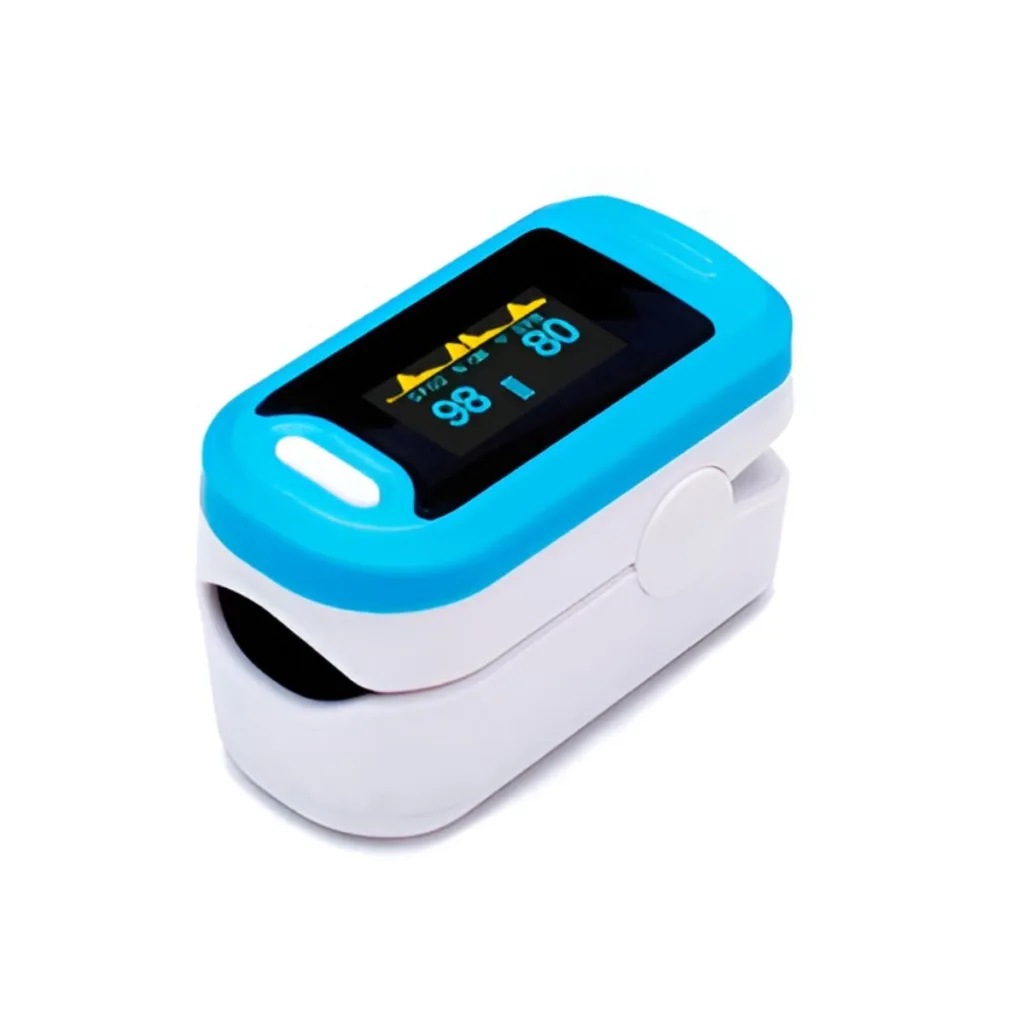
Finger pulse oximeter PULOX PO-200 (Ref. 713) | Portable SpO2 and heart rate monitor – Class IIa (CE MDD 93/42/CEE)
20,62 € In stockAdd to basket -
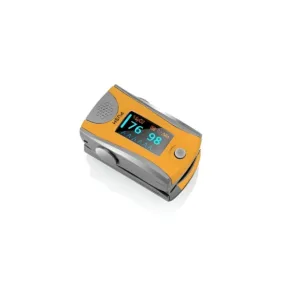
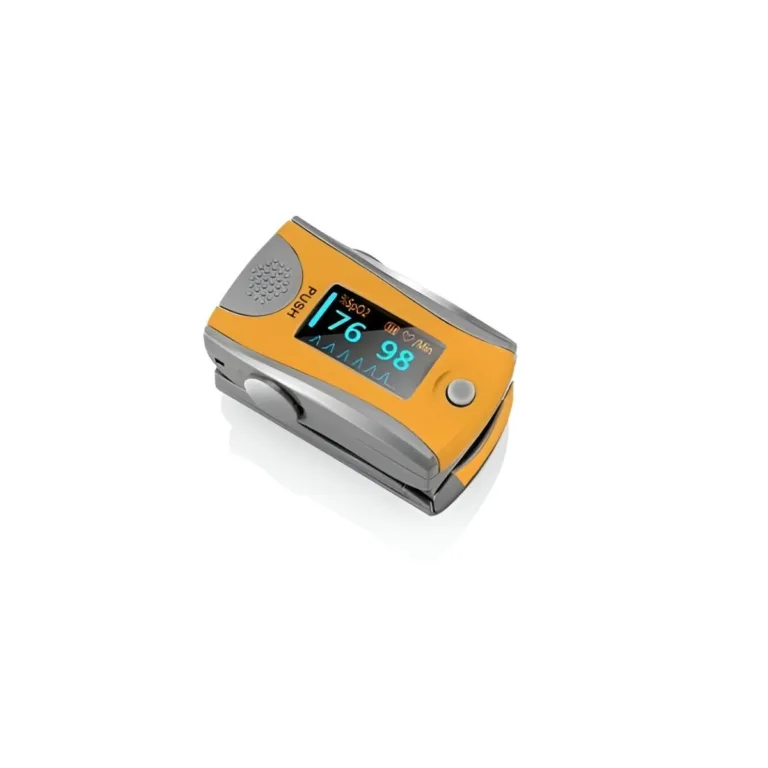
ME7 fingertip pulse oximeter with plethysmograph and colour OLED display: SpO₂ and heart rate monitor (CE MDD)
59,40 € In stockAdd to basket -
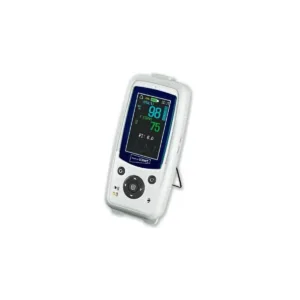
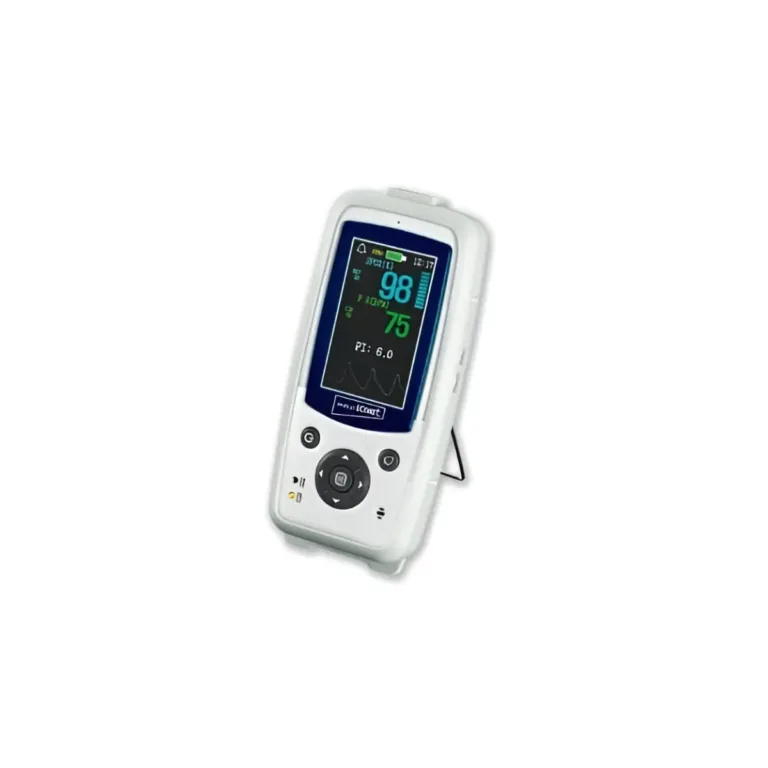
PalmCare Pro handheld pulse oximeter (ref. 40.50-2240) | SpO2 monitor with 3″ colour TFT screen, perfusion index (PI), 20-day trend memory and adjustable alarms for adults, paediatrics and neonates
358,20 € In stockAdd to basket -
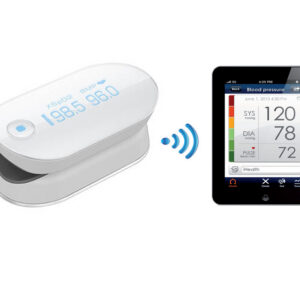
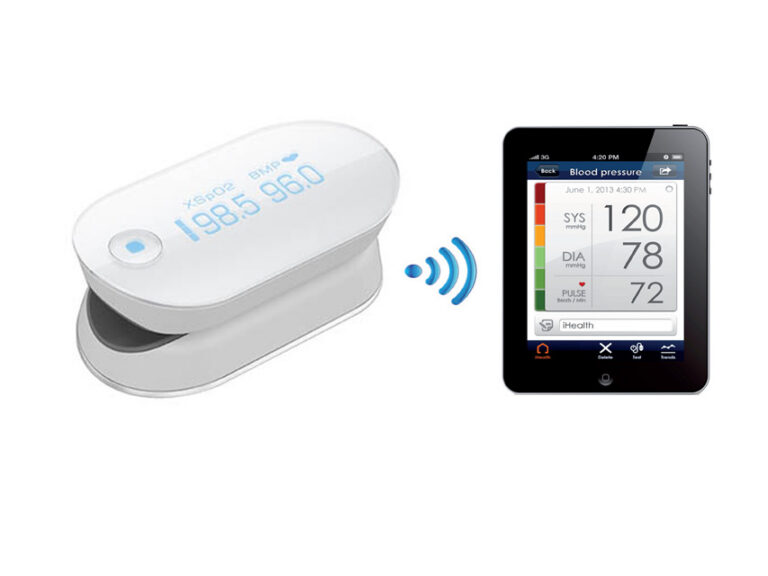
iHealth Air Wireless Fingertip Pulse Oximeter with Bluetooth 4.0 – SpO2, Pulse Rate and Perfusion Index Monitor (Ref. 23525)
82,65 € In stockAdd to basket -
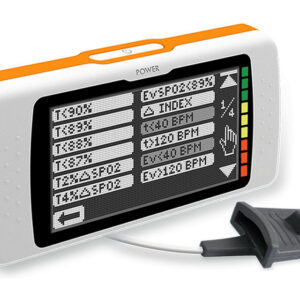
Portable 3D Pulse Oximeter Spirodoc Oximeter with MIR Spiro PC Software | Ref. 33533 (GM33533)
1.187,50 € In stockAdd to basket -
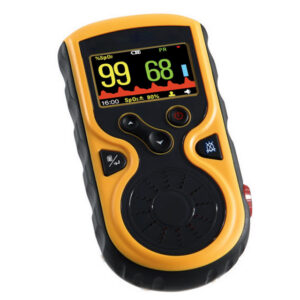
Portable pulse oximeter OXY-100 – SpO2, pulse rate and perfusion index (PI) monitor with 384 h storage (Ref. 34342) | GM34342
122,55 € In stockAdd to basket -
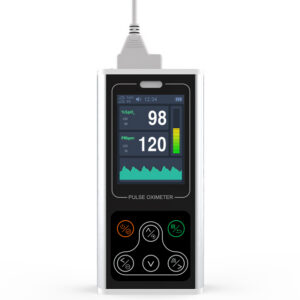
OXY-55 portable pulse oximeter with software – SpO2, pulse rate (PR) and perfusion index monitor with 2.8″ colour TFT screen (Ref. 35048)
142,50 € In stockAdd to basket -
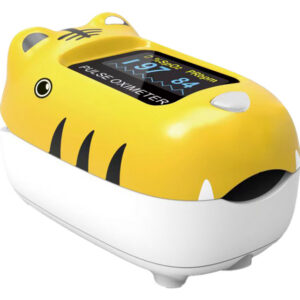
Paediatric finger pulse oximeter OXY-0 (tiger) – SpO2 and pulse rate monitor with colour LCD screen (Ref. 35056)
22,80 € In stockAdd to basket
Buying and selection tips
-
Decide on the power supply according to workload
Fingertip devices usually run on batteries and others on a rechargeable battery. If the department carries out many measurements a day, a rechargeable version reduces dependence on consumables. Check the type of power supply and the stated battery life in the description before confirming the order.
-
Match the device to the finger size
Fingertip formats cover different digit thicknesses, and some models are paediatric. Check the range of thickness accepted and whether the model is intended for paediatric or adult patients.
-
Look at the perfusion index, not just saturation
Some models display the perfusion index, which gives a relative indication of signal quality. It is a useful figure for assessing the reliability of the reading.
-
Connectivity: decide where the record is kept
Some devices connect by Bluetooth and send the result to a phone or tablet, and may have no internal memory. If you need the device to keep its own history, check that the model offers it.
-
Check the product marking
Check in each product the marking and the technical data stated by the manufacturer before adding it to a purchasing file.
-
Consider alarms if you will be monitoring
In continuous monitoring it is advisable for the alarms to be adjustable. These are functions that do not appear on the simpler fingertip models; check their configuration before deciding.
Frequently asked questions
Which format should I buy, fingertip or handheld, for a consulting room with many measurements?
The fingertip one is compact and handles spot checks. For repeated measurements and the need for alarms, a handheld device with a larger screen is usually more comfortable to use.
What battery life should I require if monitoring will be continuous?
Compare the battery life stated for each model with the length of your shifts and access to spares or charging before deciding.
Is Bluetooth connectivity worthwhile on a device without a screen?
Yes, if the aim is for the result to reach the professional from the patient's home. In return, some models have no internal memory and the reading exists only in the app.
How do I tell a paediatric pulse oximeter from an adult-only one?
By the range of finger thickness accepted and by the sensor configuration. If the range is not stated, do not assume that the fit will be correct on a child.
Which alarm functions should I check before buying?
Check whether the alarms are adjustable and whether the model offers a silent mode. These are relevant functions in continuous measurements.
Common questions
Taking it for granted that any fingertip pulse oximeter is suitable for continuous monitoring
Some fingertip formats are designed for spot checks. For prolonged monitoring you need to look for a model with the necessary battery life, memory and alarms.
Believing that the perfusion index is a second saturation value
It does not measure oxygen: it is a relative indication of signal quality.
Thinking that a child-style casing is only an aesthetic matter
In paediatric models the sizing of the sensor and the fit on a child's finger change. Check the finger size accepted before choosing.
More products in this guide
-
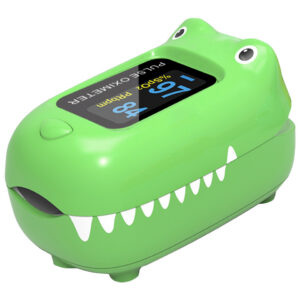
OXY-0 Paediatric Finger Pulse Oximeter (crocodile) – SpO2 and Pulse Rate Monitor with Colour LCD Screen (Ref. 35057)
22,80 € In stockAdd to basket -
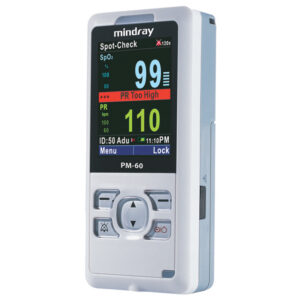
Portable Pulse Oximeter Mindray PM-60 – SpO2 and Pulse Rate Monitor with Spot-Check Mode | Ref. 35060
375,25 € In stockAdd to basket -
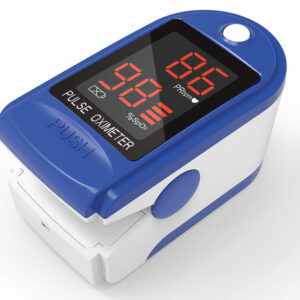
OXY-1 Finger Pulse Oximeter – SpO2 and Pulse Rate (PR) Monitor with LED Screen (Ref. 35069) · Manual IT, HR, FI, LV, BG, Arabic
13,30 € In stockAdd to basket -
Finger Pulse Oximeter OXY-1 with LED Display – SpO2 and Pulse Rate Monitor (Ref. 35070) · Manual GB, PT, GR, DK, NL, RO
13,30 € In stockAdd to basket -
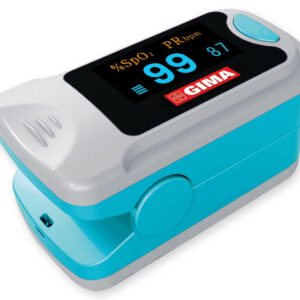
OXY-3 Finger Pulse Oximeter – SpO2 and Pulse Rate Monitor, Display Rotatable in 4 Directions (Ref. 35074 / 35090)
15,68 € In stockSelect options This product has multiple variants. The options may be chosen on the product page -
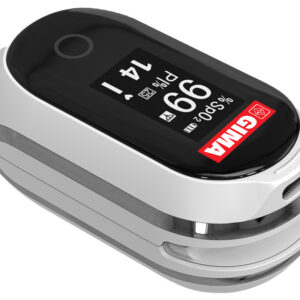
Rechargeable Bluetooth OXY-8 finger pulse oximeter – SpO2, pulse (PR) and perfusion index (PI) monitor with OLED screen (Ref. 35077)
19,95 € In stockAdd to basket -
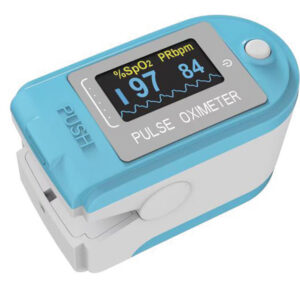
OXY-9 finger pulse oximeter with Bluetooth – SpO2 and pulse rate (PR) monitor with storage of 1000 records and PHMS App · Ref. 35078
20,90 € On orderAdd to basket -
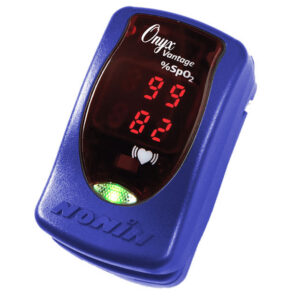
Nonin Onyx® Vantage 9590 finger pulse oximeter | SpO₂ and pulse rate monitor with PureSAT® technology – Refs. 35084 (blue) and 35085 (black)
242,25 € In stockSelect options This product has multiple variants. The options may be chosen on the product page