
Digital upper arm blood pressure monitor
12 products in the catalogue
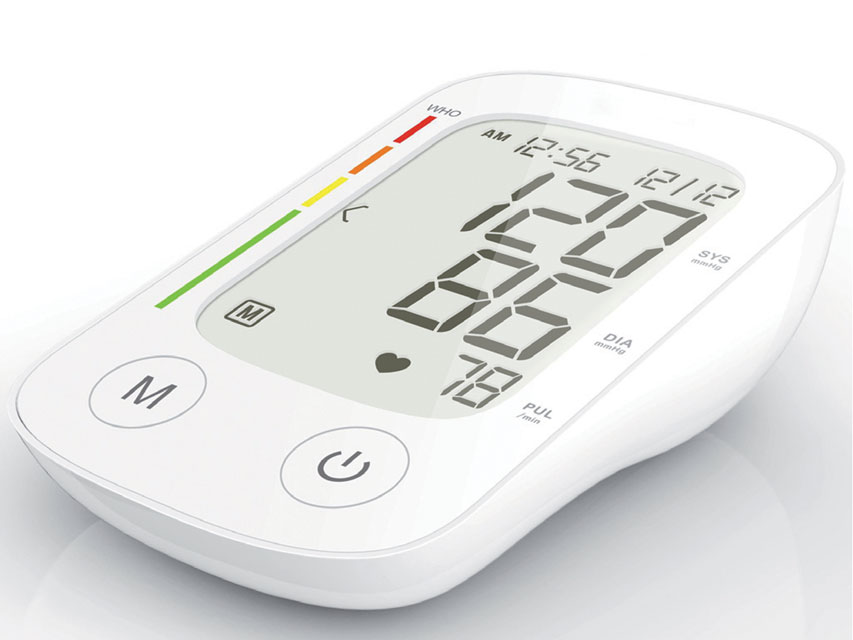
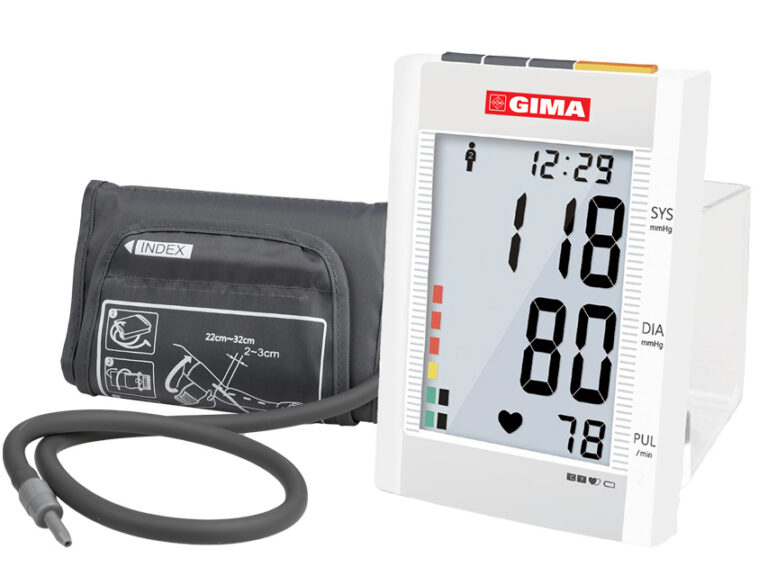
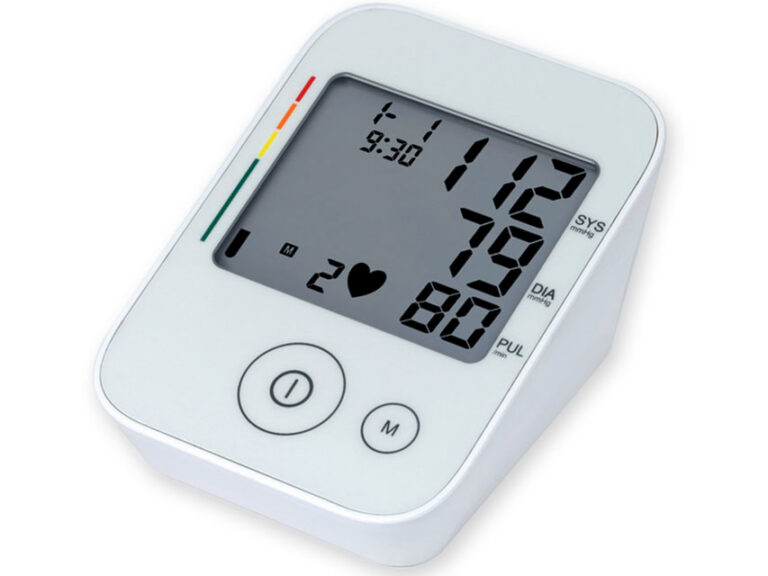
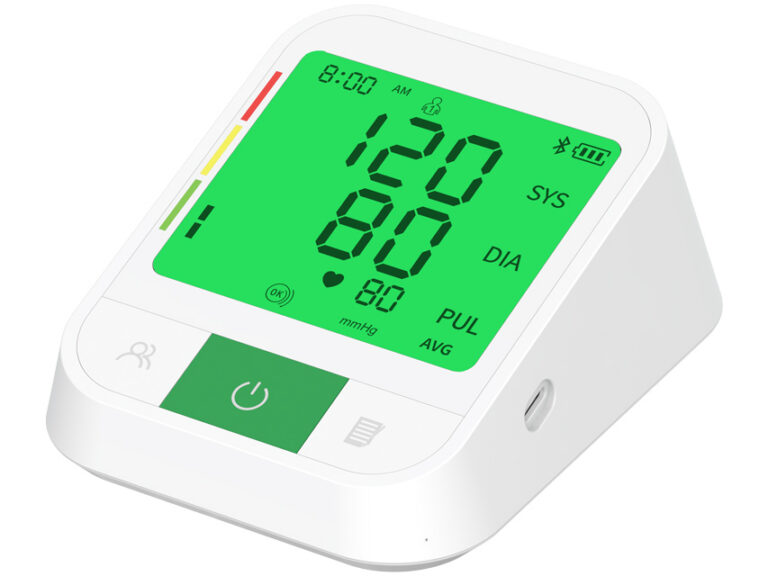
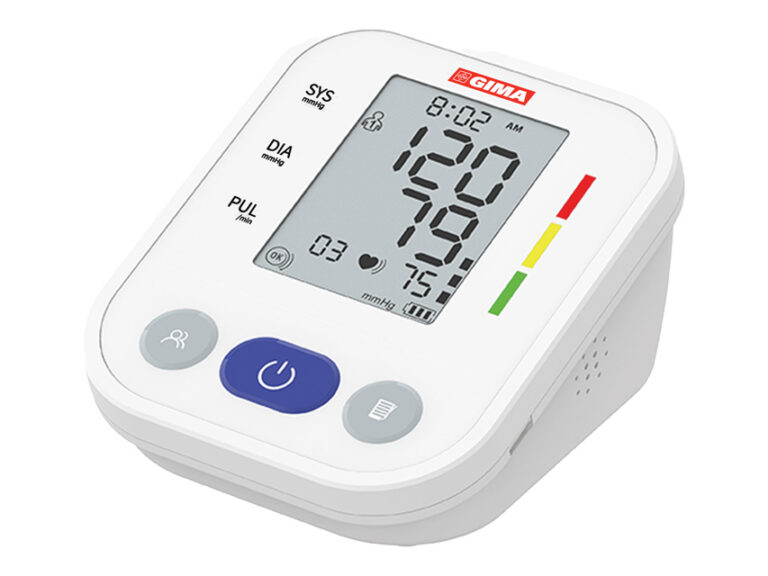
A digital upper arm blood pressure monitor is a device that measures systolic and diastolic blood pressure and pulse rate using an inflatable cuff placed on the upper arm. The measurement is taken by the oscillometric method, automatically and non-invasively, and the result is shown on a liquid crystal display.
In a healthcare setting it is used in consulting rooms, on wards and in home follow-up, where a quick reading that is easy to record is important. For that reason the cuff circumference range, the measurement memory, the irregular heartbeat indicator and the type of power supply all carry weight. This guide sets out the criteria worth checking before you buy.
Other related families
-
 Diagnostics and Monitoring
This is the family where the upper arm monitor is found as equipment for measuring and monitoring blood pressure.
-
 Blood Pressure Monitor Cuffs
It lets you resolve a change of size or a cuff replacement without replacing the whole device.
-
Blood Pressure Monitor Accessories
It groups mounts, baskets and support items that accompany the monitor in the consulting room.
Products in this guide
- Batteries 10
- Mains power 3
-
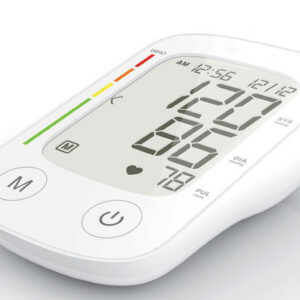
JOLLY Digital Upper Arm Blood Pressure Monitor – Professional Blood Pressure Monitor with Backlit LCD Display and Multi-User Memory (Ref. 32777)
30,40 € In stockAdd to basket -
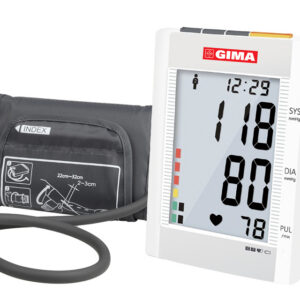
Domino Digital Upper Arm Blood Pressure Monitor – Professional Blood Pressure Monitor (Ref. 32778 / 32779)
Price range: 38,00 € through 94,05 € In stockSelect options This product has multiple variants. The options may be chosen on the product page -
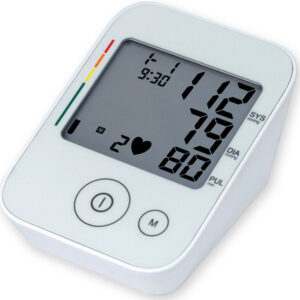
ANDON Digital Upper Arm Blood Pressure Monitor Ref. 32901 – Automatic Blood Pressure Monitor using the Oscillometric Method with LCD Screen, WHO Indicator and Arrhythmia Detection (HB)
21,85 € In stockAdd to basket -
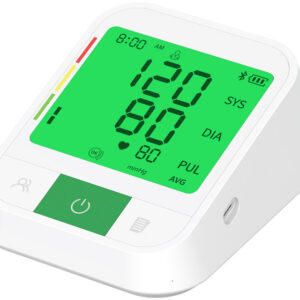
X-CHECK PRO Automatic Digital Upper Arm Blood Pressure Monitor with Bluetooth – Oscillometric Blood Pressure Monitor, 4.2″ LCD Screen with 4-Colour Backlight, Irregular Heartbeat Detection and 2×120 Memory (Ref. 49872)
30,40 € In stockAdd to basket -
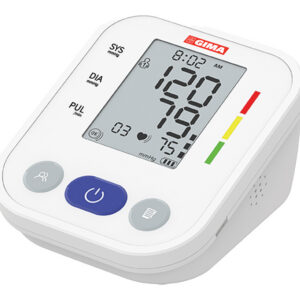
X-CHECK digital arm blood pressure monitor (Ref. 49874) – Automatic oscillometric blood pressure monitor with 22-42 cm cuff, 2×99 memory, irregular heartbeat detection (IHB) and WHO indicator
20,90 € In stockAdd to basket -
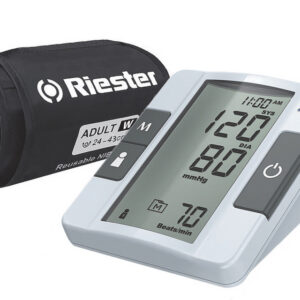
Automatic Digital Arm Blood Pressure Monitor RI-CHAMPION Smart Pro+ (Model 1735) with Adult Cuff, Irregular Heartbeat Detection and Memory for 400 Readings | Blood Pressure Monitor Class IIa (Ref. 49950)
91,20 € In stockAdd to basket -
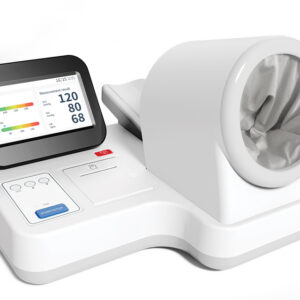
Automatic Digital Upper Arm Blood Pressure Monitor Pharmacy (Ref. 49980) – Oscillometric Monitor with Integrated Cuff 17-42 cm, 7″ Colour Screen and Results Printer
1.520,00 € On orderAdd to basket -
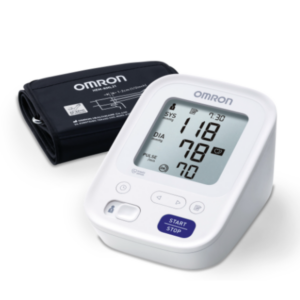
Arm Blood Pressure Monitor Omron M3 Professional (HEM-7154-E) – Automatic Blood Pressure Monitor with Easy Cuff 22-42 cm, 2×60 Memory and Irregular Heartbeat Detection
58,87 € In stockAdd to basket
View the Blood Pressure Monitors and Arterial Pressure Monitors family
Buying and selection tips
-
Measure the arm circumference before deciding the size
The cuff is the component that most affects the purchase: some devices are offered with cuffs covering different circumference ranges. It helps to know the actual circumference of the arms to be measured, because an out-of-range cuff means changing model or buying a separate size.
-
Consider the memory according to users and number of readings
The memory varies by model: some store readings for one or two users and others more records. If the device is shared in the consulting room, per-user memory and the date and time of each reading save transcription.
-
Check the irregular heartbeat indicator
Many monitors incorporate an irregular heartbeat indicator, and some models add atrial fibrillation detection. This is a detail that appears in the model description and should be confirmed before buying.
-
Choose the power supply according to the point of use
The options are batteries, a rechargeable battery and mains power. The stated battery life can be very different in a consulting room with intensive use than on home visits.
-
Check connectivity
Some models have Bluetooth and a mobile app. On certain devices the full record can only be viewed through the app, so confirm whether connectivity is needed for the intended use.
-
Ask for the stated accuracy margin
Some devices state a cuff pressure accuracy in mmHg. This is an objective figure that lets you compare models before deciding on the purchase.
Frequently asked questions
What cuff size should I order if very different arms are measured in the consulting room?
Some devices accept wide-range cuffs and other sizes separately. The practical approach is to choose a model with several sizes available and check which sizes exist for that specific device.
How many readings does the device store and for how many users?
It depends on the model: some have memory for two users and others store a larger number of readings per user. If it is shared between professionals, it helps if each reading is recorded with its date and time.
Do I need Bluetooth or is the device's memory enough?
On some devices the stored readings can only be viewed through the mobile app, and connectivity becomes necessary. If you are not going to use the app, prioritise models with direct on-screen viewing.
What battery life and type of power supply should I compare on a blood pressure monitor?
Some devices run on batteries and others on a rechargeable battery, and state a number of readings per charge or per set. That figure helps in deciding between a consulting-room device and one for visits.
Common questions
Believing that any cuff fits any arm
The cuff circumference is limited by sizes. An out-of-range cuff means changing size or model, not forcing the fit.
Confusing automatic measurement with manual measurement
The oscillometric method is automatic and does not need a stethoscope; the aneroid sphygmomanometer is manual. They are two different types of device and are not compared on the same features.
Assuming that all models include connectivity
Some have Bluetooth and others do not. Confirm in the description of each model which functions it includes.
More products in this guide
-
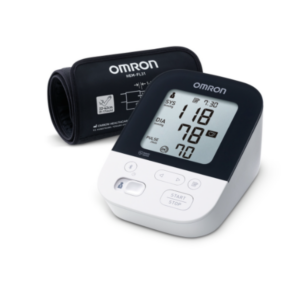
Arm Blood Pressure Monitor Omron M4 Connect AFib (HEM-7155T-EBK) – Automatic Oscillometric with Atrial Fibrillation Detection, Intelli Wrap 360° Cuff (22-42 cm), Bluetooth and Omron Connect App
63,58 € In stockAdd to basket -
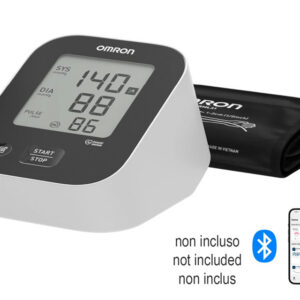
Digital Upper-Arm Blood Pressure Monitor Omron M2+ CONNECT (HEM-7188T1-LE) – Automatic Oscillometric with Intellisense, Bluetooth with OMRON Connect App, 22-42 cm Cuff and Irregular Heartbeat Detection
61,75 € In stockAdd to basket -
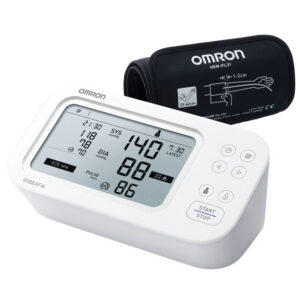
Arm Blood Pressure Monitor Omron M6 Comfort AFib (HEM-7380-E) – Digital Oscillometric Monitor with Atrial Fibrillation Detection in Each Measurement, Intelli Wrap 360° Cuff (22-42 cm), Triple Average and 2×100 Memory
105,45 € In stockAdd to basket -
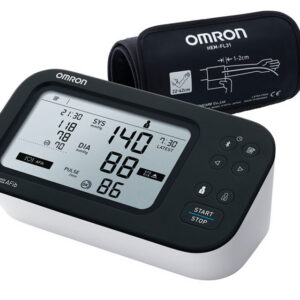
Arm Blood Pressure Monitor Omron M7 Intelli IT AFib (HEM-7380T1-EBK) – Automatic Digital Monitor with Atrial Fibrillation Detection, Intelli Wrap 360° Cuff (22-42 cm), Bluetooth and OMRON Connect App
102,60 € In stockAdd to basket
Keep exploring
- Adult sphygmomanometer: buying guide
- Buying guide to aneroid sphygmomanometers
- Automatic blood pressure monitors: buying guide
- Automatic upper arm blood pressure monitor: buying guide
- Buying guide: digital blood pressure monitors
- Digital blood pressure monitors: buying guide
- sphygmomanometer
- adult cuff