
Buying guide to aneroid sphygmomanometers
41 products in the catalogue
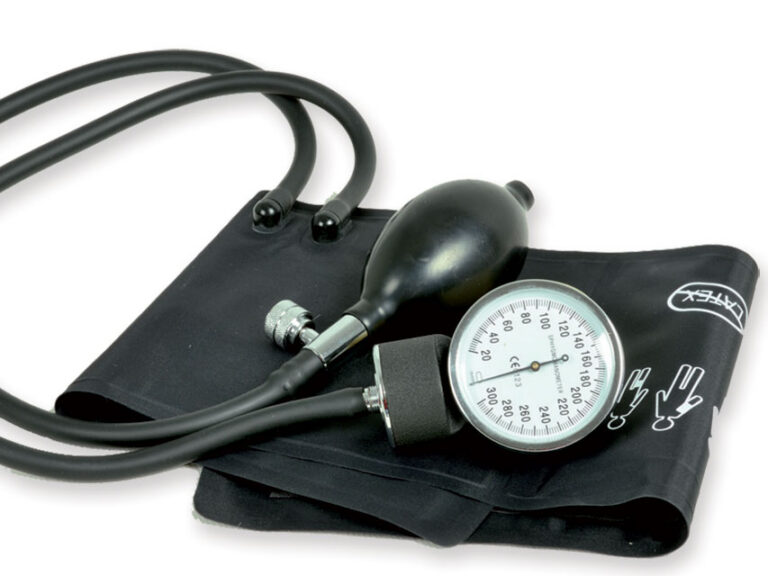
The aneroid sphygmomanometer is an instrument for the indirect measurement of blood pressure that works by the Korotkoff method. It has three parts: the gauge, the cuff and the inflation system, made up of the bulb with a non-return valve and the air release valve. The reading is auscultatory, so it requires staff trained in that technique.
In a healthcare setting it is used in consulting rooms, triage and repeated checks, where an instrument with no batteries or electronics and a visible scale is wanted. There are one-tube and two-tube versions, with different types of valve, wall-mounted, palm, paediatric and kit versions, and with cuffs of different sizes and materials, including latex-free ones. Choosing well means looking at impact resistance, the calibration guarantee, the valve and the availability of compatible cuffs and spare parts.
Other related families
-
 Diagnostics and Monitoring
This is the family where aneroid sphygmomanometers are found as diagnostic equipment for measuring blood pressure.
-
 Blood Pressure Monitor Cuffs
The cuff is a critical component of the aneroid and is chosen by size, material and number of outlets.
-
Blood Pressure Monitor Accessories
Bulbs, valves, spare gauges and cases extend the service life of the equipment and avoid replacing it entirely.
Products in this guide
- Unit 39
- Kit 1
- Medical device 35
- Sanitary kit 5
- I m 32
- I 2
- Adult 7
- Paediatric 2
-
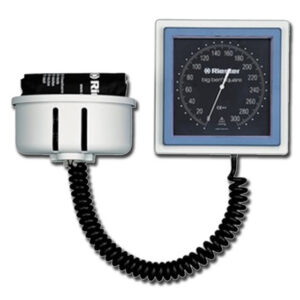
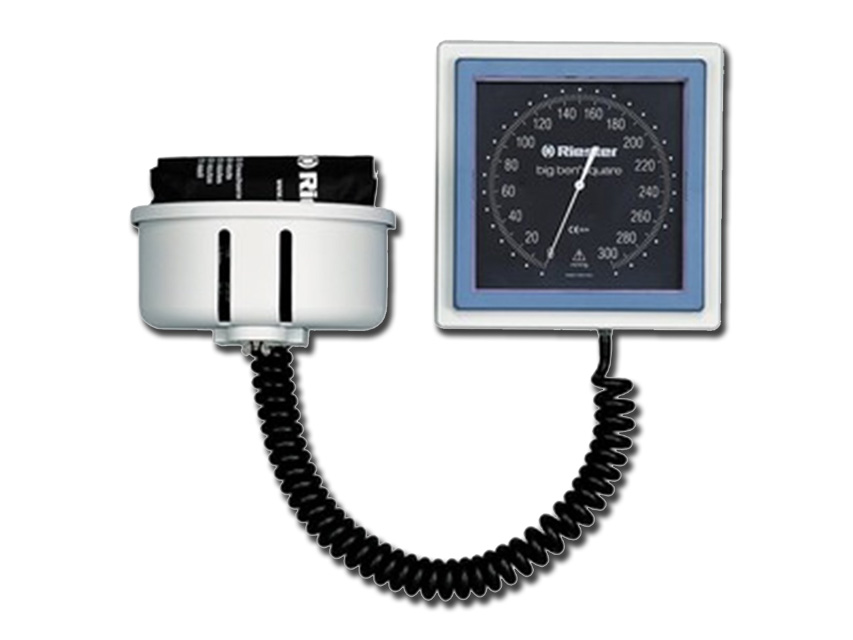
Aneroid Sphygmomanometer with Basket for RI-FORMER® Diagnostic Station (Ref. LF3655-109)
160,55 € In stockAdd to basket -
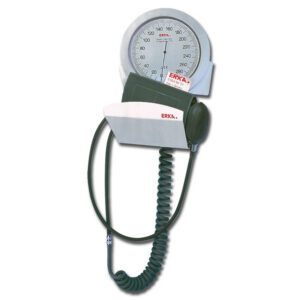
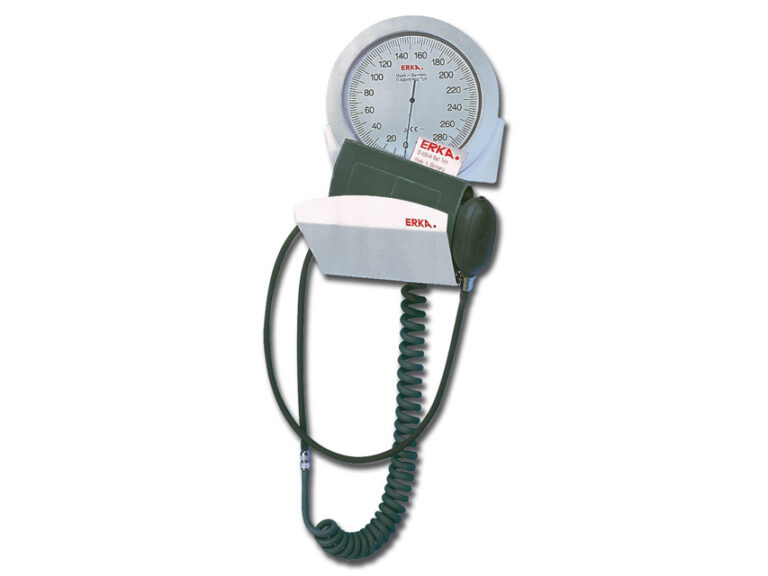
ERKA VARIO wall-mounted aneroid sphygmomanometer – Wall blood pressure monitor with orientable dial, scale 0-300 mmHg (±3 mmHg) and adult cuff (Ref. GM32672)
280,25 € In stockSelect options This product has multiple variants. The options may be chosen on the product page -
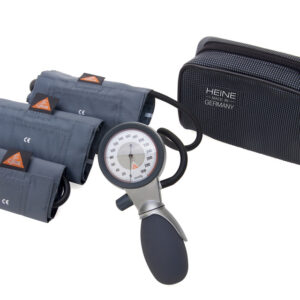
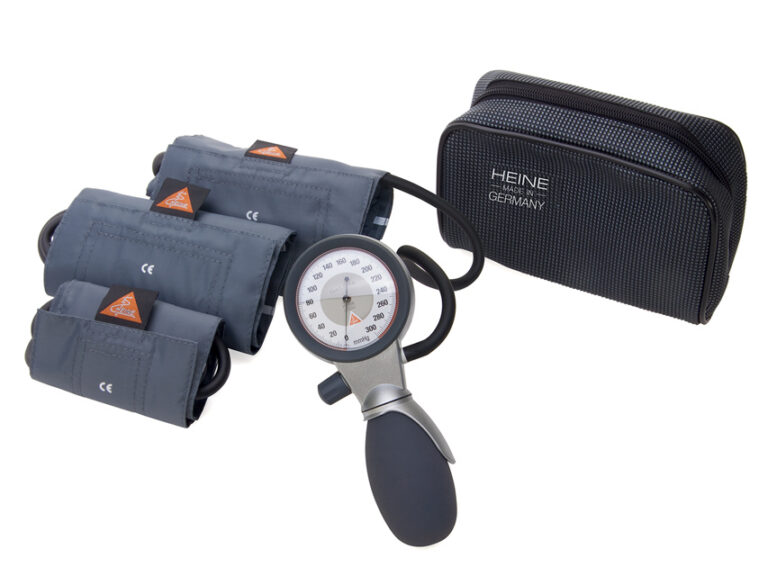
HEINE GAMMA G7 aneroid sphygmomanometer family kit with 3 cuffs (13-20, 20-29 and 29-41 cm) and case – Ref. M-000.09.554 / GM32679
218,50 € In stockAdd to basket -
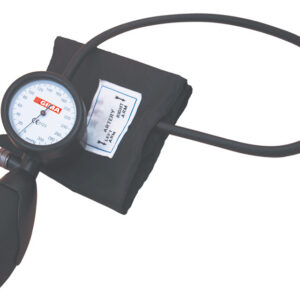
KOBE Palm Aneroid Sphygmomanometer – Manual Blood Pressure Monitor with Large Manometer, 0-300 mmHg Scale and Adult Nylon Cuff (Ref. 32690)
19,00 € In stockAdd to basket -
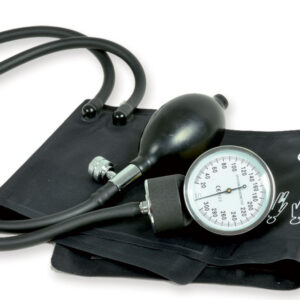
YTON Aneroid Sphygmomanometer – Manual Blood Pressure Monitor with One-Piece Cuff, Gauge with Clip and Scale 0-300 mmHg (Ref. GM32692)
Price range: 17,58 € through 23,75 € In stockSelect options This product has multiple variants. The options may be chosen on the product page -
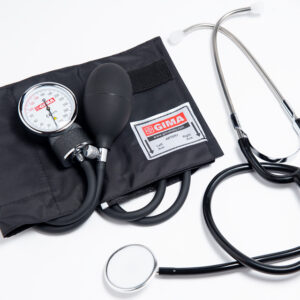
YTON Aneroid Sphygmomanometer Kit with Stethoscope – Manual Auscultatory Blood Pressure Monitor with Nylon Cuff and Velcro Closure, Scale 0-300 mmHg (Ref. GM32693)
15,68 € In stockAdd to basket -
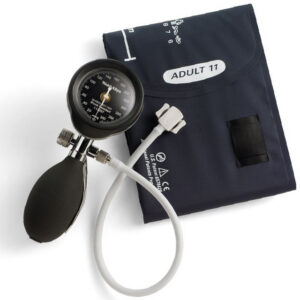
Anti-shock aneroid sphygmomanometer Welch Allyn DuraShock DS55 Silver Line (manometer with DuraShock technology, laser-engraved dial and 10-year calibration warranty, ref. DS-5501-189)
159,60 € In stockAdd to basket -
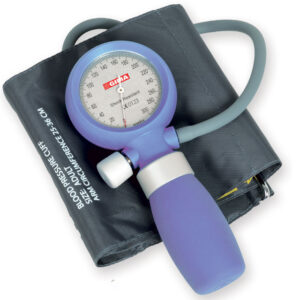
Anti-shock aneroid sphygmomanometer Ref. 32702 with nylon cuff (ISO 81060)
52,25 € In stockAdd to basket
View the Blood Pressure Monitors and Arterial Pressure Monitors family
Buying and selection tips
-
Type of deflation valve
The release valve affects control of the pressure drop during auscultation. There are gauges with a screw valve, a push-button valve and a trigger valve, and each is operated differently. Check which one suits how your professionals work before deciding.
-
Impact resistance and calibration
For intensive use, consider antishock models and a calibration guarantee in line with the demands of the service. Some models state that they hold calibration for longer than traditional aneroids. Also check the drop height stated by the manufacturer.
-
One tube or two
The number of tubes determines how the gauge is connected to the cuff. On two-tube models the gauge is not connected directly to the inflation system. Check the compatibility between gauge, bulb and cuff before closing the purchase.
-
Cuff size and material
Fitting the cuff to the circumference of the arm is decisive for a valid reading. On some models the sizes are colour-coded so that the right one can be found quickly. There are nylon cuffs and latex-free versions.
-
Gauge scale and accuracy
Check that the scale covers the working range, normally 0 to 300 mmHg, and the stated accuracy, which on many models is ±3 mmHg. A wide-diameter dial makes reading easier.
Compatibility
- Reusable cuffs with a swivel port
- Some reusable cuffs allow the cuff to be used with one or two tubes. Check that the gauge accepts that type of connection.
- Wall mount and storage basket
- For fixed use in a consulting room there are wall-mounted models and mounts with a basket. Check that the mount takes the intended gauge size.
Frequently asked questions
What is the difference between a gauge with a screw valve and one with a push-button valve?
Both release the pressure, but they are operated differently: the screw valve opens by turning and the push-button valve is pressed. The choice depends on the preference of the professional taking the measurement.
How many cuffs should I include to cover different arm circumferences?
It depends on the service. It is advisable to have several sizes to fit the cuff to the circumference of the arm; some kits include several cuffs.
Should I choose latex-free cuffs in a healthcare facility?
Cuffs are offered with and without latex, identified with the corresponding symbols. If the facility prefers to avoid latex, choose a model that declares it.
What calibration guarantee is reasonable for a daily-use aneroid?
The guarantee varies by range: some offer 5, 10 or 15 years of calibration guarantee. The more intensive the intended use, the more weight this detail carries in the purchase.
How does antishock technology affect the service life of the gauge?
Some models with antishock technology state that they hold calibration for longer than traditional ones and withstand drops from a certain height. Compare the figure stated by the manufacturer.
Can I use a one-tube cuff with a two-tube gauge?
Not directly: two-tube models are used with two-tube cuffs. Check the number of outlets on the cuff and the gauge before combining them.
Common questions
Confusing an aneroid sphygmomanometer with a digital one
The aneroid is mechanical and the reading is auscultatory. It is not a self-measurement device.
Assuming that all gauges have the same valve
There are gauges with a screw valve, a push-button valve and a trigger valve, and each is operated differently. Check which suits the way you work.
Assuming that the gauge does not need recalibrating
Aneroids can lose calibration over time and with use, which is why the calibration guarantee is a purchasing criterion. Follow the manufacturer's instructions.
Believing that any cuff fits any gauge
The number of tubes and the type of connection must match. Two-tube gauges require two-tube cuffs.
More products in this guide
-
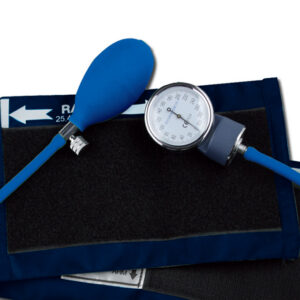
YTON Latex-Free Aneroid Sphygmomanometer – Manual Blood Pressure Monitor with Blue Nylon Cuff and Velcro Closure, Scale 0-300 mmHg (Ref. GM32704)
15,20 € In stockAdd to basket -
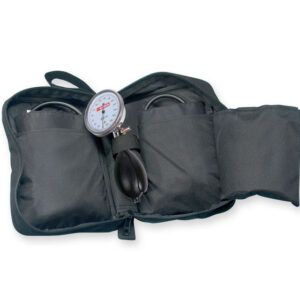
Paediatric aneroid sphygmomanometer SIRIO PEDIATRIC KIT – Blood pressure monitor with 3 paediatric cuffs (4 months–10 years) in nylon bag | Ref. GM32705
68,40 € In stockAdd to basket -
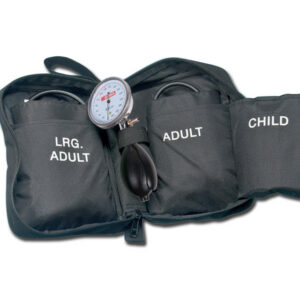
Aneroid sphygmomanometer SIRIO KIT 3 – Blood pressure monitor with 3 one-piece latex-free cuffs (child, adult and adult large) in nylon bag | Ref. GM32706
66,50 € In stockAdd to basket -
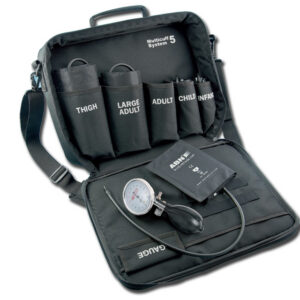
Aneroid sphygmomanometer SIRIO KIT 5 – Blood pressure monitor with 5 cuffs (infant, child, adult, large adult and thigh) in nylon bag | Ref. GM32707
123,50 € In stockAdd to basket -
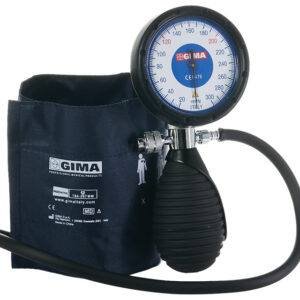
Paediatric Aneroid Blood Pressure Monitor ROMA – Palm Sphygmomanometer 1 Tube with Cuff 35×11 cm (Ref. 32709)
24,70 € In stockAdd to basket -
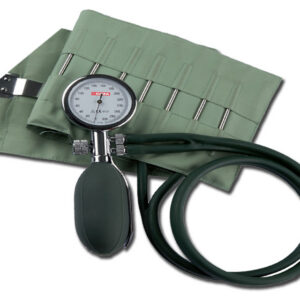
MINOR 2 aneroid blood pressure monitor – Professional 2-tube sphygmomanometer with cotton cuff (ref. 32713)
Price range: 30,40 € through 47,50 € In stockSelect options This product has multiple variants. The options may be chosen on the product page -
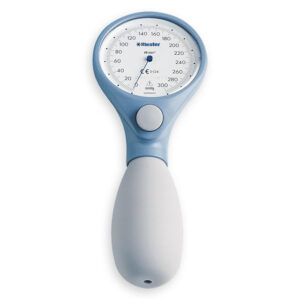
RI-SAN® Palm Aneroid Sphygmomanometer without Latex – Light Blue (Light Blue), Scale 0-300 mmHg (±3 mmHg), Ø 64 mm, Ref. 32715
75,05 € In stockSelect options This product has multiple variants. The options may be chosen on the product page -
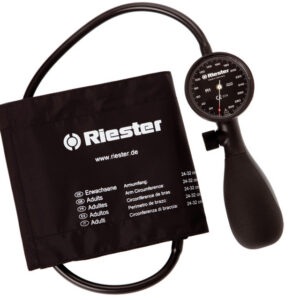
Aneroid Sphygmomanometer R1 Shock Proof with Velcro Cuff – Ref. 1250-107 (SKU GM32716) – Accuracy ±3 mmHg
108,30 € In stockAdd to basket
Keep exploring
- Adult sphygmomanometer: buying guide
- Automatic blood pressure monitors: buying guide
- Automatic upper arm blood pressure monitor: buying guide
- Buying guide: digital blood pressure monitors
- Digital blood pressure monitors: buying guide
- Buying guide: digital sphygmomanometer
- blood pressure measurement
- manual blood pressure monitor
- latex-free
- sphygmomanometer
- sleeve
- stethoscope
- medical device
- paediatric
- adult cuff