
Digital blood pressure monitors: buying guide
8 products in the catalogue
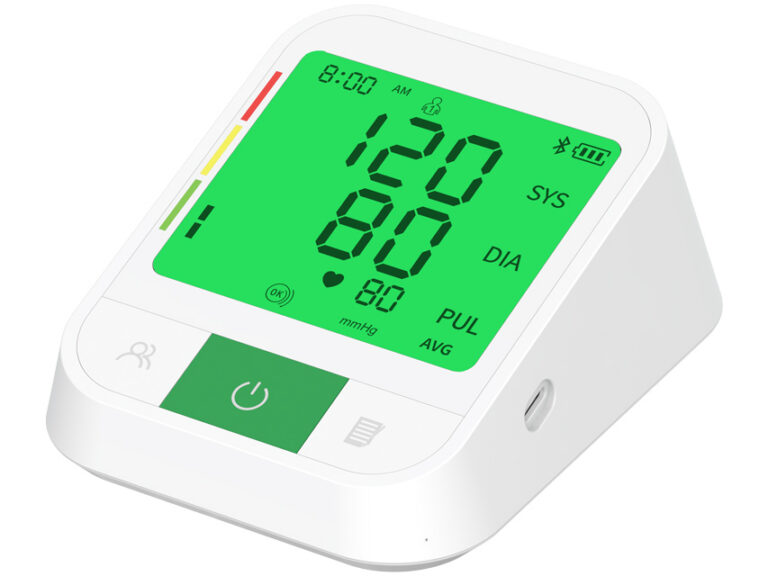
A digital blood pressure monitor measures blood pressure and pulse rate automatically and non-invasively, using an integrated pressure sensor. The display shows the systolic, diastolic and pulse values. In a healthcare setting it is used in consulting rooms, in triage and on ward rounds, where repeatable and well-identified readings are important. The range includes upper-arm and wrist devices, with and without Bluetooth connectivity.
The choice is not just about appearance: the measurement site (arm or wrist), the circumference range the cuff covers, the memory available and how it is allocated per user, the power supply, the connectivity and the possibility of measuring in auscultatory mode all matter. It is also advisable to check whether the device declares compliance with accuracy standards and what limitations the manufacturer states for certain groups of users. The instructions for use of each model are defined by the manufacturer and must be passed on to the staff who will handle the device.
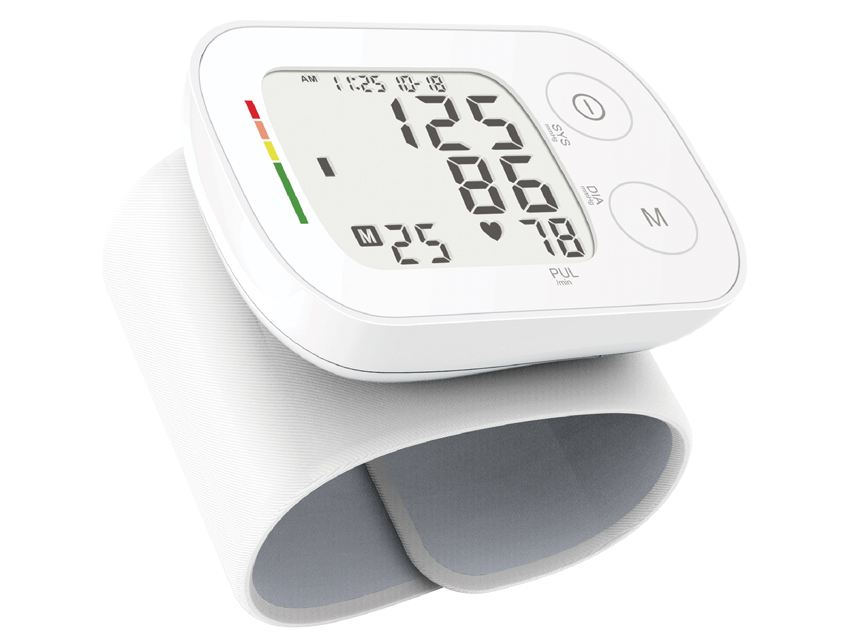
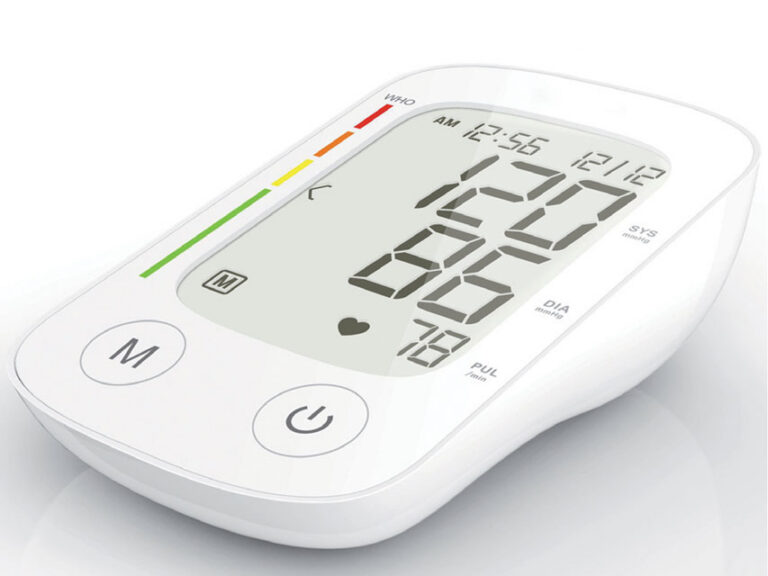
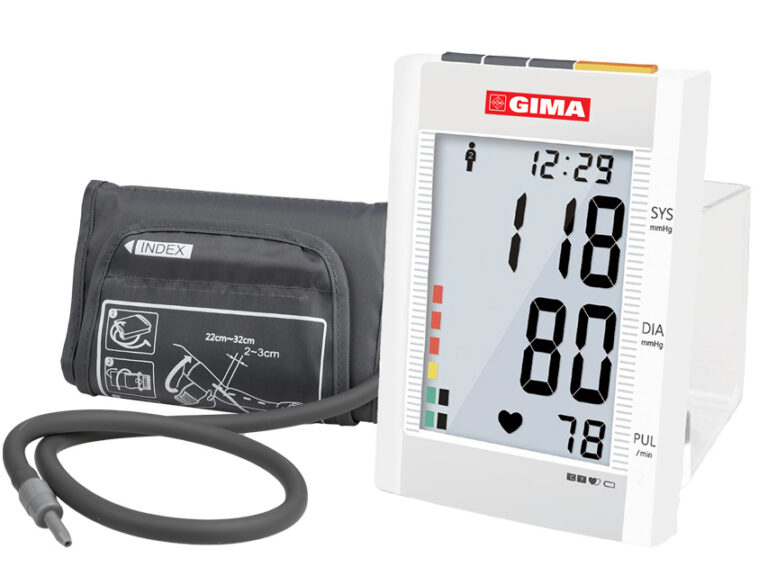
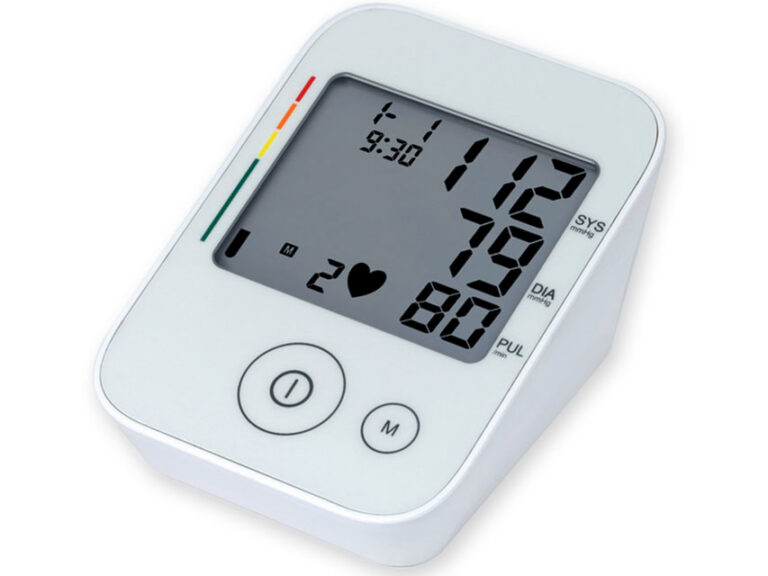
Other related families
-
 Diagnostics and Monitoring
Groups the blood pressure monitors and sphygmomanometers that the buyer will compare by performance and intended use.
-
 Blood Pressure Monitor Cuffs
The cuff size is a purchasing criterion and means planning for replacements according to the type of user.
-
Blood Pressure Monitor Accessories
Cases, adapters and stands complete the equipment and avoid poorly resolved later purchases.
Products in this guide
-
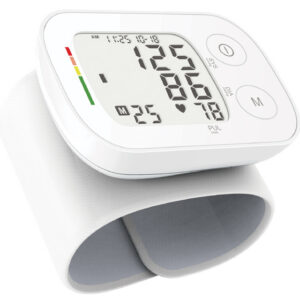
JOLLY Digital Wrist Blood Pressure Monitor – Professional Blood Pressure Monitor with Backlit LCD Display and Multi-User Memory (Ref. 32773)
19,95 € In stockAdd to basket -
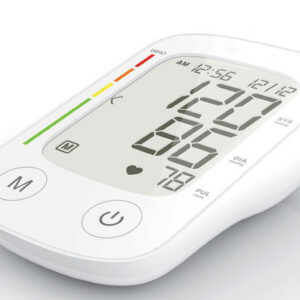
JOLLY Digital Upper Arm Blood Pressure Monitor – Professional Blood Pressure Monitor with Backlit LCD Display and Multi-User Memory (Ref. 32777)
30,40 € In stockAdd to basket -
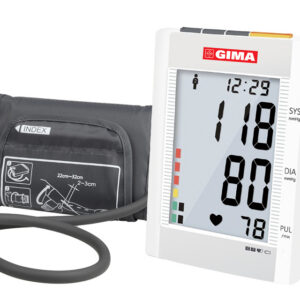
Domino Digital Upper Arm Blood Pressure Monitor – Professional Blood Pressure Monitor (Ref. 32778 / 32779)
Price range: 38,00 € through 94,05 € In stockSelect options This product has multiple variants. The options may be chosen on the product page -
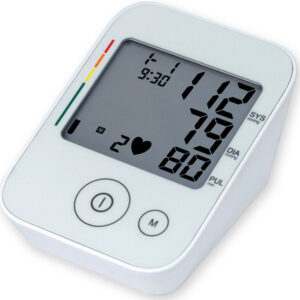
ANDON Digital Upper Arm Blood Pressure Monitor Ref. 32901 – Automatic Blood Pressure Monitor using the Oscillometric Method with LCD Screen, WHO Indicator and Arrhythmia Detection (HB)
21,85 € In stockAdd to basket -
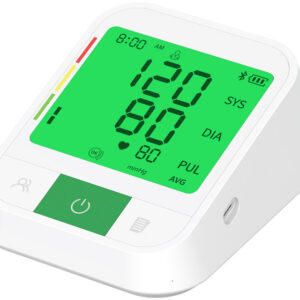
X-CHECK PRO Automatic Digital Upper Arm Blood Pressure Monitor with Bluetooth – Oscillometric Blood Pressure Monitor, 4.2″ LCD Screen with 4-Colour Backlight, Irregular Heartbeat Detection and 2×120 Memory (Ref. 49872)
30,40 € In stockAdd to basket -
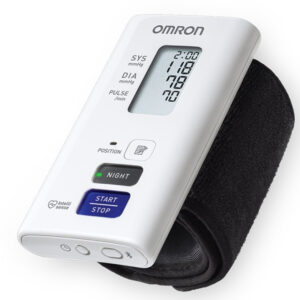
Wrist Blood Pressure Monitor Omron NightView (HEM-9601T-E3) – Automatic Blood Pressure Monitor with Programmed Night Measurement, Irregular Heartbeat Detection and Bluetooth Connectivity with OMRON Connect App
323,00 € In stockAdd to basket -
Wrist blood pressure monitor Omron RS4 (HEM-6181-E) – Automatic blood pressure monitor with LED position sensor, Intellisense and irregular heartbeat indicator
In stockRequest a quote -
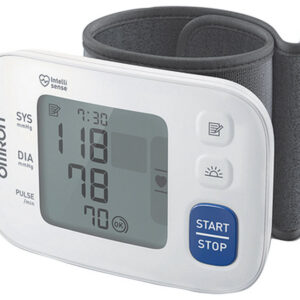
Wrist Blood Pressure Monitor Omron RS4 (HEM-6181-E) – Digital Automatic Blood Pressure Monitor with LED Position Sensor, Intellisense and 1×60 Memory
77,90 € In stockAdd to basket
View the Blood Pressure Monitors and Arterial Pressure Monitors family
Buying and selection tips
-
Arm or wrist depending on use
The upper-arm format accepts cuffs of several sizes and is the most common in consulting rooms and triage; the wrist format is more compact and easier to transport. Before deciding, check which measurement site the device supports and whether your routine requires moving the device from one place to another.
-
Memory and number of users
Look at how the history is stored: some devices store 60 readings for each of two users and others have two banks of 60 readings. If the device passes through several hands, a separate record per user avoids mixing data.
-
Power supply and battery life
Devices may be powered by batteries or by a rechargeable battery, and the declared battery life varies between models. Consider whether the device stays fixed in the consulting room or travels, because consumption and the need for replacement change according to the scenario.
-
Declared additional functions
Some models include an irregular heartbeat indicator, movement detection or Bluetooth connectivity. These are functions of the device that should be compared between references; the interpretation of any alert is for the healthcare professional.
-
Validation and auscultatory mode
Check that the device declares compliance with accuracy standards and whether it has an auscultatory mode, which allows measurement with a stethoscope to cross-check the automatic reading.
Frequently asked questions
What is the practical difference between an upper-arm and a wrist monitor for a consulting room?
The upper-arm monitor accepts cuffs of several sizes and, on some models, an auscultatory mode with a stethoscope; the wrist monitor is more compact and easier to transport. The choice depends on whether a wide range of sizes is needed or whether mobility takes priority.
How many measurements can it store and how are they divided between users?
Some devices store 60 readings for each of two users, with date and time, and others have two banks of 60 readings. Check the allocation per user if the device is used by several people.
What limitations does the manufacturer declare that I should check before assigning the device?
Each manufacturer states the groups of users and the situations for which the device is not intended. Check these limitations in the instructions for the chosen reference before buying.
What cuff size should I order for users with a large arm?
Some models cover circumference ranges of 22 to 42 cm or 24 to 43 cm, with specific cuffs for adult and obese users. Check the range declared by each reference and order the one that covers the intended users.
What should I check if the device is going to be used outside the consulting room?
Check in the manufacturer's instructions the permitted conditions of use and the power supply of the device. Some manufacturers state that it should not be used in a moving vehicle.
Is a model with Bluetooth connectivity worth it for a department?
It depends on whether you want to transfer the readings to an application or to the patient record. Check which application the device requires and whether it is compatible with the department's devices.
Common questions
Confusing the irregular heartbeat indicator with a diagnosis
The indicator is an alert function of the device; it does not replace the assessment of a healthcare professional.
Choosing by measurement site alone
The measurement site is just one criterion: also check the cuff range, the memory, the power supply and the limitations declared by the manufacturer.
Assuming that any model suits any type of user
Many devices are not intended for certain groups of users and the manufacturer states this in its instructions. Check the declared limitations before assigning the device.
Forgetting replacement cuffs
The cuff is a part that determines the compatibility of the device; check the replacements and sizes available when choosing the model.