
Adult sphygmomanometer: buying guide
20 products in the catalogue
An adult sphygmomanometer is the instrument used to measure blood pressure non-invasively. The products in this guide are aneroid sphygmomanometers, with a dial gauge, a cuff with a rubber bladder and an inflation bulb with a release valve, which require a manual reading and are used with a stethoscope. They include palm, wall-mounted, tabletop and trolley-mounted models, and mercury-free devices.
The choice depends on the workstation: consulting room, hospital ward, home visit or teaching. In consulting rooms and wards, robustness and legibility from a distance are valued; in other settings, size and ease of handling carry more weight. The cuff size is the factor that most affects the real usefulness of the device, because it has to match the arm circumference of the adult users. Before deciding, fix the cuff size, the number of tubes and outlets, the material and the type of mounting. This guide gathers the criteria that allow options to be compared.
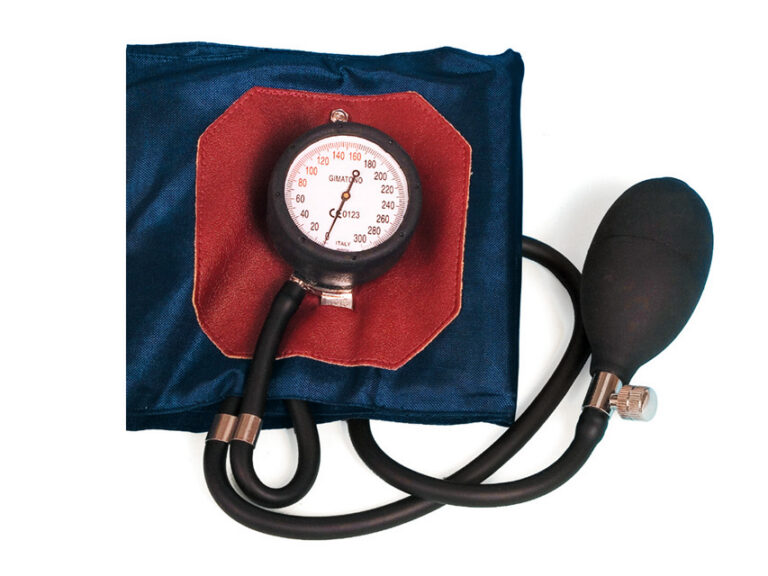
Other related families
-
 Diagnostics and Monitoring
Groups the sphygmomanometers and blood pressure monitors compared in this guide.
-
 Blood Pressure Monitor Cuffs
Allows cuff sizes to be replaced or extended without changing the device.
-
Blood Pressure Monitor Accessories
Brings together bulbs, valves, tubes, cases and stands that complete the equipment.
Products in this guide
- Medical device 17
- Sanitary kit 3
- I m 13
- II a 3
- I 1
- Germany 5
- Japan 1
-
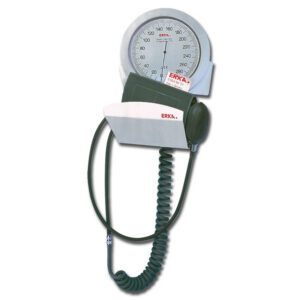
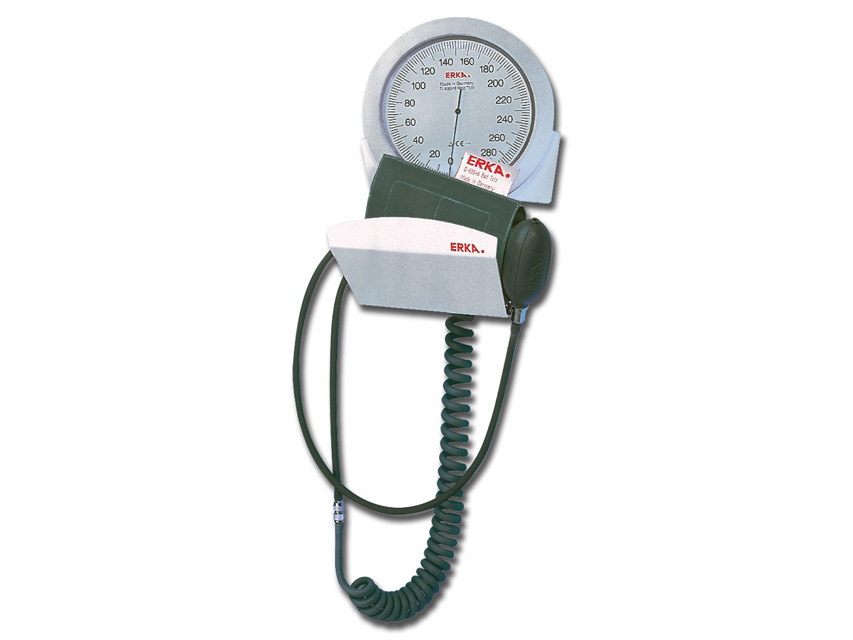
ERKA VARIO wall-mounted aneroid sphygmomanometer – Wall blood pressure monitor with orientable dial, scale 0-300 mmHg (±3 mmHg) and adult cuff (Ref. GM32672)
280,25 € In stockSelect options This product has multiple variants. The options may be chosen on the product page -
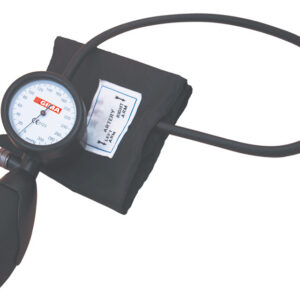
KOBE Palm Aneroid Sphygmomanometer – Manual Blood Pressure Monitor with Large Manometer, 0-300 mmHg Scale and Adult Nylon Cuff (Ref. 32690)
19,00 € In stockAdd to basket -
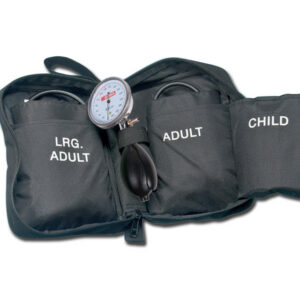
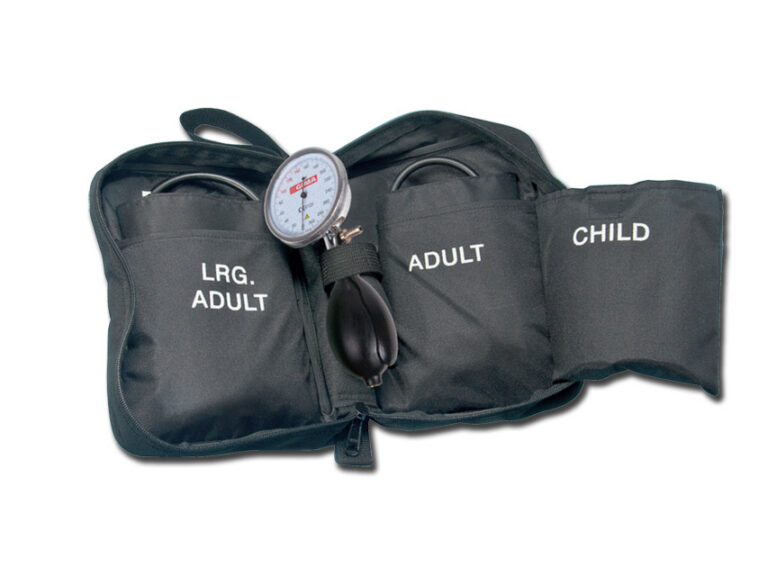
Aneroid sphygmomanometer SIRIO KIT 3 – Blood pressure monitor with 3 one-piece latex-free cuffs (child, adult and adult large) in nylon bag | Ref. GM32706
66,50 € In stockAdd to basket -
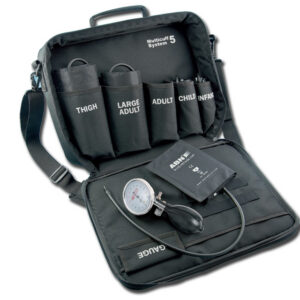
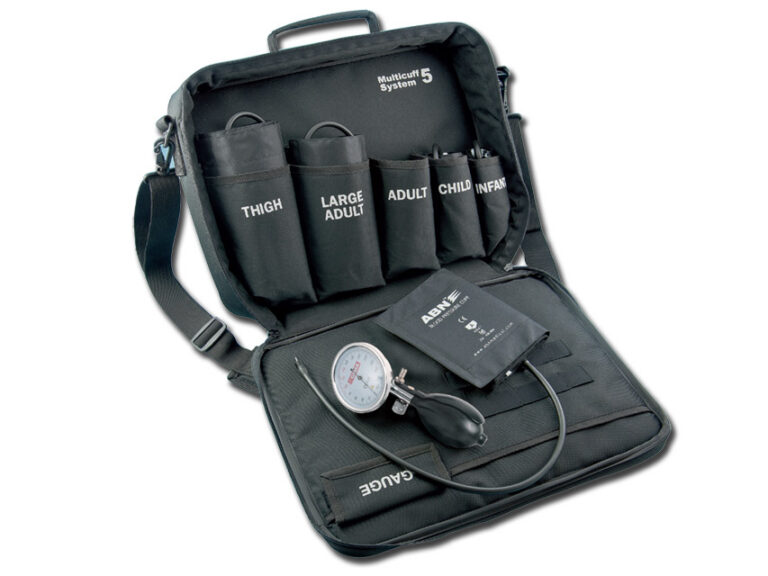
Aneroid sphygmomanometer SIRIO KIT 5 – Blood pressure monitor with 5 cuffs (infant, child, adult, large adult and thigh) in nylon bag | Ref. GM32707
123,50 € In stockAdd to basket -
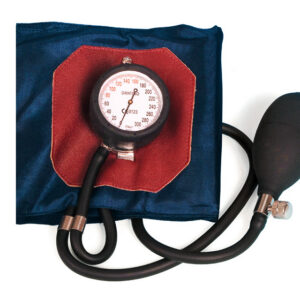
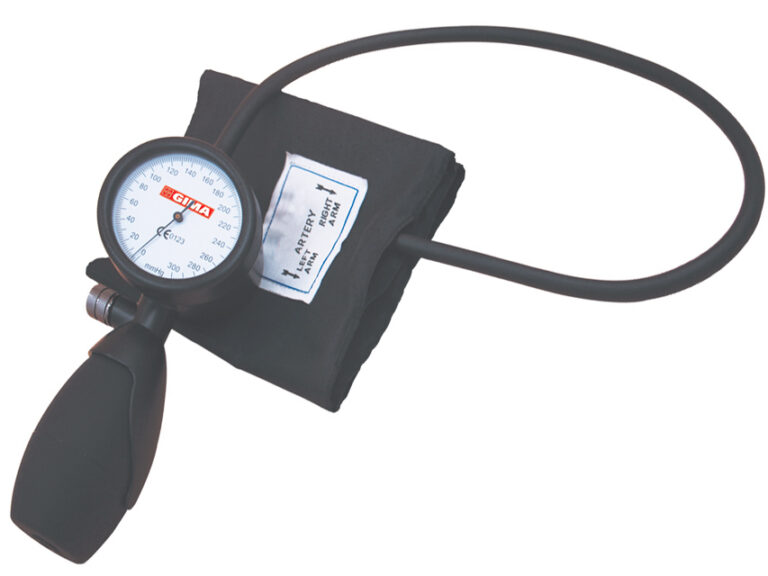
Aneroid Sphygmomanometer GIMATONO – Manual Blood Pressure Monitor without Latex with Chrome-Plated Manometer on Cuff, 2-Tube TPU Bladder Adult Size (Ref. 32719)
18,05 € In stockAdd to basket -
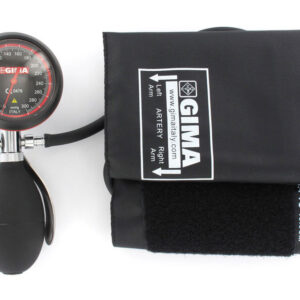
London aneroid sphygmomanometer – Adult manual blood pressure monitor without latex with nylon cuff and 55 mm ABS manometer (Ref. GM32725 / GM32726)
20,90 € In stockSelect options This product has multiple variants. The options may be chosen on the product page -
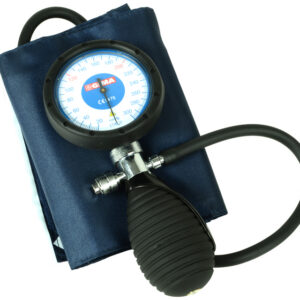
ROMA Aneroid Blood Pressure Monitor – Adult Palm Sphygmomanometer 1 Tube with Blue Cuff (Ref. 32727)
Price range: 24,70 € through 25,65 € In stockSelect options This product has multiple variants. The options may be chosen on the product page -
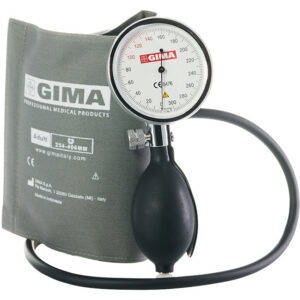
SIRIO Aneroid Blood Pressure Monitor – Classic Adult Sphygmomanometer with Fabric Cuff and Bulb Valve (Ref. 32729) | Cahnos
28,50 € In stockAdd to basket
View the Blood Pressure Monitors and Arterial Pressure Monitors family
Buying and selection tips
-
Count the tubes and outlets on the cuff
A two-outlet cuff connects one tube to the release valve and bulb and the other to the gauge. The same device may be supplied with or without an integrated stethoscope. Check the number of outlets and whether you need a stethoscope before replacing the cuff.
-
Prioritise latex-free cuffs that are easy to maintain
Latex-free versions exist, and a distinctive cuff colour helps identify the size at a glance in a room with several devices. If the device is going to rotate between users, ask the manufacturer for its cleaning instructions and material compatibility.
-
Choose the mounting according to the point of use
A wall-mounted gauge with an adjustable bracket and a storage basket frees up the consulting-room desk, and there are also stands with wheels and swivelling wall-mounting kits. One model includes a 2.5 metre coiled tube and a large-volume ergonomic bulb.
-
Check the gauge scale and accuracy
Some aneroid gauges declare a range of 0 to 300 mmHg, an accuracy of ±3 mmHg and a minimum scale division of 2 mmHg, with a needle and black numbers on a white background. A large dial, 55 to 68 mm in diameter, makes reading easier. Ask for these figures to be stated in the device documentation.
-
Check the product classification
A manual upper-arm sphygmomanometer is classified as a medical device with a measuring function and must declare its conformity with the standards for non-invasive sphygmomanometers. Check these references in the documentation before purchase.
Frequently asked questions
Is a kit with several cuffs better, or just the adult size?
If the device is going to be used with users of different ages, there are cuffs for pre-school children, children, adults and special sizes. Buying only the adult size limits the device to a single type of user; some kits include several cuffs.
What is the difference between a palm, wall-mounted and trolley-mounted gauge?
The point of use changes: the palm gauge is held in the hand, the wall-mounted one frees up the consulting-room desk and the trolley-mounted one moves between rooms. Choose according to the workstation where it will be used.
What details of the gauge scale should I ask for in writing?
The range, accuracy and minimum scale division of the gauge, as well as the diameter of the dial. These details allow references to be compared and must be stated in the device documentation.
What does it mean for a sphygmomanometer to be mercury-free?
That the gauge does not use a mercury column. Some references in the category are presented as mercury-free, with a column or display; check the type of reading for each one.
How do I check that the replacement cuff is compatible with the device?
Check the number of outlets, the type of connection and the size. Always follow the device manufacturer's instructions on the cuff that should be used.
Common questions
Believing that any adult cuff fits any device
Each sphygmomanometer must be used with the cuff specified by its manufacturer; before replacing, check outlets, connection and size.
Confusing the cuff size with the tube length
The size is defined by the arm circumference and by the dimensions of the cuff, whereas the length of the flexible tube is measured separately; in some kits it is 60 cm in the child, adult and special sizes.
Confusing the manual sphygmomanometer with a device that has an on-screen reading
The manual upper-arm sphygmomanometer has a gauge for manual reading, a cuff with a rubber bladder, an inflation bulb with a release valve and a two-outlet cuff, and may or may not include a stethoscope. It does not show the figure on a screen, so it requires the user to be able to read the scale.
Buying the device without thinking about the mounting
The palm, wall, tabletop or trolley mounting determines where and how the device is used. Decide on it before comparing references.
More products in this guide
-
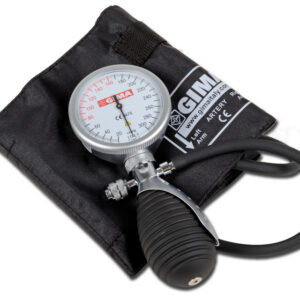
BOSTON Aneroid Sphygmomanometer – Palm Manual Blood Pressure Monitor with Dial Ø 60 mm and Calibrated Black Adult Cuff (Ref. 32731)
27,55 € In stockAdd to basket -
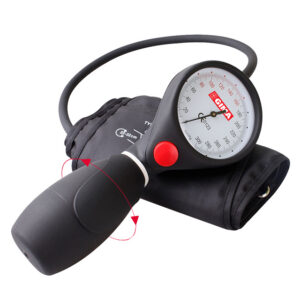
Professional Aneroid Blood Pressure Monitor Tokyo 2 – Sphygmomanometer with 65 mm Ø Dial, Button Valve and Calibrated Black Adult Cuff 54 x 14.5 cm (Ref. 32736)
22,80 € In stockAdd to basket -
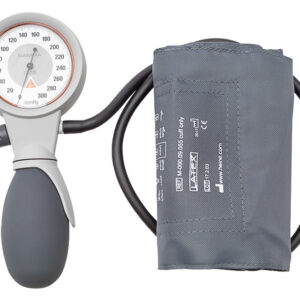
HEINE GAMMA G5 aneroid sphygmomanometer for adults – Cuff 29-41 cm with zip case (Ref. M-000.09.230 / GM32737)
114,95 € In stockAdd to basket -
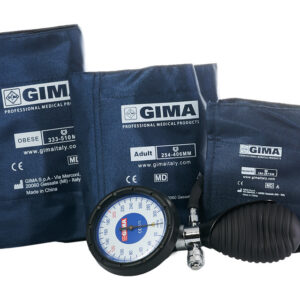
ROMA Aneroid Blood Pressure Monitor – Multi-Cuff Set with 3 Cuffs (Paediatric, Adult and Large Adult)
35,15 € In stockAdd to basket -
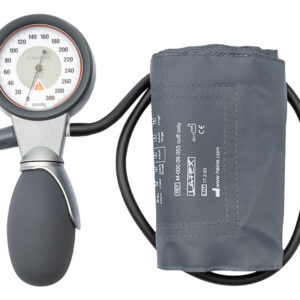
Professional aneroid sphygmomanometer HEINE GAMMA G7 for adults, cuff 29-41 cm with zip case (Ref. M-000.09.232 / GM32739)
171,00 € In stockAdd to basket -
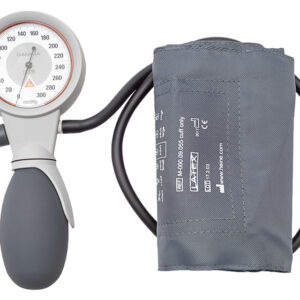
HEINE GAMMA G5 aneroid sphygmomanometer for adults (cuff 29-41 cm) without carrying bag – Ref. M-000.09.561
106,40 € In stockAdd to basket -
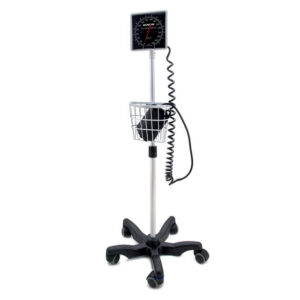
Denver Aneroid Sphygmomanometer on Trolley (32744) – 145×145 mm Dial, Adjustable Height 90-135 cm, Adult Cuff with 2-Tube TPU Bladder
71,25 € On orderAdd to basket -
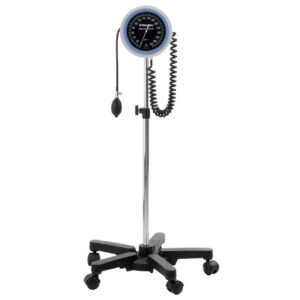
Professional Aneroid Sphygmomanometer Riester BIG BEN® on Trolley – Dial Ø147 mm, 0-300 mmHg, Adult Velcro Cuff 2 Tubes Latex-Free, Adjustable Height 90-140 cm | Ref. GM32746
266,00 € In stockAdd to basket
Keep exploring
- Buying guide to aneroid sphygmomanometers
- Automatic blood pressure monitors: buying guide
- Automatic upper arm blood pressure monitor: buying guide
- Buying guide: digital blood pressure monitors
- Digital blood pressure monitors: buying guide
- Buying guide: digital sphygmomanometer
- blood pressure measurement
- manual blood pressure monitor
- latex-free
- adult cuff
- sphygmomanometer
- mercury-free