How to choose an autoclave: buying guide
9 products in the catalogue
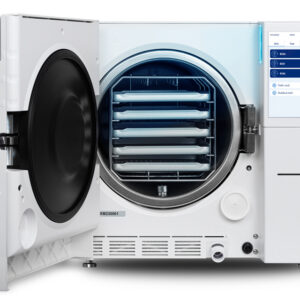
A medical autoclave is a steam steriliser used in clinics, dental practices and sterile services departments to sterilise previously prepared instruments. The equipment is one part of the facility's sterilisation process, which must always follow the manufacturer's instructions.
On the medical market there are Class B benchtop autoclaves conforming to standard EN 13060, with fractional vacuum cycles. The purchasing decision turns on four axes: chamber and load capacity, programmes and tests available, cycle traceability and the accessories that come with the equipment. The aim of this guide is for the professional buyer to know what to ask before deciding.


Other related families
-
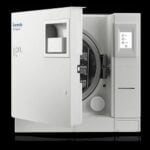 Autoclaves
The family in which the main equipment is chosen: Class B, chamber capacity and sterilisation programmes.
-
 Autoclave Printers
These provide traceability on paper when the unit has no built-in printer.
-
 Ultrasonic Cleaning Tanks
Complement the cleaning of instruments before sterilisation.
-
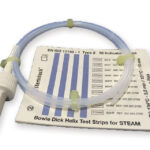 BOWIE DICK Tests
Allow air removal and steam penetration in porous loads to be verified.
-
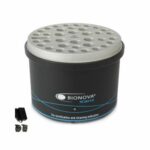 Biological Controls
Provide the microbiological check of the sterilisation cycle.
-
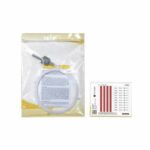 Load Control Systems
Help to record and control the load processed in each cycle.
Products in this guide
- 1.5 l 1
- 24 l 3
- 29 l 1
- 6 kg 3
- 7 kg 1
-
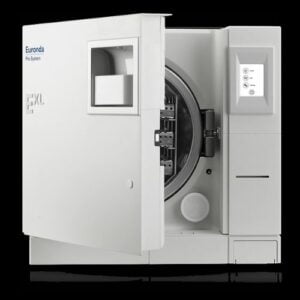
EXL 29 L Class B Autoclave (EN 13060) – Professional Benchtop Steam Steriliser with 5 XL 55 cm Trays, Touchscreen and Ethernet/SD Traceability
7.480,00 € In stockAdd to basket -
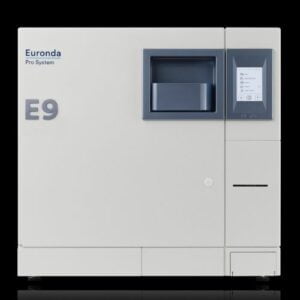
Class B Autoclave E9 24 L – Benchtop Steam Steriliser EN 13060 with 4.3″ Touchscreen, SD/Ethernet Connectivity and Expandable Traceability (SKU 115712)
5.440,00 € In stockAdd to basket -
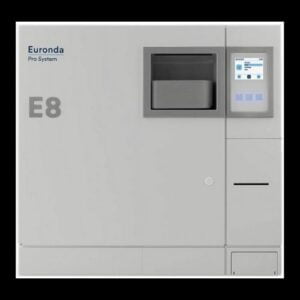
Autoclave E8 24 L Class B EN 13060 – Benchtop Steam Steriliser with 2.4″ Screen, SD Card, E-Timer and 5 Trays
4.505,00 € In stockAdd to basket -
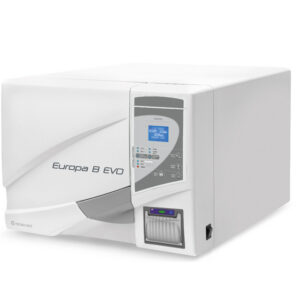
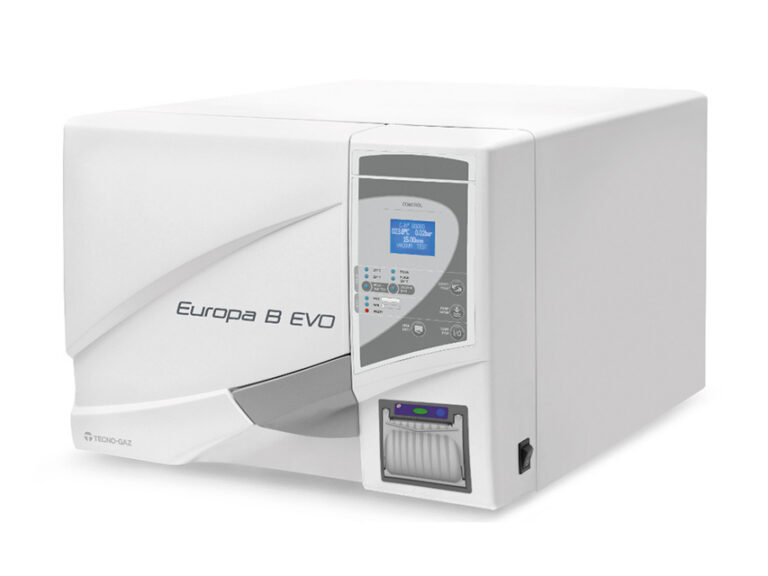
Class B Autoclave EUROPA B EVO 15 litres – Steriliser with Fractionated Vacuum, Integrated Printer and 134 °C / 121 °C Cycles – 230 V (Ref. 35653)
5.035,00 € In stockAdd to basket -
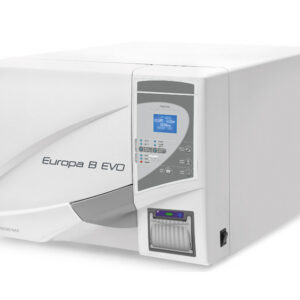
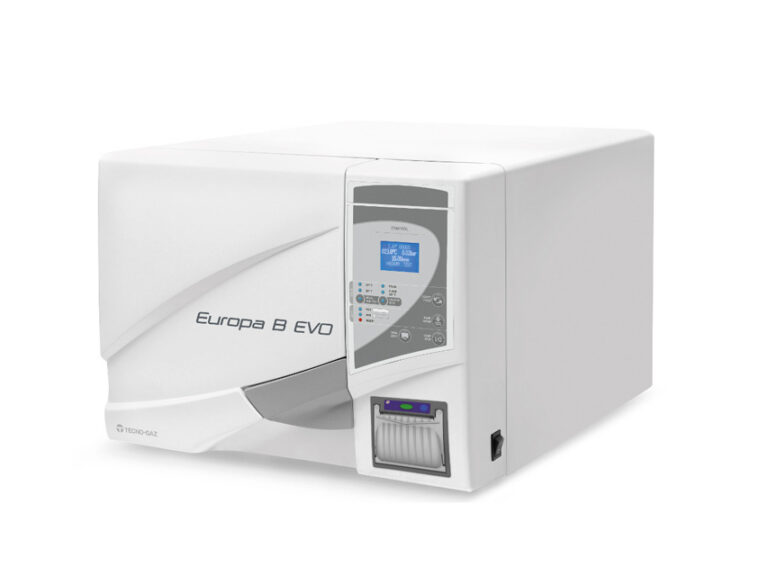
Class B Steam Autoclave EUROPA B EVO – 24 litres, 230 V – Steam sterilisation with integrated printer, P.I.D. system and integrated osmosis | Ref. 35657
6.650,00 € In stockAdd to basket -
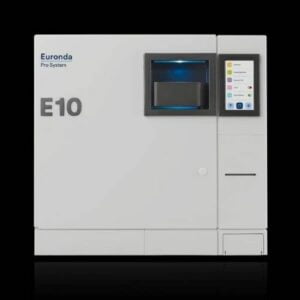
Class B Autoclave Euronda E10 – 24 L | Bench-top Steam Steriliser EN 13060 with Vacuum Pump, E-Touch Screen and Digital Traceability (SKU 115750)
5.907,50 € In stockAdd to basket -

Euronda E8 24 L Class B Autoclave | Bench-top Steam Steriliser EN 13060 with 2.4″ Colour Screen, SD Card and 5 Trays (Ref. 35678)
5.035,00 € In stockAdd to basket -
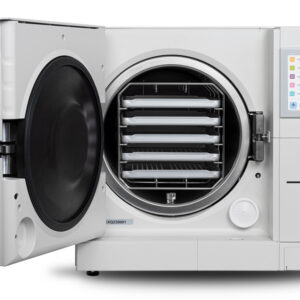
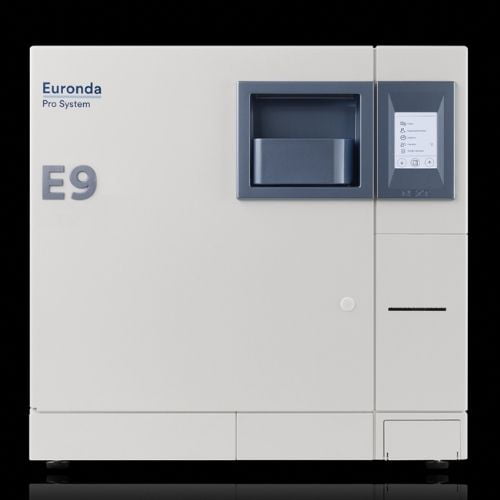
Euronda E9 Class B Autoclave – 24 L | Benchtop Steam Steriliser EN 13060, Colour Touchscreen and Digital Traceability (Ref. 35679)
5.985,00 € In stockAdd to basket
Buying and selection tips
-
Chamber and load capacity
Litres are not everything: two units with similar volume may have chambers of different shapes and accept different loads. Benchtop autoclaves come in capacities of 15, 24 and 29 litres. Check how many trays or cassettes fit at once and compare the internal dimensions, not just the volume.
-
Class B and regulatory compliance
Class B autoclaves are presented as conforming to standard EN 13060 and work with fractional vacuum, which allows solid, porous and hollow loads to be processed. Ask the supplier for the unit's declaration of conformity and do not settle for the commercial label.
-
Programmes and tests available
Check which sterilisation programmes the unit includes for the type of load you will process (solid, porous or hollow) and which tests it can run, such as vacuum or Bowie-Dick. The more programmes and tests come as standard, the less you will depend on later add-ons.
-
Traceability: how each cycle is stored
Some models save the data of each cycle to an SD card or send it over a network connection, and printers exist for autoclaves when the unit has no built-in printing. Consider whether you need to print at the time or only to archive and transfer the data to a computer.
-
Installation: power, water and location
The electric power, access to the water tank and the weight of the unit affect where it can be installed. Ask the supplier for these details for each model and check the available socket and that the supporting furniture is suitable before completing the purchase.
-
The autoclave is part of a system
The autoclave is the last link in the facility's sterilisation process. When choosing equipment, also think about the rest of the system: washing, packaging, heat sealing and controls. Always follow the manufacturer's instructions and the facility's protocol.
Compatibility
- Autoclave printer
- Allows a printed record of each cycle without depending on a computer; check whether the unit has it built in or as an accessory.
Frequently asked questions
How much chamber capacity do I need to work with bagged cassettes?
It depends on the daily load. The 29-litre models take more trays than the 15- or 24-litre ones, but the shape of the chamber also matters. Check the internal dimensions and not just the litres.
Which tests should the autoclave itself be able to run?
Check that the unit can run tests such as vacuum or Bowie-Dick, in addition to the sterilisation programmes. Having them as standard avoids depending on external equipment.
How is the traceability of each sterilisation cycle ensured?
Some models save the cycle data to an SD card or send it over a network connection, and can be supplemented with a printer. Confirm which options come as standard on the unit and which are accessories.
What should I check on the door closure and the unit's safety features?
Ask the supplier for information on the door closure system and the safety protections of the specific model, and check that they appear in its technical data.
What space and weight should I allow for in the furniture where the unit will go?
It depends on the model and its capacity: the more litres, the greater the size and weight. Request the dimensions and the operating weight of the chosen unit and check that the furniture supports them and allows access to the tanks.
Common questions
Believing that any benchtop autoclave is Class B
Not all of them are. A Class B unit conforms to standard EN 13060 and offers type B cycles. If your load includes hollow or porous material, confirm which types of cycle the unit supports.
Thinking that the autoclave sterilises on its own
The autoclave is only one part of the sterilisation process. Follow the manufacturer's instructions and the facility's protocol, and also plan for the rest of the material that goes with the unit.
Choosing by litres without looking at the shape of the chamber
Two units with similar capacity may have chambers of different dimensions. The shape determines which trays and cassettes fit, so compare internal dimensions and not just volume.
Forgetting the weight and access to the tanks when siting the unit
A benchtop autoclave is heavy equipment. Ask for the weight of the chosen model and allow for comfortable access to the water tank and the loading chamber.