
Polyurethane dressings: buying guide
20 products in the catalogue
The polyurethane dressing is not a single product, but a group of solutions that share polyurethane as the backing material and behave differently depending on their construction. The most recognisable form is the transparent polyurethane film, which acts as a barrier and as a fixation element, and lets you see the covered area without removing it. The other main form is polyurethane foam, designed to absorb and cushion. Confusing the two when buying leads to choosing a product that does not fit the department's need.
The range includes transparent adhesive films, dressings with an absorbent pad, fixation dressings for vascular access and adhesive and non-adhesive foams. For the buyer, the decision does not lie in the generic material but in a few specific details: the real family of the dressing, the presence or absence of an adhesive border, the overall size versus the pad size, the absorption and vapour transmission values, and the layer construction. This guide sets out these checks so that offers can be compared on equivalent criteria. The choice of dressing in each case is for the healthcare staff.
Other related families
-
 Transparent Adhesive Dressing
Groups transparent adhesive films, the most common polyurethane form when the aim is to cover and secure without hiding the area.
-
 Central Compress Adhesive Dressing
Covers dressings with a central pad, useful when a defined absorbent area is needed within the dressing.
-
 Dressing Retention
Brings together the fixation products that can complement a polyurethane dressing when it does not have an adhesive border.
Products in this guide
- Polyurethane 20
- Foam 2
- Non-woven 2
- Glass 1
- Box OF 10 6
- Box OF 100 4
- Box OF 50 4
- Box OF 25 3
- Box OF 5 3
- II a 13
- II b 2
- I 1
-
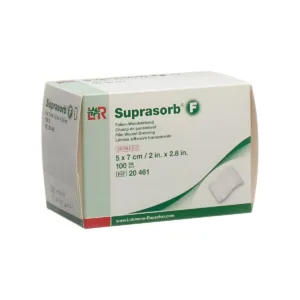
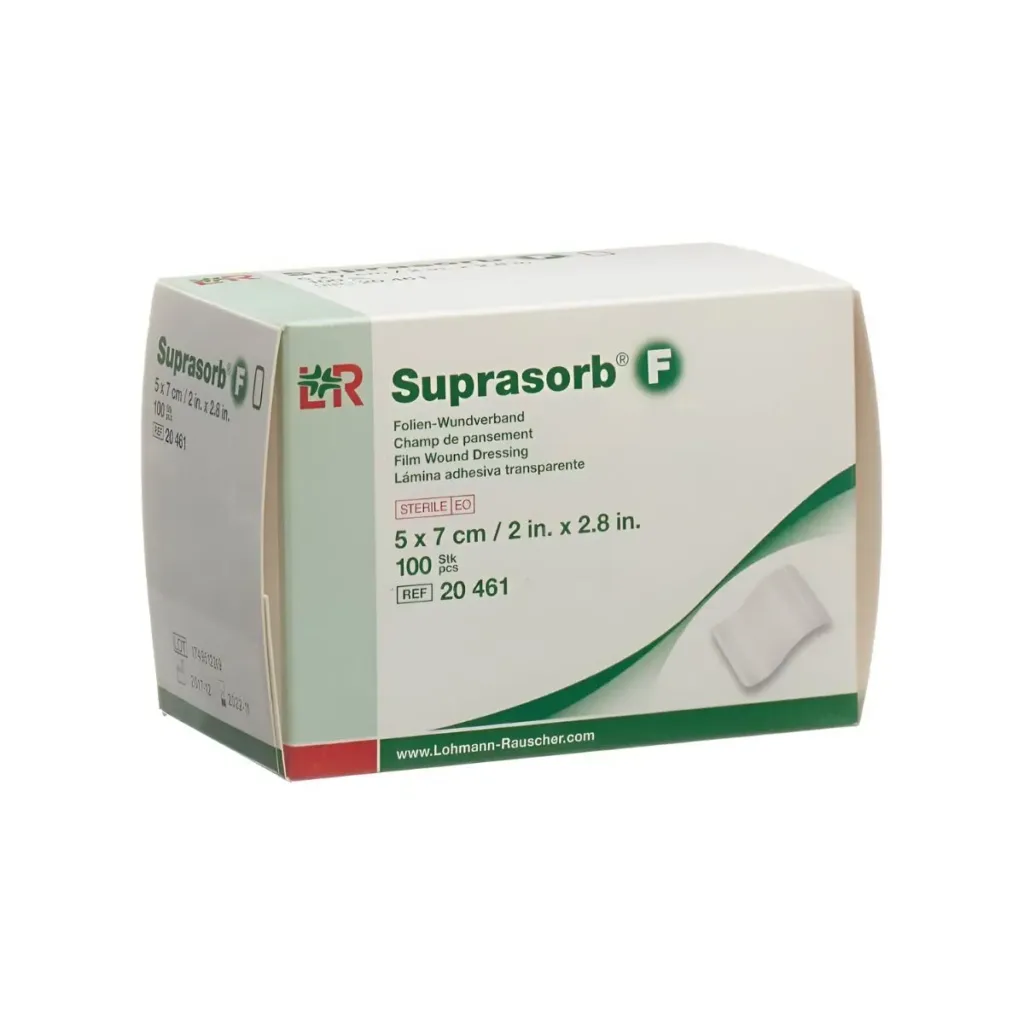
Latex-free Transparent Adhesive Dressing Suprasorb F (L&R) 5 x 7 cm – Ref. 20461 – Box of 100 Sterile Units for Superficial Wounds with Light Exudate
4,28 € In stockAdd to basket -
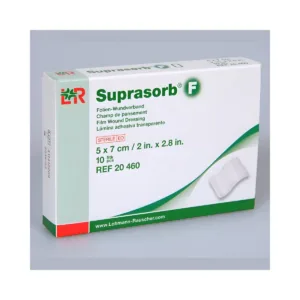
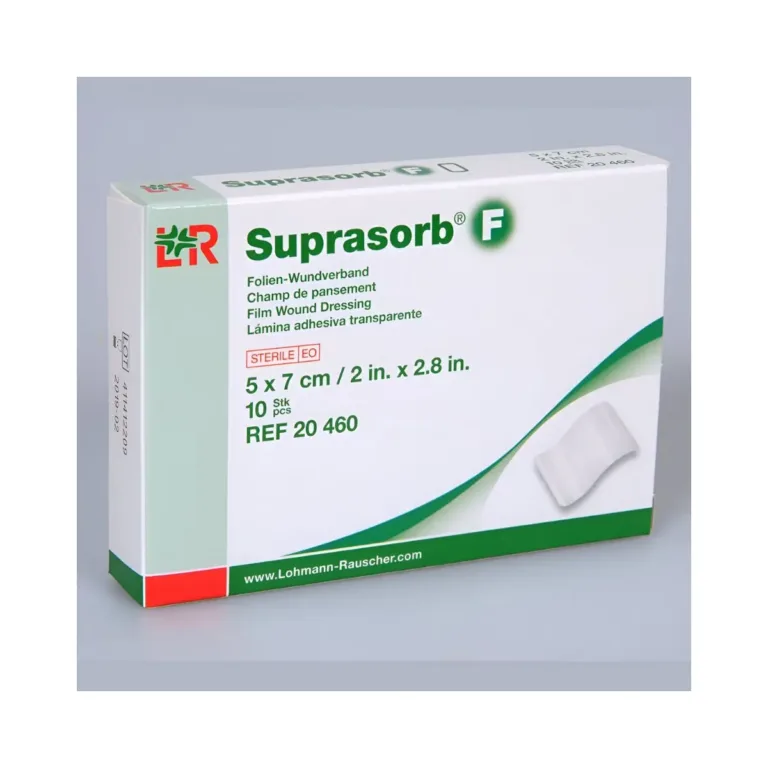
Suprasorb F Transparent Adhesive Dressing (L&R) 5 x 7 cm Ref. 20460 – Box of 10 Sterile Units, Latex-Free, for Superficial Wounds with Light Exudate
4,28 € In stockAdd to basket -
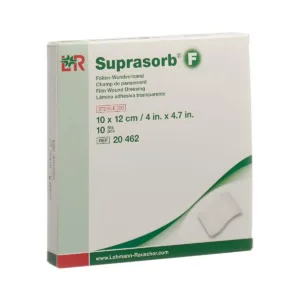
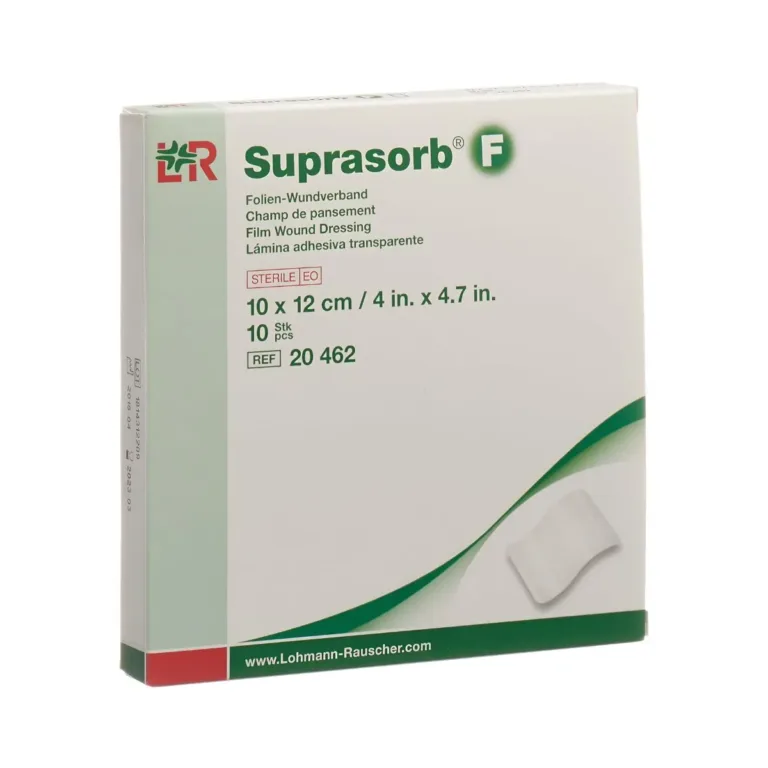
Suprasorb F Transparent Adhesive Dressing (Lohmann & Rauscher) 10 x 12 cm – Ref. 20462 – Box of 10 Sterile Units, Latex-free, for Superficial Wounds with Light Secretion
10,49 € In stockAdd to basket -
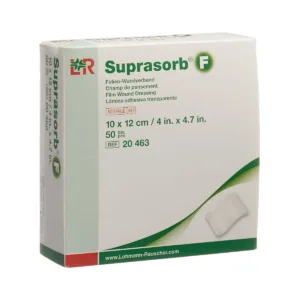
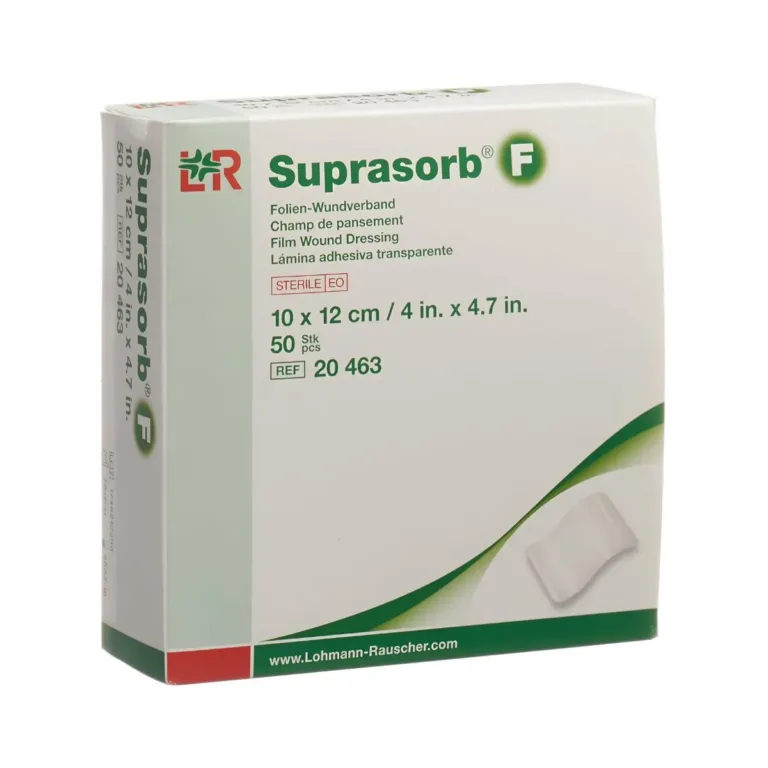
Transparent Adhesive Latex-Free Dressing Suprasorb F (L&R) 10 x 12 cm – Ref. 20463 – Box of 50 Sterile Units for Superficial Wounds with Light Exudate
47,58 € In stockAdd to basket -
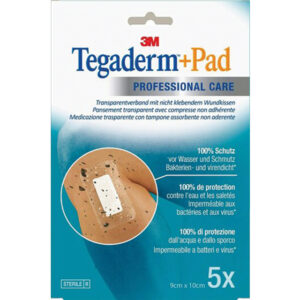
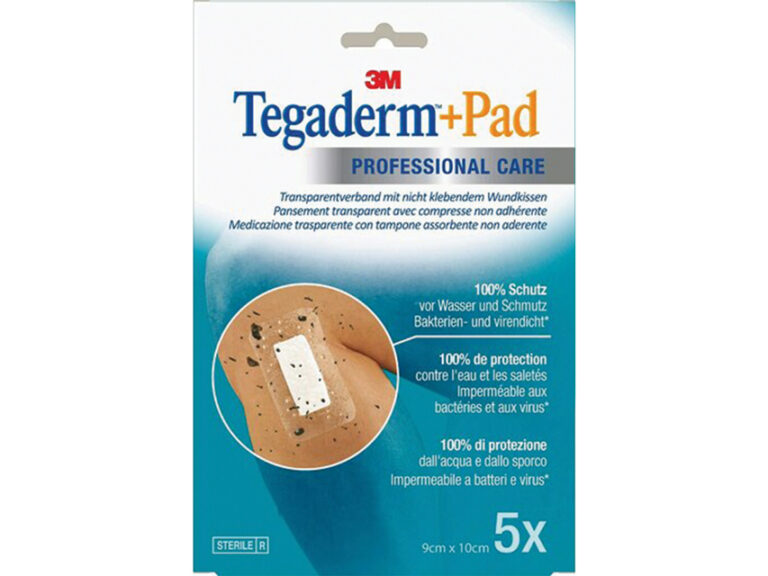
3M™ TEGADERM™ + PAD 9×10 cm Sterile Dressing with Absorbent Non-Adherent Pad – Box of 5 units (Ref. 3586NP)
10,93 € On orderAdd to basket -
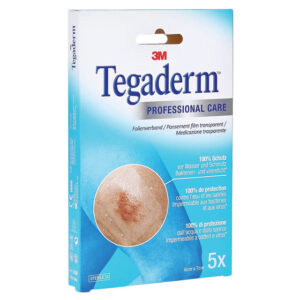
Sterile Transparent Film Dressing 3M™ TEGADERM™ 6 x 7 cm – Ref. 1624NP – Box of 5 units
8,17 € In stockAdd to basket -
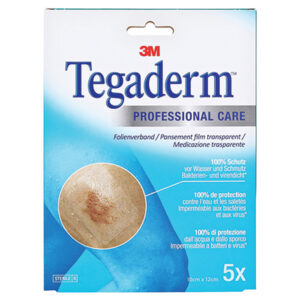
3M™ TEGADERM™ Transparent Film Dressing 10 x 12 cm – Sterile, Box of 5 units (Ref. 1626NP)
17,10 € In stockAdd to basket -
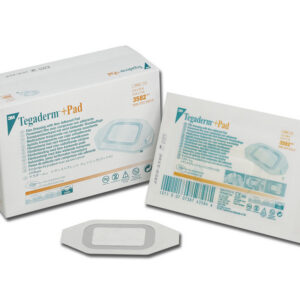
3M™ TEGADERM™ + PAD 5×7 cm sterile dressing with absorbent pad – Box of 50 units (Ref. 3582)
40,38 € In stockAdd to basket
Buying and selection tips
-
Family: film or foam
Before looking at sizes, decide whether you need a transparent polyurethane film or a polyurethane foam. The film provides barrier and fixation functions, whereas the foam is presented as absorbent and cushioning. Comparing offers from different families as if they were equivalent is of no use.
-
Adhesive border and type of adhesive
Check whether the dressing has an adhesive border or not, because it affects fixation and the usable size. Then clarify the nature of the adhesive: silicone, acrylic, hydrocolloid or no adhesive. When the supplier speaks of silicone, it is worth knowing whether it refers to the border or to the contact layer.
-
Overall size and pad size
A size such as 10 × 10 cm may correspond to the overall size of the dressing and not to the surface of the pad. On dressings with a border, the pad is smaller than the whole, so ask for both figures before comparing. Without the pad size, two dressings of the same format may not be interchangeable.
-
Absorption and MVTR with their standard
Ask for the absorption capacity in g/100 cm² and the retention according to EN 13726-1, as well as the MVTR in g/m²/24 h according to EN 13726-2. These values allow one foam to be compared with another without depending on the commercial brochure. If the supplier does not provide them, the comparison has no basis.
-
Sterility and absence of latex
Check that the dressing is supplied sterile and look in the description for a declaration that it is latex-free. Neither of these details can be deduced from the appearance of the dressing.
-
Transparency
If you need to see the covered area without removing the dressing, consider a transparent backing. A semipermeable polyurethane film is described as a barrier against external contamination and permeable to air and water vapour. Confirm both properties in the product's technical data sheet.
Frequently asked questions
How do I know whether the offer I am comparing is a polyurethane film or a foam?
Look at the declared function: the transparent polyurethane film is presented as barrier and fixation, whereas the foam is presented as absorbent and cushioning. If the supplier does not clarify the family, ask for the technical data sheet before comparing.
What absorption and vapour transmission values should I require from a polyurethane foam?
The absorption capacity in g/100 cm² and the retention according to EN 13726-1, and the MVTR in g/m²/24 h according to EN 13726-2. With those data, the comparison between foams is made on a uniform basis.
Does a commercial term such as hydrocellular describe a material other than polyurethane?
No; it is applied to a polyurethane foam, so it is compared with other foams and not with other families. It is best not to treat it as a separate category when assessing offers.
What measurements should I ask the supplier for in order to compare two dressings with a pad?
The overall size and the pad size. The same format may have pads of different sizes and therefore not be interchangeable.
Common questions
Believing that every polyurethane dressing is transparent
Polyurethane is used both in transparent films and in foams, and not all presentations let you see the covered area. If transparency is a requirement, it must be confirmed in the product description.
Treating two dressings as equivalent just because they share the same size
The same format may conceal a pad of a different size and a very different absorption. Size alone does not allow products to be interchanged.
Confusing a foam with a gelling fibre layer with a fibre dressing
Some foams incorporate a gelling fibre layer under the foam, but that does not make them a fibre dressing. The family that counts is that of the main backing.
Assuming that all the products in the category are film dressings
The products include films, foams and other wound care items. Check the description of each reference before including it in a comparison.
More products in this guide
-
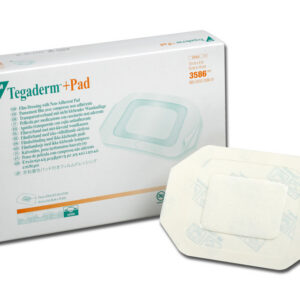
3M™ TEGADERM™ + PAD 9×10 cm sterile dressing with absorbent pad – Box of 25 units (Ref. 3586)
43,23 € In stockAdd to basket -
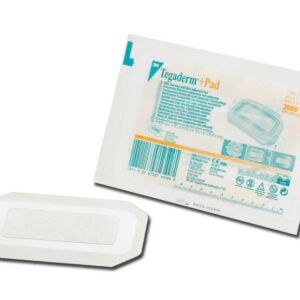
3M™ TEGADERM™ + PAD 9×15 cm sterile dressing with absorbent pad – Box of 25 units (Ref. 3589)
57,95 € In stockAdd to basket -
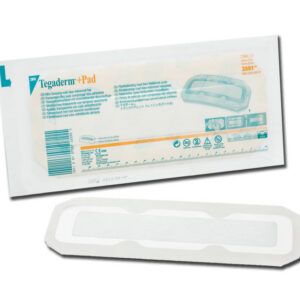
3M™ TEGADERM™ + PAD dressing 9×25 cm sterile with absorbent pad – Box of 25 units (Ref. 3591)
96,90 € In stockAdd to basket -
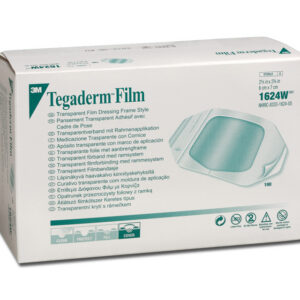
3M™ TEGADERM™ film dressing 6×7 cm sterile, transparent and waterproof – Box of 100 units (Ref. 1624W)
47,98 € In stockAdd to basket -
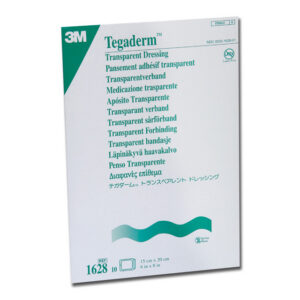
Transparent sterile dressing 3M™ Tegaderm™ 1628 – 15×20 cm – Box of 10 units
31,64 € In stockAdd to basket -
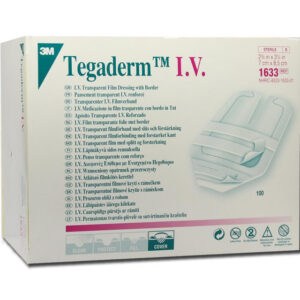
Transparent IV Securement Dressing 3M Tegaderm™ IV 7 x 8.5 cm Sterile for Peripheral Lines – Box of 100 units
94,05 € In stockAdd to basket -
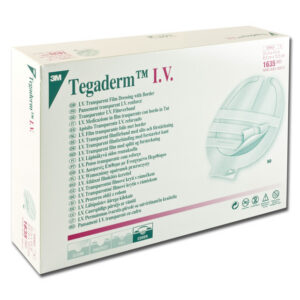
3M Tegaderm IV Transparent IV Securement Dressing 8.5 x 10.5 cm Sterile for Central Lines – Box of 50 units
132,05 € In stockAdd to basket -
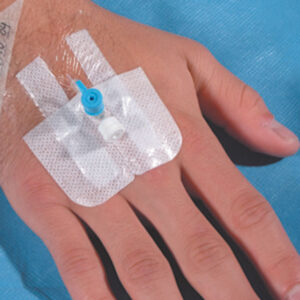
3M Tegaderm IV Advanced IV Fixation Dressing 6.5 x 7 cm for Peripheral Lines – Sterile – Box of 100 units
135,85 € In stockAdd to basket
Keep exploring
- Absorbent dressings: buying guide
- Adhesive dressings: buying guide
- Adhesive plasters: buying guide for professionals
- Fixation dressings: buying guide
- Gauze for burns: buying guide
- How to choose dressings
- latex-free
- Dressings
- Sterile
- adhesive dressing
- breathable
- medical device
- fixation
- wound care
- immobilisation
- orthopaedics
- traumatology