
Adhesive plasters: buying guide for professionals
7 products in the catalogue
Adhesive plasters are single-use adhesive dressings designed to cover and protect small wounds and superficial cuts, in the home as well as in healthcare and professional settings. In a restocking purchase they are treated as a fast-moving consumable and the choice depends on the type of plaster, the size and the pack format.
The products include classic, hypoallergenic, children's, hand, haemostatic gauze and detectable plasters, and assortments of several sizes in the same box. This guide sets out the criteria worth reviewing before restocking: type, actual size, pack quantity per box and the facility's conditions of use.
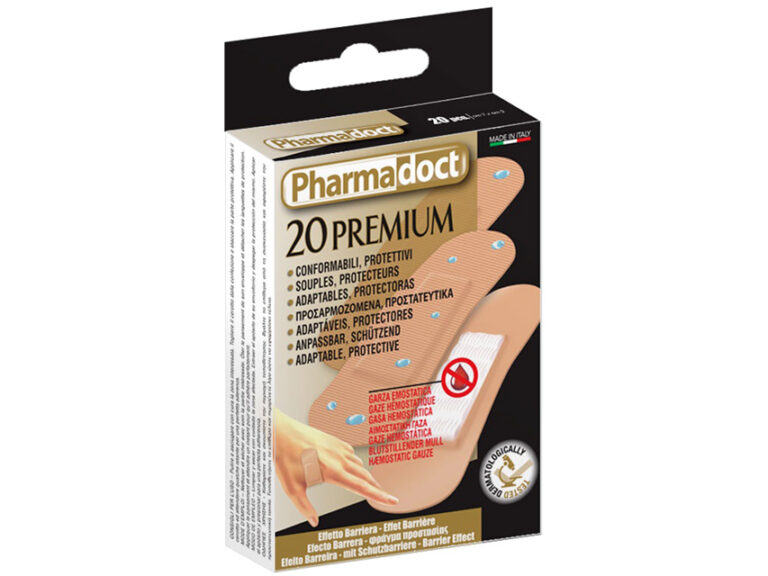
Other related families
Products in this guide
- Box 6
- Box OF 12 2
- Box OF 20 1
- Pack OF 50 1
- I 5
- III 1
-
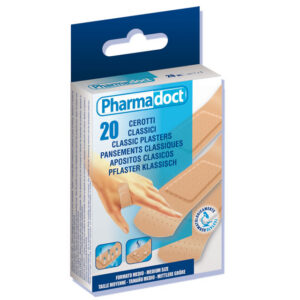
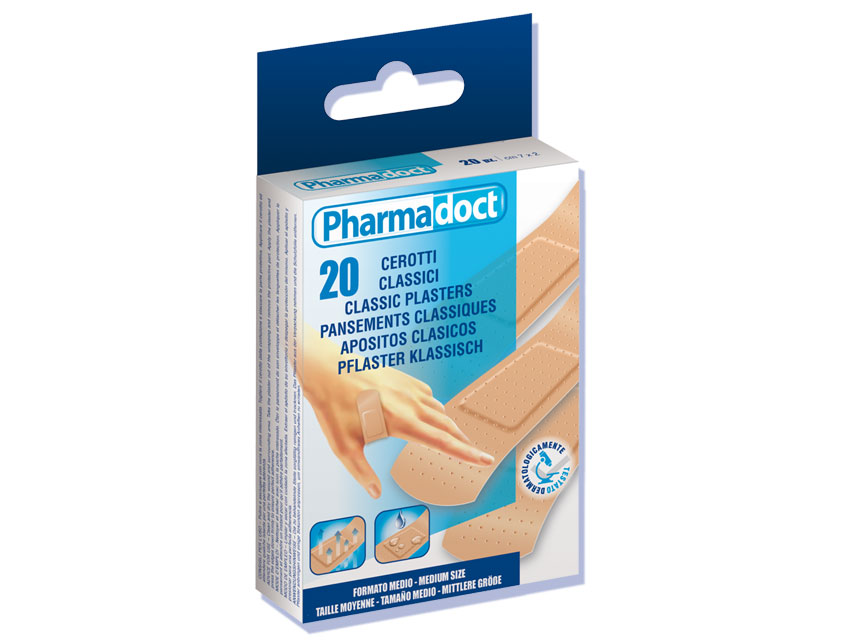
Classic PHARMADOCT Plasters 7×2 cm – Carton of 12 Boxes of 20 Adhesive Dressings | Class I Medical Device (Ref. GM25300)
8,08 € In stockAdd to basket -
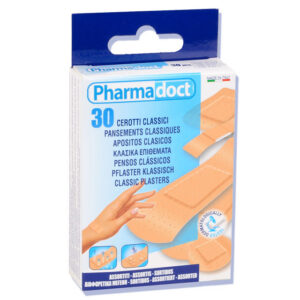
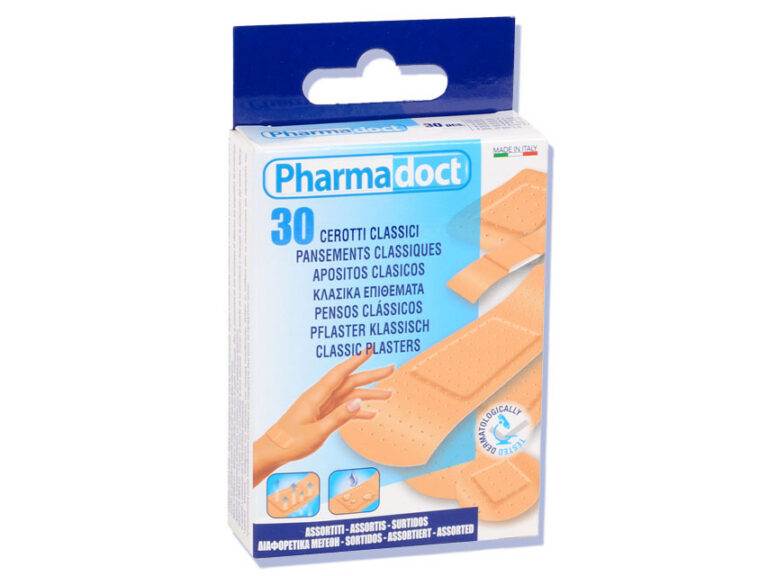
Assorted Plasters PHARMADOCT – Classic and Hypoallergenic Adhesive Dressings in 5 and 6 Sizes (Refs. GM25301, GM25302, GM25305) | Carton of 12 Boxes
Price range: 10,26 € through 27,93 € In stockSelect options This product has multiple variants. The options may be chosen on the product page -
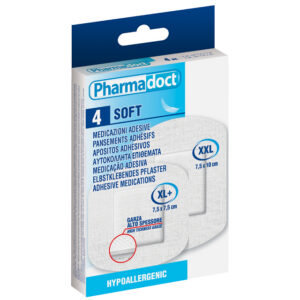
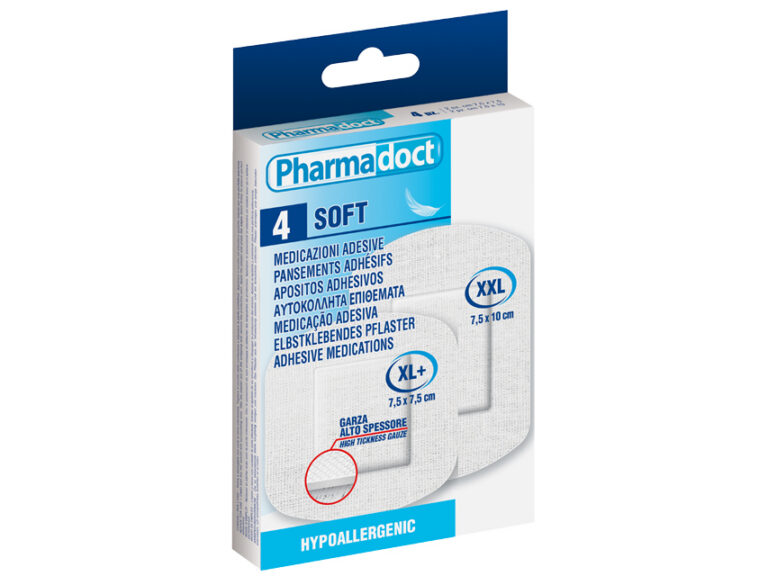
PHARMADOCT Hypoallergenic Plasters – 2 Sizes (7.5×7.5 and 7.5×10 cm), Carton of 12 Boxes of 4 | Ref. GM25307
12,35 € In stockAdd to basket -

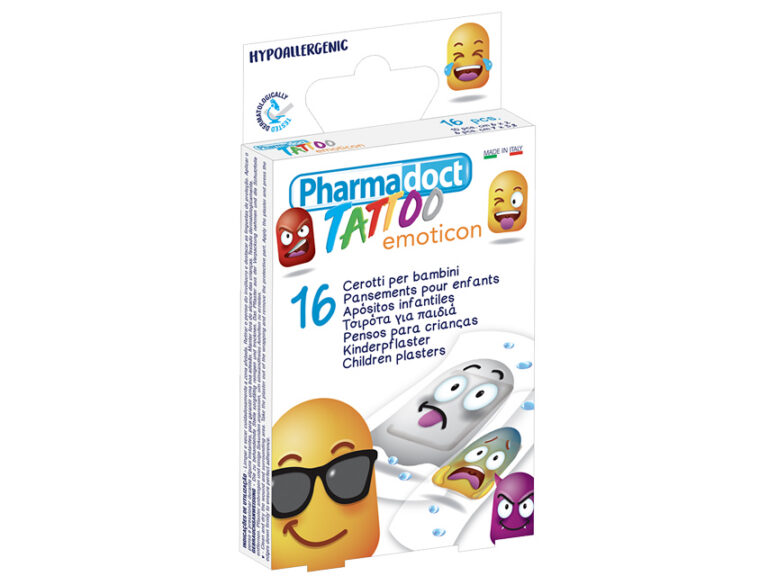
PHARMADOCT Children’s Tattoo Plasters – Carton of 12 Boxes of 16 Plasters in 2 Sizes | Ref. GM25310
12,64 € In stockAdd to basket -
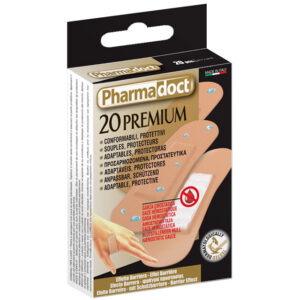
Plasters with Haemostatic Gauze PHARMADOCT – Carton of 12 Boxes of 20 Plasters | Ref. 25312
11,97 € In stockAdd to basket -
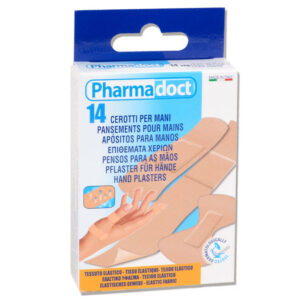
PHARMADOCT Hand Plasters – Adhesive Dressings in 3 Sizes (12×2, 7×2 and Butterfly) in Blister | Carton of 12 Boxes of 14 Units (Ref. 25314)
11,40 € In stockAdd to basket -
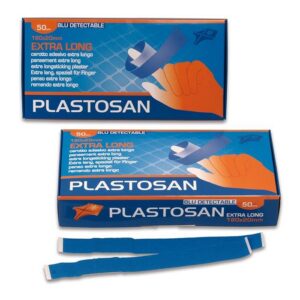
Extra-long blue detectable plaster 18 x 2 cm – Adhesive dressing with detectable band (metal detectable) for wound dressings and food industry (Ref. CER143 / BRLCER143)
13,40 € In stockAdd to basket
Buying and selection tips
-
Choose the type of plaster first
There are classic, hypoallergenic, children's (with designs), hand, haemostatic gauze and detectable plasters. Each type serves a different use, so settle it before comparing sizes or pack formats.
-
Compare the actual size
Sizes vary from one format to another, such as classic plasters, an extra-long detectable plaster or several sizes in the same box of hand plasters. Ask for the overall size and, if relevant, the pad size as well.
-
Hypoallergenic for frequent use
If staff or users have sensitive skin, check in the description that the adhesive is stated as hypoallergenic and whether the product states that it is latex-free.
-
Sterile or not, individual or assorted
Some products are supplied sterile and others are not, and there are assortments with several sizes. Check the presentation so as to match restocking to actual consumption.
-
Count the quantity per box and per carton
Some products are ordered by the carton of 12 boxes, with 16 or 20 plasters per box, and others by the single box. Check both figures before comparing the contents per unit.
Frequently asked questions
How do I choose between classic and hypoallergenic plasters?
By the sensitivity of the user's skin and by the product description: hypoallergenic plasters state a hypoallergenic adhesive. Also compare the size and the number of plasters per box.
Which plaster do I need if it has to be detectable?
There is a blue, extra-long detectable plaster, designed for environments where it needs to be easy to locate. Check the size and presentation in the product description.
How do I compare the actual number of units between carton and box?
Calculate the total units: some products are ordered by the carton of 12 boxes with 16 or 20 plasters per box. Compare the products by the actual number of plasters, not by the packaging.
Are there plasters with haemostatic gauze for restocking?
Yes, there is a product of plasters with haemostatic gauze, in a carton of 12 boxes. Check the size and the number of units per box before ordering.
Common questions
Believing that all plasters in the same group are the same
They are not. The type, the adhesive and the presence or absence of latex all change. Two products of the same size can behave differently on the skin.
Taking the nominal size as the pad size
On bordered dressings, the figure may correspond to the overall size and the pad may be smaller. Ask for both measurements so as not to fall short on contact surface.
Comparing boxes without counting the units
A box of 16 plasters and one of 20 are not equivalent. Check the units per box and per carton.