
Surgical drapes: buying guide for fenestrated drapes
30 products in the catalogue
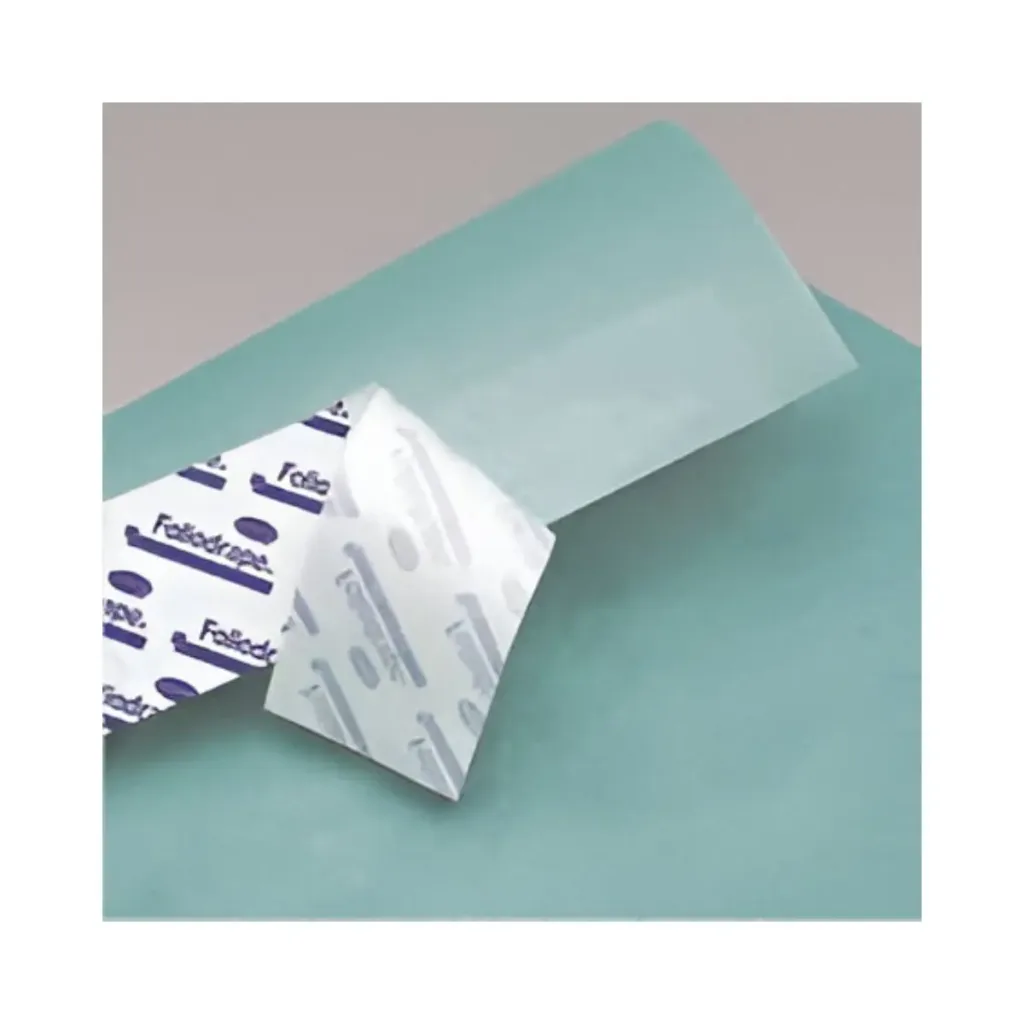
A surgical drape is a single-use cover placed over the operative site. In its fenestrated version it leaves only the working area exposed through an opening or fenestration, and some references have an adhesive border to fix the drape to the skin. The selection brings together sterile and non-sterile drapes, fenestrated and plain, made of plastic-coated viscose, 20 g absorbent viscose and two-layer non-woven (TNT) fabric.
When choosing, it is worth checking whether or not the drape has a fenestration, whether there is adhesive, the material, the sterility and the size. All of this determines whether the product suits the intended procedure and the way the surgical team works. This guide sets out those criteria.


Other related families
-
 Fenestrated Surgical Drapes with Adhesive
This is the core of this guide: drapes with an opening and adhesive border to fix the drape to the skin.
-
Surgical Drapes with Adhesive
An alternative when fixation is wanted without a fenestration.
-
 Sterile Fenestrated Absorbent Viscose 20 Grams
Brings together sterile fenestrated drapes made of absorbent viscose.
-
 Non-sterile Fenestrated Absorbent Viscose 20 Grams
For uses where a sterile barrier is not required.
-
 Operating theatre accessories
Accessories that go with the drape and complete the working surface.
- SURGICAL DRAPING Overview of surgical draping to locate the other related solutions.
Products in this guide
- Non-woven 29
- Viscose 16
- Sterile 20
- Non-sterile 2
- 20 g/m² 16
- 54 g/m² 3
- Box OF 40 3
- Box OF 150 2
- Box OF 120 1
- Box OF 15 1
- Box OF 170 1
- Box OF 300 1
- Box OF 320 1
- Box OF 350 1
-
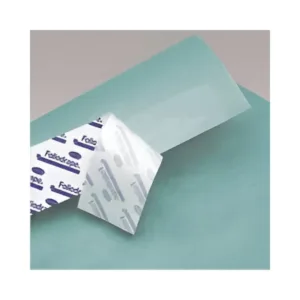
Sterile Disposable Surgical Field Drape Sheets of Non-Woven Fabric (TNT) of Absorbent Viscose with Adhesive and Fenestra Ø 8 cm – 20 g/m², 75 x 100 cm | Ref. 10531
100,80 € In stockAdd to basket -

Non-Sterile Disposable Field Drapes and Sheets of Absorbent Viscose (TNT) 20 g/m² – 75 x 100 cm, Circular Fenestration Ø 10 cm, Single-Use | Ref. 10231
76,48 € In stockAdd to basket -
Sterile Absorbent Viscose Surgical Field Drapes (TNT) 20 g/m² – 50 x 40 cm, Fenestration Ø 10 cm, Single-Use | Ref. 10302
124,99 € In stockAdd to basket -
Disposable Sterile Surgical Drapes of Absorbent Viscose (TNT) 20 g/m² – Circular Fenestration Ø 10 cm, 50 x 80 cm, Single-Use | Ref. 10304
91,35 € In stockAdd to basket -
Sterile Fenestrated Surgical Field Drape Sheet of Absorbent Viscose TNT 20 g/m² – 75 x 100 cm, Fenestration Ø 10 cm, Single-Use | Ref. 10331
90,34 € In stockAdd to basket -
Disposable Non-Sterile Surgical Field Drapes of Absorbent Viscose with Adhesive and 8 cm Fenestration – TNT 20 g/m², 50 x 80 cm | Ref. 10404
90,97 € In stockAdd to basket -
Sterile Disposable Surgical Field Drape Sheet of Absorbent Viscose 20 g/m² with Adhesive and Fenestration Ø 8 cm – 50 x 40 cm | Ref. 10502
120,20 € In stockAdd to basket -
Sterile Surgical Field Drape Sheets of Absorbent Viscose Non-Woven Fabric (TNT) 20 g/m², Fenestrated with Adhesive – Fenestration Ø 8 cm, 50 x 80 cm | Ref. 10504
101,43 € In stockAdd to basket
Buying and selection tips
-
Match the fenestration to the operative field
The opening must correspond to the area to be operated on. There are circular, oval and pear-shaped fenestrations, in various dimensions. Check the shape and size of the fenestration on each reference, and whether it is centred or offset, because this affects positioning on the table.
-
Decide whether you need a perimeter adhesive
The adhesive border fixes the drape to the skin and reduces the risk of it shifting. Adhesives that peel off without residue make removal easier at the end of the procedure. If the procedure is short and with little fluid load, a fenestrated drape without adhesive may be enough.
-
Compare the material
The selection includes drapes made of plastic-coated viscose, 20 g absorbent viscose and absorbent, waterproof two-layer TNT. Check the material of each reference and the barrier requirements of the procedure before deciding.
-
Sterility according to use
There are sterile and non-sterile drapes. Sterile ones are for uses where a sterile barrier is required; non-sterile ones are for uses where it is not. Check this in the name of each reference.
-
Size and presentation
Two-layer TNT drapes come in several sizes and in different box quantities. Calculate the surface you need to cover and the expected consumption before choosing the size and box.
Compatibility
- Plain drapes with adhesive
- They are used to complete the draping together with the fenestrated drape; check the composition and size of each piece.
Frequently asked questions
When is it worth buying a fenestrated drape with adhesive?
When you want fixation to the skin around the fenestration; adhesives that peel off without residue make removal easier at the end. For minor procedures with little fluid load, a drape without adhesive may be enough.
How do I choose the shape and size of the fenestration for a specific procedure?
The fenestration must correspond to the area to be operated on. There are circular, oval and pear-shaped openings in various dimensions; check the shape and measurements of each reference.
What is the difference between a sterile and a non-sterile drape?
The sterile one is used when a sterile barrier is required; the non-sterile one is for uses where it is not. Sterility is stated in the name of each reference.
Which material should I choose: viscose or two-layer TNT?
The selection includes plastic-coated viscose, 20 g absorbent viscose and absorbent, waterproof two-layer TNT. Compare the material of each reference with the barrier requirements of the procedure.
What should I check in the name before ordering a surgical drape?
Whether it is fenestrated or not, whether it has adhesive, whether it is sterile or non-sterile, the material, the size and the presentation (single units or box).
Common questions
Assuming all drapes in a family are fenestrated
There are fenestrated drapes and drapes without a fenestration, with or without adhesive. Check the name piece by piece.
Thinking that sterile and non-sterile are interchangeable
They are not: the intended use determines whether a sterile barrier is required. Check the sterility of each reference.
Believing that viscose and two-layer TNT are equivalent
They are different materials and each reference states its own. Compare them against the barrier requirements of the procedure.
More products in this guide
-
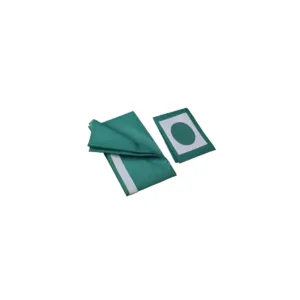
Disposable Non-Sterile Absorbent Viscose Surgical Field Sheets with Adhesive and Ø 8 cm Fenestration, 20 g/m², 75 x 100 cm | Ref. 10631
95,32 € In stockAdd to basket -
Sterile Disposable Surgical Field Drape of Absorbent Viscose 20 g/m², Fenestrated with Adhesive, Fenestration Ø 8 cm – 50 x 40 cm | Ref. 10702
168,65 € In stockAdd to basket -
Sterile Surgical Fenestrated Drape with Adhesive – Absorbent Viscose Non-woven TNT 20 g/m², 75 x 100 cm, Fenestration Ø 8 cm | Ref. 10731
104,83 € In stockAdd to basket -
Surgical Field Drape Sheets, Non-Sterile Fenestrated, Plasticised Viscose 20 g/m² – 50 x 40 cm, Fenestration Ø 10 cm | Ref. 11202
162,16 € In stockAdd to basket -
Sterile Fenestrated Surgical Field Drapes of Plasticised Viscose (TNT) – 20 g/m², 50 x 40 cm, Fenestra Ø 10 cm, Single-Use | Ref. 11302
119,85 € In stockAdd to basket -
Sterile Fenestrated Surgical Field Drape of Plasticised Viscose (TNT) with Ø 10 cm Fenestra, 20 g/m², 75 x 100 cm, Single-Use | Ref. 11331
109,52 € In stockAdd to basket -
Non-sterile Disposable Surgical Field Drape Sheets of Plasticised Viscose with Adhesive and Fenestration Ø 8 cm – TNT 20 g/m², 50 x 40 cm | Ref. 11402
141,41 € In stockAdd to basket -
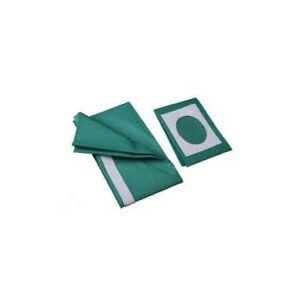
Sterile Surgical Field Drapes of Plasticised Viscose Non-Woven Fabric, Fenestrated with Adhesive (Fenestration Diameter 8 cm) 20 g/m², 75 x 100 cm | Ref. 117731
124,00 € In stockAdd to basket