
Sterile dressings: buying guide
81 products in the catalogue
A sterile dressing is a single-use product designed to cover and protect a wound or incision and to keep the area shielded from external contamination. The choice depends on the location, the extent of the area to be covered and the function expected of the product.
The range includes several formats: adhesive dressings with a central pad, transparent film dressings, IV fixation dressings, non-adhesive foam dressings, non-adherent dressings, burn dressings, and sterile gauze swabs and cotton balls. The purchase is decided by objective criteria: sterility, material, overall size and pad size, type of adhesive, box presentation and sterilisation method. This guide sets out those criteria so that the comparison between references is consistent.

Other related families
-
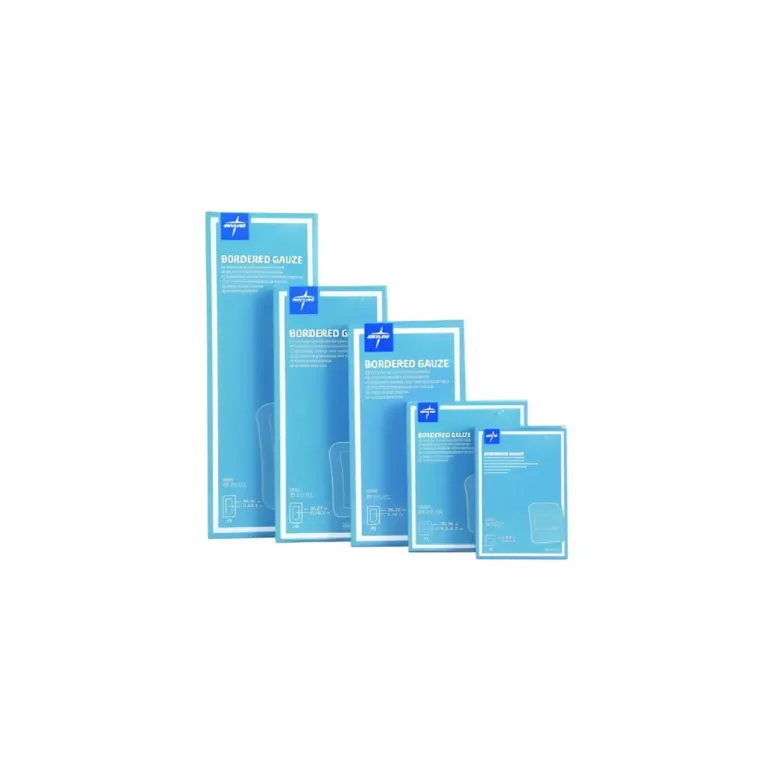
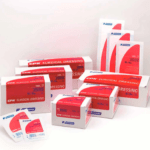 Central Compress Adhesive Dressing
Groups the formats with an adhesive border and central pad, which solve fixation in a single piece.
-
 Surgical Dressings
Brings together the larger-format sterile dressings, where sterility and absorption are declared as independent specifications.
-
 Dressing Retention
Necessary when you opt for a dressing without an adhesive border, because the retention is bought separately and must be consistent with the size of the chosen product.
Products in this guide
- Polyurethane 19
- Cotton 12
- Non-woven 7
- Foam 3
- Cellulose 1
- Nylon / polyamide 1
- Polyester 1
- Polyethylene 1
- Ethylene oxide 17
- Vapour 9
- Radiation 1
- Box OF 10 17
- Box OF 25 9
- Box OF 50 8
- Box OF 5 7
- Unit 6
- Box OF 100 5
- Box OF 1 3
- Box OF 600 3
- Medical device 54
- Sanitary kit 1
-
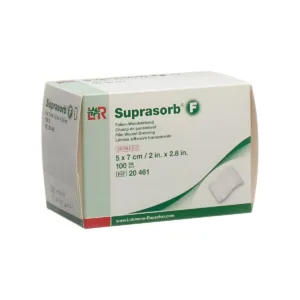
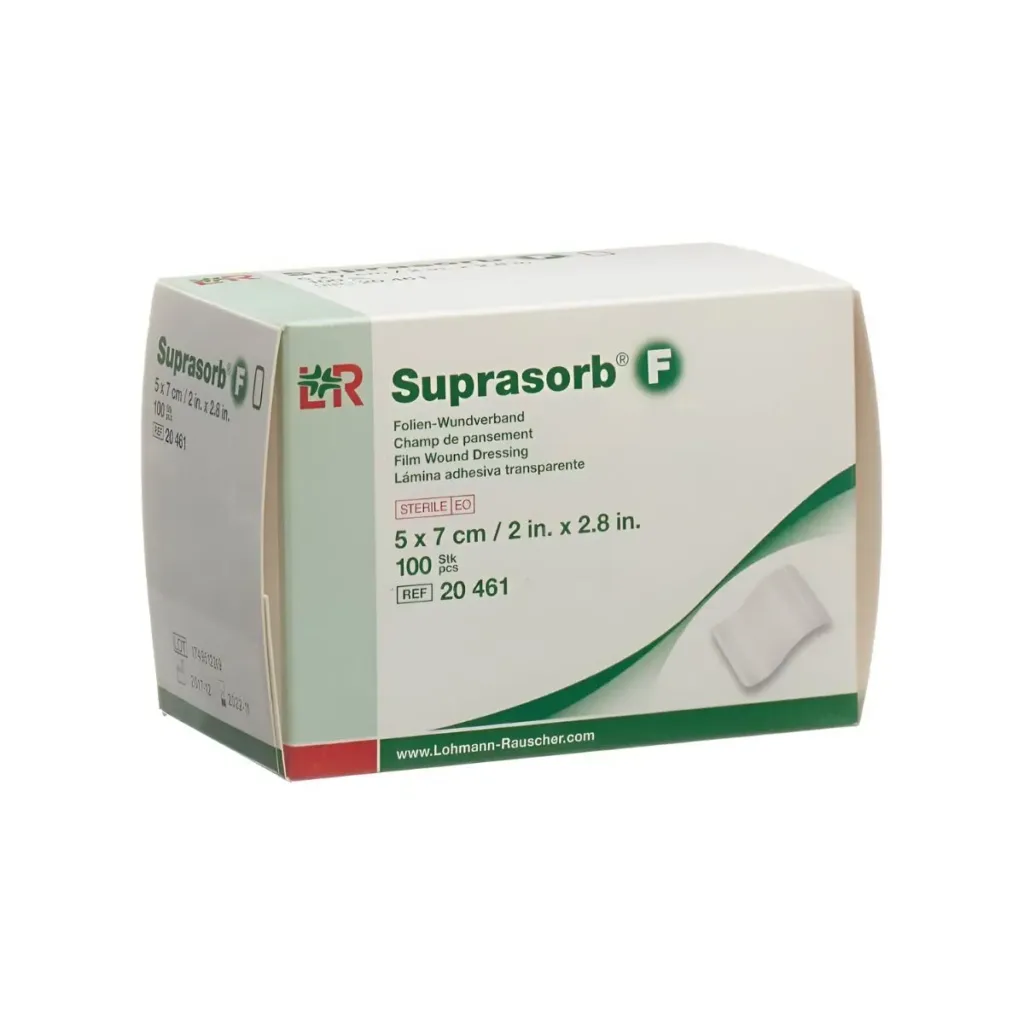
Latex-free Transparent Adhesive Dressing Suprasorb F (L&R) 5 x 7 cm – Ref. 20461 – Box of 100 Sterile Units for Superficial Wounds with Light Exudate
4,28 € In stockAdd to basket -
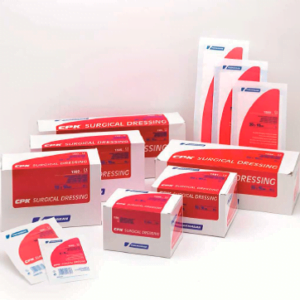
Sterile adhesive dressing with central compress CPK Surgical Dressing 10 x 10 cm – Box of 600 units (Ref. CPK1381)
57,51 € In stockAdd to basket -
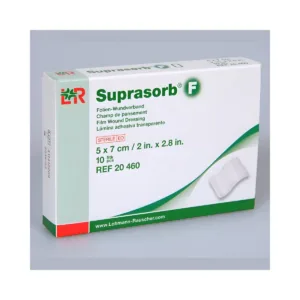
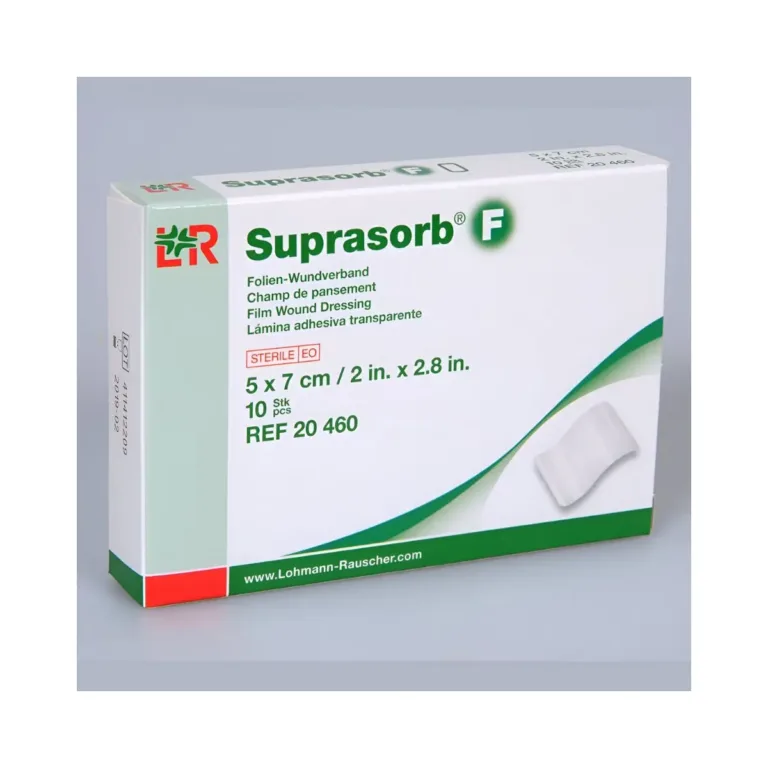
Suprasorb F Transparent Adhesive Dressing (L&R) 5 x 7 cm Ref. 20460 – Box of 10 Sterile Units, Latex-Free, for Superficial Wounds with Light Exudate
4,28 € In stockAdd to basket -
Sterile adhesive dressing with central compress CPK Surgical Dressing 15 x 10 cm – Box of 600 units (Ref. CPK1382)
74,82 € In stockAdd to basket -
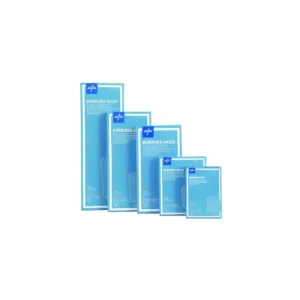
Island Dressing 10×20 cm with Hypoallergenic Adhesive and Absorbent Pad | Cahnos
28,88 € In stockAdd to basket -
Sterile adhesive island dressing CPK Surgical Dressing 30 x 10 cm with central absorbent compress and non-adherent layer – Box of 300 units (CPK1385)
90,60 € In stockAdd to basket -
Sterile adhesive dressing with central pad CPK Surgical Dressing 5 x 9 cm – Box of 1,200 units (Ref. CPK1379)
63,26 € In stockAdd to basket -
Sterile adhesive dressing with central compress CPK Surgical Dressing 6 x 8 cm – Box of 1,200 units (Ref. CPK1380)
63,26 € In stockAdd to basket
Buying and selection tips
-
Separate overall size from pad size
On a dressing with a border, the size on the label may refer to the whole product and not to the central pad. When comparing two references of the same nominal size, always ask for both figures: that of the adhesive outline and that of the pad. Without this information, two 10 x 10 cm products may cover different surfaces.
-
Specify which type of dressing you need
Transparent film, foam, IV fixation, non-adherent or burn dressings are different products even if they share a size. Establish the type first and then the size and presentation.
-
Check the adhesive and the fixation
Confirm in the description whether the product has an adhesive border or is a non-adhesive dressing that needs separate fixation. The description should state the type of adhesive and on which part of the dressing it is applied.
-
Ask for absorption in comparable data
To compare dressings of different construction, ask the manufacturer for absorption capacity data in the same unit. Without them, the decision is made only on the appearance of the product.
-
Check sterility and presentation
Verify that the reference declares sterility and individual packaging, and the number of units per box. Gauze swabs, cotton balls and dressings vary in presentation and sterilisation method, so it is worth standardising the criterion in the order.
Frequently asked questions
How do I tell an island-type adhesive dressing from a non-adhesive one when ordering?
The island type has adhesive around the edge and a central pad, so it stays in place on its own. The non-adhesive dressing rests on the area and needs separate fixation. Check in the description of each reference whether the border is adhesive before grouping them in the same order.
What data should I ask for to compare the absorption of two sterile dressings?
The absorption capacity expressed in the same unit for both products. With that figure, different constructions, such as foam or gauze, can be compared on the same scale.
How do I check that the dressing arrives sterile and is single-use?
The description must declare sterility and single use. Also check that the individual pack arrives intact.
What is the difference between a transparent film dressing and a foam one?
They are different constructions: film is a transparent sheet and foam is an absorbent material, non-adhesive on some references. Choose according to the function you need and compare size and presentation.
Common questions
Taking the size on the label as the size of the pad
On dressings with a border, the nominal size may be the overall size of the product and the pad is smaller. When comparing references, require both figures.
Assuming that every dressing is sterile
Sterility is a separate specification. Check it in the description of each reference and do not deduce it from the format or the appearance of the pack.
Confusing the border adhesive with the contact layer
They are two different elements: the adhesive that fixes the dressing to the skin and the layer that stays in contact with the covered area. When ordering a reference, specify which of the two you need.
More products in this guide
-
Sterile adhesive dressing 25 x 10 cm with absorbent central compress CPK Surgical Dressing (Ref. CPK1384)
62,15 € In stockAdd to basket -
Sterile adhesive dressing CPK Surgical Dressing 20 x 10 cm with absorbent central compress and non-adherent layer – Ref. CPK1383
50,32 € In stockAdd to basket -
Sterile adhesive dressing CPK Surgical Dressing 5 x 7 cm with central compress – Box of 1000 units (Ref. 1378)
44,24 € In stockAdd to basket -
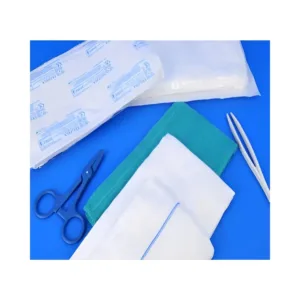
S/5 Sterile straight gauze pad 17 threads 45×45 cm – 2 layers sewn with radiological thread RX, 100% hydrophilic cotton UNE-EN 14079 (SKU 37094, box of 50 sachets × 5 units)
65,42 € In stockAdd to basket -
S/4 Sterile Gauze Pad 17 Threads 45×45 cm with Radiopaque Thread RX – 2 Sewn Layers, 100% Absorbent Cotton UNE-EN 14079 | Box of 50 Sachets × 4 units (SKU 37093)
53,25 € In stockAdd to basket -
S/5 Sterile gauze pad 17 threads 45×45 cm – 4 layers sewn with radiopaque RX thread, 100% hydrophilic cotton UNE-EN 14079, class IIa medical device (SKU 37374, box of 50 pouches × 5 units)
104,72 € In stockAdd to basket -
S/2 Gauze Pad 17 Threads 45×45 cm Sterile with X-ray Thread – 4 Plies Stitched and Overlocked, 100% Hydrophilic Cotton UNE-EN 14079, Class IIa (SKU 37371)
44,62 € In stockAdd to basket -
Gauze Compress 17 Threads 45×45 cm Sterile with Radiopaque Thread RX – S/2, 2 Sewn Layers, 100% Hydrophilic Cotton (SKU 37091)
44,50 € In stockAdd to basket
Keep exploring
- Absorbent dressings: buying guide
- Adhesive dressings: buying guide
- Adhesive plasters: buying guide for professionals
- Fixation dressings: buying guide
- Gauze for burns: buying guide
- How to choose dressings
- latex-free
- adhesive dressing
- cotton wool
- Dressings
- Sterile
- wound care
- Wound Dressings
- breathable
- non-woven
- gauze compresses