
Portable spirometer: buying guide
13 products in the catalogue
A portable spirometer is a lung function device that the professional can carry and use outside the testing laboratory: primary care consulting rooms, occupational medicine or respiratory units. It measures parameters such as FVC, VC, IVC and MVV and displays flow/volume and volume/time curves.
Very different formats coexist. There are pocket devices that pair by Bluetooth with a phone and have no screen or internal memory, and desktop units with a touchscreen, an integrated thermal printer and storage for thousands of tests; some also accept an oximetry module. Choosing well depends on where the device will be used, on whether a printed report needs to be handed over on the spot, on the consumables and on whether the data must be transferred to the electronic health record.
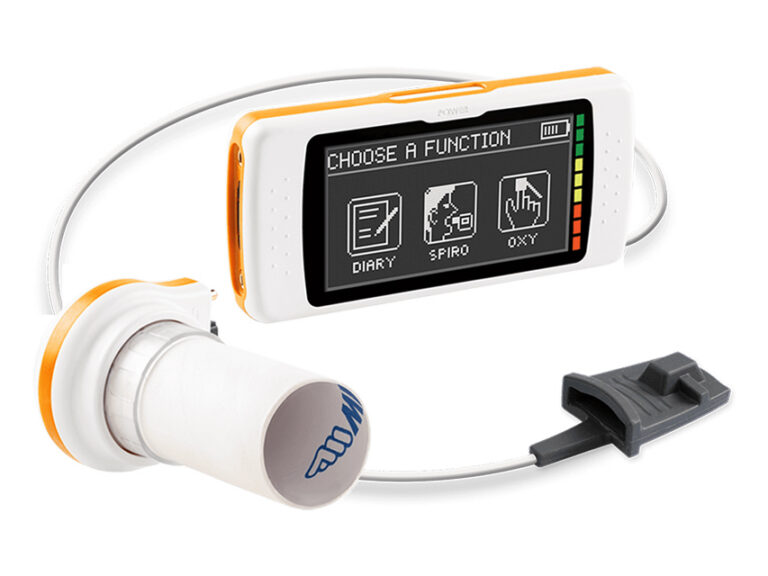
Other related families
-
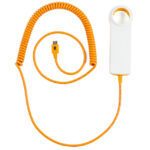 Portable Digital Spirometers
The core family of this guide: it brings together handheld and transportable desktop units for lung function testing.
-
 Disposable Spirometry Mouthpieces
A continuous-use consumable: you need to get the right size for the chosen transducer.
-
 Bacterial Filters for Spirometry
A consumable that is combined with the transducer and affects hygiene between patients.
-
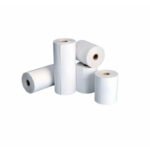 Spirometry Thermal Paper
Needed if the device has an integrated thermal printer and reports are handed out in the consulting room.
-
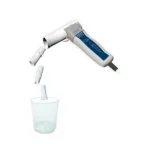 Transducers
The measurement module determines which consumables and which calibration the device needs.
Products in this guide
- Rechargeable battery 10
- Batteries 4
- Mains power 1
- Unit 12
- Kit 1
-
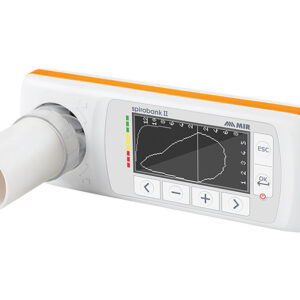
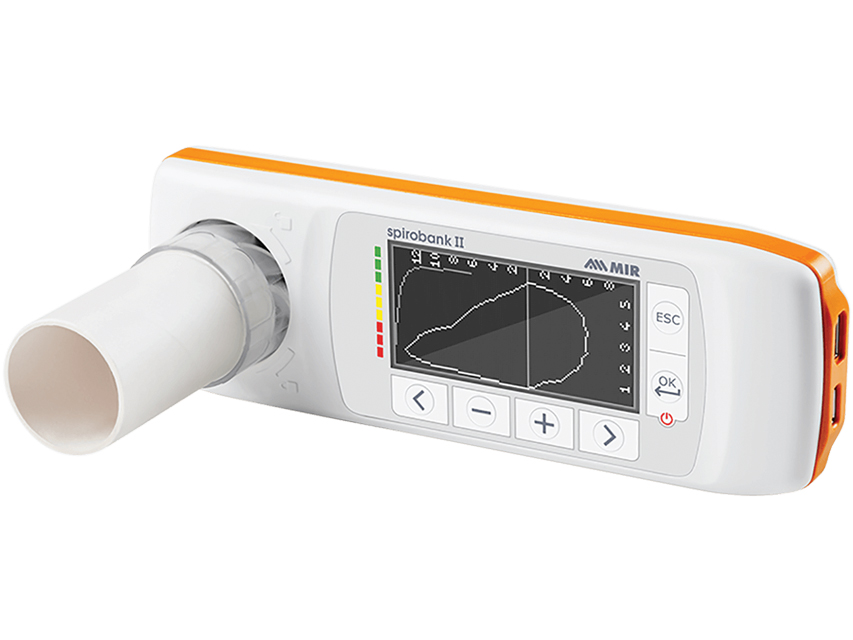
Portable Spirometer SPIROBANK II SMART with MIR SPIRO Software for PC (1-Year Licence) | Ref. 33512
1.510,50 € In stockAdd to basket -
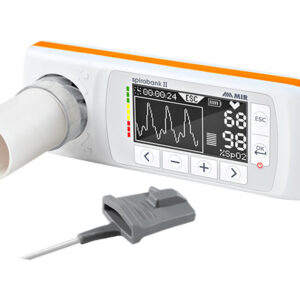
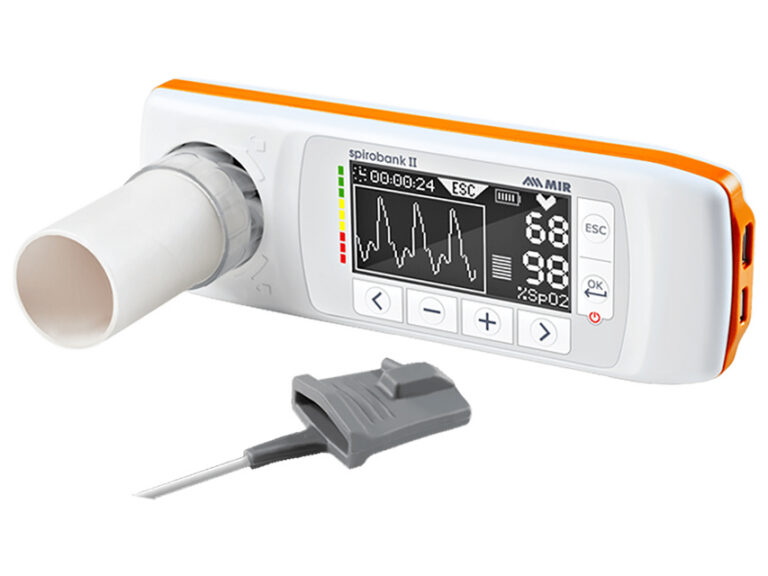
Portable Spirometer SPIROBANK II SMART+ with SpO2 Oximetry Module and MIR SPIRO Software | Ref. 33514
1.881,00 € In stockAdd to basket -
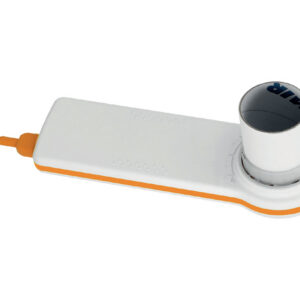
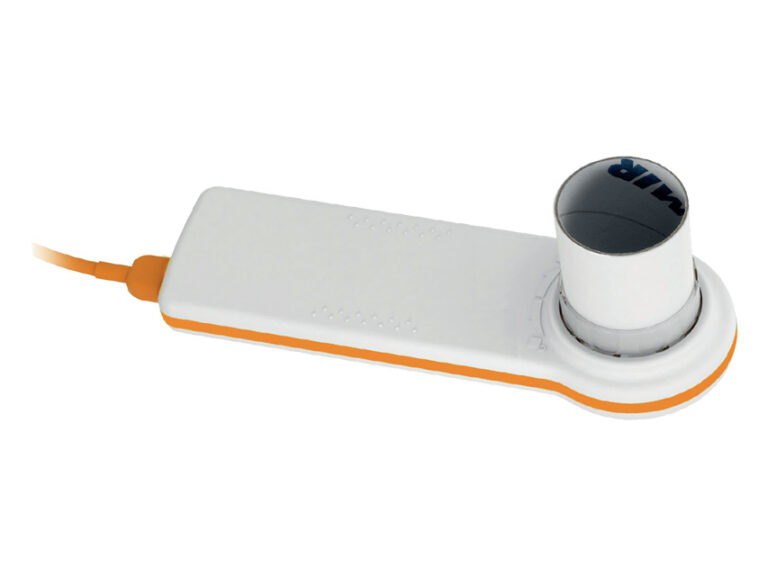
Portable digital MINISPIR spirometer with MIR SPIRO PC software – Ref. 33528 (Class II A)
1.444,00 € In stockAdd to basket -
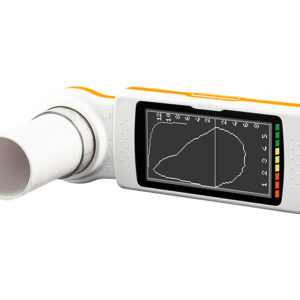
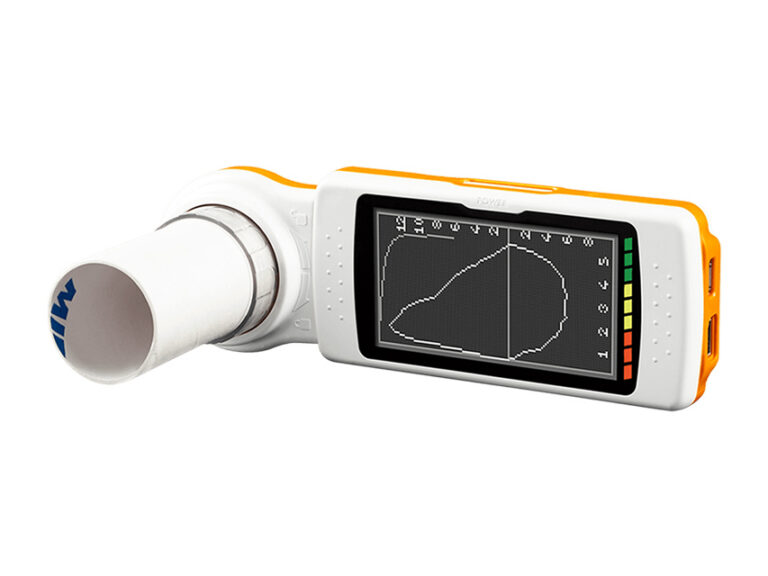
Portable Digital Spirometer SPIRODOC with MIR SPIRO PC Software via Bluetooth | Ref. 33532
1.729,00 € In stockAdd to basket -
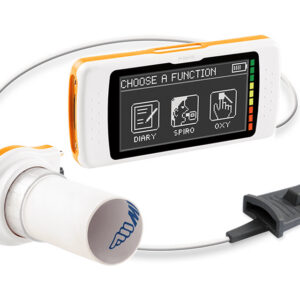
Spirodoc Portable Spirometer + Pulse Oximeter with MIR Spiro PC Software (Bluetooth) | Ref. GM33534
1.995,00 € In stockAdd to basket -

Portable pocket digital spirometer SP-10 with Bluetooth | Lung function FVC, FEV1, PEF and FEF with TFT screen and PHMS app | Ref. GM33535
294,50 € In stockAdd to basket -
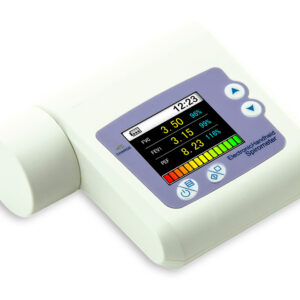
SP-10 portable digital pocket spirometer | Pulmonary function FVC, FEV1, PEF and FEF with TFT screen and PHMS app | Ref. GM33536
199,50 € In stockAdd to basket -
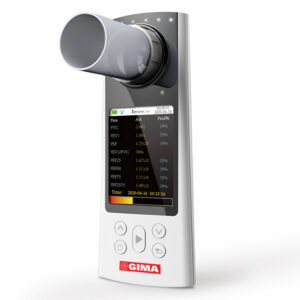
Handheld portable digital spirometer SP-80B | Pulmonary function FVC, FEV1, PEF | Colour LCD screen | Ref. GM33551
237,50 € In stockAdd to basket
Buying and selection tips
-
Transducer: turbine, Fleisch or disposable
The element that measures flow determines the consumables and the maintenance. There are turbine modules, Fleisch-type modules and disposable transducer modules, and each comes with different consumables. Check that the chosen module accepts the type of mouthpiece and filter already used in your department.
-
Battery life and type of power supply
Some handheld units run on alkaline batteries or a rechargeable lithium battery, and desktop units include a rechargeable battery and mains power. Declared battery life varies greatly: some units claim about 50 hours of operation and others around an hour and a half of continuous use. If the device will accompany the professional on visits, this is a decisive detail.
-
Screen and printer: a report without a computer
A desktop spirometer with a 7-inch touchscreen and an integrated thermal printer lets you hand over the report without depending on a PC. Some models use 112 mm paper. If your consulting-room workflow requires an immediate report, this is the point that most affects the choice.
-
Connectivity and transfer to the health record
Check whether the device connects by USB, by Bluetooth or both, and whether the software supports integration with the electronic health record. It is also worth knowing whether the software runs on your department's desktop operating systems and whether updates are included.
-
Optional oximetry module
Some models accept an oximetry module that adds a spot check of saturation and pulse. If the department only performs spirometry, that module may not get daily use.
-
Internal memory and data management
Some devices store more than 10,000 spirometry tests, which lets you work in stand-alone mode and transfer the data afterwards. Others store nothing and depend entirely on the mobile device they connect to.
Compatibility
- Disposable turbine with mouthpiece
- Some models use a single-patient disposable turbine, individually packaged. Confirm which mouthpiece and which filter it needs before ordering.
- Calibration syringe, nose clip and carry bag
- These are listed as optional accessories on some desktop units and it is worth planning for them when ordering, together with the transducer holder.
Frequently asked questions
What does it mean to choose a pocket spirometer that works only with a mobile app?
In some models it means the device has no screen or internal memory: the test is seen in real time on the phone screen and the result is shared as a PDF. It is a very lightweight option, but it means you must always carry the phone or tablet.
What is the day-to-day difference between a disposable turbine and a reusable one?
The disposable turbine is single-patient and comes individually packaged; the reusable one follows the manufacturer's instructions for disinfection and calibration. Choose according to your department's workflow.
Is the oximetry module worth it if I only do spirometry?
Only if you will be performing saturation checks: the module adds a spot check of saturation and pulse. If the intended use is spirometry only, it adds no daily value.
What real battery life can I expect from a portable spirometer?
Declared figures vary greatly depending on the format: some handheld units claim about 50 hours on one charge and some desktop units around an hour and a half. Compare the figure with the intended use before deciding.
How do I check that the device will transfer data to my electronic health record?
Check whether the device's software supports integration with the electronic health record and whether it runs on your department's desktop operating systems. Also confirm whether updates are included.
Which consumables should I plan for when buying a portable spirometer?
Besides the transducer, plan for mouthpieces, filters, nose clips and, on devices with a printer, rolls of thermal paper. On desktop models, the calibration syringe and the carry bag may be optional.
Common questions
Thinking that a pocket spirometer stores the tests
Some app-based devices have no internal memory or screen and do not record data on the device: the result lives on the phone. If you need a history on the device itself, choose a model with internal memory.
Assuming that calibration is the same on all devices
Some models let you calibrate on the device itself and generate a printable report. Check on each model how it is calibrated and whether it needs a calibration syringe.
Confusing a desktop spirometer with a handheld one
They do not share format or features: desktop units integrate a touchscreen, printer and large internal memory, whereas pocket ones prioritise small size and connection to the phone. Decide the scenario of use first and then the format.
More products in this guide
-
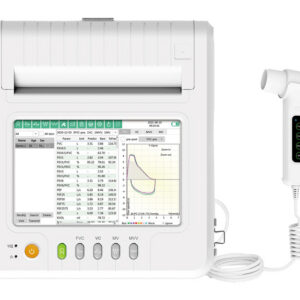
Portable digital spirometer SP-100B with 10.1″ touchscreen and integrated thermal printer | Pulmonary function FVC, FEV1/FVC, VC, MVV and MV | Ref. GM33554
In stockRequest a quote -
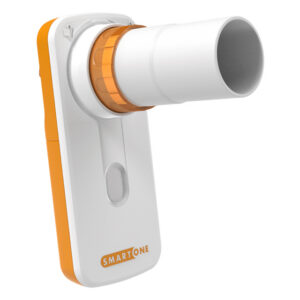
Portable spirometer SMART ONE with smartphone app – Measurement of FEV1 and peak expiratory flow (Bluetooth 4.0, iOS and Android) · Ref. 33681
114,00 € In stockAdd to basket -
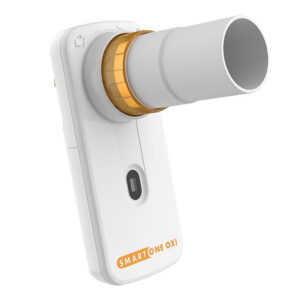
Portable SMART ONE OXI spirometer with smartphone app – FEV1 and peak expiratory flow measurement (Bluetooth 4.0, iOS and Android) · Ref. 33684
147,25 € In stockAdd to basket -
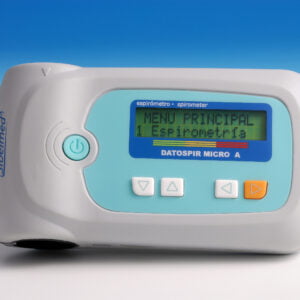
Portable digital spirometer Datospir Micro A (Sibelmed) – Bidirectional turbine, clinical and home mode, USB connection and W20s software | Ref. 02072
800,00 € In stockAdd to basket -
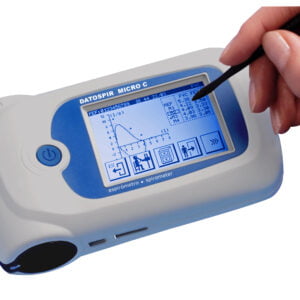
Portable digital spirometer Sibelmed Datospir Micro C (Ref. 02073) with W20s software — bidirectional volumetric turbine, PDA-type touchscreen, USB/Bluetooth/RS232 and database of more than 1,000 tests | Clinical and home spirometry
1.000,00 € In stockAdd to basket