
How to choose a medical syringe
58 products in the catalogue
A medical syringe is a device made up of a graduated barrel, a plunger and a connection tip. The products include two-part and three-part syringes, with or without a needle, insulin syringes, large-volume irrigation syringes and syringes with a catheter tip. This guide deals exclusively with the medical syringe.
Choosing well is not just a matter of getting the volume right. The connection, the number of parts, the printed scale and the presence or absence of a needle are criteria that rule out products before size does. A syringe of the right volume but with the wrong connection is no use for the intended purpose. This guide sets out these criteria for a professional buyer: what to state on each order line and what to check before completing the purchase.
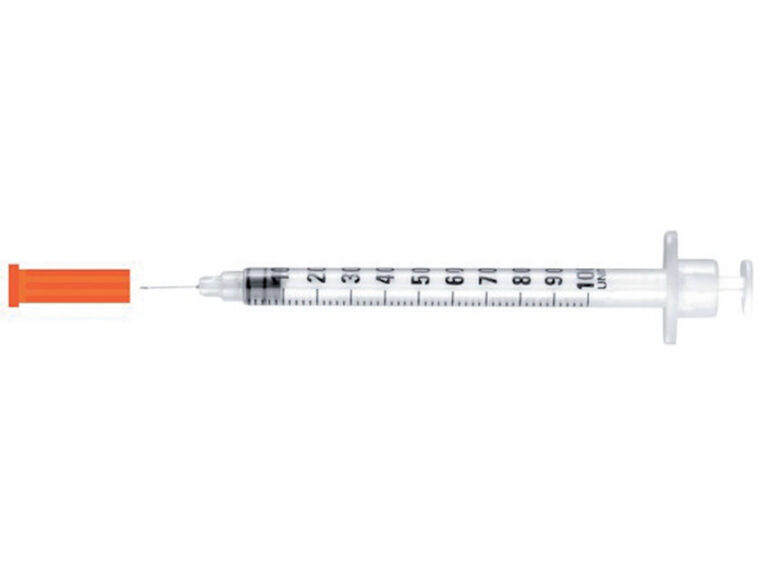
Other related families
Products in this guide
- 0.3 ml 1
- 0.5 ml 3
- 1 ml 8
- 2 ml 4
- 2.5 ml 1
- 3 l 1
- 3 ml 5
- 5 ml 9
- Polypropylene 13
- Stainless steel 3
- Aluminium 1
- Nylon / polyamide 1
- Polyethylene 1
- PVC 1
- Single-use 18
- Reusable 2
- Box OF 100 36
- Unit 6
- Box OF 25 4
- Box OF 50 3
- Box OF 30 2
- Box OF 200 1
- Box OF 300 1
-
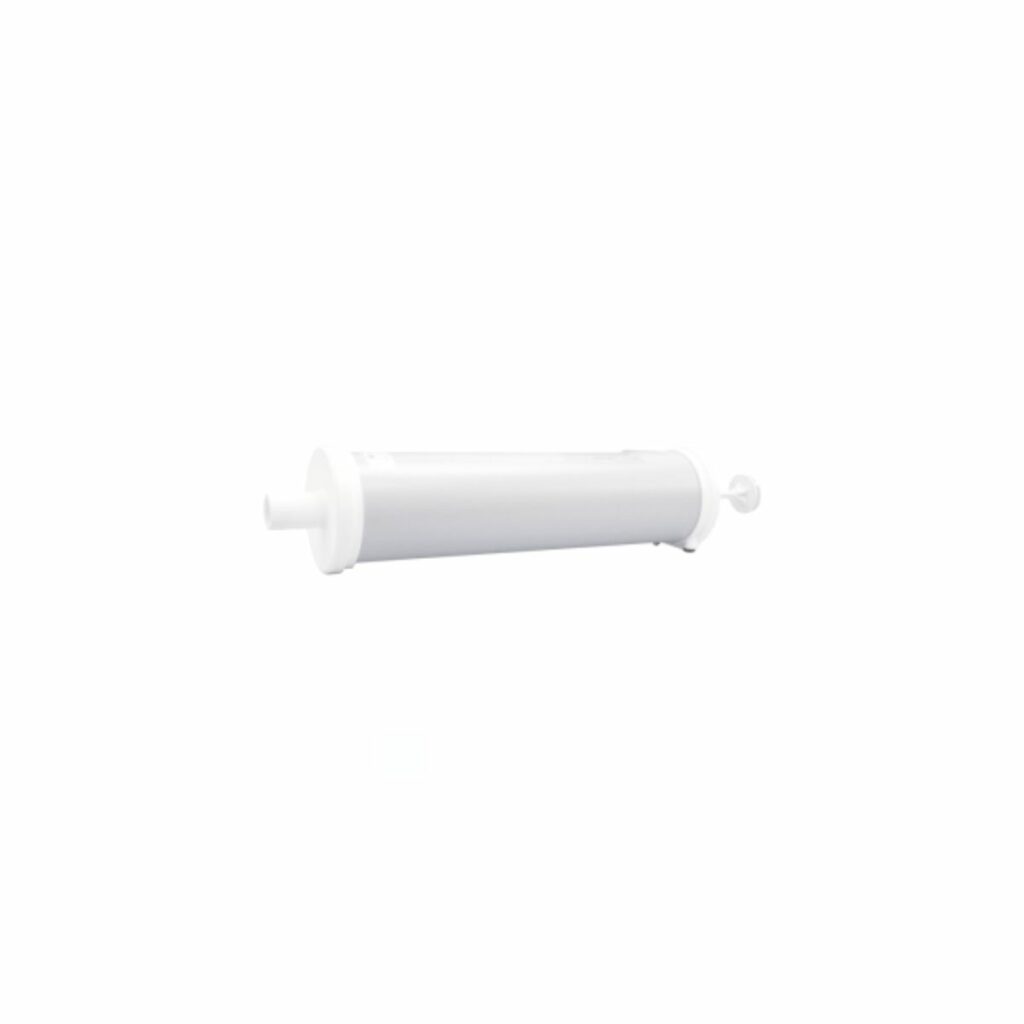
S3000-3L calibration syringe (3 L) for spirometers – Certified accuracy ±0.5 % | Ref. 08290
375,00 € In stockAdd to basket -
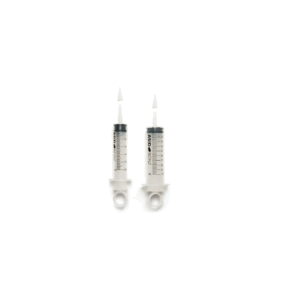
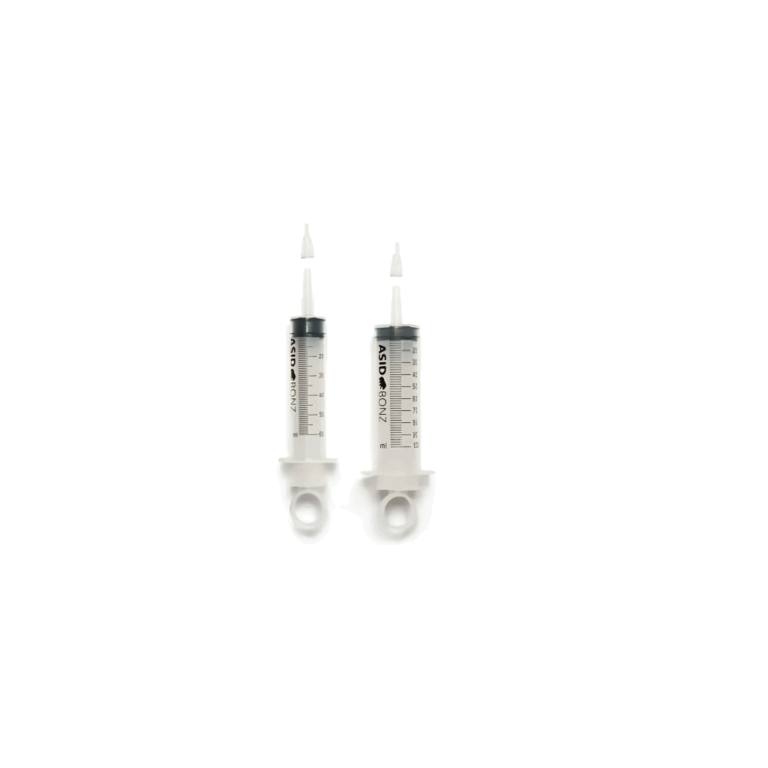
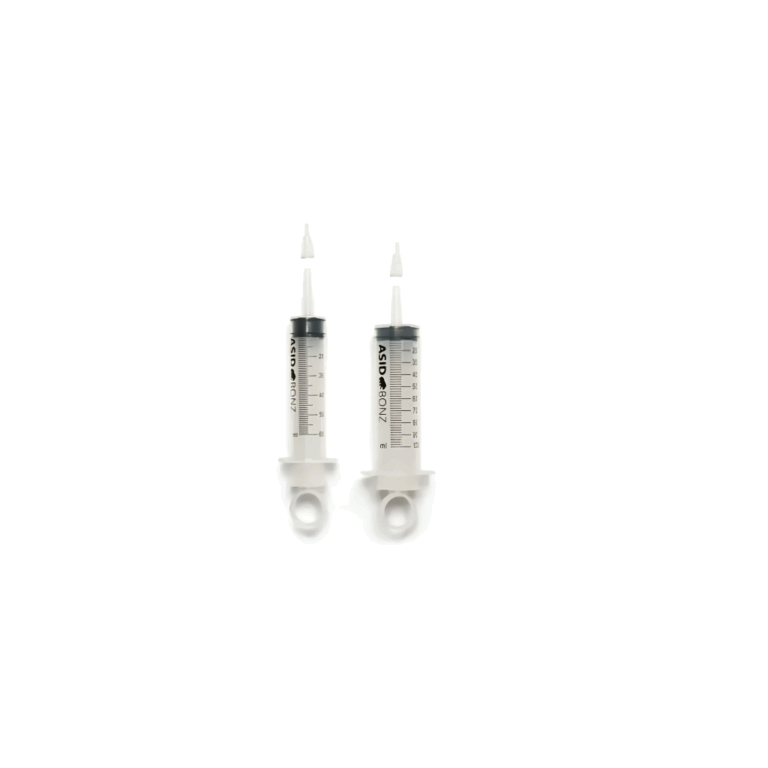
Piston Irrigation Syringe 60 ml (Ref. 620060) | Catheters and Drainage Systems
26,95 € In stockAdd to basket -
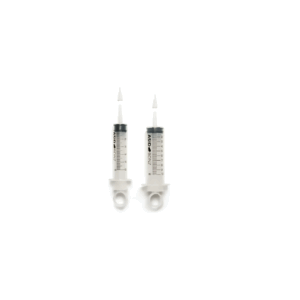
Piston Irrigation Syringe 100 ml – Ref. 620100 | Catheters and Drainage Systems
32,73 € In stockAdd to basket -

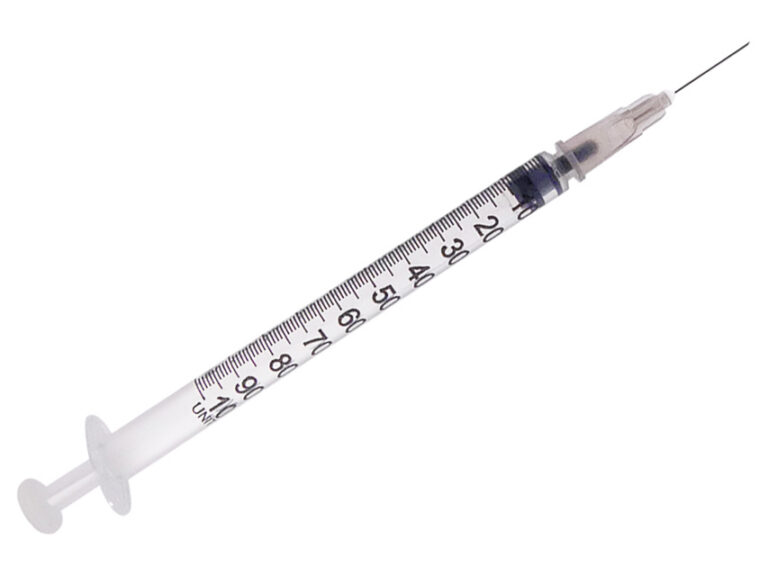
Dead-Space-Free Insulin Syringe 1 ml with Assembled Needle 25G × 16 mm (0.5 × 16 mm) · Box of 100 units (Ref. 23802)
9,79 € In stockAdd to basket -
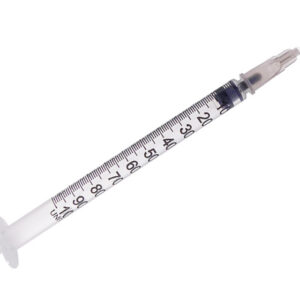
Insulin Syringe without Dead Space 1 ml with Assembled Needle 27G × 13 mm (0.4 × 13 mm) · Box of 100 units (Ref. 23803)
9,79 € In stockAdd to basket -
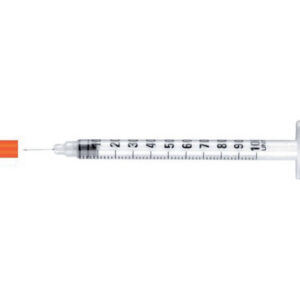
No Dead Space Insulin Syringe 0.5 ml · Fixed Needle 30G × 8 mm (0.3 × 8 mm) · Box of 100 units (Ref. 23805)
16,72 € In stockAdd to basket -
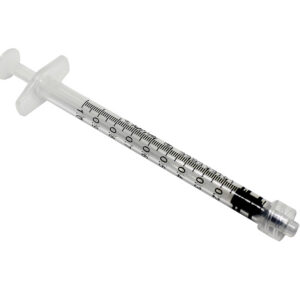
3-piece needle-free syringes (INJ/LIGHT line) – Luer Lock, centric and eccentric cone, 1 to 60 ml | Refs. GM23806 to GM23819
Price range: 7,03 € through 16,15 € In stockSelect options This product has multiple variants. The options may be chosen on the product page -
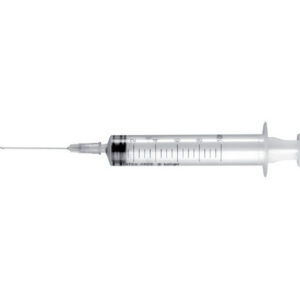
3-piece syringes with needle (INJ/LIGHT Line) – Central and eccentric Luer cone, 1 to 20 ml | Refs. GM23822 to GM23838
Price range: 8,84 € through 31,35 € In stockSelect options This product has multiple variants. The options may be chosen on the product page
Buying and selection tips
-
Nominal volume and graduation are not the same thing
The nominal volume is the stated capacity of the syringe, but the printed graduation can exceed that nominal figure, so check both before deciding. At small volumes, the scale available affects how easily it can be read. On insulin syringes the scale is expressed in units, not millilitres.
-
Settle the connection before the volume
The connection is the criterion that rules out the most products: the Luer tip may be concentric or eccentric, friction-fit (Luer slip) or threaded (Luer lock), and there are syringes with a catheter tip. Choosing the connection first avoids buying a syringe that cannot then be attached to the destination equipment.
-
Two-part or three-part
Two-part syringes have no rubber seal and three-part syringes have a rubber-tipped plunger. This difference affects how smoothly the plunger moves, so it should be stated when comparing products.
-
With or without needle
There are needle-free syringes and syringes with an attached needle, such as insulin syringes, where you should also settle the needle gauge and length. State both on the order.
-
Materials and latex-free status
Check the material of the barrel and plunger and whether latex is present or absent. Some three-part syringes are declared latex-free.
Compatibility
- Luer slip and Luer lock tip
- The Luer slip is a friction fit and the Luer lock has a thread. Check that the syringe tip matches that of the equipment it will be connected to.
- Concentric and eccentric tip
- Some products offer a concentric tip and others an eccentric one. This information must appear on the order.
Frequently asked questions
What is the difference between a two-part and a three-part syringe?
The two-part syringe has no rubber seal, while the three-part syringe has a rubber-tipped plunger. This difference affects how smoothly the plunger moves.
How do I check that a syringe fits the equipment I already have?
Check the type of tip (Luer slip, Luer lock or catheter tip) and whether it is concentric or eccentric. Volume alone does not guarantee that it can be connected.
What should I state when ordering insulin syringes?
The volume (for example 0.5 or 1 ml), the needle gauge and length, and whether it is a low dead space type. Also check the printed scale.
Which syringe do I need for large-volume irrigation?
There are irrigation syringes of 50/60 ml and 100 ml with a catheter tip or Luer adaptor. Settle the volume, the type of tip and whether the product is latex-free.
Common questions
The nominal volume and the graduation of the syringe are always the same
Not always: the graduation can exceed the nominal volume, so check both figures when comparing products.
If the syringe has no needle, stating the volume is enough
You must also state the connection, the number of parts and the scale.
All 10 ml syringes are equivalent
They may differ in the number of parts and in the tip (Luer slip, Luer lock, concentric or eccentric). Compare products on these details and not on volume alone.
More products in this guide
-
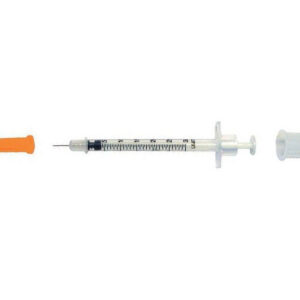
BD Micro-Fine™ 0.3 ml Insulin Syringe with Fixed 30G × 8 mm Needle – Ref. 324826 | Box of 100 units
15,20 € In stockAdd to basket -
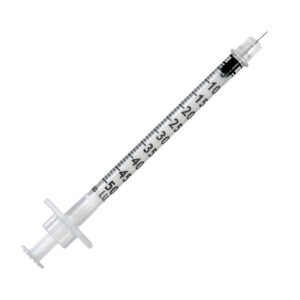
BD Micro-Fine™ 0.5 ml Insulin Syringe with Fixed 30G × 8 mm Needle – Ref. 324825 | Box of 100 units
14,73 € In stockAdd to basket -
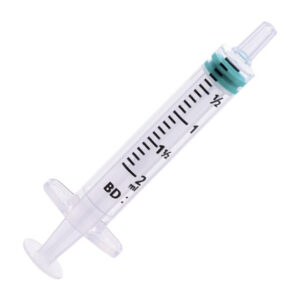
BD Emerald needle-free syringes 2, 5 and 10 ml – Central Luer Slip tip | Box of 100 units
Price range: 8,55 € through 12,54 € In stockSelect options This product has multiple variants. The options may be chosen on the product page -
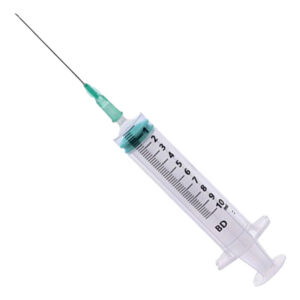
BD Emerald 10 ml syringe with 21G needle (0.8 x 40 mm) – Luer Slip central tip | Box of 100 units
16,34 € In stockAdd to basket -
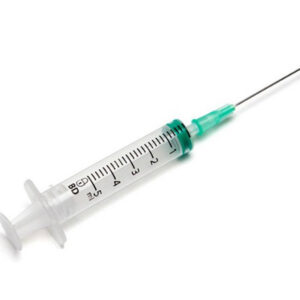
BD Emerald 5 ml syringe with 21G needle (0.8×40 mm) – central Luer Slip tip, needle detached | Box of 100 units
14,25 € In stockAdd to basket -
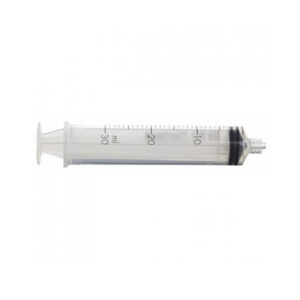
BD Plastipak™ syringes without needle with Luer Lock cone (1-50 ml) | Ref. 23872/23873/23874/23882/23883/23884
Price range: 20,90 € through 46,55 € In stockSelect options This product has multiple variants. The options may be chosen on the product page -
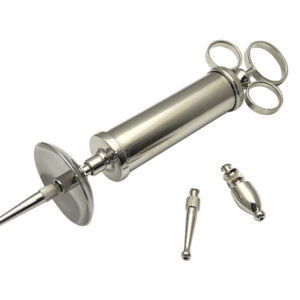
Schimmelbusch 50 cc brass ear syringe (Ref. 25835) for ENT irrigation
118,75 € In stockAdd to basket -
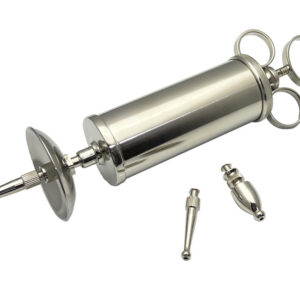
Schimmelbusch 100 cc brass ear syringe (Ref. 25836) for ENT irrigation
128,25 € In stockAdd to basket