
Insulin syringes: buying guide
9 products in the catalogue
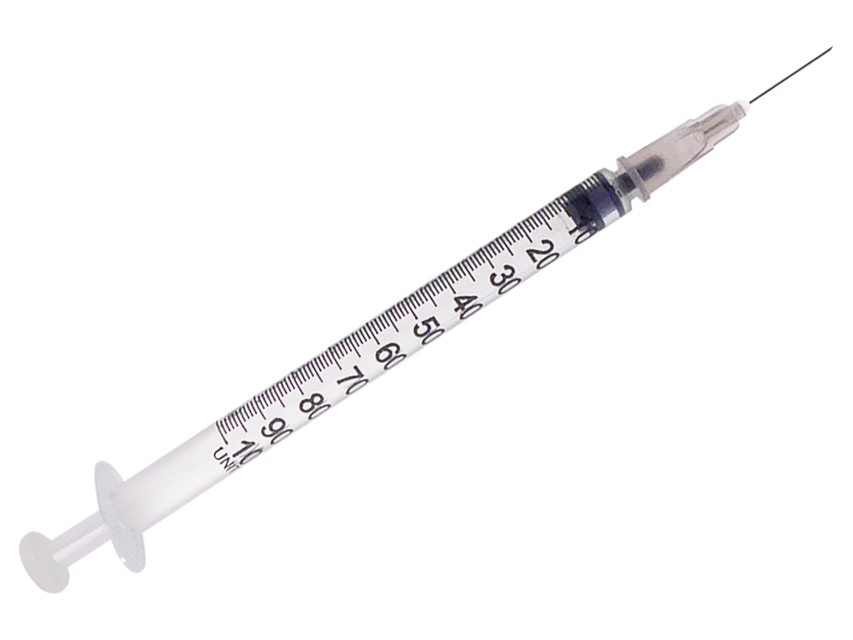
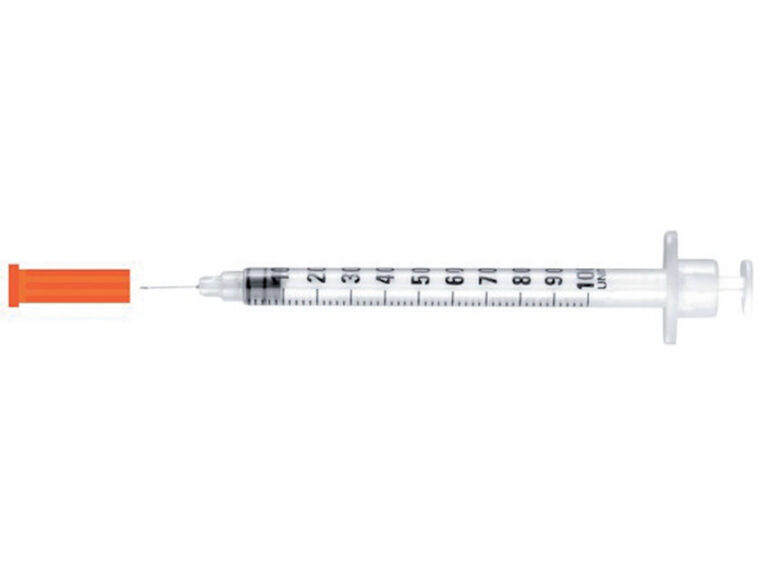
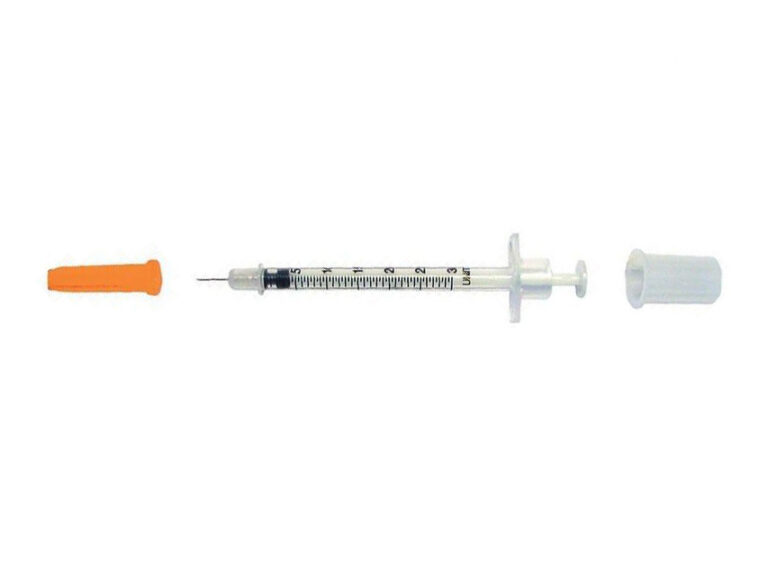
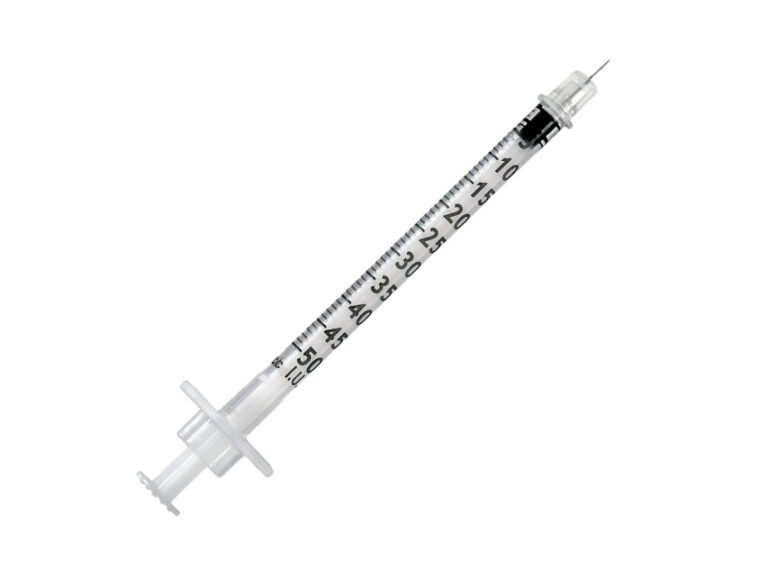
The insulin syringe is a sterile, single-use medical device of small volume with an integral needle, whose barrel is graduated in insulin units as well as in millilitres. It is supplied individually packed, and this combination of a scale in units, a fixed needle and a reduced volume is what distinguishes it from an ordinary hypodermic syringe.
The range is organised into three capacities (0.3 ml, 0.5 ml and 1 ml) with a fixed needle of 25G to 30G and lengths of 8 to 16 mm depending on the product. There are two-part and three-part syringes and U-100 scale versions, so the professional buyer does not choose by capacity alone, but by scale legibility, type of construction and needle characteristics.
Other related families
Products in this guide
- 0.3 ml 1
- 0.5 ml 3
- 1 ml 5
- 12 × 0.3 mm 2
- 16 × 0.5 mm 1
- 16/0.5 1
- 29G*13MM 2
- 30G*8MM 2
- 30G*13MM 1
- 12*0.3 1
- 16/0.5 1
- 29G*13MM 2
- 30G*8MM 2
- 30G*13MM 1
- 25 g 1
- 29 g 1
- 30 g 2
-

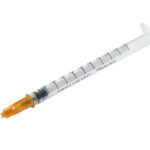
Dead-Space-Free Insulin Syringe 1 ml with Assembled Needle 25G × 16 mm (0.5 × 16 mm) · Box of 100 units (Ref. 23802)
9,79 € In stockAdd to basket -
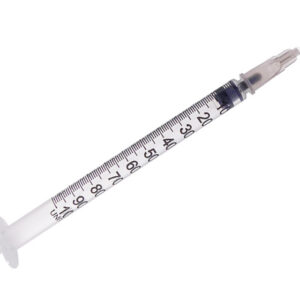
Insulin Syringe without Dead Space 1 ml with Assembled Needle 27G × 13 mm (0.4 × 13 mm) · Box of 100 units (Ref. 23803)
9,79 € In stockAdd to basket -
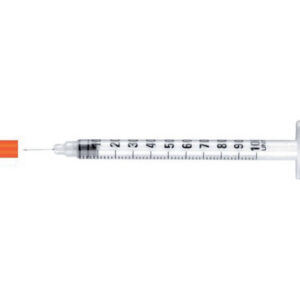
No Dead Space Insulin Syringe 0.5 ml · Fixed Needle 30G × 8 mm (0.3 × 8 mm) · Box of 100 units (Ref. 23805)
16,72 € In stockAdd to basket -
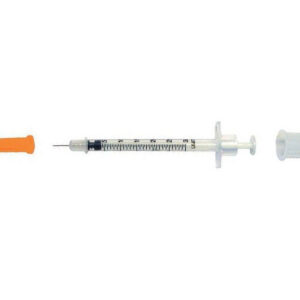
BD Micro-Fine™ 0.3 ml Insulin Syringe with Fixed 30G × 8 mm Needle – Ref. 324826 | Box of 100 units
15,20 € In stockAdd to basket -
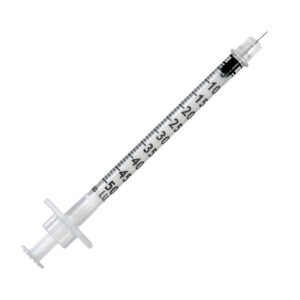
BD Micro-Fine™ 0.5 ml Insulin Syringe with Fixed 30G × 8 mm Needle – Ref. 324825 | Box of 100 units
14,73 € In stockAdd to basket -
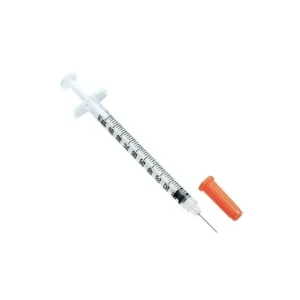
Insulin Syringe Nipro 0.5 ml U-100 with Fixed Needle 29G × 13 mm – Box of 100 units (Ref. SYMS05U1002913B-EC)
10,13 € In stockAdd to basket -
Insulin syringe Nipro 1 ml with needle 12 × 0.3 mm – Box of 100 units
8,61 € In stockAdd to basket -
Insulin syringe Nipro MYSHOT™ 1 ml U-100 3-part with fixed needle 30G × 13 mm – Sterile, single-use – Box of 100 units (Ref. SYMS1U1003013B-EC)
10,13 € In stockAdd to basket
Buying and selection tips
-
Check the scale against the vial
The insulin syringe is graduated in insulin units. Confirm that the printed scale (for example U-100) is the one that corresponds to the product to be used, as not all scales are interchangeable.
-
Two-part or three-part: they are not the same
Some syringes are three-part, with a plunger with an elastomer seal in a polypropylene barrel, and others are two-part, without a rubber seal. The feel of the plunger travel changes, so it is advisable to settle the type before standardising the order.
-
Specify needle gauge and length
The range includes fixed needles of 25G, 27G, 29G and 30G, with lengths of 8, 12, 13 and 16 mm depending on the product. State both figures, gauge and length, in the order, because the barrel capacity does not determine them.
-
Look at the fineness of the graduation
Compare the graduation of the 0.3, 0.5 and 1 ml versions, as the scale is finer the smaller the barrel. Consider the legibility of the markings and the stated residual volume, which is the amount left in the hub and varies by model.
-
Require individual sterile packaging
Insulin syringes are supplied sterile and individually packed, in boxes of 100 units. Check the type of packaging and the units per box for each product before confirming the order.
-
Check latex and plasticisers
Some products state that they are free of latex and of PHT, DEHP, PVC and BPA. If your facility requires these, note them in the request and check them in the data for each product, because not all of them state this.
Frequently asked questions
How do I tell a three-part insulin syringe from a two-part one when buying?
The three-part syringe has an elastomer seal on the plunger and the two-part syringe does not. You can tell them apart from the component list and the plunger description of each product.
Which scale should the syringe have for the vial I use?
The syringe and the vial must share the same stated concentration, for example U-100. Check the printed scale before confirming the order.
Which needle gauge and length should I order for an insulin syringe?
The products in the range have a fixed needle of 25G to 30G and lengths of 8 to 16 mm. Both figures must be stated in the order, because the barrel volume does not fix them.
Why does residual volume matter when choosing an insulin syringe?
Because it is the amount left in the hub, and the figure varies with the model. In a small barrel that remainder weighs proportionally more than in a 1 ml one.
Is individual sterile blister packaging a buying criterion for insulin syringes?
Yes, when the product is kept in a dressing trolley or first-aid kit: individual packaging maintains sterility until use. Also check the units per box for each product.
Common questions
Confusing the insulin syringe with the 1 ml tuberculin syringe
They share the same volume but not the scale: the tuberculin syringe is graduated in millilitres, whereas the insulin syringe is graduated in units. Check that the product expressly states an insulin scale.
Taking it for granted that any small syringe with a fine needle will do
The fine needle does not define the product: the scale in insulin units does. A 1 ml syringe graduated only in millilitres is not an insulin syringe.
Assuming that low dead space means zero residual volume
No: the technical data state a minimum, not zero, residual volume, and the figure varies with the model. Read it in the chosen product before comparing two versions of the same capacity.
Reusing the syringe because the volume is small
They are sterile, single-use products, individually packed. They must not be reused.