
How to choose a hypodermic needle
54 products in the catalogue
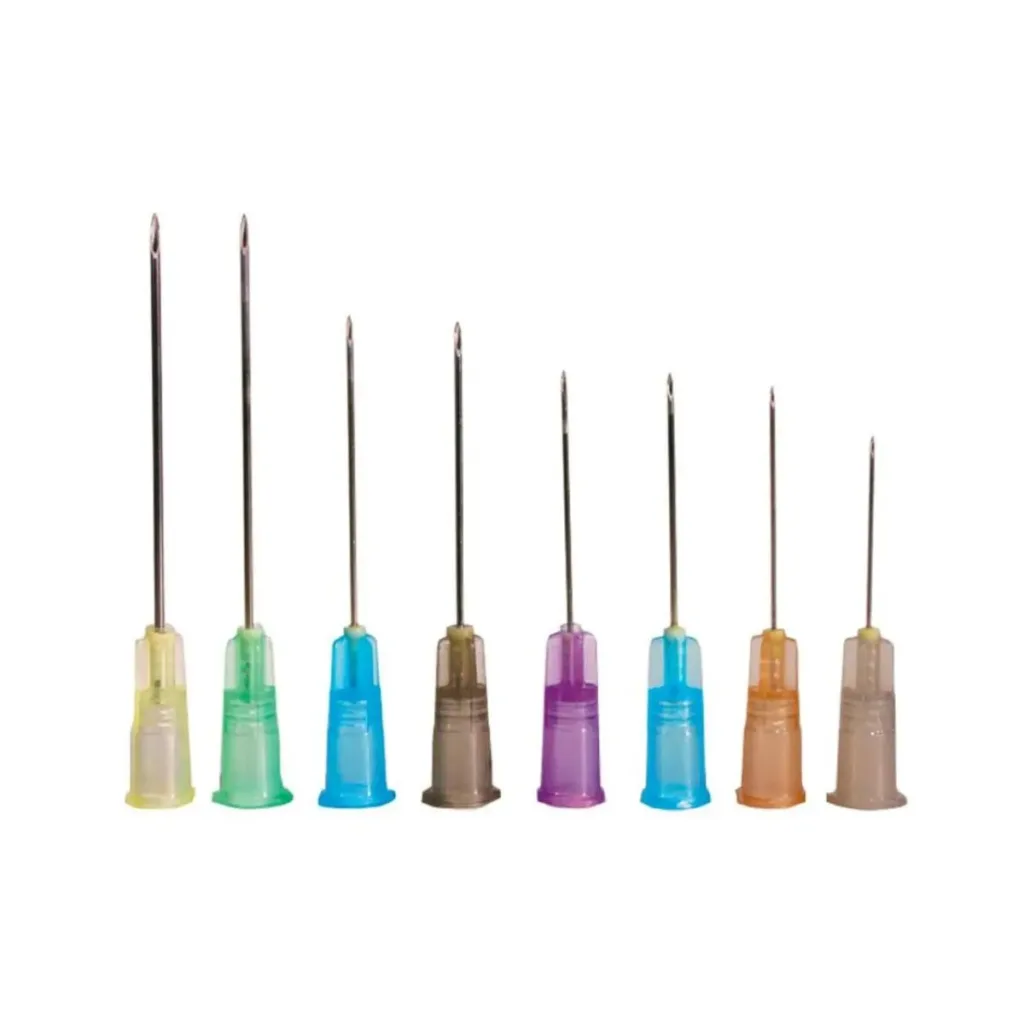
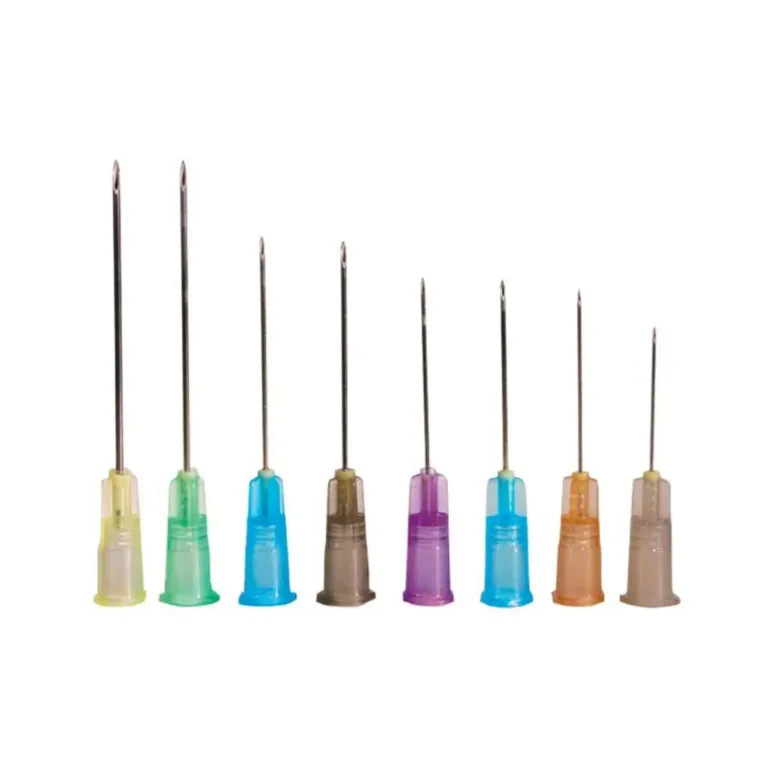
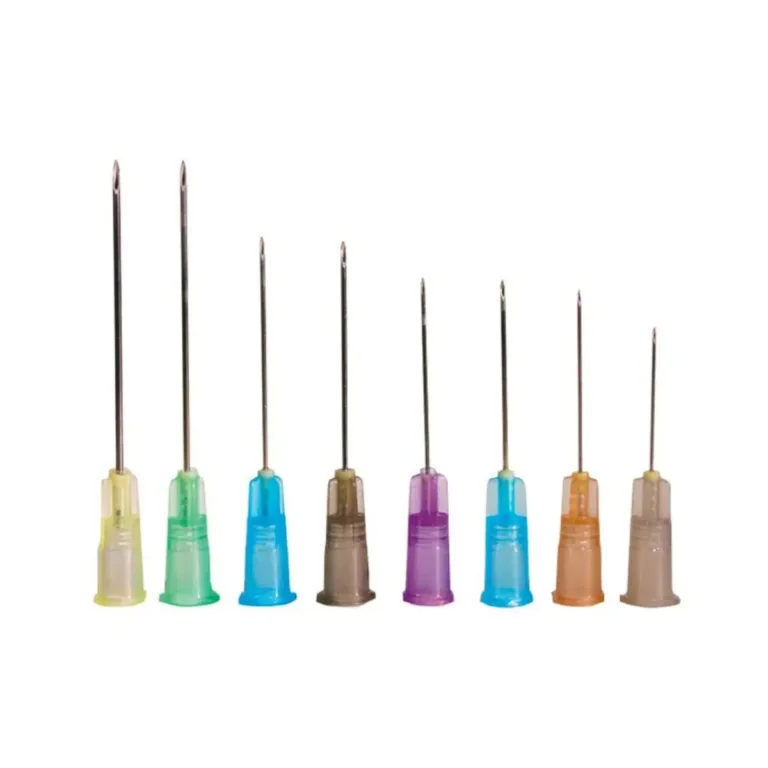
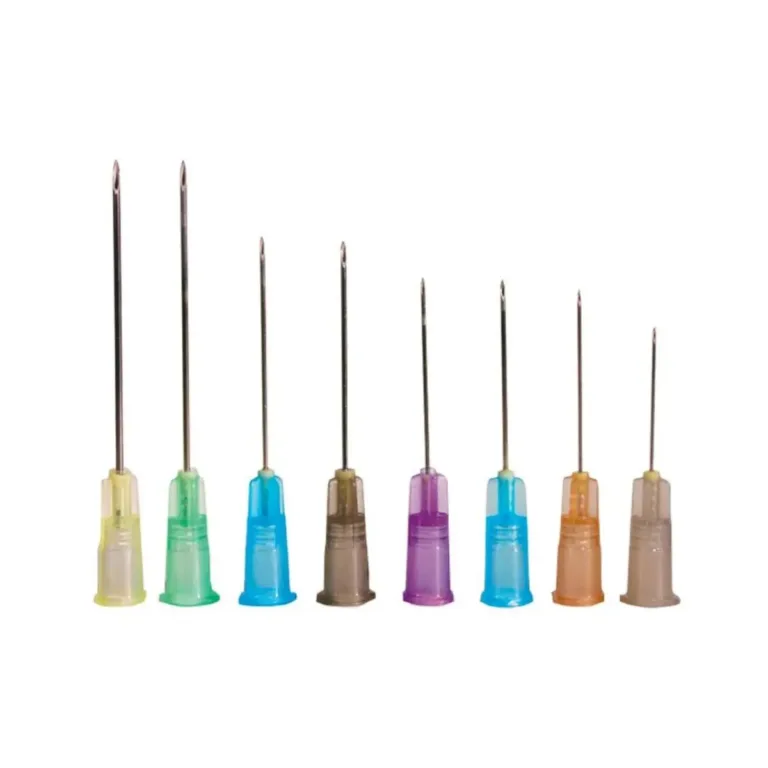
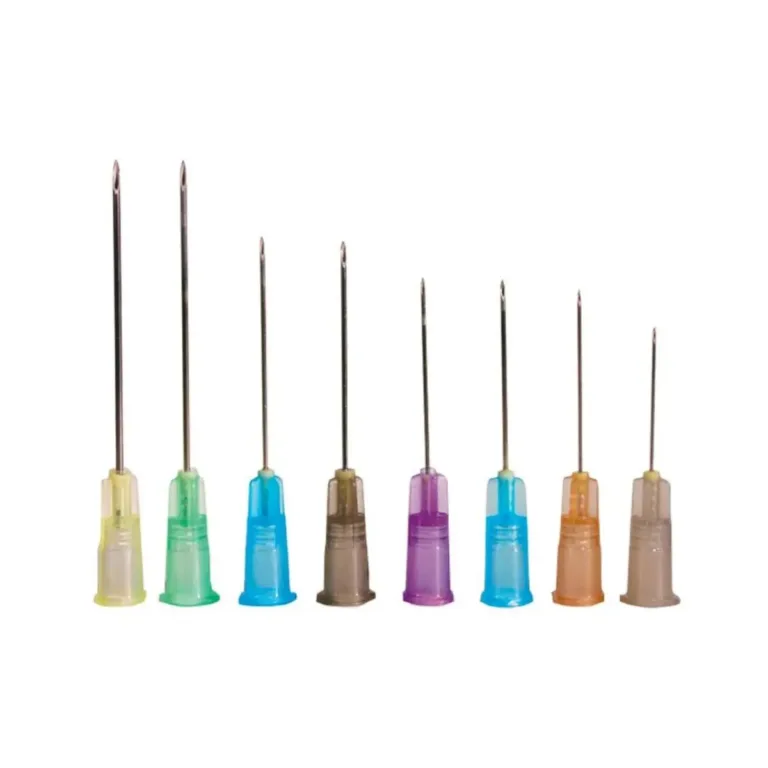
The hypodermic needle is a single-use medical device made up of a stainless steel cannula with a bevelled tip, a hub and a protective cap. It is used for administering medication, taking samples and transferring fluids between containers, always within a procedure defined by the institution.
When buying, a needle is not chosen on a single piece of data: the gauge fixes the outer diameter, the length affects access and the standardised colour lets you recognise the gauge at a glance. In addition there are the connection type, whether or not there is a safety device, the type of bevel and the packaging format. It is best to settle these criteria in writing before issuing the request, to avoid improper substitutions between similar references.
Other related families
Products in this guide
- 16 g 1
- 18 g 6
- 19 g 3
- 20 g 4
- 21 g 6
- 22 g 5
- 23 g 7
- 24 g 1
- 1/2" 1
- 0.4*12 1
- 0.4*13 1
- 0.45 × 12 1
- 0.50 × 16 1
- 0.50 × 25 1
- 0.50 × 38 1
- 0.6*16 1
- 1/2" 1
- 0.3 × 12 mm 1
- 0.30 × 13 1
- 0.4 × 12 mm 1
- 0.4 × 13 mm 1
- 0.40 × 13 1
- 0.45 × 12 1
- 0.5 × 16 mm 1
- Luer lock 15
- Luer 14
- Luer-slip 8
-
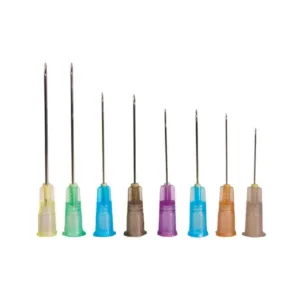
Braun Sterican 25G x 1″ (0.50 x 25 mm) Hypodermic Needle – Box of 100 Units | Ref. 9186158
5,57 € In stockAdd to basket -
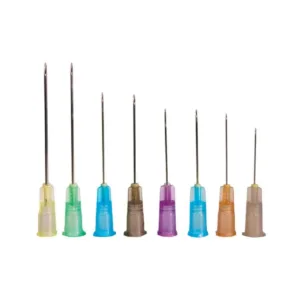
Hypodermic needle Braun Sterican 26G (0.45 x 12 mm) – Box of 100 sterile units
4,98 € In stockAdd to basket -
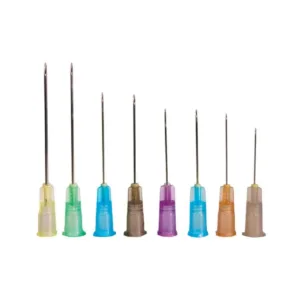
Hypodermic needle Braun Sterican 30G x 1/2″ (0.30 x 12 mm) – Ref. 4656300 – Box of 100 sterile units
5,71 € In stockAdd to basket -
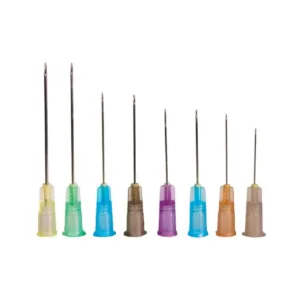
Sterile Braun Sterican 27G x 1″ (0.40 x 25 mm) hypodermic needle – Grey ISO 6009 – Box of 100 units
5,57 € In stockAdd to basket -
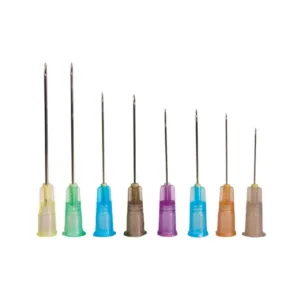
Hypodermic needle Braun Sterican 18G x 1 1/2″ (1.20 x 40 mm) short bevel – Box of 100 units Ref. 4665120
4,98 € In stockAdd to basket -
18G Needle-Pro Braun Safety Hypodermic Needle (1.20 x 25 / 38 mm) – Box of 100 units
24,72 € In stockSelect options This product has multiple variants. The options may be chosen on the product page -
21G Needle-Pro Braun safety hypodermic needle (0.80 x 25 / 38 mm) – Box of 100 units
24,72 € In stockSelect options This product has multiple variants. The options may be chosen on the product page -
25G Needle-Pro Braun Safety Hypodermic Needle (0.50 x 16 / 25 / 38 mm) – Box of 100 units
24,72 € In stockSelect options This product has multiple variants. The options may be chosen on the product page
Buying and selection tips
-
Gauge, the first filter
The gauge defines the diameter of the cannula and shapes the rest of the purchasing decision. The standardised colour goes with the gauge and serves to check it at a glance, but it should never be the only criterion in the request.
-
Length: a different reference
The same needle in 25 mm and in 40 mm is neither the same reference nor the same purchase. In this range lengths run from about 12 mm to 120 mm. Fix the gauge and length in the request and do not leave them to the supplier's choice.
-
Connection: Luer, Luer lock or Luer slip
The needle is mounted on the syringe tip, and the connection type must match that of the intended syringe. It is best to fix the connection in the request so as not to receive a needle that does not fit the system already validated.
-
Needlestick safety
Needles with a safety device add protection against accidental needlestick injuries and are governed by a specific standard. If your institution requires them, they are ordered as a separate family and not as a substitute for the conventional needle.
-
Materials and latex-free status
In some models the cannula is stainless steel and the hub and cap are polypropylene, with no latex in the components. This is a point to confirm on each reference when the institution operates a latex-free protocol.
-
Presentation and traceability
Depending on the model, each needle comes in an individual blister pack and boxes contain 100 units. Check that the packaging carries the batch number, shelf life and sterilisation details, which makes traceability on the ward easier.
Compatibility
- Needlestick safety device
- Needles with protection are identified as their own family and meet the needlestick protection standard; they are not replaced by a conventional needle of the same gauge.
- Individual pack and box
- The individual pack and the number of units per box affect storage, counting and restocking on the ward.
Frequently asked questions
What is the difference between a hypodermic needle and a safety hypodermic needle?
The safety needle has a device that protects against needlestick injuries and is governed by a specific standard; the conventional one does not. They are ordered as different families and do not offset each other.
Can I use the needle colour to confirm the gauge before buying?
Yes, the standardised colour goes with the gauge, but only if the product is a needle. The same colour may correspond to a different gauge on a catheter, so the check must be made on the correct family.
Which connection should I request if the syringe I will use is Luer lock?
The needle must be offered with the connection that fits the syringe tip. It is best to fix Luer, Luer lock or Luer slip in the request and not leave it open to the supplier's interpretation.
What traceability data should I require on the packaging of each needle?
Batch number, shelf life and sterilisation details on the packaging units, with an individual pack that guarantees the sterility of the product.
Can I standardise on a single reference for needles of different lengths?
It is not advisable: gauge and length define the reference. It is preferable to separate references by gauge and length rather than unify for purchasing convenience.
Common questions
Translating colour into gauge without looking at the product family
Green corresponds to 21G on a hypodermic needle, but on a catheter green is 18G. The rule is not to translate colour into gauge without knowing whether the product is a needle or a catheter.
Treating two needles of the same G as equivalent
The gauge only fixes the diameter; the length, bevel type and connection change the reference. Two needles of the same G with different lengths are not the same purchase.
Mixing needles with different bevels because the gauge matches
The range includes needles with a short bevel and with a triple-bevel tip, among others. The gauge does not make them interchangeable within the same order line.
More products in this guide
-
19G Needle-Pro Braun safety hypodermic needle (1.10 x 38 mm) – Ref. 4658312 – Box of 100 units
24,72 € In stockAdd to basket -
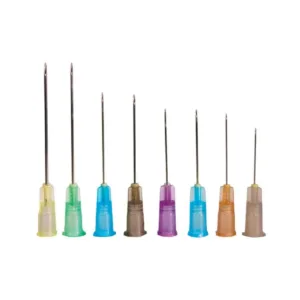
Sterile hypodermic needle 19G x 2″ (1.10 x 50 mm) Braun Sterican – Luer-Lock cone, ivory hub ISO 6009 – Box 100 units, Ref. 4665511
4,98 € In stockAdd to basket -
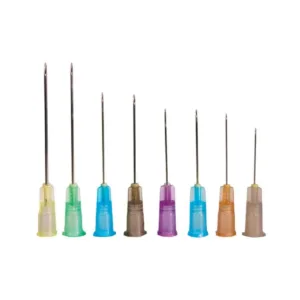
Hypodermic needle 21G x 4 3/4″ (0.80 x 120 mm) T. Neural Braun Sterican – Long bevel for neural therapy, box of 100 units
22,17 € In stockAdd to basket -
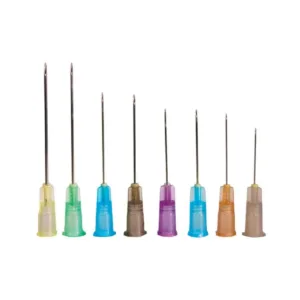
Braun Sterican 22G x 1 1/4″ (0.70 x 30 mm) Hypodermic Needle – Box of 100 sterile units | Ref. 4657624
4,98 € In stockAdd to basket -
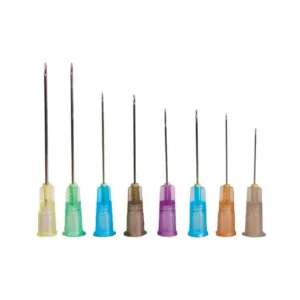
23G x 1″ (0.60 x 25 mm) Braun Sterican Hypodermic Needle – Box of 100 Units, Luer-Lock Cone
4,98 € In stockAdd to basket -
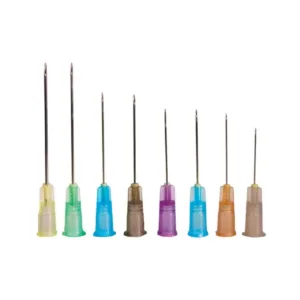
Hypodermic needle 23G x 2 3/8″ (0.60 x 60 mm) T. Neural Braun Sterican – Box of 100 units
17,14 € In stockAdd to basket -
Safety hypodermic needle 27G (0.40 x 13 mm) Needle-Pro Braun – Box of 100 units
24,72 € In stockAdd to basket -
30G Needle-Pro Braun Safety Hypodermic Needle (0.30 x 13 mm) – Box of 100 units
24,72 € In stockAdd to basket