
Butterfly needle: buying guide
13 products in the catalogue
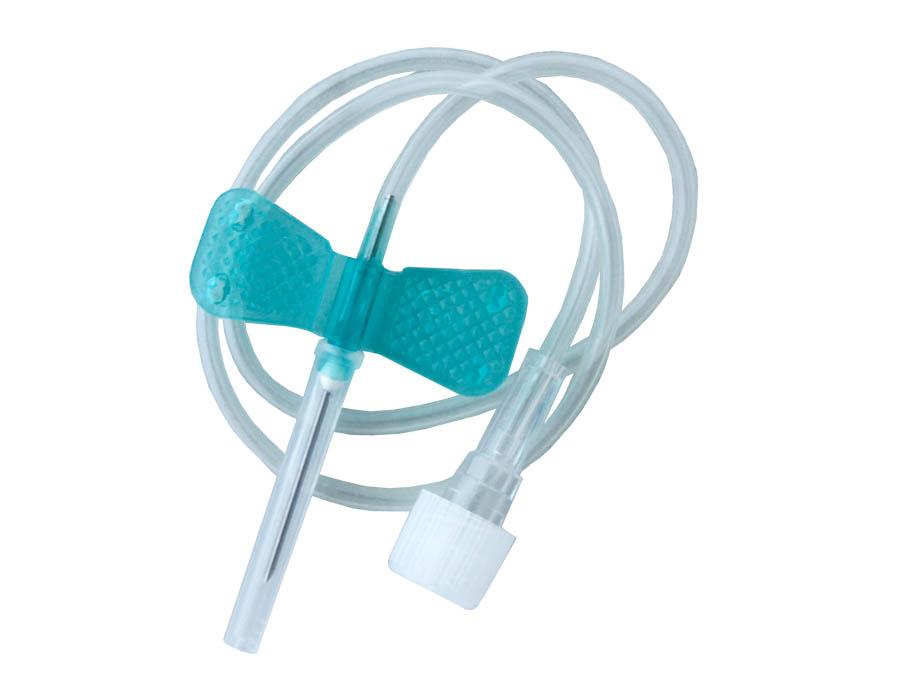
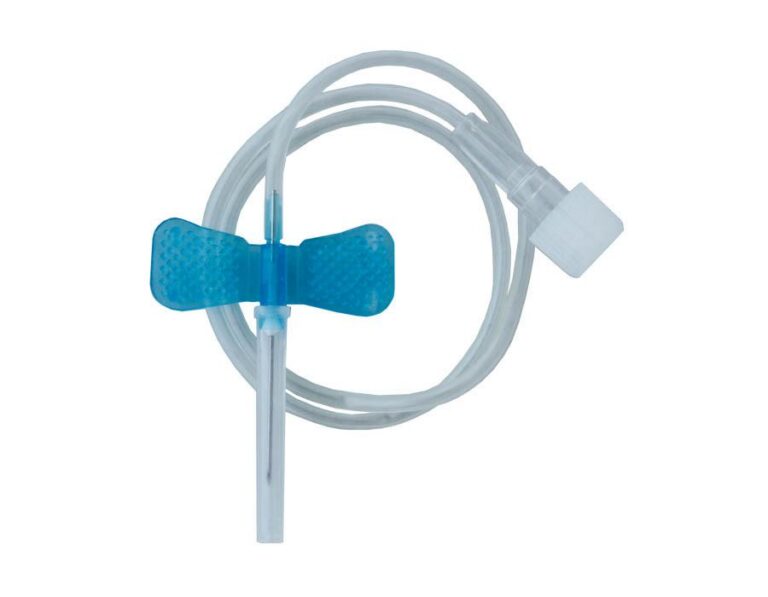
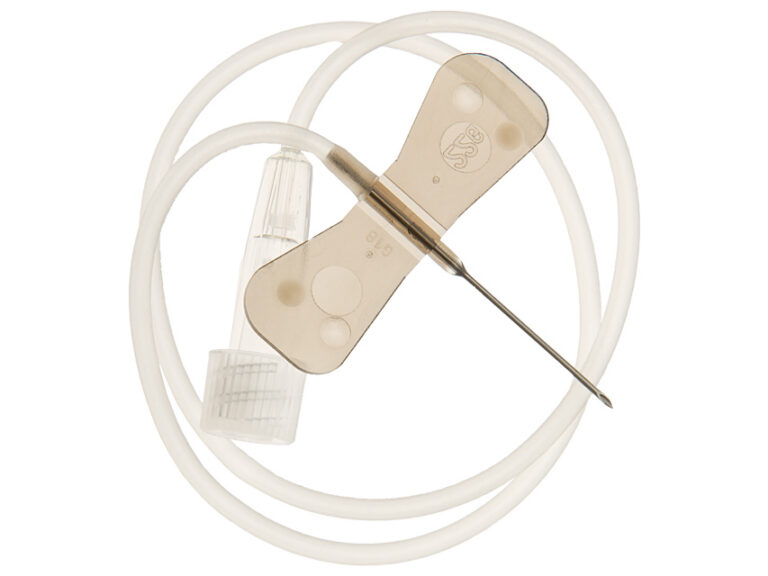
The butterfly needle, also known as a winged infusion set or scalp vein needle, is a single-use needle with two flexible wings and a length of tubing that connects it to the infusion system. The wings provide a grip point and the flexible tubing allows freedom of movement; this is what sets it apart from the straight hypodermic needle, which has neither.
It is used for injection, infusion and transfusion, and also for blood sampling, where there are specific butterfly-type presentations with a needle-protection system. In purchasing practice it is ordered by gauge, needle length, connector and whether or not it has protection against accidental needlestick injuries. This guide sets out those four criteria and the most frequent identification errors between butterfly needles, hypodermic needles and catheters.
Other related families
Products in this guide
- 19 g 2
- 21 g 3
- 22 g 2
- 23 g 3
- 25 g 2
- 27 g 1
- 0.6 mm 1
- 0.8 mm 1
- 19 4
- 0.5 × 19 mm 1
- 0.6 × 19 mm 1
- 0.7 × 19 1
- 0.7 × 19 mm 2
- 0.8 × 19 mm 1
- 1.9 cm 6
- 30 cm 1
- ABS 1
- Polycarbonate 1
- PVC 1
- Stainless steel 1
-
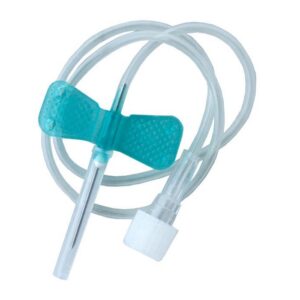
Sterile 21G Green Epicranial Butterfly Needle (Winged) for Intravenous Infusion | Ref. 90185 / BRL90185
Out of stockRequest a quote -
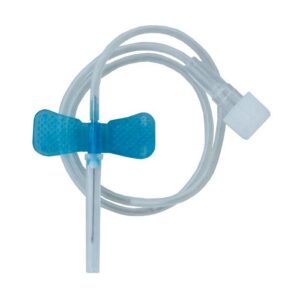
Sterile Epicranial Butterfly Needle (Winged Needle) 23G Light Blue for Intravenous Infusion | Ref. 90187 / BRL90187
Out of stockRequest a quote -
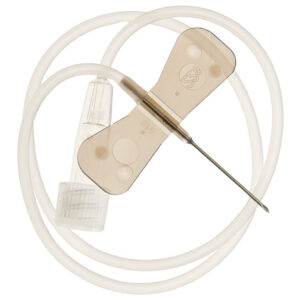
Terumo Surflo™ 22G (0.7 × 19 mm) sterile winged infusion set – Ref. SV*22NL30 – Black – Box of 50 units
23,75 € In stockAdd to basket -
Sale!
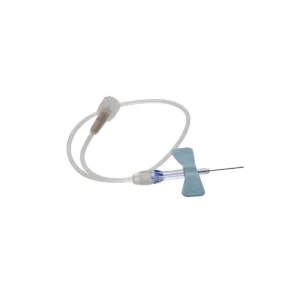
Butterfly Nipro 27G x 3/4″ (0.4 x 19 mm) scalp vein type with wings | Box of 50 units | Ref. PSV-27ET
Original price was: 11,74 €.7,50 €Current price is: 7,50 €. In stockAdd to basket -
Butterfly Nipro 19G x 3/4″ (1.1 x 19 mm) scalp vein type with wings and luer connector | Box of 50 units | Ref. PSV 19 ET
11,74 € In stockAdd to basket -
Butterfly needle Nipro 25G x 3/4″ (0.5 x 19 mm) with wings and Luer connector | Box of 50 units | Ref. PSV-25ET
11,74 € In stockAdd to basket -
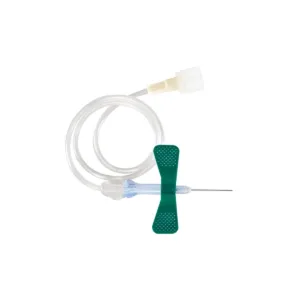
Safety Butterfly Nipro 21G x 19 mm (0.8 x 19 mm) scalp vein type with anti-stick system | Box of 50 units | Ref. PSV-SF-21-ET
21,40 € In stockAdd to basket -
Safety butterfly needle Nipro 23G x 19 mm (0.6 x 19 mm) with anti-puncture system | Ref. PSV-SF-23-ET | Box of 50 units
21,40 € In stockAdd to basket
Buying and selection tips
-
Gauge cannot be deduced from the colour of the wings
The colour code by gauge belongs to the hypodermic needle (ISO 6009) and should not simply be carried over to catheters. On a butterfly needle the colour goes with the gauge, but the reference is set by the G and by the length in millimetres.
-
Decide whether you need a needle-protection system
Safety versions of the butterfly needle incorporate a mechanism that protects against accidental needlestick injuries, a feature covered by ISO 23908. Decide beforehand whether the purchase is for a conventional or a safety butterfly needle, because the mechanism changes the product name.
-
Check the connector against the destination system
Both the Luer and the Luer lock connector are found in this category, and ISO 80369-7 sets the Luer connection for this type of coupling. Before closing the purchase, check which of the two fits the infusion or sampling system the butterfly needle will be used with.
-
Keep needle length separate from tubing length
A butterfly needle has two lengths that are easily confused: that of the needle, in millimetres, and that of the tubing, which reaches 30 cm on some models. In the order it is best to write both fields separately, because the same gauge is offered with 10 or 19 mm needles and with tubing of different lengths.
-
Do not mistake a butterfly needle for a hypodermic needle or a catheter
The butterfly needle is a family of its own within single-use needles, defined by the wings and tubing, not by the gauge. A hypodermic needle of the same G or a peripheral catheter of the same colour does not serve the same function, so they should not be included in the comparison as substitutes.
Compatibility
- Luer lock connection (ISO 80369-7)
- Check that the connector on the butterfly needle and the one on the destination system are of the same type. Luer lock is one of the standardised connections in this group and is not the same as those intended for other routes, such as ENFit or NRFit.
Frequently asked questions
What is the difference between a safety butterfly needle and a conventional one?
The safety version adds a needle-protection system that shields the needle after use; the conventional one does not have it. Gauge, needle length and connector are chosen in the same way in both cases.
How do I decide between a Luer and a Luer lock connector on a butterfly needle?
By looking at the system it will be connected to. Both connections, plain Luer and Luer lock, are standardised in ISO 80369-7, and Luer lock adds a screw-thread lock; the connector should be settled before ordering.
Is a butterfly needle the same as a hypodermic needle of the same gauge?
No. The butterfly needle is defined by its wings and tubing, and the straight hypodermic needle has neither; they share the gauge system but are different families and should not replace each other in a purchasing comparison.
Will any butterfly needle do for blood collection?
In this category there are butterfly-type blood collection sets with a needle-protection system and their own product name. Before buying, check in the name whether the product is an infusion butterfly needle or a blood collection set.
Can I connect a butterfly needle to an enteral or neuraxial system?
The connections for those routes are standardised separately (ENFit and NRFit) and do not match the Luer connection. When buying, check that the connector on the butterfly needle is Luer or Luer lock, according to the intended system.
Common questions
Choosing the butterfly needle by the colour of the wings
Colour is an identification aid, not a purchasing specification. The order should state the G and the millimetres.
Reading 19 as the gauge when it is actually the length
A single description can contain both the gauge in G and the needle length in millimetres: 19G and 19 mm are different things. The needle is described by the G × mm pair, so both figures must be read.
Substituting a butterfly needle with a peripheral catheter of the same colour
They are different families: the butterfly needle is a needle with wings and tubing, and the peripheral catheter is another product. Sharing gauge or colour does not make them equivalent in a comparison.
More products in this guide
-
Butterfly needle Nipro 21G x 19 mm (0.8 mm) green with wings and luer connector | Box 50 units | Ref. PSV-21ET
11,74 € In stockAdd to basket -
Butterfly needle Nipro 23G x 19 mm (0.6 mm) Blue with Wings and Luer Connector | Box of 50 units | Ref. PSV-23ET
11,74 € In stockAdd to basket -
Safety butterfly needle Nipro 19G x 19 mm (1.1 x 19 mm) scalp vein type with anti-needlestick system | Box of 50 units | Ref. PSV-SF-19-ET
21,40 € In stockAdd to basket -
Safety butterfly needle Nipro 25G x 19 mm (0.5 x 19 mm) scalp vein type with anti-puncture mechanism | Box of 50 units | Ref. PSV-SF-25-ET
21,40 € In stockAdd to basket -
Safety blood collection set Nipro 22G (0.7 x 19 mm) butterfly type with anti-needlestick | Ref. BCS-SF 22-19 ET
60,09 € In stockAdd to basket