
Black nitrile gloves: buying guide
12 products in the catalogue
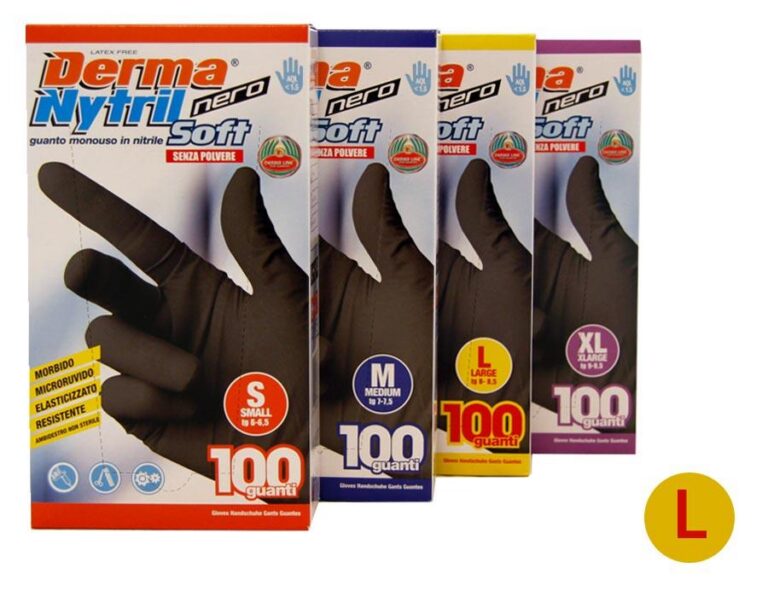
The black nitrile glove is a single-use, powder-free, latex-free glove used in healthcare settings where it is useful to identify the material or work area at a glance. The products include examination gloves in sizes from small to extra large, higher-sensitivity versions and 30 cm long versions.
Colour does not define protection: what defines it is the standard the manufacturer declares. An examination glove must declare EN 455-1 with AQL 1.5, and if it is intended for chemical protection or protection against micro-organisms it must declare EN ISO 374-1 and EN ISO 374-5. Before deciding, fix the size, cuff length, thickness and intended use, and check which standards each reference declares.
Other related families
-
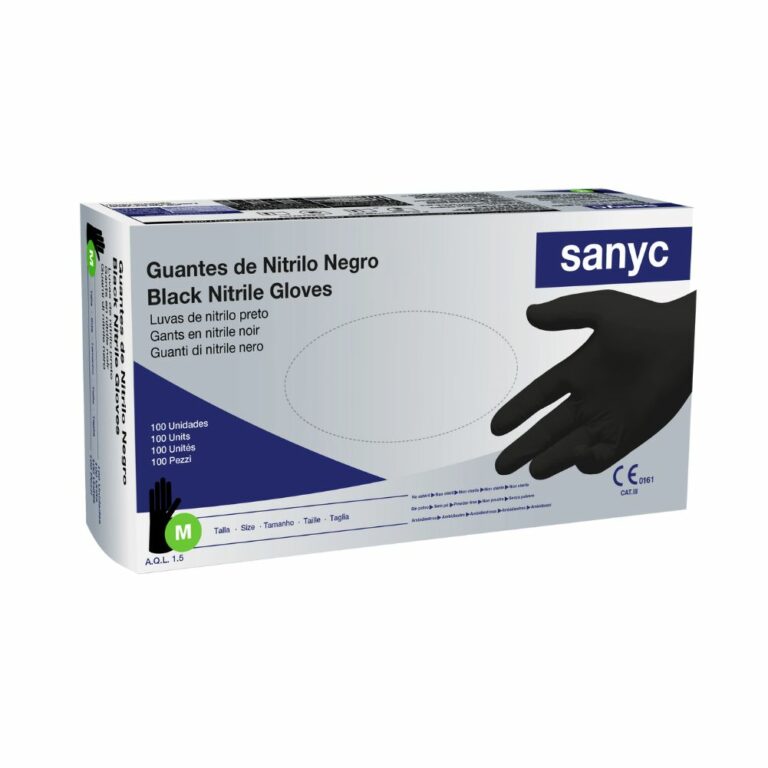
 SANYC Black
Brings together black nitrile examination gloves, in sizes from small to extra large and boxes of 100.
-
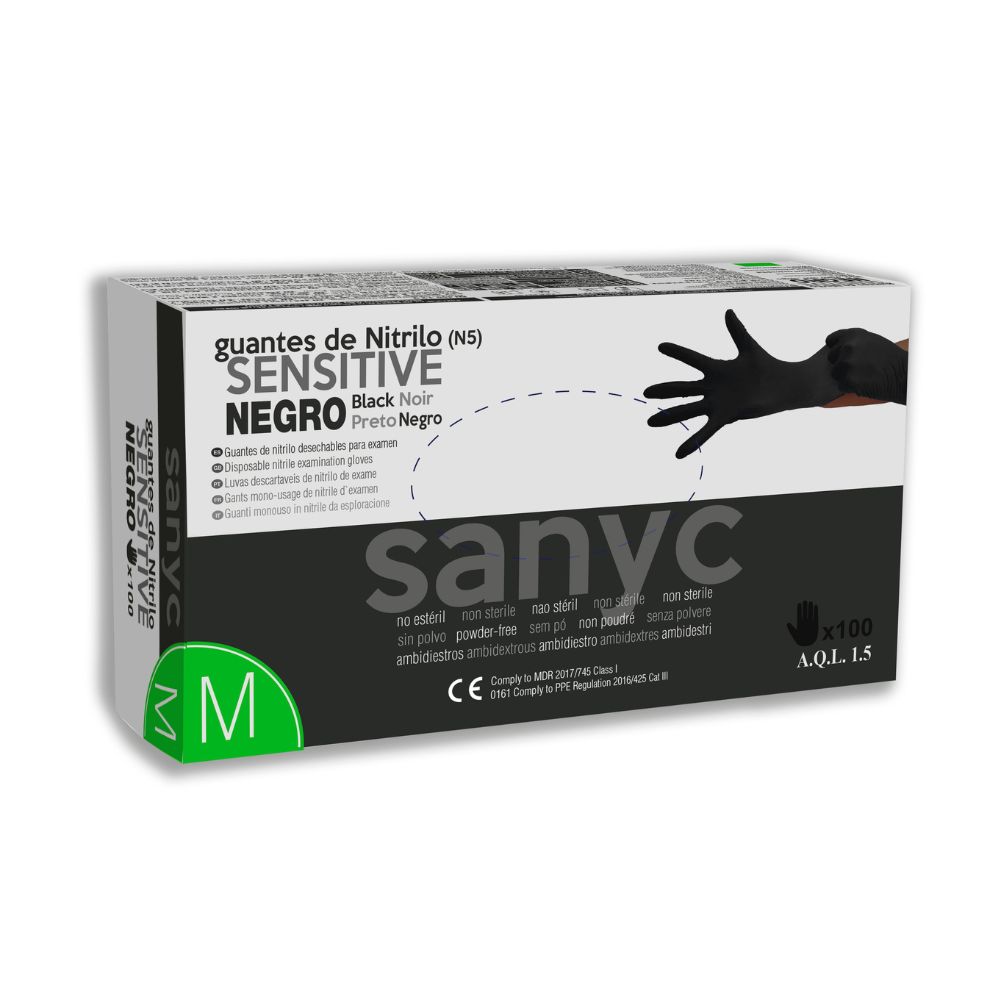
 SANYC Sensitive Black
Black high-sensitivity variant, for those who prioritise touch and dexterity.
-
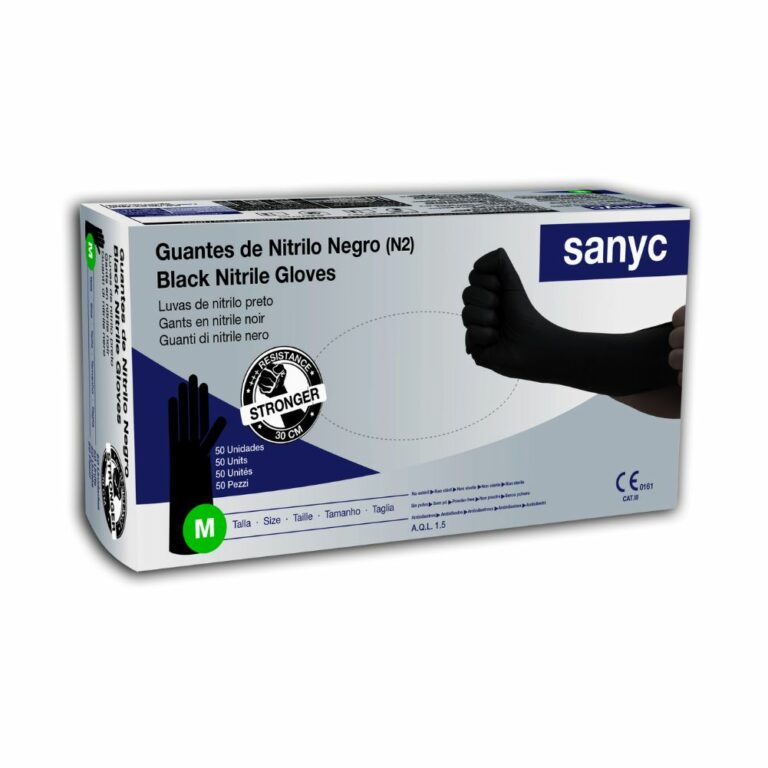
 STRONGER Black 30 CM
Black 30 cm format, useful when more cuff coverage is needed.
-
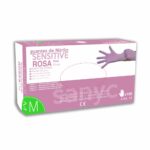 Medical Examination Gloves
General family of examination gloves, where the black powder-free, latex-free references fit.
Products in this guide
-
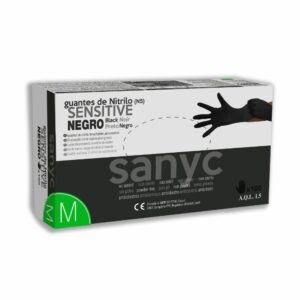
Nitrile Glove SANYC Sensitive Black Size XG for Medical Examination – Box of 100 Units, Latex-Free and High Sensitivity
4,75 € In stockAdd to basket -
Nitrile Glove SANYC Sensitive Black Size P (Small) – Box of 100 Units for Medical Examination Latex-Free
4,75 € In stockAdd to basket -
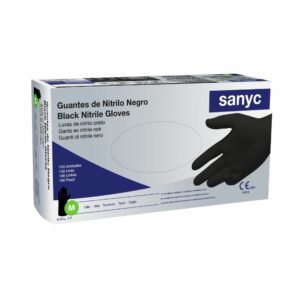
Black Nitrile Glove Sanyc Size G (Large) | Box of 100 Units for Medical Examination, Latex-Free
6,58 € In stockAdd to basket -
Black Nitrile Glove Sanyc Size XG (Extra Large) – Box of 100 Units | Medical Examination Latex-Free
6,58 € In stockAdd to basket -
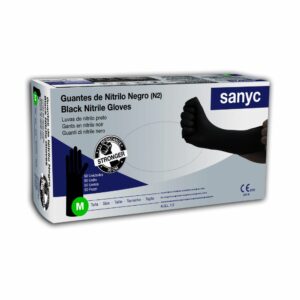
Black Nitrile Glove Stronger 30 cm Size G (Large) | Brand Sanic | Box of 50 Units for Medical Examination
8,08 € In stockAdd to basket -
Stronger Black Nitrile Glove 30 cm Size XG | Brand Sanic | Box of 50 Units for Medical Examination
8,08 € In stockAdd to basket -
Nitrile Glove Sanic Stronger Black 30 cm Size XXG | Box of 50 Units | Medical Examination
8,08 € In stockAdd to basket -
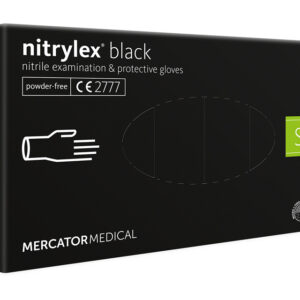
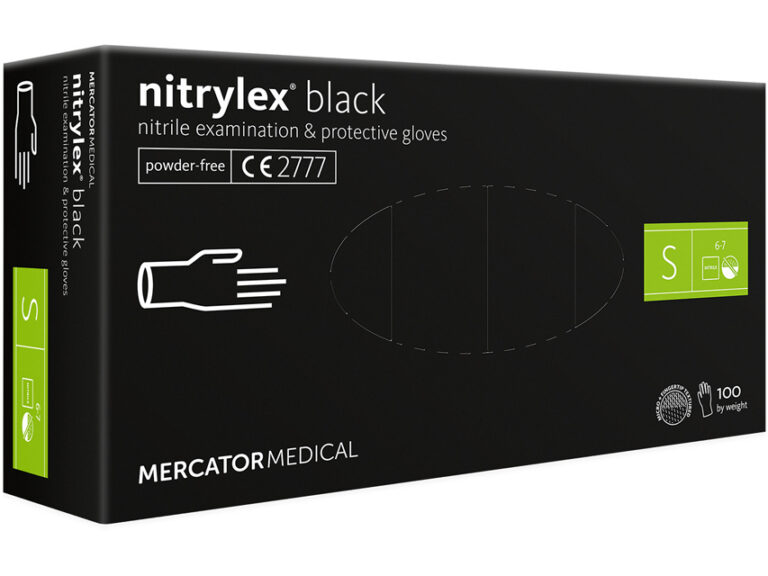
NITRYLEX® BLACK Powder-Free Nitrile Gloves for Medical Examination – Black Colour, Sizes S (6-7) to XL (Ref. GM21816-GM21819)
8,08 € In stockSelect options This product has multiple variants. The options may be chosen on the product page
Buying and selection tips
-
Verify the AQL before approving the glove
EN 455-1 requires an AQL of 1.5 for freedom from holes. A glove with AQL 2.5 compliant with ASTM does not meet EN 455-1 without further testing, so the reference must declare the correct test and not just the value.
-
Do not read “latex-free” as hypoallergenic
A latex-free glove may contain vulcanisation accelerators. If the aim is to minimise the risk of sensitisation, ask about the formulation and do not limit yourself to checking for the absence of latex.
-
Separate colour from performance
Black is a finish, not a protection category. Compare the family (examination, surgical or PPE), the material, the AQL, the thickness and the declared standards.
-
Compare thickness in millimetres, not weight
The weight per glove is not the thickness. To compare two black references look at the millimetres at the palm and finger, which affect feel and strength.
-
Choose the cuff length according to the task
Cuff length varies between references; the 30 cm ones offer more coverage, at the cost of slightly less dexterity. Compare the length in the size you will order.
-
Respect the packaging and storage
Keep the gloves in their original packaging, in a cool, dry place, and follow the manufacturer's storage instructions.
Compatibility
- VIRUS marking and biohazard
- Without the word VIRUS next to the biohazard pictogram, the marking covers only bacteria and fungi. Check what each reference declares.
Frequently asked questions
Can I use a black nitrile examination glove against cytotoxic drugs?
Only if the reference expressly declares that permeation test. The colour and the fact of being an examination glove do not guarantee it: check what the manufacturer declares.
Does a black powder-free, latex-free glove prevent all allergies?
No. The absence of latex avoids natural rubber latex, but a latex-free glove may contain vulcanisation accelerators. Ask about the formulation if this point matters for your department.
How do I know whether a black glove declares protection against viruses?
It must declare EN ISO 374-5 with the word VIRUS. If only the biohazard pictogram appears without that word, the declared coverage is limited to bacteria and fungi.
Does the same black examination glove work for theatre and for the clinic?
No. An examination glove is not a surgical glove: the anatomy, AQL, length and class change. For theatre, a surgical glove must be chosen.
Common questions
“Latex-free” equals hypoallergenic
No. A latex-free glove may contain vulcanisation accelerators; the absence of natural rubber latex does not by itself remove the risk of sensitisation.
The weight of the glove is its thickness
The weight per glove is not the thickness. To compare two references use the millimetres at the palm and finger, not grams.
The biohazard pictogram already covers viruses
Without the word VIRUS, the marking covers only bacteria and fungi. Protection against viruses requires the corresponding viral penetration test.
An examination glove works just as well as a surgical one
An examination glove is not a surgical glove: they differ in anatomy, AQL, length and class. They are different families and are not simply interchangeable.
More products in this guide
-
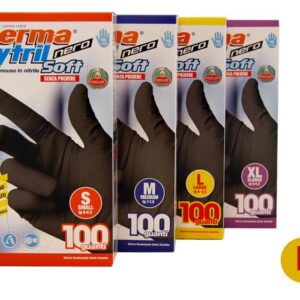
Black Powder-Free Nitrile Gloves for Examination and Protection – Size L (Large), Box of 100 units (Ref. 42573L)
8,40 € In stockAdd to basket -
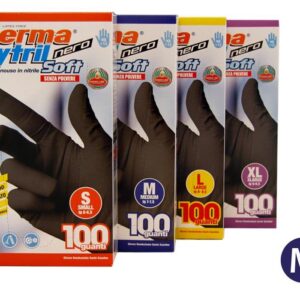
Black Powder-Free Nitrile Examination and Protection Gloves – Size M, Box of 100 units (Ref. 42573M)
8,40 € In stockAdd to basket -
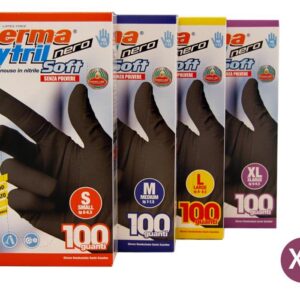
Black Powder-Free Nitrile Examination and Protection Gloves – Size XL, Box of 100 units (Ref. 42573XL)
8,40 € In stockAdd to basket -
Nitrile Glove Sanic Stronger Black 30 cm Size M (Mediana) | Box of 50 Units | Medical Examination Latex-Free
8,08 € In stockAdd to basket