
How to choose a vital signs monitor
13 products in the catalogue
A vital signs monitor is a device that brings together on a single screen the physiological measurements that healthcare staff need to assess a patient's condition at the point of care. Depending on the configuration, it can provide non-invasive blood pressure, pulse rate, oxygen saturation, temperature, ECG, respiration and, in expandable units, capnography. It is used in inpatient wards, consulting rooms, emergency departments, recovery units and triage, where observations need to be recorded quickly and in an orderly way.
The choice does not depend only on the number of parameters. A device designed for spot checks suits ward rounds and consultations, whereas an intensive care monitor adds waveforms, configurable alarms and expandable modules. The patient group it will be used for also matters, because treating adults is not the same as treating paediatric patients or neonates, as does the power supply, since a unit with a rechargeable battery can be moved between rooms without depending on a power socket. Before deciding, it is worth reviewing the internal memory, connectivity with clinical information systems, mounting options and ease of cleaning. These factors determine day-to-day use as much as the measurement features do.
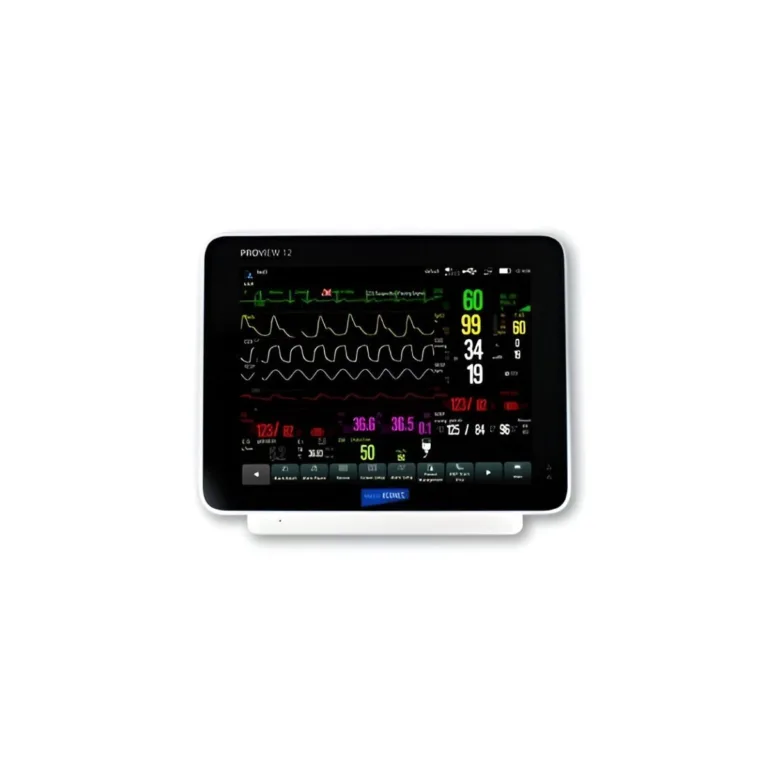
Other related families
- DIAGNOSTIC DEVICES Covers the measurement and monitoring equipment used to assess the patient's condition at the point of care.
-
 Vital Signs Monitor Accessories
Cuffs, sensors and cables affect day-to-day use and the compatibility of the monitor you choose.
-
 EtCO2 Modules
For those who need to extend respiratory monitoring with capnography.
-
 Pulse oximeters
An alternative when only oxygen saturation and pulse rate are required.
Products in this guide
- Rechargeable battery 12
- Mains power 9
- Adult 3
- Paediatric 3
- Neonatal 1
- II b 6
- II a 1
-
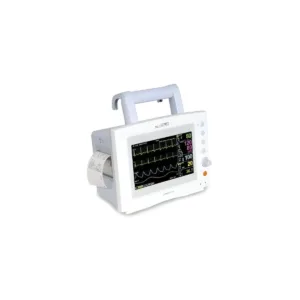
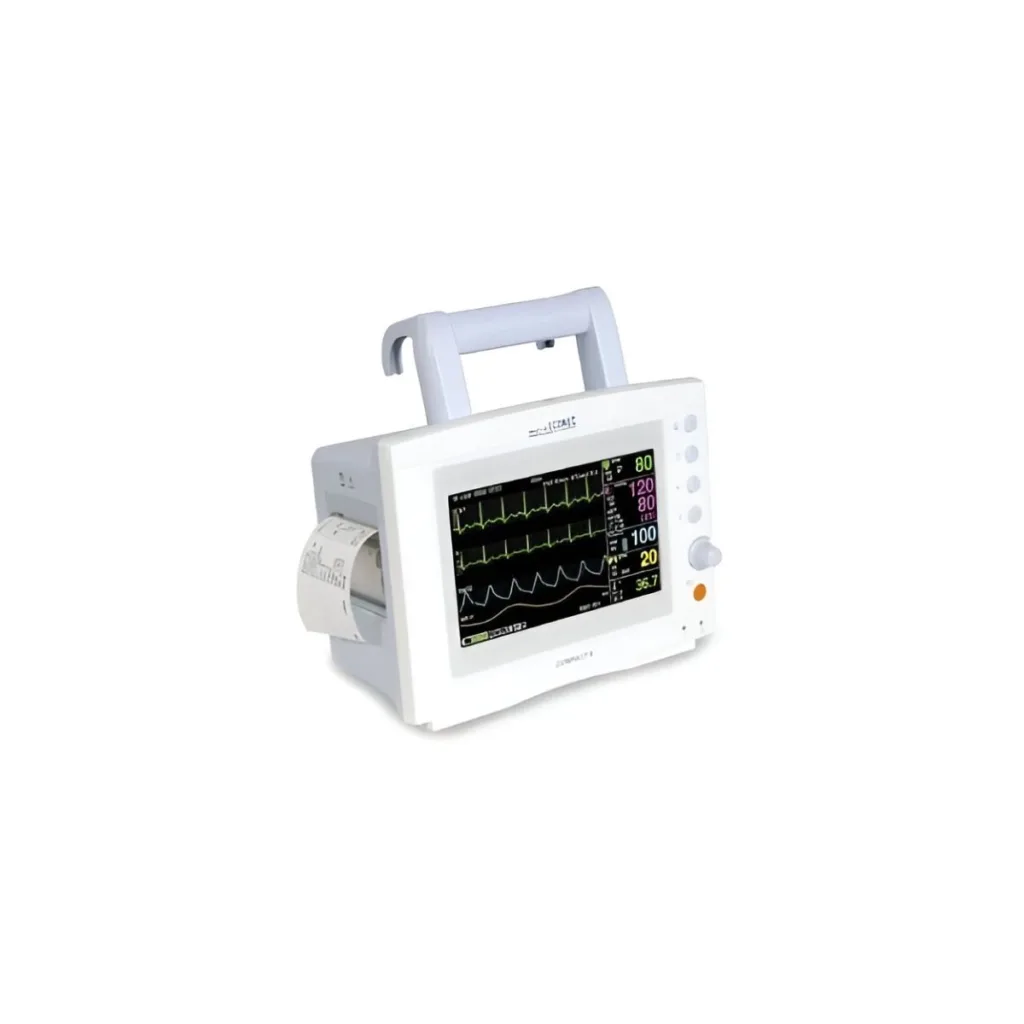
Vital signs monitor Compact 5 – 5-parameter multiparameter with 8″ touchscreen, 3-lead ECG, SpO2, NIBP (Suntech), temperature, battery, printer, LAN/WLAN and HL7 (Ref. 20.11-5700S)
3.222,00 € In stockAdd to basket -
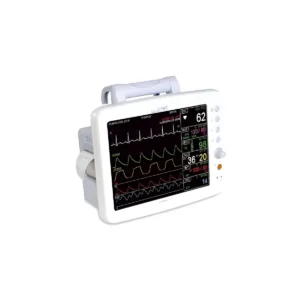
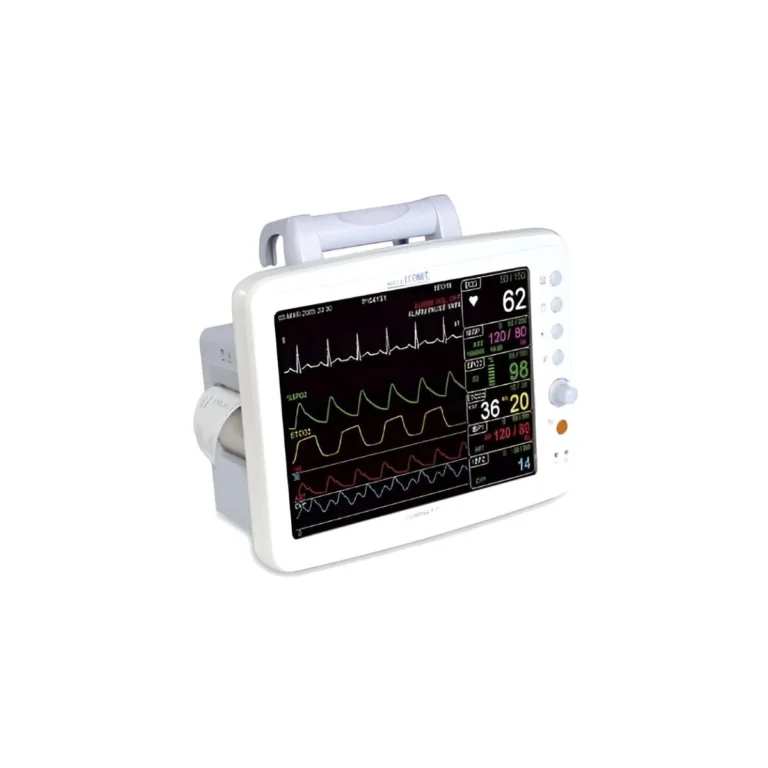
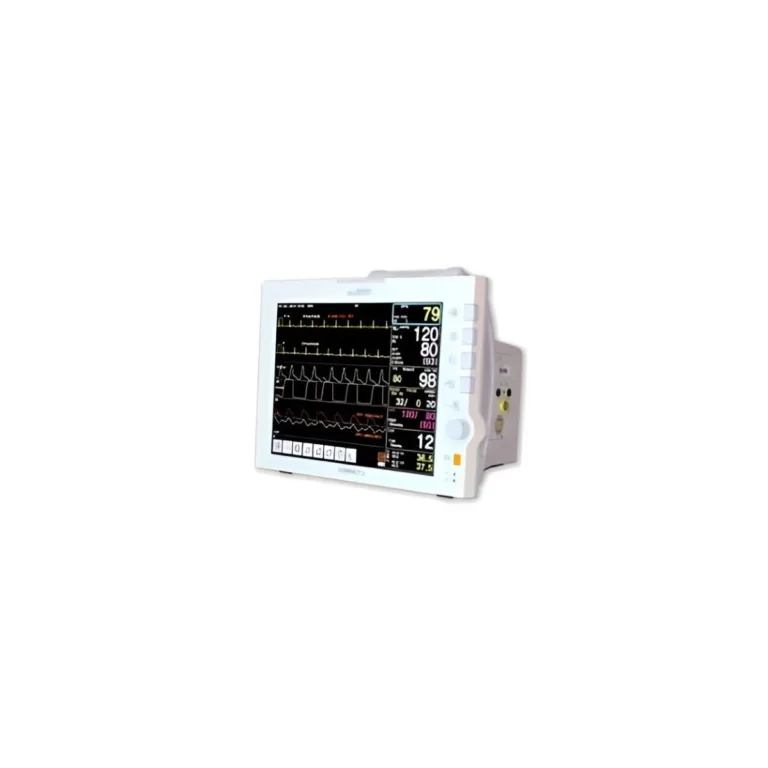
Compact 7 multiparameter vital signs monitor – 12.1″ touchscreen for intensive care with 5-lead ECG, SpO2, NIBP, EtCO2 module, HL7, LAN/WLAN and thermal printer
3.870,00 € In stockAdd to basket -
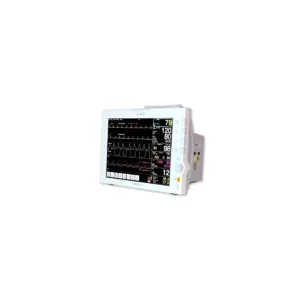
Compact 7 Multiparameter Vital Signs Monitor – 12.1″ Touch Screen for Intensive Care, with 4 h Battery, HL7, LAN/WLAN and Thermal Printer (SKU 20.11-6000S)
4.770,00 € In stockAdd to basket -
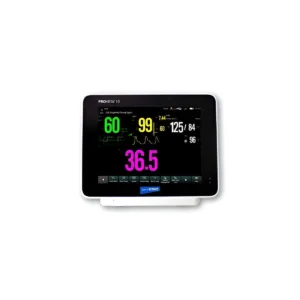
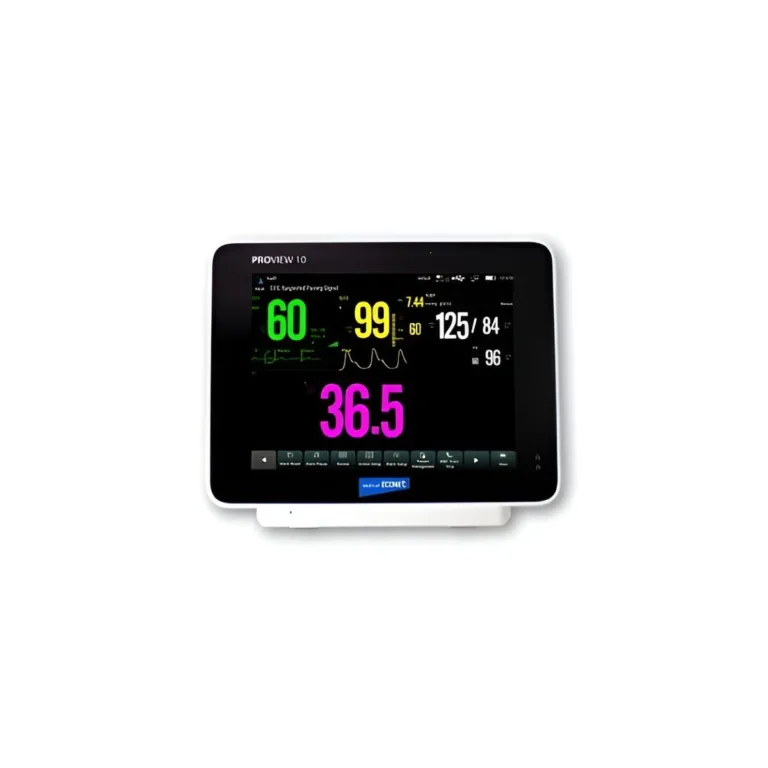
Vital signs monitor Compact 7 (PROVIEW 10): 10.4″ touchscreen with 3/5/6/12-lead ECG, detection of 27 arrhythmias, EWS and GCS scale
1.978,20 € In stockAdd to basket -
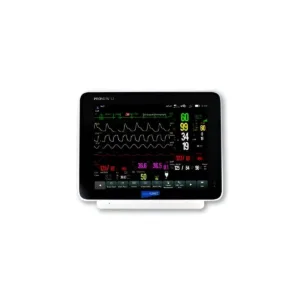
Multiparameter vital signs monitor Compact 7 (PROVIEW 12): 12.1″ touchscreen for ICU with 3/5/6/12-lead ECG, 8 parameters, detection of 27 arrhythmias, EWS and Glasgow Coma Scale
2.338,20 € In stockAdd to basket -
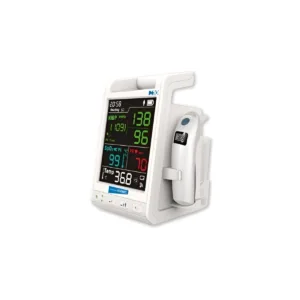
M10 Multiparameter Vital Signs Monitor | 6″ Colour LCD Screen, Nellcor-Compatible SpO2, NIBP, Pulse Rate and Wireless Infrared Ear Thermometer – Portable 1.2 kg (Ref. 51-6005)
1.078,20 € In stockAdd to basket -
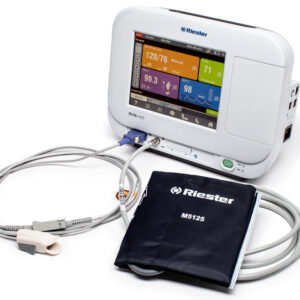
RIESTER RVS-100 multiparameter vital signs monitor (1960-RRXPE) – NIBP, SpO2 and integrated printer | Ref. 33800
3.182,50 € In stockAdd to basket -
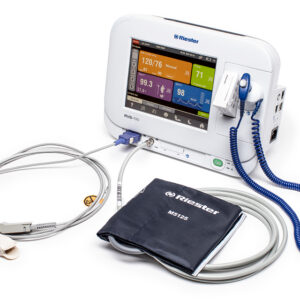
RIESTER RVS-100 multiparameter vital signs monitor (1960-RRBPE) – NIBP, SpO2, predictive temperature and printer | Ref. 33801
3.914,00 € In stockAdd to basket
Buying and selection tips
-
Define the patient group before the number of parameters
One device may not suit every patient profile: there are monitors configured for adults, for paediatric patients and for neonates, and some cover all three groups. If the expected use includes neonates, it is worth confirming this before completing the purchase, because it affects the configuration and the accessories. Start with the patient you will be treating and then adjust the features.
-
Decide whether you need spot checks or continuous monitoring
Spot-check devices take observations when the professional requests them, whereas intensive care monitors display waveforms and allow prolonged monitoring. Some platforms combine both ways of working and let you switch between a numerical display and a waveform display. Choose according to the type of stay and how often the patient's condition needs to be recorded.
-
Check the battery life and the type of power supply
A rechargeable battery lets you move the unit between rooms without depending on a power socket, which is useful on ward rounds and during transfers. Battery life varies greatly between models, from units lasting several hours to some models that declare more than 60 hours of continuous monitoring on batteries. Also check whether the unit can operate connected to the mains while charging.
-
Consider the internal memory and how measurements are retrieved
Storage capacity affects the clinical record: some units store dozens of sets of measurements and others store thousands of blood pressure records, SpO2 series and hours of waveform. The longer the planned monitoring, the more important it is to be able to review the data as a list, waveform or trend graph. Confirm whether the data can be downloaded or transferred to a computer.
-
Check connectivity with information systems
If your facility works with electronic health records or a central monitoring station, the unit must be able to integrate through in-hospital communication protocols. This connection lets you transfer measurements and manage parameters, alarms and patient identification from a central station. Check compatibility with your facility's systems before deciding.
-
Take cleaning, mounting and transport into account
Smooth surfaces and protected keypads make cleaning easier, which is relevant in shared use; follow the manufacturer's instructions. A built-in carrying handle and the various mounting options (mobile stand, wall mounting or drip-stand fixing) let you adapt the unit to the space available. If the unit will rotate between rooms, prioritise these solutions.
Compatibility
- Single-use or reusable SpO2 sensors
- The flexibility of the system depends on the range of accessories available; check whether disposable or reusable sensors are preferred according to the volume of use.
- NEWS2, MEWS and CART early warning scoring systems
- Some models integrate these scoring systems to standardise recording; check that the model you choose includes the system your department uses.
Frequently asked questions
What is the difference between a spot-check monitor and a continuous monitoring one?
A spot-check monitor takes measurements when the professional requests them and displays the numerical values; a continuous monitoring one adds waveform display and prolonged monitoring. Some platforms let you switch between the two modes.
Can I use the same monitor on adult, paediatric and neonatal patients?
It depends on the model: some are configured for adults and paediatric patients, and others also cover neonates. It is worth confirming the patient group before buying, because it determines the configuration and the accessories.
How are measurements integrated into the facility's electronic health record?
Through connectivity using the HL7 protocol, which allows integration with clinical information centralisation systems and electronic medical records. Check that the model offers this output and that it is compatible with your facility's systems.
What battery life do I need if the unit will be moved between rooms?
It depends on the workload: battery life varies between models and some declare more than 60 hours of continuous monitoring on batteries. Check the declared battery life and whether it can be used connected to the mains.
Is it worth choosing a monitor with built-in early warning scoring?
If the department uses clinical deterioration scales, built-in scoring provides a standardised method of recording compared with manual scoring. If that system is not used, it may be a dispensable feature.
What should I check about temperature before choosing the model?
In some models temperature measurement is an option, not a standard feature, and it can be done with a tympanic thermometer or with a probe. Confirm whether the model you choose includes it and with what type of measurement.
Common questions
Believing that more parameters always means a better device
Not necessarily: a basic configuration of blood pressure, oxygen saturation and pulse rate may be enough depending on the department. Additional parameters, such as ECG or capnography, are justified when the type of patient and the unit require them.
Assuming that temperature is included
In some models temperature is an option added to the base configuration, and it may be measured tympanically. Check the description of the specific model before assuming it is included.
Thinking that the internal memory is unlimited
Capacity varies greatly: some units store dozens of sets of measurements and others hold thousands of blood pressure records, SpO2 series and hours of waveform. If monitoring will be long, check the capacity and how the data can be reviewed.
Assuming that any SpO2 sensor works with any device
Some monitors incorporate specific, optional oximetry technologies, and the range of sensors available affects use. Check the compatibility of sensors and accessories for the model before buying.
More products in this guide
-
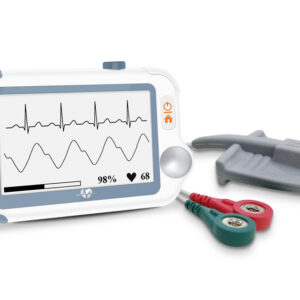
Checkme Pro wireless multi-parameter vital signs monitor – ECG, SpO2, temperature – Ref. 35186
275,50 € In stockAdd to basket -
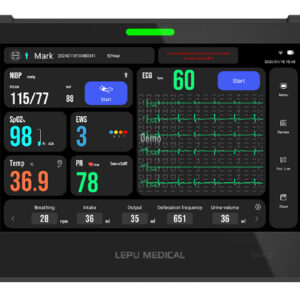
AIView VS Tablet Vital Signs Monitor – ECG, Temperature, SpO2, PR and NIBP – Adult and Paediatric, 10.1″ Touchscreen and Rechargeable Battery (Ref. 54400)
1.330,00 € In stockAdd to basket -
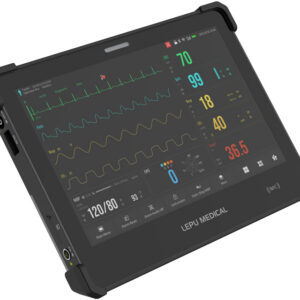
AIVIEW VX Tablet Vital Signs Monitor – Multiparameter with ECG, SpO2, NIBP, Temp and Respiration for Adults, Paediatrics and Neonates | Ref. 54405
1.472,50 € In stockAdd to basket -
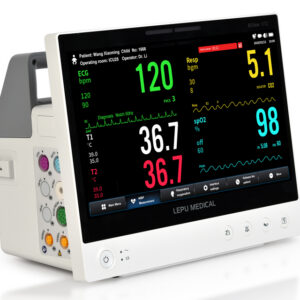
AIVIEW V10 Multiparameter Vital Signs Monitor – 11.6″ Touchscreen with 5-Lead ECG, SpO2, NIBP, Temperature and Respiration (Ref. 54500)
1.045,00 € In stockAdd to basket -
AIVIEW V12 Multiparameter Vital Signs Monitor – 13.3″ Touchscreen with 5-lead ECG, 28 Arrhythmia Analysis, EWS/GCS and Wi-Fi/HL7 Connectivity
1.330,00 € In stockAdd to basket