
Sterile gloves: buying guide
13 products in the catalogue
Single-use sterile gloves are the barrier medical device that the professional puts on to isolate their hands from the surgical field. They are used in surgical procedures and in any manoeuvre that requires handling sterile material, and their sterility, specific anatomical shape and quality control set them apart from examination gloves: a sterile examination glove does not become a surgical glove.
This range includes powder-free surgical gloves in latex, neoprene (polychloroprene) and polyisoprene. Before deciding, it helps to order the criteria as follows: size, material, presence or absence of powder, cuff length, thickness, declared leak resistance and type of presentation.


Other related families
Products in this guide
- 5.5 1
- 6.0 2
- 6.5 2
- 7.0 1
- 7.5 2
- 8.0 1
- 8.5 3
- 9.0 1
- 28.9 cm 2
- 29.5 cm 5
- Latex 3
- Rubber 3
- Box OF 50 11
- Pair 1
-
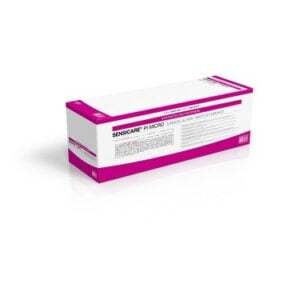
Sterile Micro Powder-Free Polyisoprene Surgical Glove SensiCare PI Micro – Size 6.0 (Box of 50 Pairs) | Ref. MSG9660
72,25 € In stockAdd to basket -
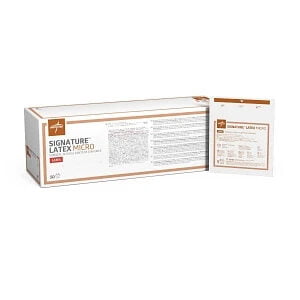
Sterile Powder-Free Latex Surgical Glove Signature Latex OR – Size 6.5 (Box of 50 Pairs) | Ref. MSG5865
23,50 € In stockAdd to basket -
Powder-Free Sterile Latex Surgical Glove Signature Latex OR – Size 9.0 (Box of 50 Pairs) | Ref. MSG5890
23,50 € In stockAdd to basket -
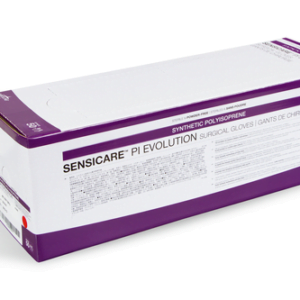
Powder-Free Sterile Polyisoprene Surgical Glove SensiCare PI Evolution – Size 6.0 (Box of 50 Pairs) | Ref. MSG9560
63,75 € In stockAdd to basket -
Sterile Standard Powder-Free Polyisoprene Surgical Glove SensiCare PI Evolution Size 6.5 | Box of 50 Pairs – Ref. MSG9565
63,75 € In stockAdd to basket -
Sterile Powder-Free Polyisoprene Surgical Glove SensiCare PI Evolution – Size 7.0 (Box of 50 Pairs) | Ref. MSG9570
63,75 € In stockAdd to basket -
Powder-Free Sterile Polyisoprene Surgical Glove SensiCare PI Evolution – Size 7.5 (Box of 50 Pairs) | Ref. MSG9575
63,75 € In stockAdd to basket -
Sterile Powder-Free Polyisoprene Surgical Glove SensiCare PI Evolution – Size 8.0 (Box of 50 Pairs) | Ref. MSG9580
63,75 € In stockAdd to basket
Buying and selection tips
-
Set the size before the material
Surgical glove size is expressed in half sizes, for example 7.0 or 8.5, and the real fit of the glove depends on it. A glove that is too large wrinkles and reduces sensitivity; one that is too small is uncomfortable in long procedures. It is worth settling the reference size for each professional before comparing materials.
-
Choosing between latex, neoprene and polyisoprene
Powder-free latex is the traditional material in the operating theatre. Polychloroprene (neoprene) and polyisoprene are materials free of natural latex protein, intended for teams that cannot use latex. Before standardising on a single material, review the needs of the department's staff.
-
Confirm that the glove is powder-free
The surgical gloves in this range are powder-free. It is a criterion that is taken for granted, but it should appear in the specifications of each reference.
-
Match the cuff length to the use
Cuff length determines how much of the wrist and forearm is covered. Always ask for the measurement and compare it between options. Do not confuse it with the thickness of the material, as they are two different quantities.
-
Compare thickness in millimetres, not in grams
The weight per glove is not the thickness: they are two ways of measuring that cannot be interchanged. To compare properly, ask for millimetres at the palm and at the finger. A thinner glove gains tactile sensitivity and a thicker one gains strength.
-
Require the leak-resistance AQL
The absence of holes in a single-use medical glove is controlled with a maximum AQL of 1.5, and dimensions and breaking force are verified under a different part of the standard. Ask the manufacturer to declare both controls.
Frequently asked questions
Can I use a sterile examination glove as a surgical glove?
No. The anatomical shape, AQL and length are different in a sterile surgical glove. A sterile examination glove does not become a surgical glove.
Is a latex-free surgical glove the same as a hypoallergenic glove?
No. A latex-free glove avoids natural latex protein, but it may contain chemical accelerators that can also cause reactions. These are two separate issues and they are not solved by the same choice.
Which sizes should I cover when forecasting purchases of sterile gloves?
Surgical glove size is expressed in half sizes. The forecast should be split size by size rather than by an average, and it is worth basing it on the actual consumption of each department.
How do I compare two gloves if one states weight and the other states thickness in millimetres?
Ask for the equivalent in millimetres at the palm and at the finger before comparing. Weight per glove is not thickness, so an apparently higher weight does not mean a thicker glove.
What does the leak-resistance standard check on a sterile surgical glove?
The part of the standard dealing with the absence of holes requires an AQL of 1.5, and dimensions and breaking force are controlled under a specific part on physical properties. They are complementary controls, not substitutes for each other.
Common questions
Any sterile glove is fine for the operating theatre
A sterile examination glove is not a surgical glove: the anatomical shape, AQL and length differ. Sterility is only one of the requirements.
"Latex-free" means hypoallergenic
A latex-free glove may contain chemical accelerators. The absence of natural latex protein and the absence of accelerators are two different things.
Weight can be used to compare thickness
Weight per glove and thickness are different quantities. A useful comparison is made in millimetres at the palm and at the finger.
Polyisoprene is latex
Polyisoprene is synthetic and contains no natural latex protein, although its feel is close to that of latex.
More products in this guide
-
Standard Sterile Powder-Free Polyisoprene Surgical Glove SensiCare PI Evolution Size 8.5 (ISOLEX, Latex-Free) – Box of 50 Pairs | Ref. MSG9585
63,75 € In stockAdd to basket -
Sterile Micro Polyisoprene Surgical Glove, Powder-Free SensiCare PI Micro – Size 5.5 | Box of 50 Pairs (Ref. MSG9655)
72,25 € In stockAdd to basket -
Sterile Powder-Free Micro Polyisoprene Surgical Glove SensiCare PI Micro Size 7.5 — Box of 50 Pairs (Ref. MSG9675)
72,25 € In stockAdd to basket -
Powder-Free Sterile Micro Polyisoprene Surgical Glove SensiCare PI Micro – Size 8.5 (Box of 50 Pairs) | Ref. MSG9685
72,25 € In stockAdd to basket -
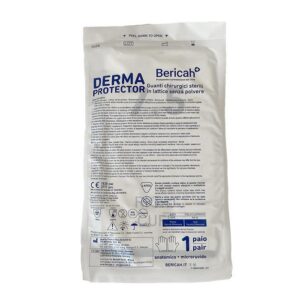
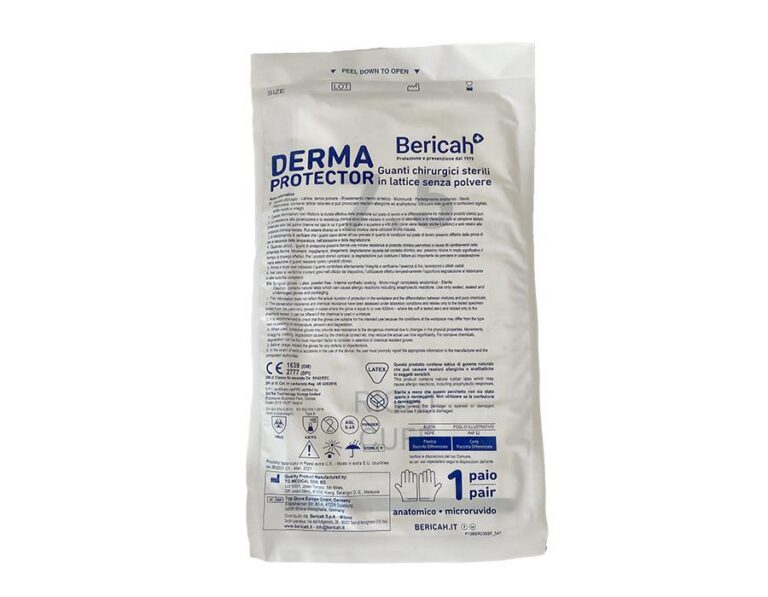
Sterile Powder-Free Latex Surgical Gloves – Size 8.5 (1 Pair per Pouch), Ref. BRLDPRO-PF-85
0,80 € In stockAdd to basket