
Description
Introduction
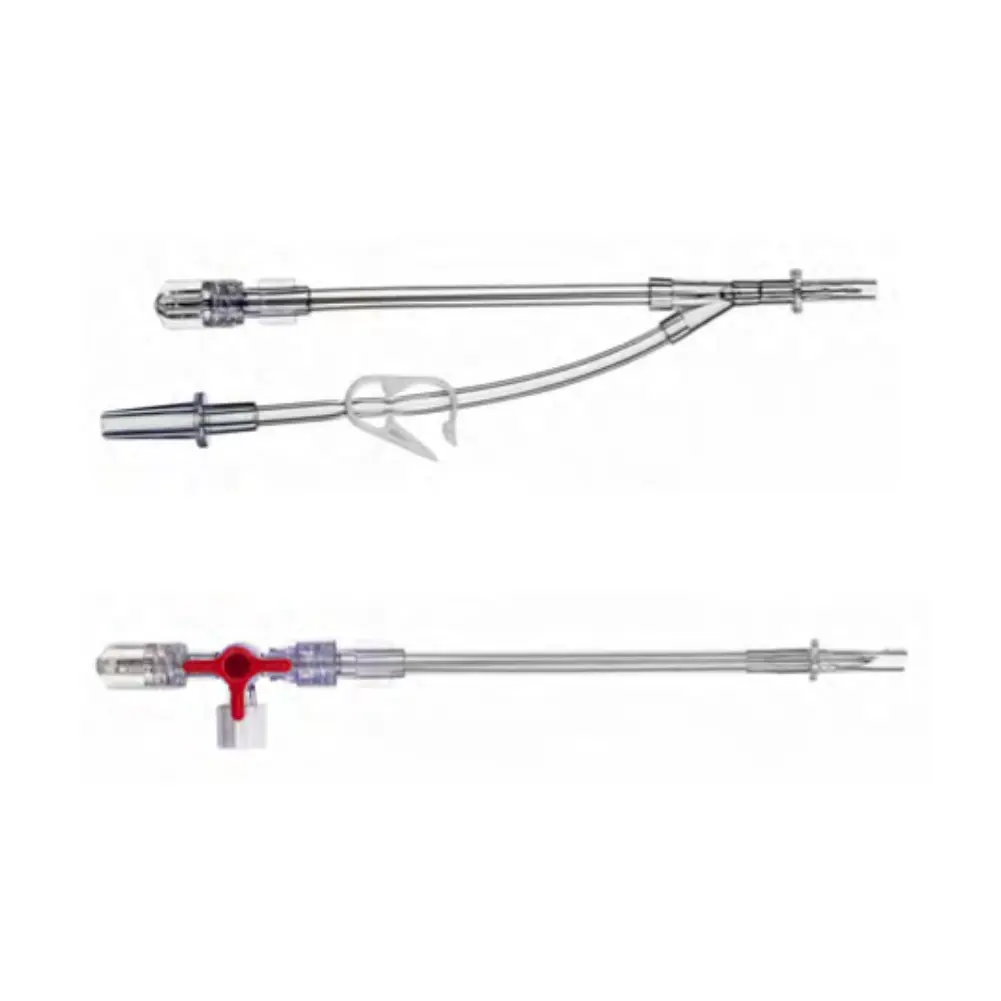
The LifeWell® TUB cannulae from MicroPort® Surgical are the complete solution for the cardioplegia circuit in cardiac surgery. Designed for cardioplegia administration, they allow inducing and maintaining cardiac arrest during the procedure, protecting the myocardium safely and effectively. A complete family that includes an aortic root cannula and coronary ostial cannulae at 45° and 90°, all with CE marking and manufactured from medical-grade materials.
Technical explanation of the device and procedure
During cardiac surgery with cardiopulmonary bypass (CPB), the cardioplegia circuit delivers the cardioplegic solution directly to the heart to stop it in a controlled manner and protect the myocardium during the clamping time. The aortic root cannula is inserted into the ascending aorta and allows antegrade infusion of the solution; its version with a purge line (vent) facilitates removal of air from the system. The coronary ostial cannulae, available at 45° and 90° angles, are placed directly into the coronary ostia for selective perfusion of the solution.
The LifeWell® TUB family stands out for its medical-grade PVC body with a moulded, kink-resistant tip, a stainless steel needle with special treatment that gives it rigidity and toughness, and a female Luer connector on all cannulae. The ostial cannulae incorporate a basket-type tip, fixation flange and are radiopaque for proper imaging control.
Technical specifications
| Description | Cannulae for cardioplegia administration |
| Family | LifeWell® TUB |
| Function | Induce cardiac arrest during surgery, protecting the heart |
| Types | Aortic root cannula · Coronary ostial cannulae 45° and 90° |
| Body | Medical-grade PVC |
| Needle | Stainless steel with special treatment — rigid and tough |
| Tip | Moulded, kink-resistant |
| Aortic root sizes | 15 G and 16 G, with and without purge line (vent) |
| Ostial sizes | 10 Fr (3.3 mm) · 12 Fr (4.0 mm) · 14 Fr (4.7 mm) |
| Connection | Female Luer on all cannulae |
| CE marking | Yes |
Order references — Aortic root cannula with purge line (vent)
| Reference | Description |
|---|---|
| ARC-Y-15 | With purge line, 15 G, fixation flange, female Luer connector |
| ARC-Y-16 | With purge line, 16 G, fixation flange, female Luer connector |
Order references — Aortic root cannula without purge line
| Reference | Description |
|---|---|
| ARC-S-15 | Without purge line, 15 G, fixation flange, female Luer connector |
| ARC-S-16 | Without purge line, 16 G, fixation flange, female Luer connector |
Order references — Coronary ostial cannulae 45°
| Reference | Description |
|---|---|
| CAOC-45-10 | 45 degrees · 10 Fr (3.3 mm) |
| CAOC-45-12 | 45 degrees · 12 Fr (4.0 mm) |
| CAOC-45-14 | 45 degrees · 14 Fr (4.7 mm) |
Order references — Coronary ostial cannulae 90°
| Reference | Description |
|---|---|
| CAOC-90-10 | 90 degrees · 10 Fr (3.3 mm) |
| CAOC-90-12 | 90 degrees · 12 Fr (4.0 mm) |
| CAOC-90-14 | 90 degrees · 14 Fr (4.7 mm) |
Equivalences and cross-references
The LifeWell® TUB family functionally covers the same segment as the classic cardioplegia cannulae from other cardiopulmonary bypass manufacturers, both in the aortic root modality (with and without vent) and in direct coronary ostial infusion. Due to its configuration (15 G and 16 G sizes in aortic root; 10, 12 and 14 Fr in ostial, at 45° and 90°, with female Luer connector), it is interchangeable in the circuit with the cardioplegia cannula ranges commonly used in myocardial perfusion.
Selection tips and variants
- Aortic root with vent (ARC-Y-15 / ARC-Y-16): recommended when it is desired to purge air from the system and monitor perfusion pressure during infusion.
- Aortic root without vent (ARC-S-15 / ARC-S-16): simpler option for procedures where a purge line is not required.
- Ostial 45° (CAOC-45-*): for an intermediate angulation that facilitates access to ostia with less perpendicular anatomy.
- Ostial 90° (CAOC-90-*): ideal for perpendicular access to the coronary ostium, with a basket-type tip that minimises trauma.
- Select the size according to the ostium size: 10 Fr (3.3 mm) for small anatomies, 12 Fr (4.0 mm) as standard and 14 Fr (4.7 mm) for large ostia.
Medical device for exclusive use under medical prescription. Conforms to Regulation (EU) 2017/745 and Royal Decree 192/2023. CE marking attached as a separate document. Indications, contraindications, warnings and instructions for use are provided in the instructions for use accompanying the product.
Reviews
There are no reviews yet.