
Description
1. Commercial Introduction
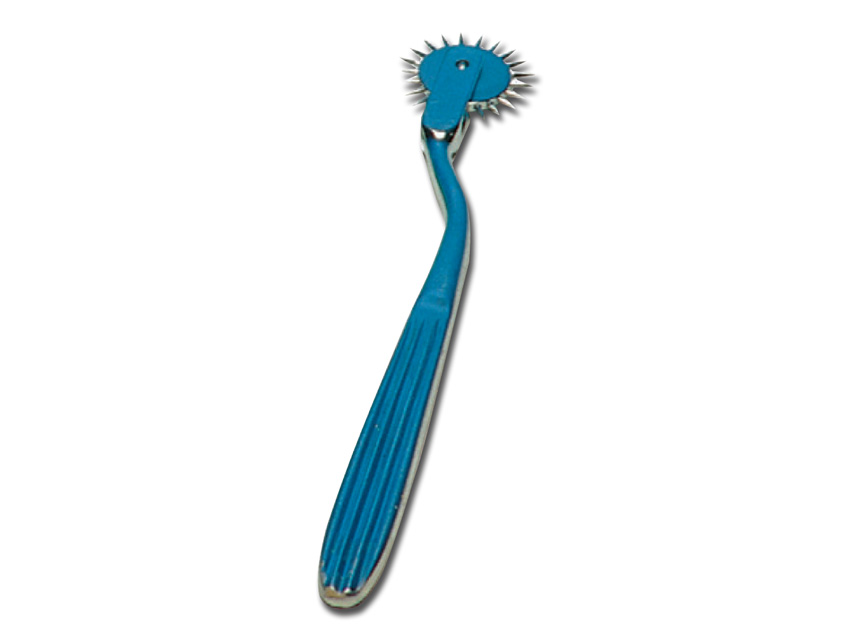
The chrome-plated Wartenberg wheel (pinwheel) is a classic neurological diagnostic instrument, designed for the examination of superficial, painful and discriminative sensitivity in the physical examination of the nervous system. Its toothed and rotating wheel allows a tactile mechanical stimulus of constant intensity to be applied, which facilitates symmetrical comparison between different cutaneous areas and the reproducibility of the examination between visits.
Marketed in Spain by Cahnos within the manufacturer’s catalogue, it is supplied in units of 1 piece, with a chrome-plated brass handle in a silver finish, latex-free and of robust construction, designed for daily use in consultations, hospitalisation and clinical assessment. For large orders you can request a quote: request your personalised offer from our technical-commercial team.
2. Technical explanation of the equipment and procedure
The Wartenberg wheel, also known as the pinwheel or Wartenberg’s wheel, is used in neurology to evaluate the superficial and painful sensitivity of the skin. By rolling it with gentle and constant pressure over the cutaneous surface, its small metallic spikes generate a well-defined tactile stimulus that the patient must locate and describe; in this way, the examiner can detect hypoesthesia, hyperesthesia or alterations in sensitivity associated with peripheral neuropathies, spinal cord lesions or dermatome involvement.
The chrome-plated brass handle provides rigidity and balance, transmitting the stimulus cleanly and reducing examiner fatigue during repeated examinations. Being latex-free, it is suitable for environments with sensitised patients or professionals, and its metallic surface allows easy cleaning and disinfection between patients following the centre’s protocol.
3. Technical Specifications
| Characteristic | Specification |
|---|---|
| Product type | Wartenberg wheel (pinwheel) for neurological examination |
| Colour | Silver |
| Handle | Chrome-plated brass (chromed plated) |
| Needle (pin) | No |
| Brush (brush) | No |
| Weight | 50 g |
| Length | 18 cm |
| Latex content | Free (latex free) |
Product data
| Value | Value |
|---|---|
| Manufacturer | GIMA |
| Manufacturer reference | 31260 |
| Reference Cahnos (SKU) | GM31260 |
| Sales unit | 1 pc |
| Device type | Medical device |
| Device class | I |
| CND | L160101 |
| GMDN | 11950 |
| EAN | 8023279312607 |
Available references
| Reference | Description | Sales unit |
|---|---|---|
| GM31260 | Chrome-plated Wartenberg wheel (pinwheel), latex-free, 50 g, 18 cm (ref. 31260) | 1 pc |
4. Equivalences and Cross-References
The Cahnos reference GM31260 corresponds to the catalogue reference 31260 (EAN 8023279312607), the product’s original manufacturer. The term pinwheel corresponds to the instrument known in clinical terminology as Wartenberg wheel or Wartenberg’s wheel, dedicated to the examination of superficial sensitivity in the neurological examination.
Within the neurological examination ecosystem, this instrument is complemented by other sensory assessment accessories from the Cahnos catalogue, such as the two-point discriminator (ref. 31279) and the THERMO FEEL thermal catheter (ref. 31278), with which it shares a diagnostic purpose in the examination of sensitivity. There is no validated 1:1 equivalence table with third-party manufacturers for this specific reference; Wartenberg wheels from other brands cover the same clinical purpose, but must be verified field by field (handle material, number and type of spikes, weight and length) before any substitution in tender specifications. To confirm specific equivalences, consult our technical-commercial department.
5. Selection tips and variants of interest
The chrome-plated Wartenberg wheel (ref. 31260) is the ideal option when looking for a specific and lightweight instrument (50 g in 18 cm) for the assessment of tactile and painful sensitivity, without additional percussion or sweeping functions. It is suitable for neurology, neuropaediatrics, primary care, emergency services, occupational medicine and training in physical examination.
For a complete neurological examination, it can be combined with the latex-free reflex hammers of the family (Buck, Dejerine, Babinsky and Taylor series), with tuning forks for vibratory assessment and with the aforementioned sensitivity accessories (two-point discriminator and thermal catheter). Check the periodic review of the instruments to keep the wheel in optimal condition and its proper hygiene between patients. Contact the technical-commercial team at Cahnos for conditions, deadlines and volume.
Reviews
There are no reviews yet.