

Description
Innomed CardioAid 200 R-2003-2 battery for defibrillator
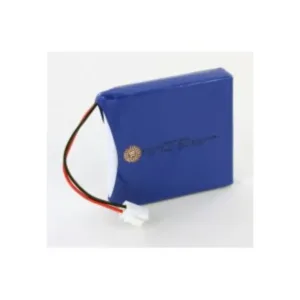
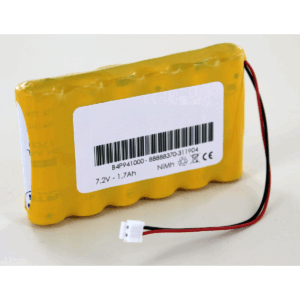
The Innomed CardioAid 200 R-2003-2 battery (Ref. 88888896) is the power replacement designed to keep your Innomed defibrillator always operational. It is a rechargeable nickel-metal hydride (Ni-MH) battery at 12 V, designed for the CardioAid 200 and CardioAid 200B models, ensuring the electrical supply required both for the defibrillation shock and for continuous monitor operation. In emergency, urgent care, patient transport and primary care settings, equipment availability is critical: this battery ensures the defibrillator responds at the exact moment it is needed.
What you should know about your defibrillator battery
The CardioAid 200 defibrillator is a portable life-support device that stores in its battery the energy needed to generate the defibrillation shock and power the ECG monitor and the external pacemaker. Ni-MH chemistry offers stable performance, with no significant memory effect and good recovery in frequent charge/discharge cycles, making it ideal for equipment that alternates between periods of intensive use and standby. Preventive maintenance of the power source (periodic full charge, replacement according to service life and inspection of terminals and connector) is one of the basic recommendations of any defibrillator and AED management programme.
Technical specifications
| Parameter | Specification |
|---|---|
| Battery type | Ni-MH (nickel-metal hydride) rechargeable |
| Nominal voltage | 12 V |
| Capacity | 2.4 Ah (2400 mAh) according to the internal technical data sheet; it is mostly marketed as 3 Ah / 3000 mAh |
| Compatible equipment | Innomed CardioAid 200 and CardioAid 200B |
| Manufacturer reference | R-2003-2 (same family: R-2003-1 and 110460-U) |
| Reference Cahnos | 88888896 |
| Installation | Direct, in the rear compartment of the device, connector aligned |
| Indicative dimensions | 100.9 × 76.2 × 69.2 mm (market data) |
| Approximate weight | ≈ 639 g (market data) |
| Function | Power supply for the defibrillation shock and continuous monitoring |
| Presentation | Individual unit |
Typical market range: replacement batteries in this family are usually sold with capacities between 2.4 Ah and 3 Ah; check the reference stamped on your original battery before replacing it.
Equivalences and cross-references
References R-2003-1 and 110460-U belong to the same manufacturer (Innomed Medical) and are used in the same CardioAid 200 / 200B models; they are considered equivalent within the same family provided the marking on the original battery matches.
| Manufacturer / Brand | Family / Model | Code / SKU | Equivalence level | Differences / Notes |
|---|---|---|---|---|
| Innomed Medical | CardioAid 200 / 200B | R-2003-1 | Exact reference equivalence (same manufacturer) | Same Ni-MH chemistry and same compartment; verify the marking on the original battery |
| Innomed Medical | CardioAid 200 / 200B | 110460-U | Exact reference equivalence (same manufacturer) | Alternative OEM number for the same device battery |
| BatteryWeb / MedGrocery (replacement) | Cardio Aid 200B | CS-ICD200MD | Comparable by category (not interchangeable 1:1) | Independent replacement manufacturer; 12 V 3000 mAh Ni-MH; verify connector and BMS before use |
There is no manufacturer-validated equivalence table cross-referencing this battery with equipment from other defibrillation manufacturers (Physio-Control, Zoll, Philips, etc.); each device uses its own compartment, connector and battery management protocol (BMS). Consult the technical department before use in tenders or cross-replacement.
Selection tips and variants of interest
Before replacing the battery, check the reference stamped on the removed battery (R-2003-2, R-2003-1 or 110460-U), the condition of the terminals and that the compartment shows no damage. After installing the new battery, perform a complete charge cycle without interruptions and allow the device to complete its start-up self-test: the CardioAid battery management system recalibrates its alarm thresholds with the new cell during the first cycle. In defibrillator fleets and external use programmes (AED), it is recommended to keep a charged spare battery and a charge rotation plan. If the device is used in environments with extreme temperatures or long periods without mains power, consult your technical service about the most suitable variant within the CardioAid 200 family.

Reviews
There are no reviews yet.