
Wheelchairs and wheeled chairs: buying guide
32 products in the catalogue
A wheeled chair combines a seat with a rolling frame to transfer or position people with reduced mobility in a healthcare or care facility. The products include different solutions: wheeled donor chairs, commode chairs, folding wheelchairs, paediatric chairs and evacuation chairs.
The decision is not limited to the seat: it affects the whole of the frame, wheels, brakes and accessories. Before deciding, it is worth reviewing the weight capacity, the seat width, the frame material, the type of wheels, the locking and whether the equipment can be folded for storage or transport.
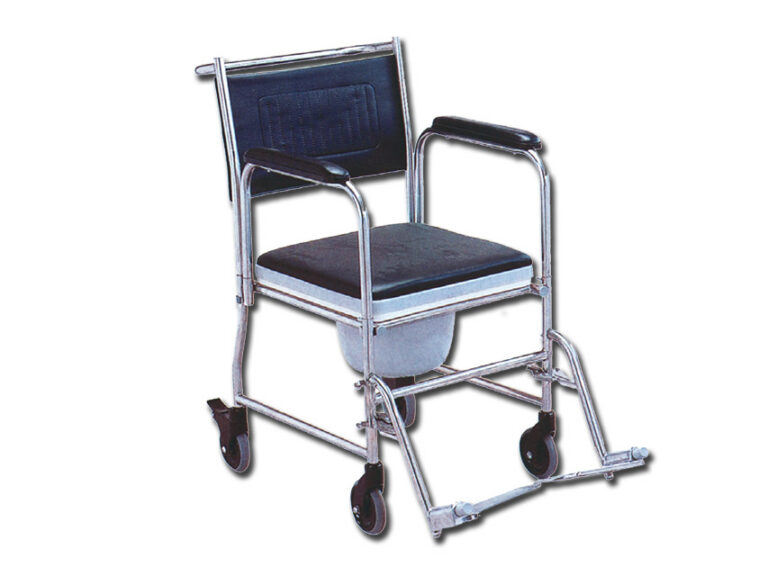
Other related families
-
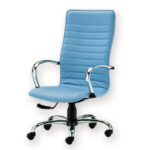 Chairs
Brings together most of the wheeled chairs and lets you compare transfer, toileting and evacuation models in one place.
- Shower and Toilet Chairs Concentrates shower and toilet chairs, for equipment that will be used in wet areas.
-
 Wheelchair Accessories
Makes it easy to find spares and accessories for wheelchairs, such as wheels, brakes or footrests.
-
 Transport and Shower Stretchers
Useful when transfer requires a padded surface rather than a conventional seat.
Products in this guide
- 75 kg 1
- 100 kg 12
- 110 kg 4
- 116 kg 1
- 120 kg 3
- 125 kg 4
- 135 kg 1
- 150 kg 4
- Aluminium 10
- Stainless steel 6
- 10.3 cm 1
- 10.5 cm 2
- 90 cm 2
- 96 cm 1
- 97 cm 1
- 100 cm 2
- 106 cm 2
- 109 cm 1
- Medical device 27
- Non-medical 4
-
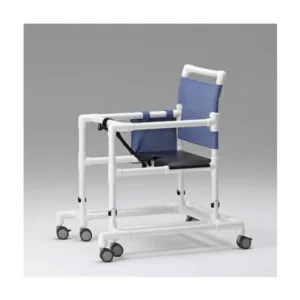
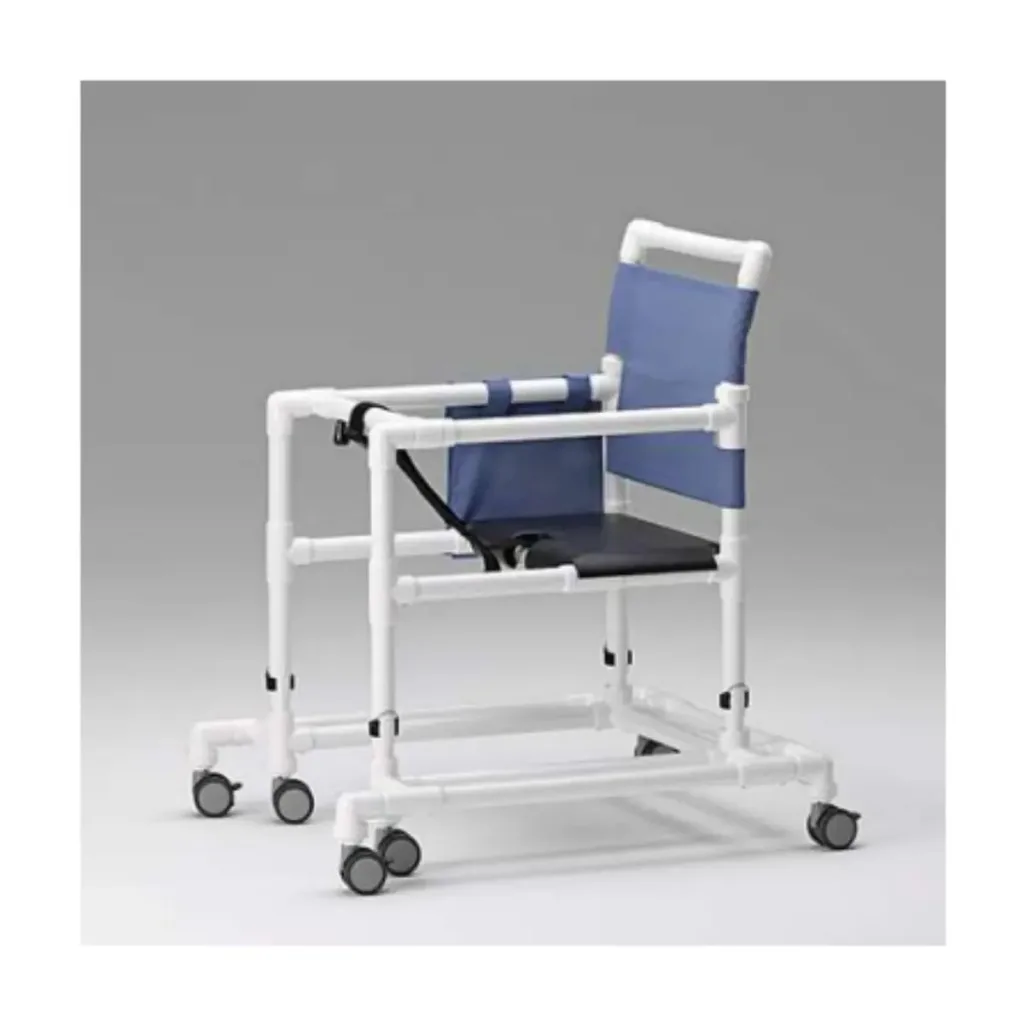
RCN Walker chair GW 120 with padded seat, safety belt and 6 double wheels with brakes | Capacity 150 kg
2.334,23 € In stockAdd to basket -
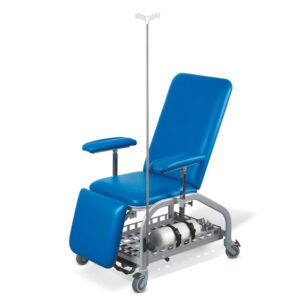
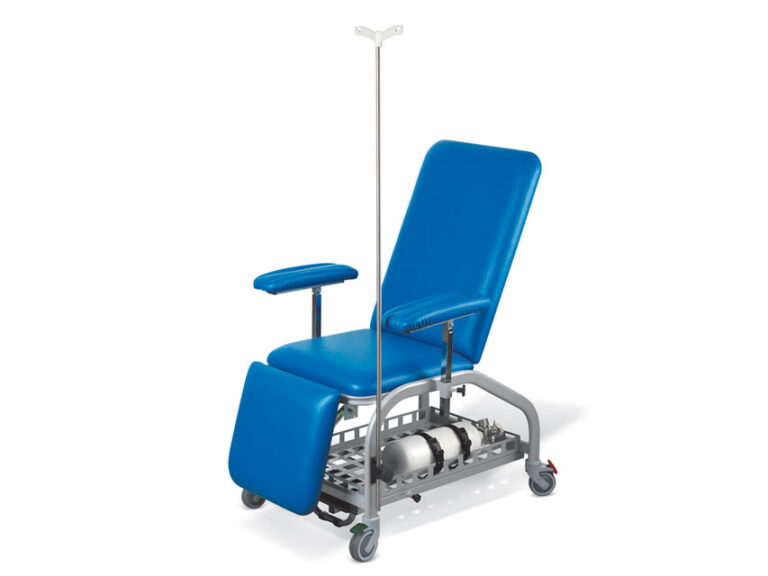
Donation Chair with Wheels | Adjustable Backrest with Gas Pump, Removable Footrest, Blue Upholstery, Load 150 kg | Ref. GM27561
1.852,50 € In stock🚚 Bulky deliveryAdd to basket -
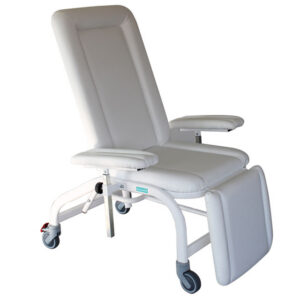
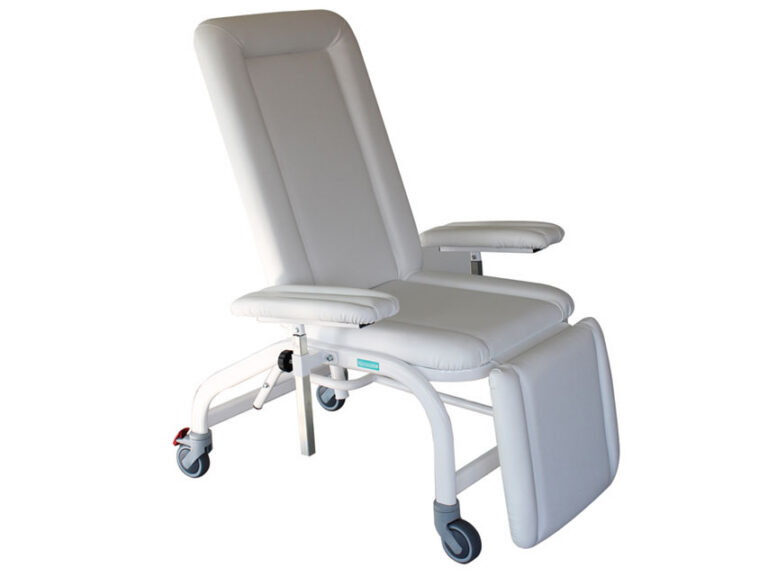
Wheeled Donation Chair – Mechanical, Synchronised Gas Spring Adjustment, White Upholstery | Ref. GM27567
997,50 € On order🚚 Bulky deliveryAdd to basket -
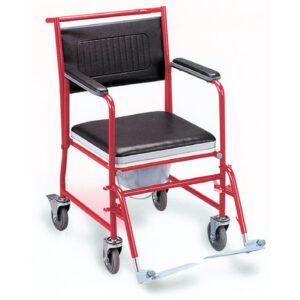
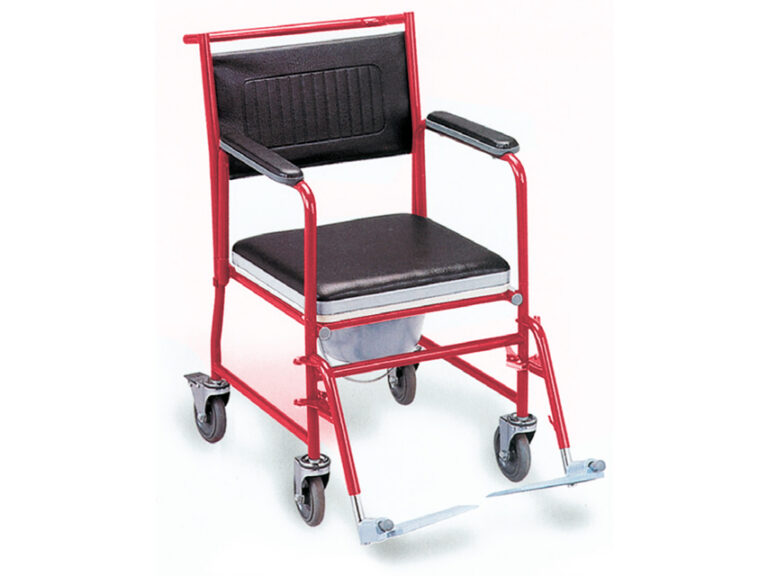
Wheeled Commode Chair – Powder-coated steel structure, sanitary plastic seat, removable armrests and footrests, max. load 100 kg (Ref. 27702)
141,55 € In stockAdd to basket -
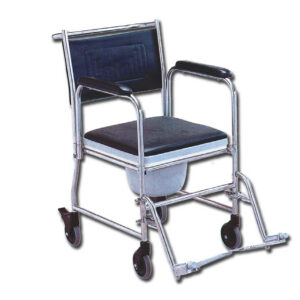
Stainless Steel Wheeled Commode Chair – Removable Armrests and Footrests, Rear Wheels with Lock, Load 100 kg (Ref. 27703)
227,05 € In stockAdd to basket -
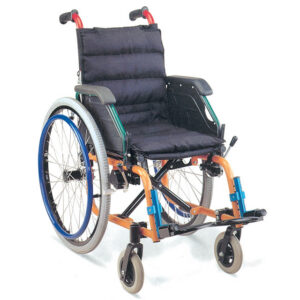
Folding Paediatric Wheelchair – 35 cm Seat, Black Fabric, Folding Backrest with Pocket and Pneumatic Wheels | Ref. 27708 (SKU GM27708)
304,00 € In stockAdd to basket -
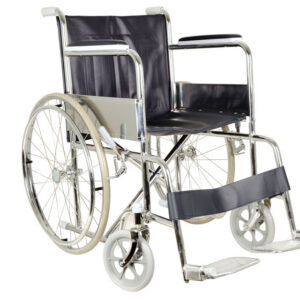
Standard Folding Wheelchair – Seat 46 cm, Chrome Frame with Single Cross Brace, Solid Wheels and Locking Brakes (Ref. 27709)
141,55 € In stockAdd to basket -
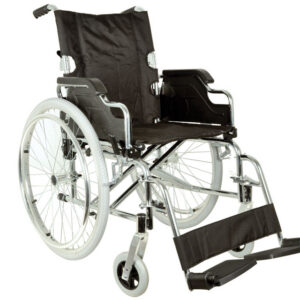
ROYAL Folding Wheelchair – 46 cm Seat, Black Fabric and Chrome-Plated Steel Chassis | Ref. 27715 (SKU GM27715)
247,00 € In stockAdd to basket
Buying and selection tips
-
Weight capacity with a margin
Compare the stated weight capacity of each reference with the weight of the intended users and leave a margin. Working at the limit shortens the life of the frame.
-
Seat width and depth
The products have different seat widths (for example, 35, 41, 43, 46 or 56 cm). Choose the width according to the intended users, and take into account the paediatric or extra-large version if the department needs them.
-
Frame material according to the environment
For wet or shower areas, a stainless steel or anodised aluminium frame is advisable, as it is easier to clean. Where day-to-day handling is the priority, aluminium frames are lighter. Review the description of each reference.
-
Wheels and folding
Check the size and type of the wheels on each reference, and whether the chair is foldable and whether the wheels can be removed, factors that affect storage and transport.
-
Brakes and accessories
Check that the chair has brakes and which accessories it accepts (footrests, removable armrests, etc.) before completing the order.
-
Commode chair and use in wet areas
Commode chairs have a seat with an opening and padding. Verify in the description whether the model is suitable for use in the shower and what materials it uses.
Compatibility
- Footrests and armrests
- Removable footrests and removable armrests are options that may vary from one model to another. Check on the reference that it includes the ones you need.
Frequently asked questions
How do I determine the seat width for a large user?
Compare the dimensions of each reference: there are standard widths and extra-large versions. Choose the width that leaves clearance for the intended user.
What should I check so that a commode chair is suitable for use over the toilet?
Verify in the description of the reference whether the model is designed for that use, and review the seat dimensions and height in relation to the facility's toilets.
What is the difference between a transit chair and a self-propelled one?
In a transit chair the attendant does the pushing, whereas in a self-propelled one the user can propel themselves with the larger-diameter rear wheels. The choice depends on the user's independence.
What material should I choose for a chair that will be used in wet areas?
Stainless steel and anodised aluminium are easier to clean. Check the frame and padding material in the description of each reference.
What weight capacity margin should I allow on a commode chair?
Start from the stated capacity of the frame and leave a margin over the weight of the intended user. If it comes close to the limit, consider another reference with a higher capacity.
Common questions
Believing that any wheeled chair is suitable for toileting
Not all models are designed for that use. Verify in the description of the reference whether it is suitable.
Supposing that a high weight capacity maintains the same performance
Reinforced configurations may vary in dimensions, weight and finishes. Review the description of each reference.
Confusing a shower and commode chair with a transit chair
The former is designed for hygiene and short transfers, while the latter is oriented towards longer journeys. The seat width, wheels and accessories differ.
More products in this guide
-
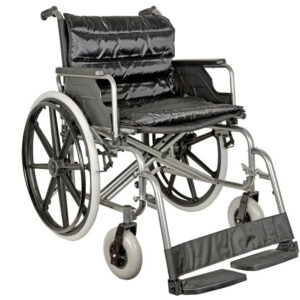
Extra-Large Folding Wheelchair – 56 cm Seat, Steel Chassis with Double Cross Brace and Pneumatic Rear Wheels (Ref. 27716)
294,50 € In stockAdd to basket -
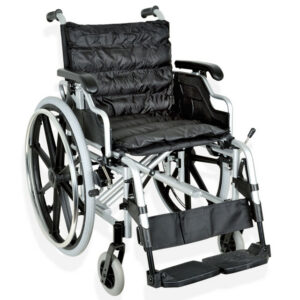
Folding aluminium wheelchair DELUXE – Seat 46 cm, black fabric, solid PU rear wheels 61 cm (24″), capacity 100 kg | Ref. 27717
456,00 € In stockAdd to basket -
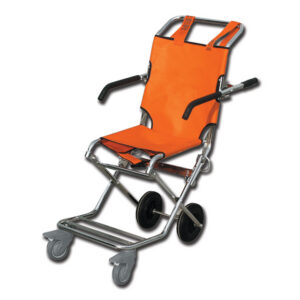
Folding Evacuation Chair – Chrome-Plated Steel with Front Wheel Brake, Reinforced Nylon Seat (Orange/Chrome), Load 116 kg | Ref. 34058 (SKU GM34058)
698,25 € In stockAdd to basket -
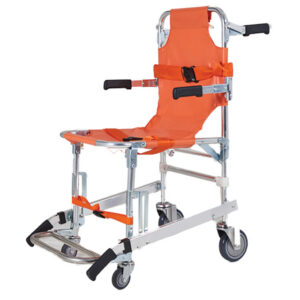
VALUE Evacuation Chair for Stairs with 4 Wheels – Lightweight Aluminium, Waterproof Orange Canvas, Max. Load 159 kg | Ref. 34073 (SKU GM34073)
228,00 € In stockAdd to basket -
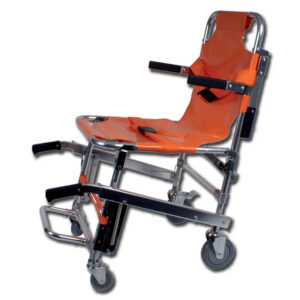
Evacuation Chair with 4 Wheels – Stretcher-Rescue Chair in Lightweight Aluminium with Waterproof Orange Canvas, 150 kg | Ref. 34074 (SKU GM34074)
378,10 € In stockAdd to basket -
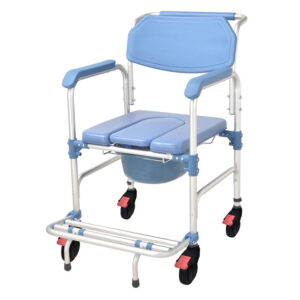
Blue commode chair (sillico) with anodised aluminium wheels, bedpan with lid and fixed height – Max. load 125 kg (Ref. 43196)
128,25 € In stockAdd to basket -
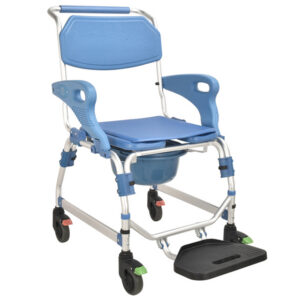
Smart Wheeled Commode Chair in Anodised Aluminium – Sanitary Chair for Bathroom with Bedpan and Lid, Large Footrest and 4 Braked Wheels, Capacity 125 kg (Ref. 43198)
266,00 € In stockAdd to basket -
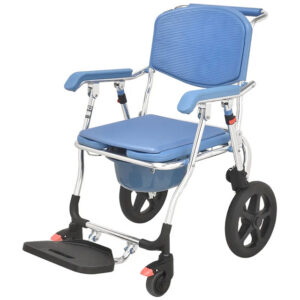
Folding Commode Chair with Wheels – EVA Seat and Backrest, Aluminium Frame, Max. Load 125 kg (Ref. 43202)
218,50 € In stockAdd to basket