
Folding wheelchairs
16 products in the catalogue
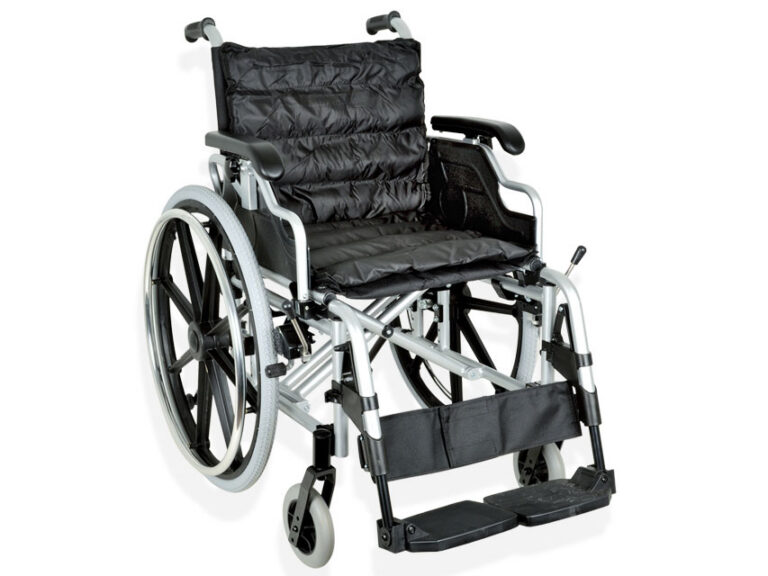
The folding wheelchair is a mobility aid whose frame folds in on itself, so that it takes up little space when not in use and can be stored or transported easily. In healthcare it is used for transferring patients between departments, in consulting rooms, care homes and rehabilitation units, and also as a personal chair.
The range includes steel and aluminium chairs, in standard, narrow, extra-wide and paediatric versions. The choice of material, between solid and pneumatic wheels, and between different seat widths affects weight, comfort and ease of handling. Before deciding, consider who will push the chair, where it will be used and how much weight it must support.
Other related families
-
 Wheelchair Accessories
Allows the chair to be completed with accessories that adapt it to the user.
- MEDICAL AND CLINICAL FURNITURE Brings together the furniture and supports that accompany the chair during patient transfer and stay.
-
 Chairs
Groups other seating solutions that can complement mobility in the consulting room or care home.
Products in this guide
- 75 kg 1
- 100 kg 10
- 110 kg 1
- 120 kg 3
- 125 kg 1
- 10.3 cm 1
- 10.5 cm 2
- 96 cm 1
- 97 cm 1
- 100 cm 2
- 106 cm 2
- 109 cm 1
- Aluminium 5
- Stainless steel 4
-
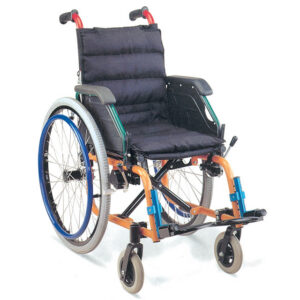
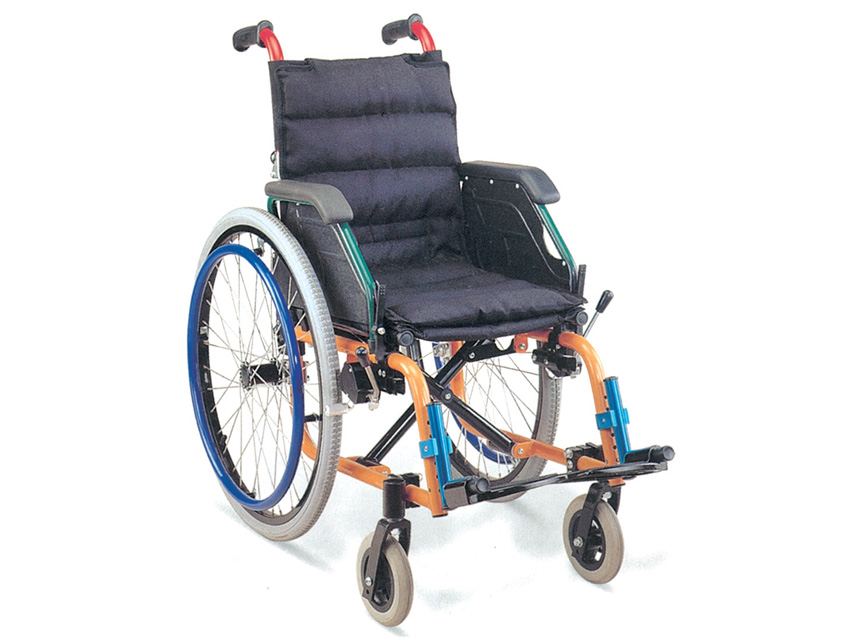
Folding Paediatric Wheelchair – 35 cm Seat, Black Fabric, Folding Backrest with Pocket and Pneumatic Wheels | Ref. 27708 (SKU GM27708)
304,00 € In stockAdd to basket -
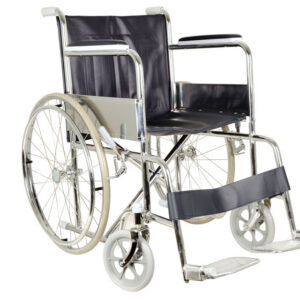
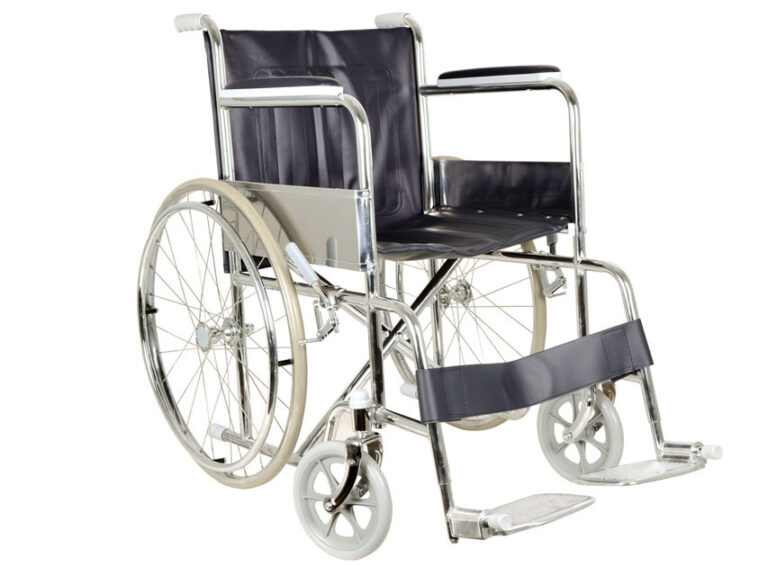
Standard Folding Wheelchair – Seat 46 cm, Chrome Frame with Single Cross Brace, Solid Wheels and Locking Brakes (Ref. 27709)
141,55 € In stockAdd to basket -
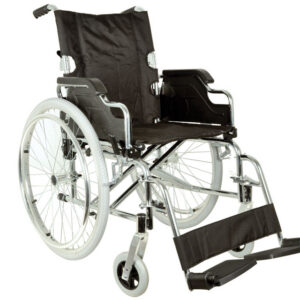
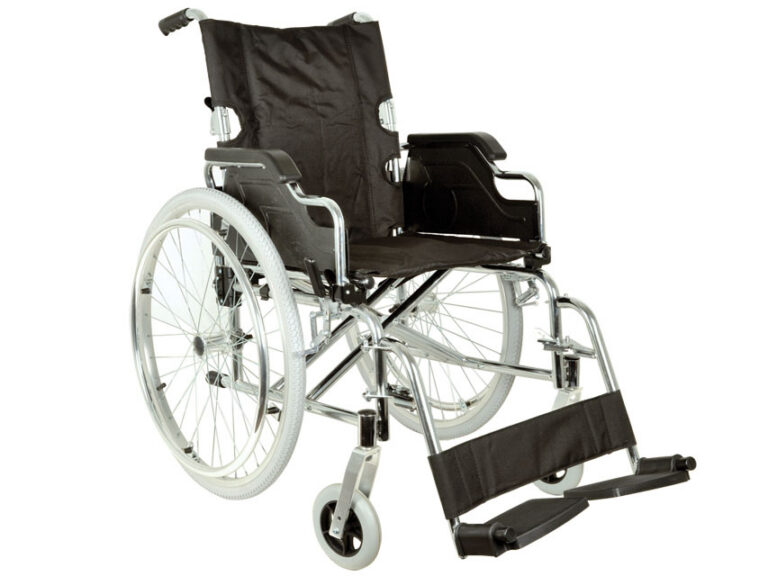
ROYAL Folding Wheelchair – 46 cm Seat, Black Fabric and Chrome-Plated Steel Chassis | Ref. 27715 (SKU GM27715)
247,00 € In stockAdd to basket -
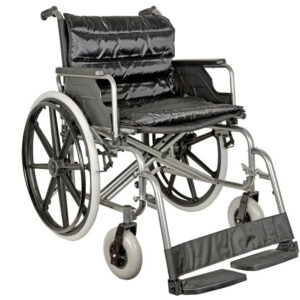
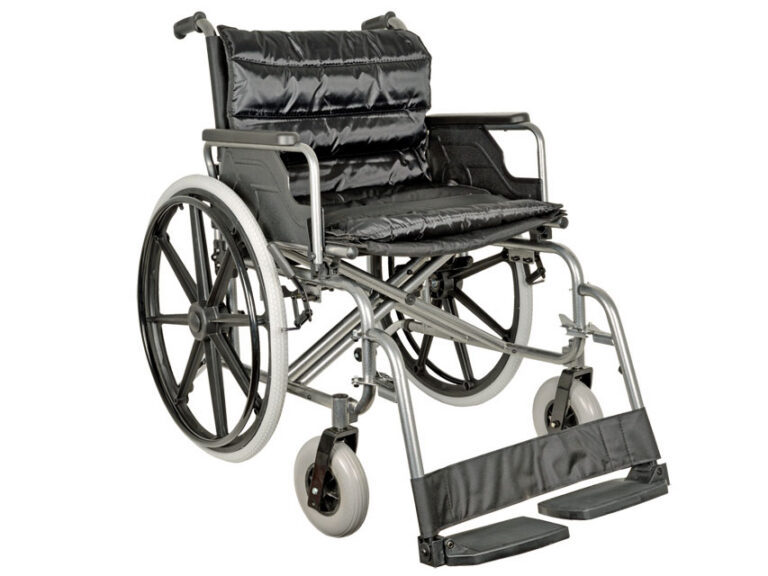
Extra-Large Folding Wheelchair – 56 cm Seat, Steel Chassis with Double Cross Brace and Pneumatic Rear Wheels (Ref. 27716)
294,50 € In stockAdd to basket -
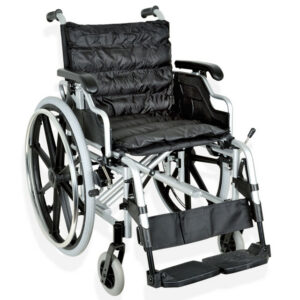
Folding aluminium wheelchair DELUXE – Seat 46 cm, black fabric, solid PU rear wheels 61 cm (24″), capacity 100 kg | Ref. 27717
456,00 € In stockAdd to basket -
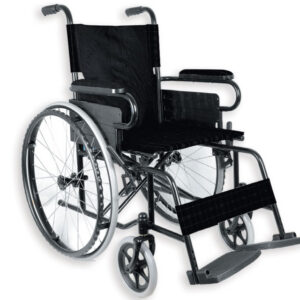
Value Folding Wheelchair – 41 cm Seat, Black Nylon Fabric, Fixed Armrests and Footrests (Ref. 43220)
160,55 € In stockAdd to basket -
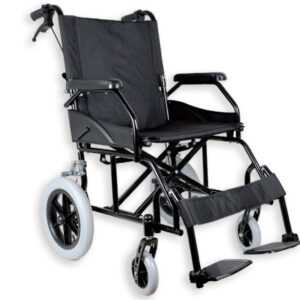
Transit Wheelchair 46 cm – Folding, Black Fabric, Handle Brakes
223,25 € In stockAdd to basket -
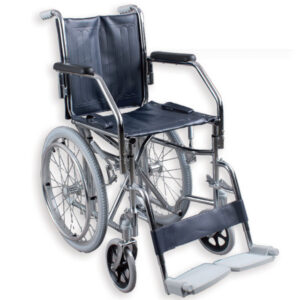
Narrow folding wheelchair “Narrow” with 41 cm seat and black fabric | Ref. 43230 (GM43230)
261,25 € In stockAdd to basket
Buying and selection tips
-
Match the seat width to the user
Seat width is the first piece of data to settle. The products in the range include paediatric, narrow, standard and extra-wide models, each with its own seat width. Choose the width suited to the intended user of each chair.
-
Weigh the frame weight against who handles it
There are steel and aluminium chairs. Aluminium reduces weight and makes folding and transporting easier, while steel offers robustness. If the chair will be loaded into a vehicle frequently, compare the stated weight of each product.
-
Choose the wheel type according to use
Solid wheels require no maintenance and are practical on indoor surfaces, while pneumatic wheels absorb uneven ground better. Check the diameter and material of the wheels of each product before deciding.
-
Check armrests and footrests
Check whether the armrests and footrests are fixed, swing-away or detachable. These elements make a difference in the daily use by auxiliary staff and affect how close the chair can get to tables and beds.
-
Take the weight capacity into account
The chair's weight capacity must exceed the intended weight of the user with a margin. Compare the maximum load stated for each product, as it varies by model.
-
Allow for folding and storage space
A folding chair reduces its width when folded, which allows it to be stored in a cupboard or a car boot. Measure the available space and compare the folded dimensions of each model to avoid buying a chair that does not fit.
Frequently asked questions
How wide is a folding wheelchair when folded?
It depends on the model: the width is reduced when the frame is folded, and it is a key figure for calculating the storage space. Ask for the folded dimensions of each product.
What seat width should I choose for the user?
The range includes seats of 35, 41, 43, 46 and 56 cm. Choose the width according to the intended user of each chair.
What are the advantages of an aluminium frame over a steel one?
Aluminium is lighter and makes folding and handling easier; steel offers robustness in intensive use. Compare the stated weight of each product.
What should I check on the footrests and armrests when choosing the chair?
Whether they are fixed, swing-away or detachable and height-adjustable, as they make it easier to get close to tables and beds.
What weight capacity should I allow for when choosing the chair?
The weight capacity must exceed the intended weight of the user with a margin. Compare the maximum load stated for each product, as it varies by model.
Common questions
Confusing a folding shower chair with a folding wheelchair
A folding shower chair is designed for washing and not for moving around the facility. The folding wheelchair is used to transport the user.
Thinking that steel and aluminium weigh the same
They are not equivalent: an aluminium frame is lighter and easier to handle than a steel one. The weight affects the effort of folding and of loading the chair into a vehicle.
Taking it for granted that solid and pneumatic wheels behave in the same way
Solid wheels need no inflation and are practical indoors, while pneumatic wheels absorb uneven ground better. Check the wheel type of each product.
More products in this guide
-
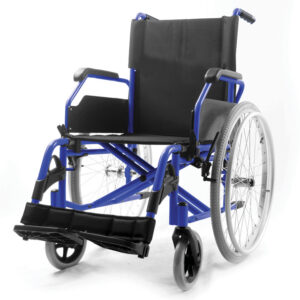
Classic folding aluminium wheelchair – Seat 46 cm, PU rear wheels 61 cm with quick-release axle, capacity 120 kg | Ref. 43235
375,25 € In stockAdd to basket -
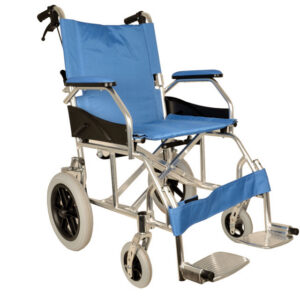
Queen blue folding aluminium wheelchair | Ultralight 9.5 kg, 46 cm seat (Ref. 43250)
229,90 € In stockAdd to basket -
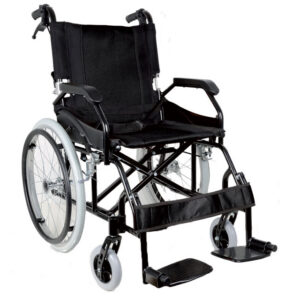
PRINCE aluminium wheelchair – 46 cm seat, black fabric, folding with hand brakes | Ref. 43251
247,00 € In stockAdd to basket -

ESSEX folding wheelchair – 43 cm seat, black fabric, max. load 110 kg | Ref. GM43260
Price range: 222,30 € through 231,80 € In stockSelect options This product has multiple variants. The options may be chosen on the product page -
Folding Wheelchair OXFORD – 43 cm Seat, Black Upholstery (Ref. GM43270)
Price range: 237,50 € through 247,00 € In stockSelect options This product has multiple variants. The options may be chosen on the product page -
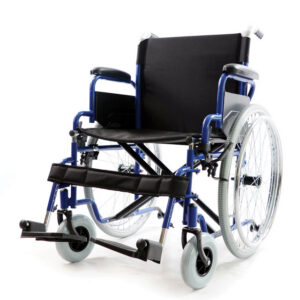
Oxford Plus Folding Wheelchair | Seat 46 cm, black upholstery, solid PU rear wheels Ø 61 cm (24″) and anti-tip system | Ref. GM43274-F
Price range: 266,00 € through 275,50 € In stockSelect options This product has multiple variants. The options may be chosen on the product page -
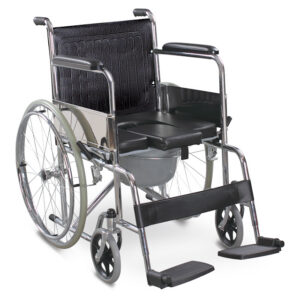
Folding Commode Chair with Wheels and U-Shaped Commode Seat – Chrome-Plated Steel Structure and Bedpan (Ref. 43283)
185,25 € On orderAdd to basket -
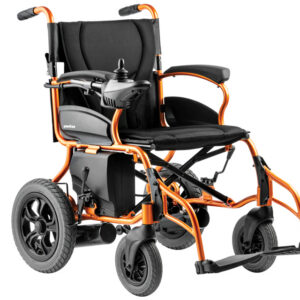
Folding Electric Wheelchair with 24V Lithium Battery · Indoor and Outdoor Use (Ref. GM43290)
Price range: 1.805,00 € through 1.881,00 € In stockSelect options This product has multiple variants. The options may be chosen on the product page