
Guide to choosing a wheelchair or mobility chair
28 products in the catalogue
A mobility chair is an assistive product that allows a person with reduced mobility to be transferred, showered or washed. In healthcare, geriatric and care settings it is used in bedrooms, bathrooms and swimming pools, and the choice depends as much on the user as on the space in which care staff work.
The range is organised around several factors: load capacity, frame material, seat dimensions, type of wheels and restraint elements. There are folding, self-propelled, transit, electric, shower and toilet chairs, and commode chairs. Before deciding, settle the main use and check that the user's measurements fit those of the seat. This guide sets out the criteria that a professional buyer should review.


Other related families
Products in this guide
- 75 kg 1
- 100 kg 12
- 110 kg 1
- 120 kg 3
- 125 kg 1
- 150 kg 7
- 175 kg 1
- 200 kg 1
- Stainless steel 7
- Aluminium 5
- Plastic 1
- Titanium 1
- 10.3 cm 1
- 10.5 cm 2
- 90 cm 2
- 96 cm 1
- 97 cm 1
- 100 cm 2
- 106 cm 2
- 109 cm 1
-
Wheelchair for shower and toilet RCN SCC 200 BS with ergonomic one-piece seat with hygienic opening and backrest with integrated handles | 150 kg
718,66 € In stockAdd to basket -
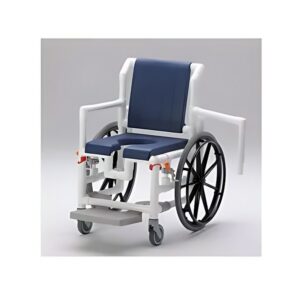
Self-propelling pool wheelchair DR 100 PPG | White resin resistant to UV rays, PU foam and 150 kg capacity
4.148,25 € In stock🚚 Bulky deliveryAdd to basket -
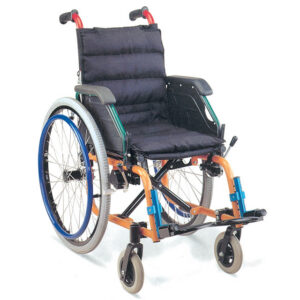
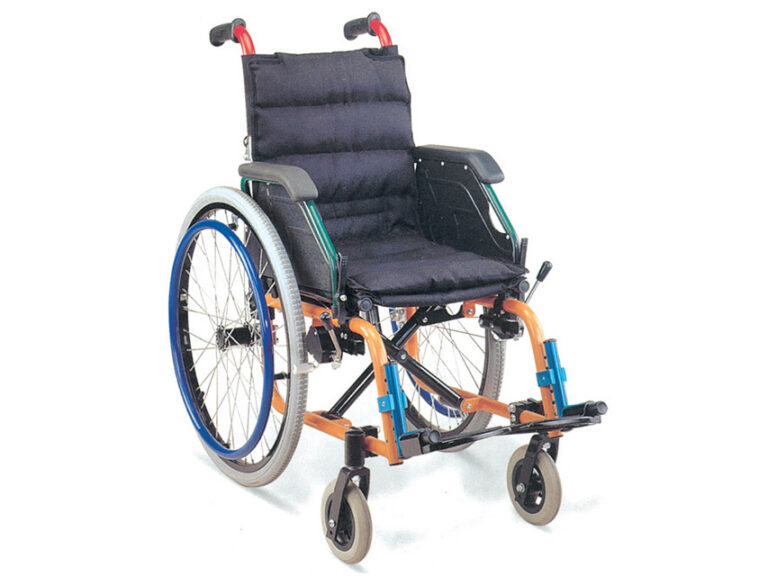
Folding Paediatric Wheelchair – 35 cm Seat, Black Fabric, Folding Backrest with Pocket and Pneumatic Wheels | Ref. 27708 (SKU GM27708)
304,00 € In stockAdd to basket -
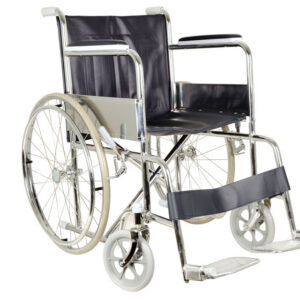
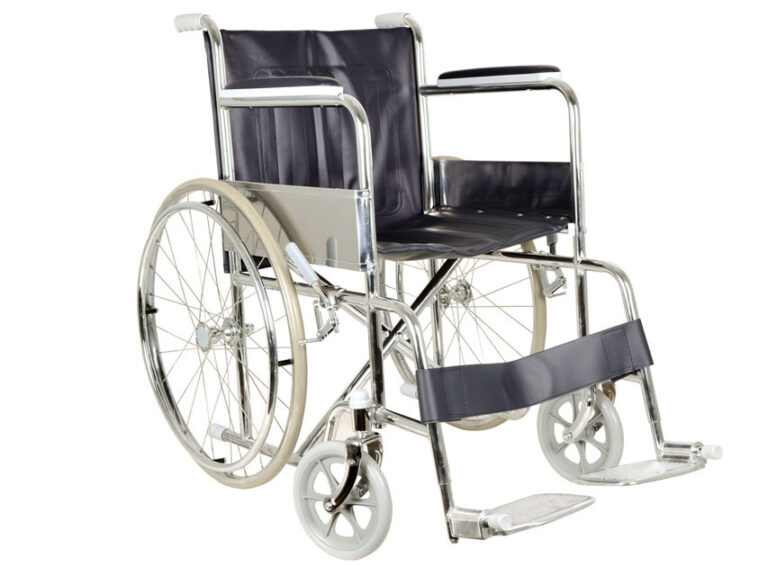
Standard Folding Wheelchair – Seat 46 cm, Chrome Frame with Single Cross Brace, Solid Wheels and Locking Brakes (Ref. 27709)
141,55 € In stockAdd to basket -
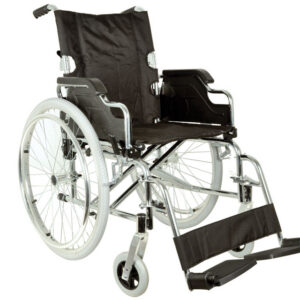
ROYAL Folding Wheelchair – 46 cm Seat, Black Fabric and Chrome-Plated Steel Chassis | Ref. 27715 (SKU GM27715)
247,00 € In stockAdd to basket -
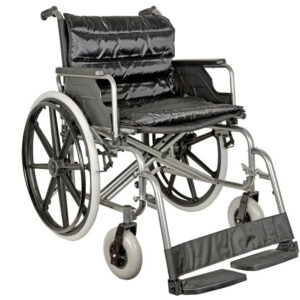
Extra-Large Folding Wheelchair – 56 cm Seat, Steel Chassis with Double Cross Brace and Pneumatic Rear Wheels (Ref. 27716)
294,50 € In stockAdd to basket -
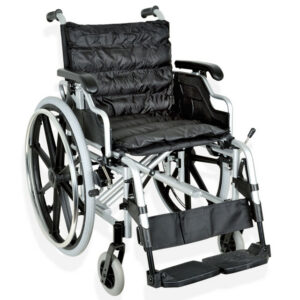
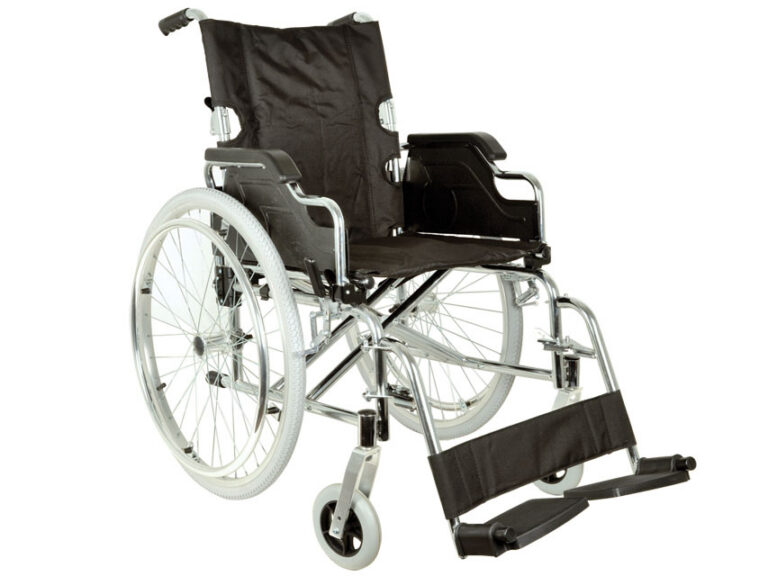
Folding aluminium wheelchair DELUXE – Seat 46 cm, black fabric, solid PU rear wheels 61 cm (24″), capacity 100 kg | Ref. 27717
456,00 € In stockAdd to basket -
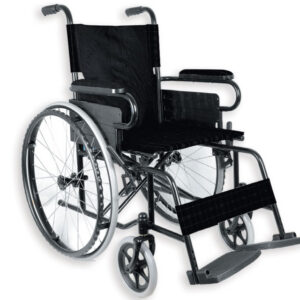
Value Folding Wheelchair – 41 cm Seat, Black Nylon Fabric, Fixed Armrests and Footrests (Ref. 43220)
160,55 € In stockAdd to basket
Buying and selection tips
-
Take the user's measurements before settling the size
Products state the seat width (for example 35, 41, 43, 46 or 56 cm). Measure the widest part of the user's pelvis and allow some margin for clothing; also check the depth and height of the seat. This avoids ordering a chair that then has to be compensated for with cushions.
-
Consider who propels the chair
If the user will move the chair themselves, they need a self-propelled chair with rear wheels and push rims; if an assistant always does the moving, transit and attendant-propelled chairs offer a different configuration. The height of the backrest is matched to the type of propulsion.
-
Check the material against the environment of use
For shower or pool areas there are stainless steel or resin chairs, described as water-resistant. For general use, folding chairs in steel or aluminium are available. Choose the material according to the environment and the weight of the equipment, since some aluminium chairs are advertised as lightweight.
-
Consider the frame, wheels and footrests
Compare the type of frame, the size of the wheels and whether the footrests and rear wheels are removable. Some models have quick-release rear wheels, which make transport and storage easier.
-
Compare the stated load capacity
Each product states its maximum load. Check it against the user's weight; there are extra-large versions and shower chairs for larger users. A capacity higher than needed does not make up for a poorly measured seat.
-
Review the restraint and braking elements
Check which system the chair incorporates: belt, bar or harness, and which brakes it has. On shower chairs, also look at the leg stops and at the commode pan or seat opening if it is to be used over the toilet.
Frequently asked questions
How do I calculate the seat width the user needs?
Measure the widest part of the pelvis and add a margin for clothing. If the result falls between two sizes, also check the depth and height of the seat before deciding.
What is the difference between a shower chair with a commode pan and one without?
Some shower and toilet chairs include a commode pan and an opening so they can be used over the toilet; others are limited to shower use. Check in the description of each product whether it can be used over the toilet.
Which chair suits a pool or shower, compared with a general-purpose one?
For pools and showers there are resin or stainless steel chairs, described as water-resistant. General-purpose folding chairs are not designed for that environment. Choose according to where it will be used.
What load capacity should I order for a larger user?
Compare the maximum load of each product and the seat width: there is an extra-large folding chair and a shower chair for larger users. Check that both figures match the user's weight and build.
Can the chair be folded for transport in a vehicle?
Folding chairs make transfer and storage easier, and some models have removable footrests and quick-release rear wheels. Confirm which parts are removable in the specific configuration before buying it.
Common questions
Confusing the seat width with the overall width of the chair
They are different measurements: the overall width includes the frame and wheels. When comparing models, look at the seat measurement, which determines whether the user fits comfortably.
Thinking that a higher backrest is always better
The height of the backrest is matched to the type of propulsion and the user's needs, not to the comfort of the person pushing. Check the stated height of each product.
Believing that any chair will do for both showering and transport
Shower and toilet models prioritise water resistance, while transport models focus on getting around. If you plan to use a single chair for both purposes, check that the product is designed for it.
More products in this guide
-
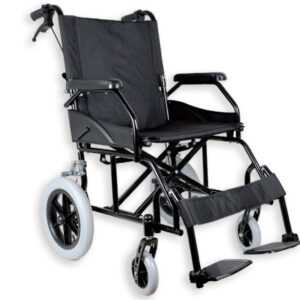
Transit Wheelchair 46 cm – Folding, Black Fabric, Handle Brakes
223,25 € In stockAdd to basket -
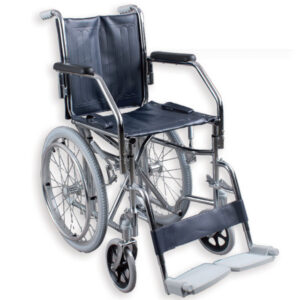
Narrow folding wheelchair “Narrow” with 41 cm seat and black fabric | Ref. 43230 (GM43230)
261,25 € In stockAdd to basket -
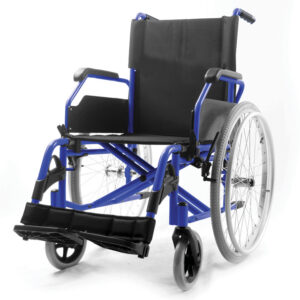
Classic folding aluminium wheelchair – Seat 46 cm, PU rear wheels 61 cm with quick-release axle, capacity 120 kg | Ref. 43235
375,25 € In stockAdd to basket -
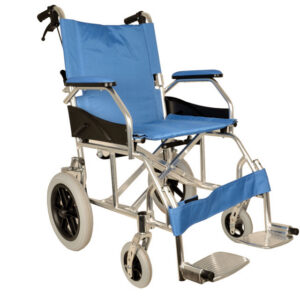
Queen blue folding aluminium wheelchair | Ultralight 9.5 kg, 46 cm seat (Ref. 43250)
229,90 € In stockAdd to basket -
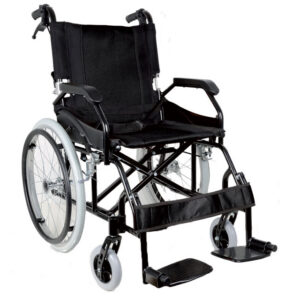
PRINCE aluminium wheelchair – 46 cm seat, black fabric, folding with hand brakes | Ref. 43251
247,00 € In stockAdd to basket -

ESSEX folding wheelchair – 43 cm seat, black fabric, max. load 110 kg | Ref. GM43260
Price range: 222,30 € through 231,80 € In stockSelect options This product has multiple variants. The options may be chosen on the product page -
Folding Wheelchair OXFORD – 43 cm Seat, Black Upholstery (Ref. GM43270)
Price range: 237,50 € through 247,00 € In stockSelect options This product has multiple variants. The options may be chosen on the product page -
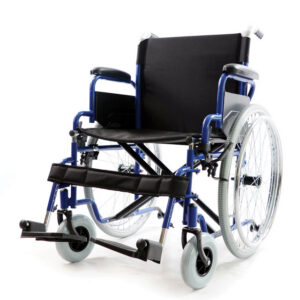
Oxford Plus Folding Wheelchair | Seat 46 cm, black upholstery, solid PU rear wheels Ø 61 cm (24″) and anti-tip system | Ref. GM43274-F
Price range: 266,00 € through 275,50 € In stockSelect options This product has multiple variants. The options may be chosen on the product page