
Surgical tape: buying guide
8 products in the catalogue
Surgical tape is an adhesive tape for medical use designed to secure dressings and bandages to the skin. Unlike a bandage, it provides no compression by itself: its job is to keep in place what already covers the area, with an adhesive that must hold without damaging the skin.
The selection includes paper rolls, porous fabric tapes and an elastic foam tape, some sterile, with silicone adhesive or with a dispenser. Widths range from 1.25 cm to 51 mm and lengths from 5 m to 9.14 m. Choosing well means checking the backing, the type of adhesive, the sterility, the width, the length and the presentation, because a roll with a dispenser or a box of several rolls changes restocking in the consulting room and on the ward.
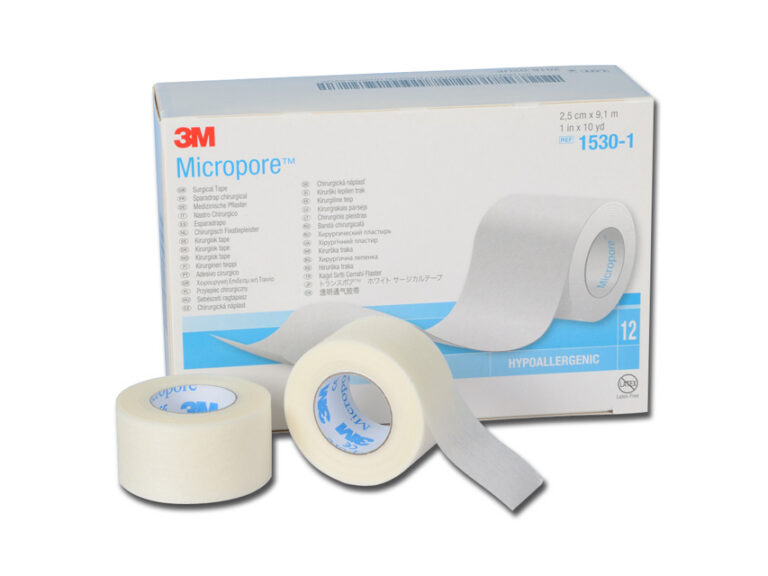
Other related families
-
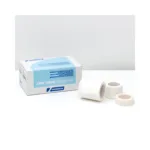 Surgical tapes
This is the product's own family: it groups the medical adhesive tapes that the buyer compares by backing, width, length and presentation.
-
 Dressing Retention
Covers the systems designed to keep the dressing in place, which is the main use of this tape.
-
 Bandages
A neighbouring family: the tape that secures should not be confused with the bandage.
Products in this guide
- Box OF 1 3
- Box OF 12 3
- Box OF 24 1
- Box OF 6 1
- Roll OF 51 1
- Unit 1
- 500 cm 1
- 914 cm 1
- Foam 1
- Polyester 1
-
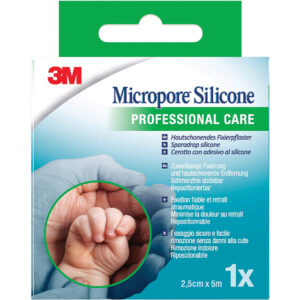
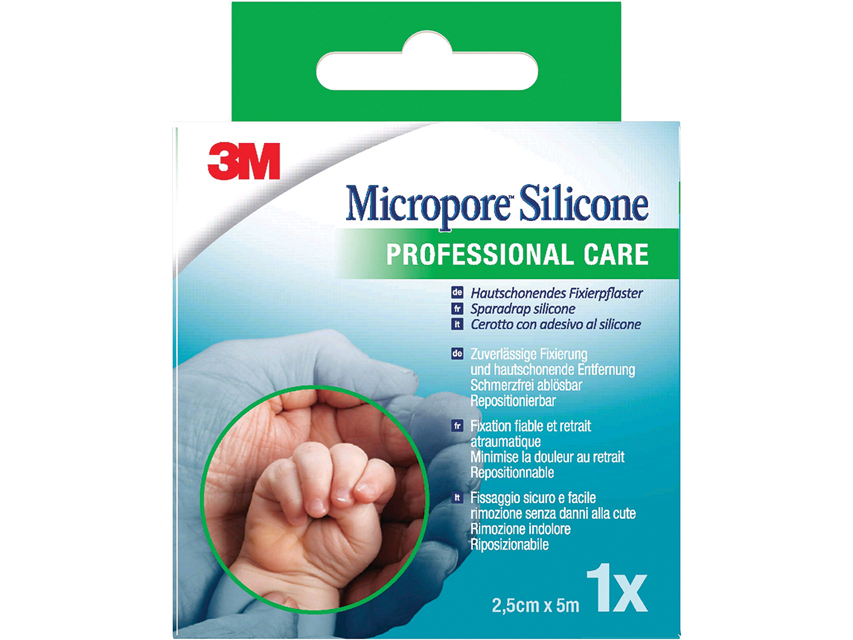
Surgical tape 3M™ Micropore™ S with silicone adhesive, sterile 2.5 cm x 5 m – Ref. 2775NP-1 | Gentle fixation for sensitive skin
8,55 € In stockAdd to basket -
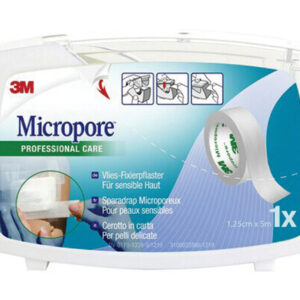
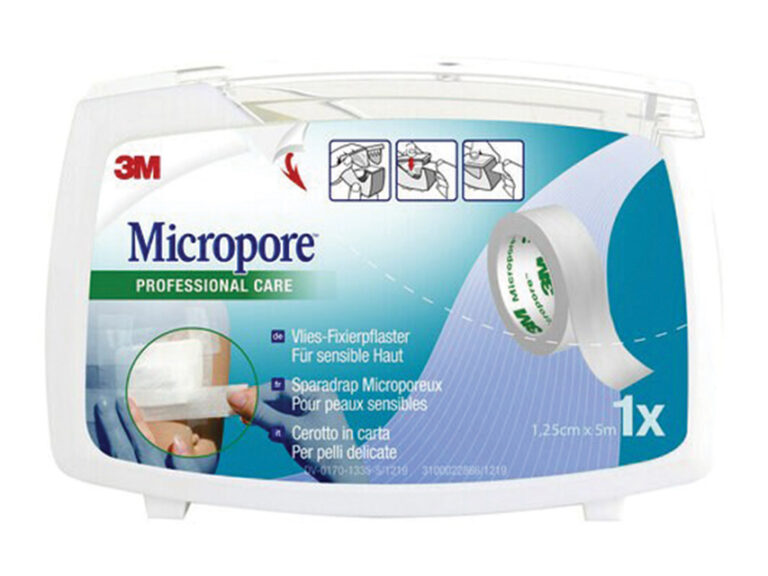
Sterile 3M™ Micropore™ surgical tape 1.25 cm x 5 m with dispenser – White (Ref. 1530NP-0SD) | Fixation of dressings, hypoallergenic
3,14 € On orderAdd to basket -
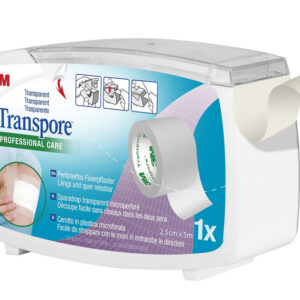
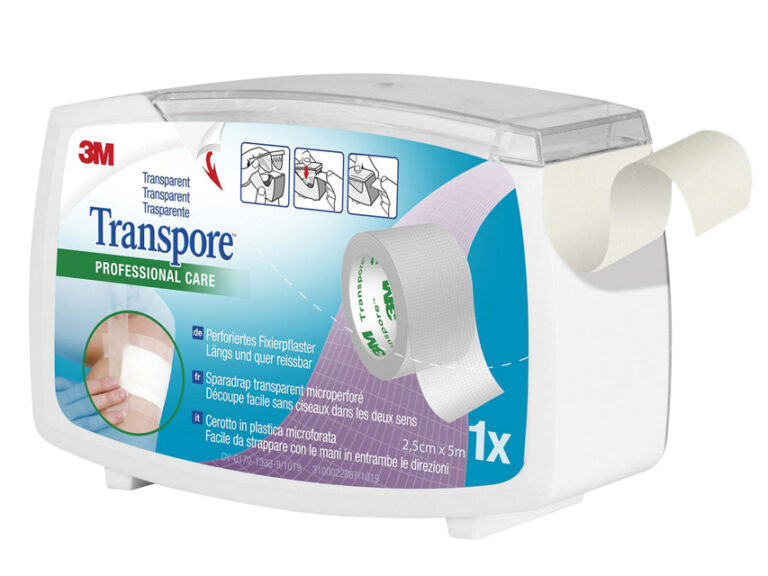
Sterile surgical tape 3M™ Transpore™ with dispenser – 2.5 cm × 5 m, white (Ref. 1527NP-1SD) | Fixation of dressings, hypoallergenic and latex-free
6,18 € In stockAdd to basket -
Sterile 3M™ Micropore™ surgical tape 2.5 cm x 5 m with dispenser – Ref. 1530NP-1SD
4,18 € In stockAdd to basket -
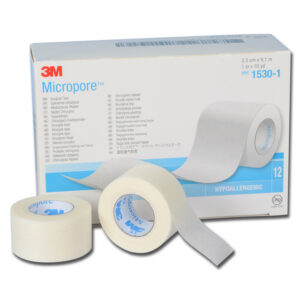
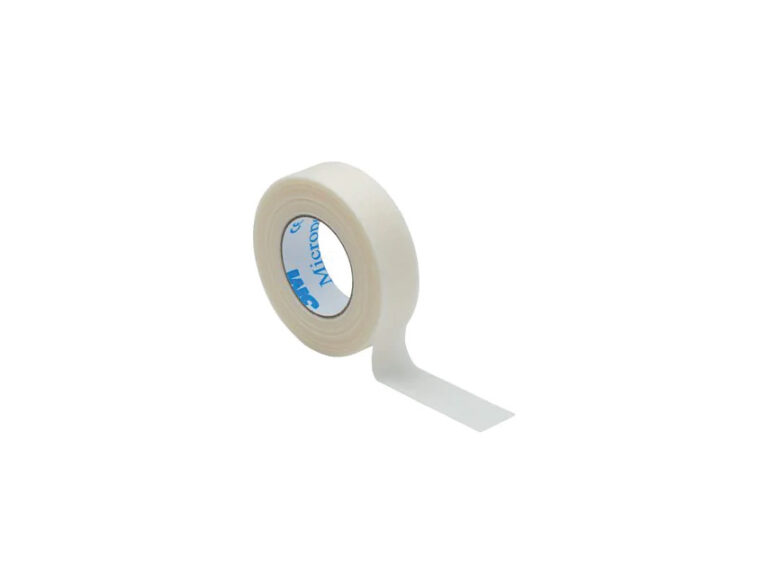
3M™ Micropore™ paper surgical tape 2.5 cm × 9.14 m – Ref. 1530-1 (box of 12 rolls)
12,26 € In stockAdd to basket -
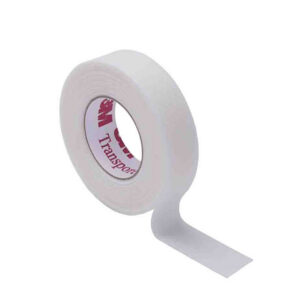
3M Transpore™ White Surgical Tape – 13 mm and 25 mm × 9.14 m rolls | Dressing fixation, hypoallergenic and breathable (Refs. 1534-0 and 1534-1)
Price range: 19,76 € through 29,93 € In stockSelect options This product has multiple variants. The options may be chosen on the product page -
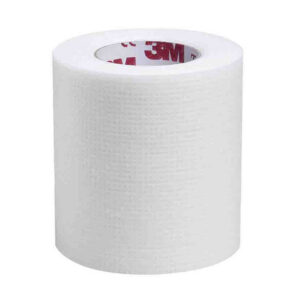
White surgical tape 3M Transpore™ Surgical Tape 51 mm × 9.14 m – Hypoallergenic, breathable and water-resistant (Ref. 1534-2, box of 6)
22,80 € In stockAdd to basket -
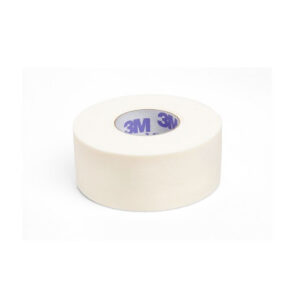
3M™ Microfoam™ Elastic Foam Surgical Tape – Dressing Fixation and Compression | 25 mm x 5 m and 50 mm x 5 m
91,20 € In stockSelect options This product has multiple variants. The options may be chosen on the product page
Buying and selection tips
-
Backing: paper, porous fabric or elastic foam
Thin, translucent paper is suitable when a lightweight tape is wanted; porous fabric is more resistant, and elastic foam conforms better to areas that move. Choose the backing according to the intended use of the tape.
-
Check the type of adhesive
Silicone and acrylic do not describe the same thing: silicone is associated with less traumatic removal and acrylic with a firmer grip. Put in writing which adhesive is expected before standardising the tape across a ward.
-
Dispenser or loose roll
The dispenser presentation fixes the length of the cut and keeps consumption in order; the loose roll requires cutting or tearing by hand. Some references in the selection come with a dispenser.
-
Width and length: 1.25 cm is not the same as 5 cm
Narrow widths allow spot fixings and wider widths hold dressings over larger surfaces. A longer roll covers more changes and reduces restocking, so fix the length before standardising the order across departments.
-
Presentation and sterile status
There are sterile rolls and general-use rolls. Check the sterility of each reference and whether the roll comes singly or in a box of several, in order to plan restocking.
Frequently asked questions
How do I decide the width of tape for securing a dressing?
Narrow widths are used for spot fixings, while wide widths are reserved for holding dressings over large areas. Start from the size of the dressing and not from the roll that is already in the store.
What should I check on a tape that will stay in contact with the skin for several days?
The type of adhesive and the breathability of the backing. Silicone and acrylic neither remove nor grip in the same way, and that difference should be reflected in the order.
Is tape with a dispenser worth buying compared with a loose roll?
It depends on how many times a day it is cut: the dispenser fixes the length and keeps consumption in order, whereas the loose roll requires cutting or tearing by hand. It also matters whether the roll comes singly or in a box.
Does surgical tape have to be sterile for every use?
Not every use requires it; there are sterile references and general-use rolls. The decision should be made by procedure and according to the facility's policy.
Common questions
Thinking that "silicone" always means the same thing
In product data sheets, silicone can refer to the edge adhesive or to an inner contact layer, and they do not behave the same on removal. Specify which one is being compared.
Confusing a fixation tape with a compression bandage
The tape secures; the bandage provides compression. The tape is used as a complement to finish off the bandage, not as the main securing element.
Assuming all tapes have the same backing
There are paper, porous fabric and elastic foam tapes, with different behaviours. Check the backing of each reference.