
Surgical tape for skin: buying guide
12 products in the catalogue
Surgical tape for skin is an adhesive tape for medical use designed to secure dressings, bandages, cannulas and catheters on the skin. It comes in rolls of different widths and lengths, and the choice depends on the backing (paper, non-woven fabric, silk, plastic or cloth), the type of adhesive and the strength the fixing must withstand.
Because the tape stays in contact with the skin, skin tolerance, breathability and absence of latex weigh as much as size. Backings permeable to air and water vapour reduce the risk of maceration, and some silicone adhesives allow the tape to be repositioned and removed gently. This guide sets out the criteria to check before buying: backing, adhesive, roll width and length, presentation and behaviour in contact with water.
Other related families
-
 Paper Surgical Tape
Brings together paper-backed tapes, lightweight and breathable, for securing dressings and bandages.
-
 Plastic Surgical Tape
Brings together plastic-backed tapes, with a smooth surface, designed for fixings exposed to moisture.
-
 Silk Surgical Tape
Brings together silk-backed tapes, tearable by hand, for quick fixings without scissors.
-
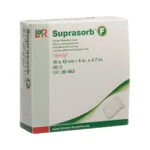 Dressings
 are secured with the tape; check their actual sizes before deciding the width of the tape.
Products in this guide
- Non-woven 4
- Polyester 3
- Cellulose 2
- Viscose 1
- 12.5 mm 1
- 50 mm 1
- 75 mm 1
- 100 mm 1
- Non-sterile 3
- Sterile 1
- 910 cm 2
- 1000 cm 2
-
Sale!
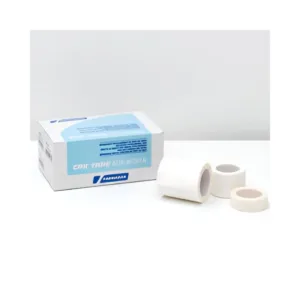
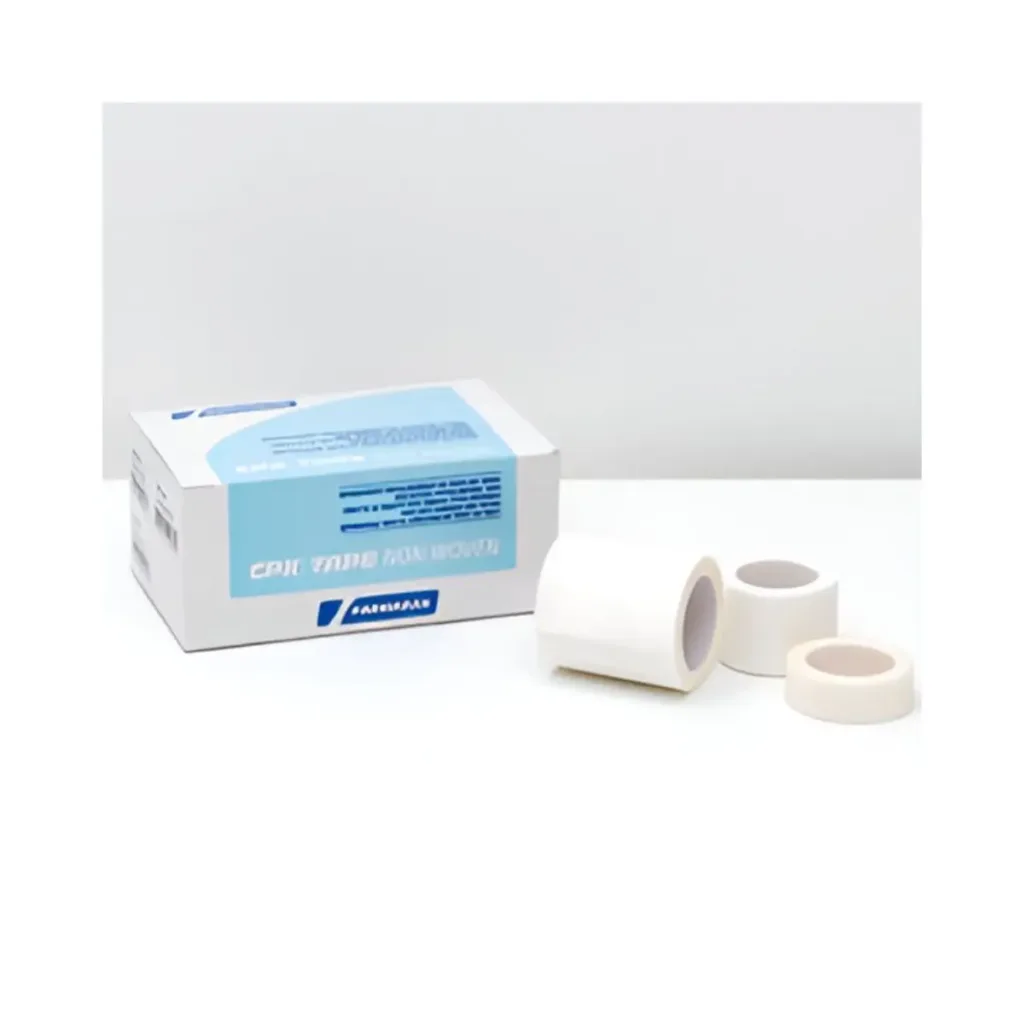
Paper surgical tape 7.5 cm × 9.1 m – CPK Non Woven Tape (CPK1438) | Fixation of dressings and bandages, hypoallergenic and breathable
Original price was: 11,50 €.7,46 €Current price is: 7,46 €. In stockAdd to basket -
Non-woven paper surgical tape 1.25 cm × 9.1 m – CPK Non Woven Tape, hypoallergenic and latex-free
11,83 € In stockAdd to basket -
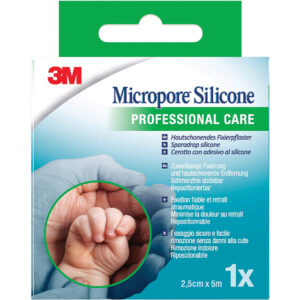
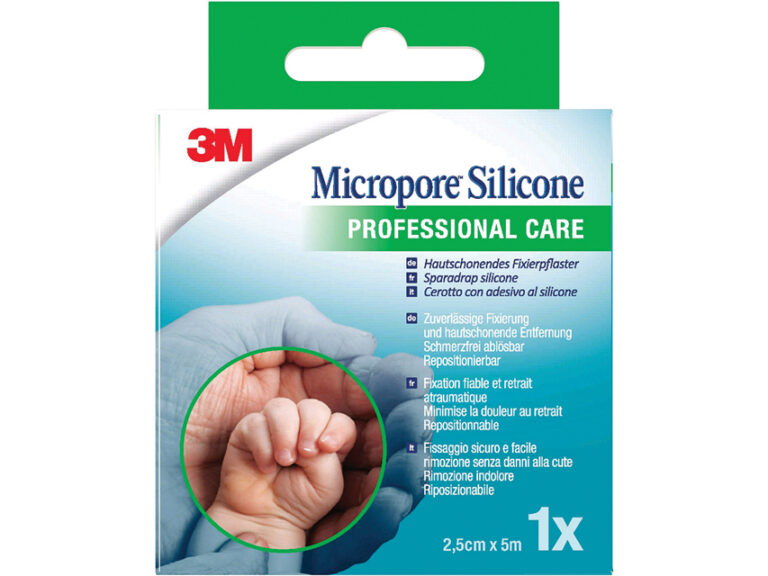
Surgical tape 3M™ Micropore™ S with silicone adhesive, sterile 2.5 cm x 5 m – Ref. 2775NP-1 | Gentle fixation for sensitive skin
8,55 € In stockAdd to basket -
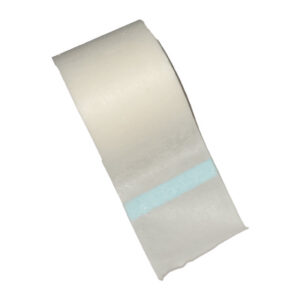
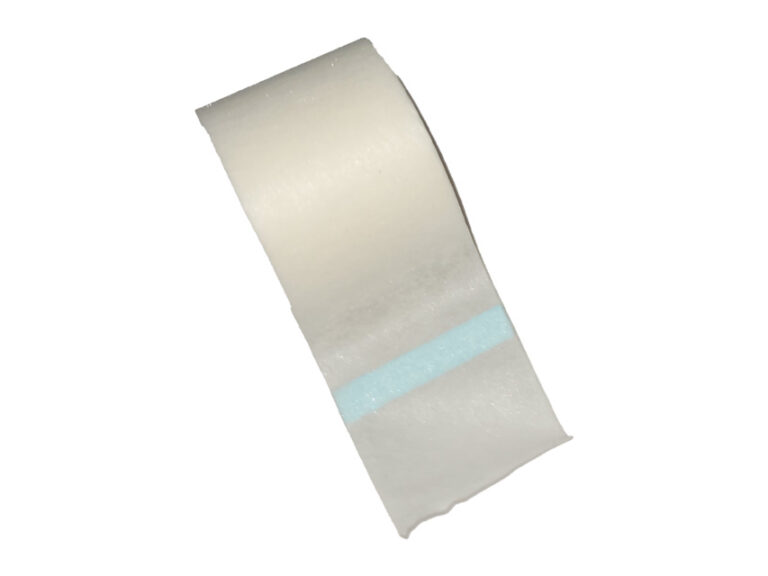
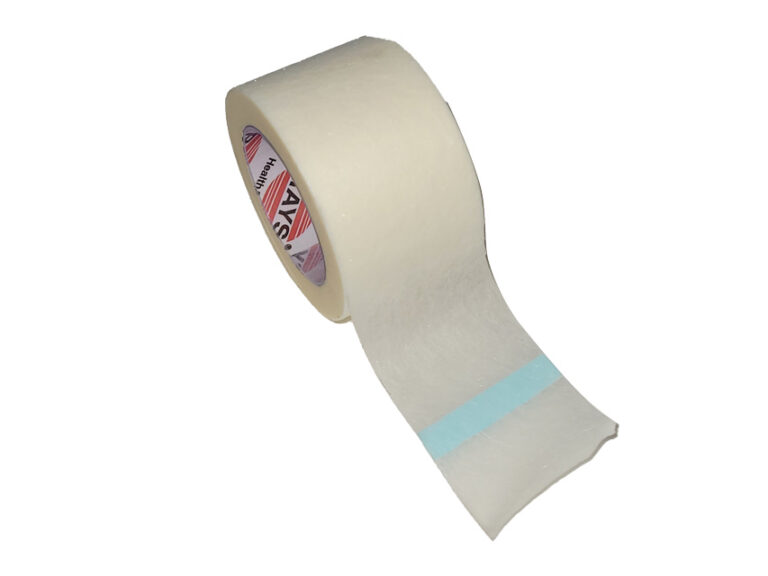
Non-woven paper (TNT) surgical tape 25 mm × 5 m – Hypoallergenic for sensitive skin | Box of 12 rolls · Ref. 34789
4,18 € In stockAdd to basket -
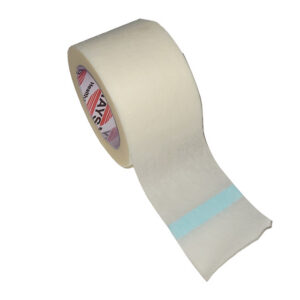
Non-woven paper surgical tape (TNT) 25 mm × 9.14 m – Hypoallergenic for sensitive skin | Box of 12 rolls · Ref. 34793
6,18 € In stockAdd to basket -
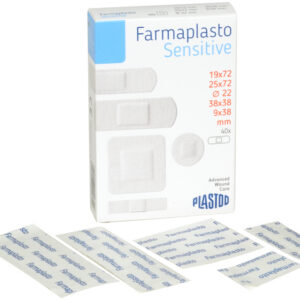
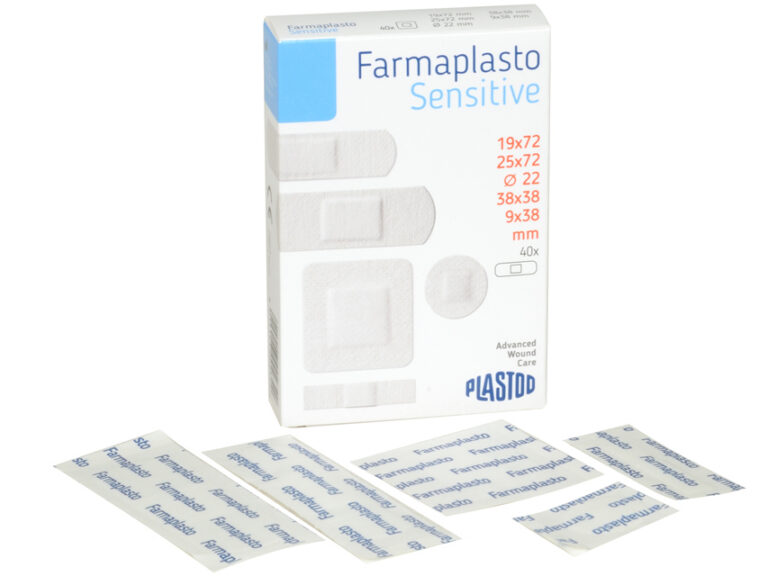
Sensitive hypoallergenic adhesive surgical tape for sensitive skin – Assortment of 5 formats | 3,200 units (80 boxes of 40) | Ref. 34817
144,40 € In stockAdd to basket -
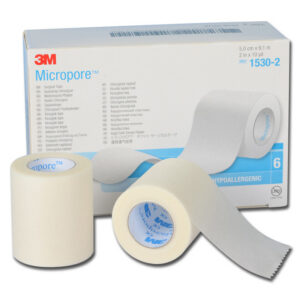
3M™ Micropore™ paper surgical tape 51 mm × 9.14 m – Hypoallergenic, latex-free and highly breathable (box of 6 rolls, Ref. 1530-2)
12,26 € In stockAdd to basket -
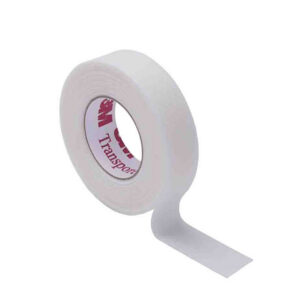
3M Transpore™ White Surgical Tape – 13 mm and 25 mm × 9.14 m rolls | Dressing fixation, hypoallergenic and breathable (Refs. 1534-0 and 1534-1)
Price range: 19,76 € through 29,93 € In stockSelect options This product has multiple variants. The options may be chosen on the product page
Buying and selection tips
-
Paper and non-woven fabric for light fixings
Paper tape is used to secure dressings, bandages, cannulas and catheters. Adhesive non-woven fabric allows some mobility and some references have a protective paper with a scale that helps calculate consumption. These are options intended for fixings that do not require high traction.
-
Silicone adhesive for fragile skin
Some non-woven references with silicone adhesive allow repositioning and gentle removal, and are intended for fragile or sensitive skin. Check in each product's description whether it is declared latex-free and phthalate-free.
-
Breathability for prolonged fixings
A backing permeable to air and water vapour reduces the risk of maceration in long-term fixings. Some sheets of stretch polyester non-woven fabric with acrylic adhesive declare high skin tolerance; they should be applied without tension.
-
Long rolls and cutting to size
Some securement sheets come in 10 m rolls with widths of 5 to 20 cm, and their protective paper has a grid printed in centimetres for cutting the exact size. Fix width and length according to the area to be covered.
-
Resistance to water and traction
Porous fabric tape is used to secure dressings, bandages, catheters and cannulas, and declares high tensile strength. Some versions are water-repellent and tearable by hand, which avoids the need for scissors.
Frequently asked questions
What is the difference between paper tape and non-woven fabric tape when securing dressings?
Both are used to secure dressings and bandages. The paper one is a lightweight white backing, while the adhesive non-woven fabric allows some mobility and on some references has a protective paper with a scale for calculating consumption.
Which surgical tape should I buy for fragile or sensitive skin?
One option is non-woven fabric with silicone adhesive, which allows repositioning and gentle removal. Check on each reference whether it declares itself latex-free and phthalate-free, and confirm the width and length of the roll.
How can the risk of maceration under a long-term fixing be reduced?
By choosing a backing permeable to air and water vapour, such as stretch polyester non-woven fabric, and applying it without tension. Check the breathability data on each reference.
Which tape best withstands water and dirt in a fixing that moves?
Porous fabric tape for securing dressings, bandages, catheters and cannulas declares high tensile strength and repels water and dirt. There are hand-tearable versions that make cutting without scissors easier.
Can the roll be cut to the exact size without wasting material?
Yes. The length is cut directly from the roll and the protective paper of some sheets has a grid printed in centimetres that lets you adjust the size. This reduces unnecessary consumption on short fixings.
Common questions
Confusing non-woven fabric with cloth tape
Non-woven fabric is a non-woven backing, stretch polyester on some references, with acrylic adhesive; cloth tape is a different backing. The change affects how it conforms to contours and how it is removed.
Assuming that any hypoallergenic tape is suitable for fragile skin
Silicone adhesive is what allows the tape to be repositioned and removed gently. A hypoallergenic adhesive of another kind need not offer that behaviour, so check the type of adhesive.
Thinking that a cohesive bandage can replace tape on the skin
Cohesive bandages stick to themselves and not to the skin, so they are not suitable for securing a cannula or a dressing directly. For that you need a tape with a skin adhesive.
Believing that “latex-free” and “thiuram-free” are the same declaration
They are two independent exclusions: one refers to latex and its derivatives and the other to thiurams. Check both separately in the product information.
More products in this guide
-
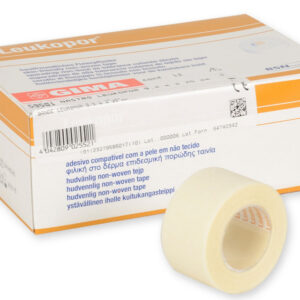
Leukopor non-woven surgical tape 25 mm x 9.2 m – BSN, for sensitive skin, box of 12 rolls (Ref. 02454-00)
23,75 € In stockAdd to basket -
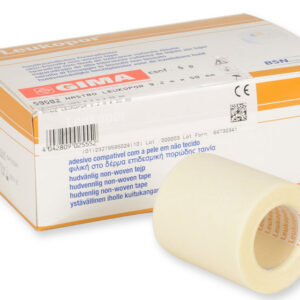
Hypoallergenic paper surgical tape LEUKOPOR® BSN 50 mm × 9.2 m – Fixation of dressings on sensitive skin (Box of 6 units)
28,50 € On orderAdd to basket -
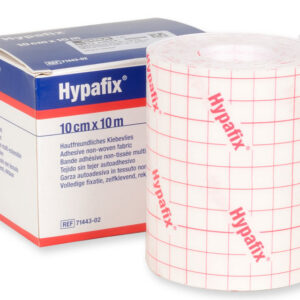
Hypafix® BSN fixation dressing 10 cm × 10 m – Non-woven fabric sheet with polyacrylate adhesive for dressing retention (Ref. 71443-02)
10,17 € In stockAdd to basket -
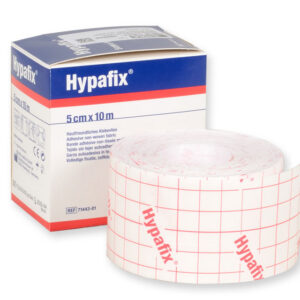
Dressing retention sheet HYPAFIX® BSN 50 mm × 10 m – Non-woven fabric with polyacrylic adhesive (Ref. 71443-01)
6,84 € In stockAdd to basket