
How to choose medical adhesive tape
55 products in the catalogue
Medical adhesive tape is an adhesive strip for healthcare use, designed to hold dressings, gauze, bandages and devices on the skin. It comes in rolls of different lengths and widths, with paper, non-woven, plastic, cloth or silk backing, and also as fixation dressings and in dispensers with refills.
The choice is not just about width: the backing determines whether the tape breathes, whether it resists water or whether it can be torn by hand; the adhesive affects skin tolerance with repeated dressing changes; and the presentation (loose roll, unit or box) sets the real consumption. This guide sets out the criteria a professional buyer can check before deciding: backing material, roll width and length, how it is cut, type of adhesive, presentation and sterility.

Other related families
-
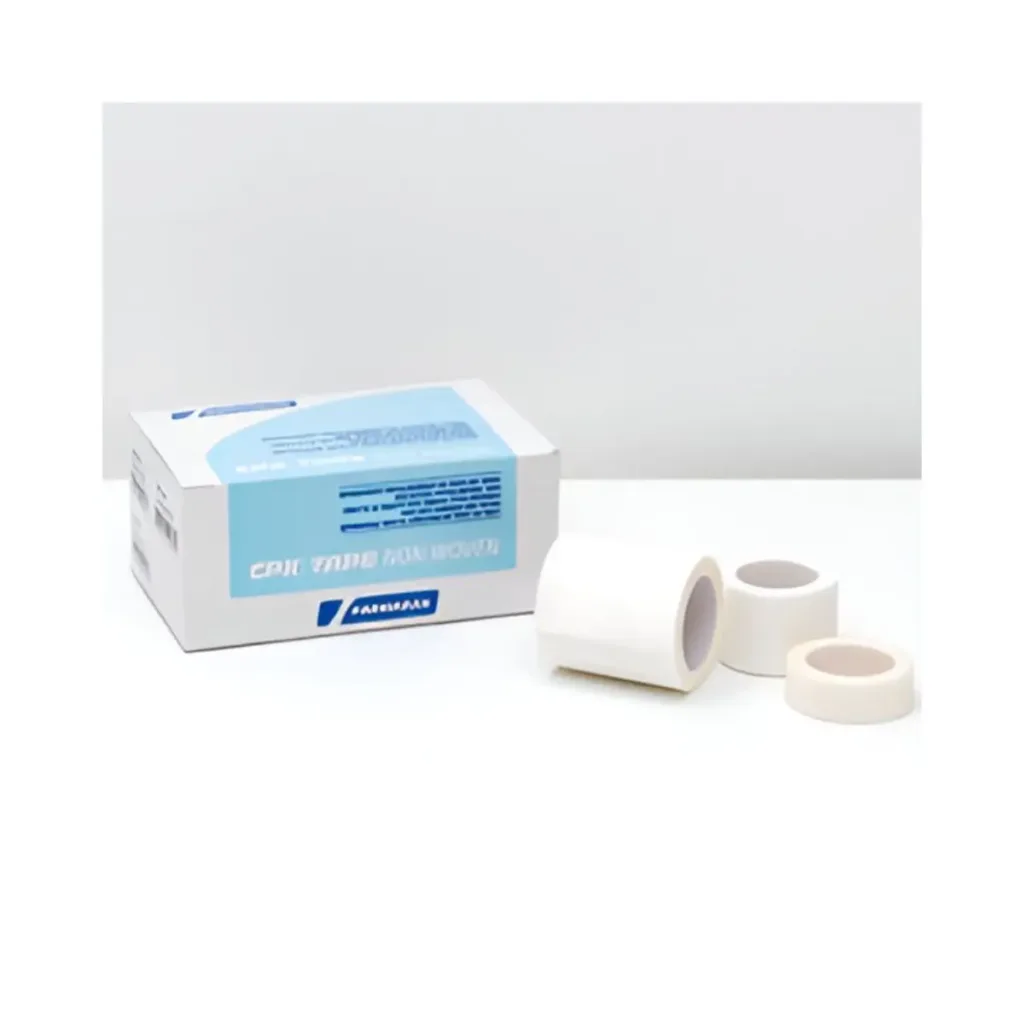
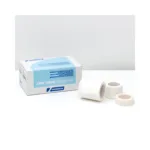 Paper Surgical Tape
Groups the paper and non-woven backed tapes, the most widely used for securing dressings and bandages in repeated dressing changes.
-
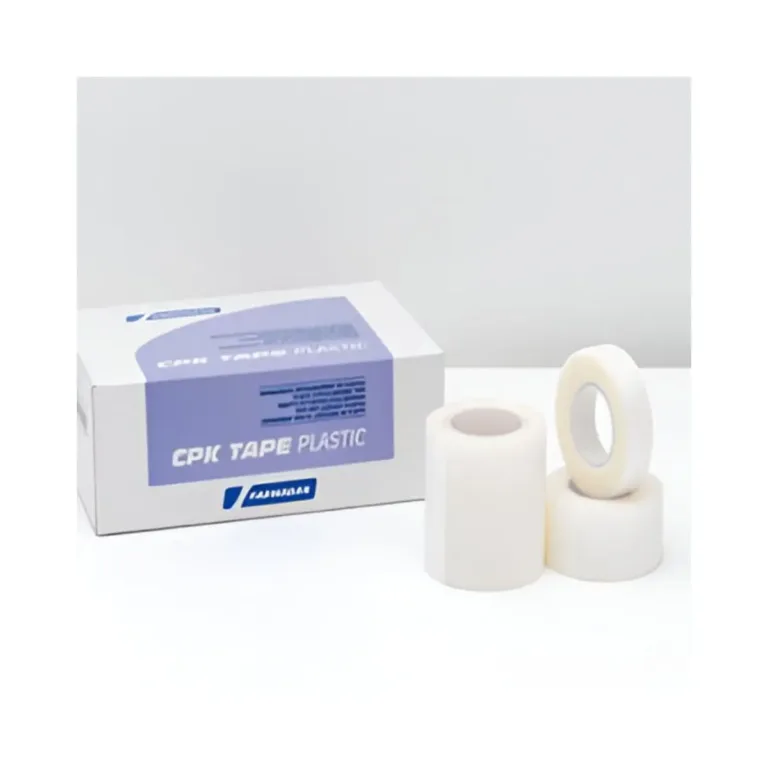
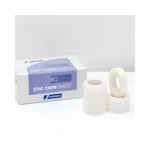 Plastic Surgical Tape
Brings together the transparent and microperforated plastic tapes, the option when the area may get wet.
-
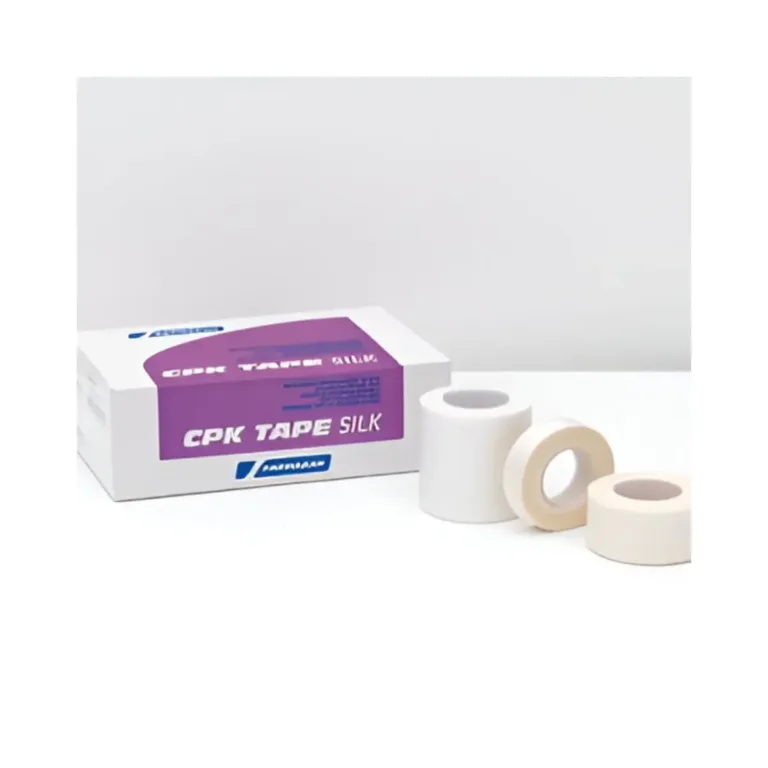
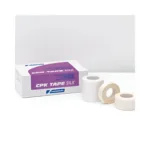 Silk Surgical Tape
Brings together the silk and silky cloth tapes, which tear by hand and have more body in areas of movement.
Products in this guide
- Non-woven 14
- Polyester 7
- Cellulose 6
- Silk 3
- Cotton 2
- Viscose 2
- Paper 1
- Plastic 1
- Sterile 13
- Non-sterile 5
- Unit 11
- Box OF 12 8
- Box OF 6 8
- Roll 7
- Box OF 1 4
- Box OF 24 4
- Box OF 18 2
- Box OF 21 2
- Medical device 42
- Non-medical 1
-
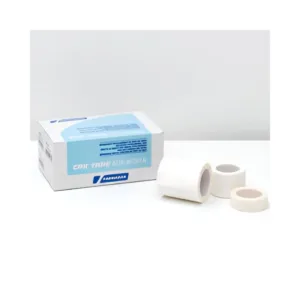
Non-woven paper surgical tape 2.5 cm × 9.1 m – CPK Non Woven Tape (CPK1436) | Hypoallergenic, permeable to air and latex-free
5,50 € In stockAdd to basket -
Sale!
Paper surgical tape 5 cm × 9.1 m – CPK Non Woven Tape | Dressing fixation, hypoallergenic and breathable
Original price was: 12,00 €.9,03 €Current price is: 9,03 €. In stockAdd to basket -
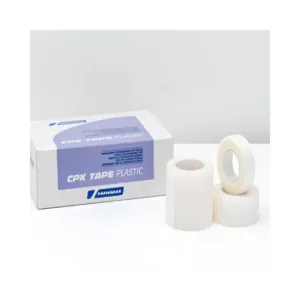
Micro-perforated plastic surgical tape 2.5 cm × 9.1 m – CPK Plastic Tape (CPK1441) | Transparent polyethylene, tearable and latex-free for dressing fixation
6,38 € In stockAdd to basket -
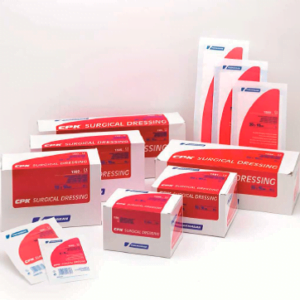
Sterile adhesive dressing with central compress CPK Surgical Dressing 15 x 10 cm – Box of 600 units (Ref. CPK1382)
74,82 € In stockAdd to basket -
Sale!
Paper surgical tape 7.5 cm × 9.1 m – CPK Non Woven Tape (CPK1438) | Fixation of dressings and bandages, hypoallergenic and breathable
Original price was: 11,50 €.7,46 €Current price is: 7,46 €. In stockAdd to basket -
Non-woven paper surgical tape 1.25 cm × 9.1 m – CPK Non Woven Tape, hypoallergenic and latex-free
11,83 € In stockAdd to basket -
Microperforated plastic surgical tape 5 cm × 9.1 m – CPK Plastic Tape (CPK1442) | Transparent polyethylene, tearable and latex-free for securing dressings and bandages
20,12 € In stockAdd to basket -
CPK Plastic Tape plastic surgical tape 1.25 cm × 9.1 m – Transparent, microperforated and tearable for dressing fixation (CPK1440)
19,81 € In stockAdd to basket
Buying and selection tips
-
Backing: paper, non-woven, plastic, cloth or silk
Paper and non-woven breathe well in dressing changes that are repeated. Microperforated plastic gives water resistance, while cloth and silk have more body and, depending on the model, tear by hand. If the skin is delicate or the tape will stay in place, the backing matters as much as the adhesive.
-
Roll width and length
Products vary in width and length. Choose the width according to what is being secured and check that it does not force you to overlap several strips. For daily dressing changes the long roll reduces restocking; calculate consumption before comparing formats.
-
Hand tearing and dispensing
A tape that tears by hand saves scissors and time, and wall dispensers with refills keep consumption organised. Consider these details if the product is handled by several people over the course of a shift.
-
Adhesive and skin tolerance
Some tapes are described as hypoallergenic and others as designed for sensitive skin. Check in the description what each product states and follow the manufacturer's instructions.
-
Sterility and presentation
Some products, such as fixation dressings, are supplied sterile, and others are not. Presentation as a unit or a box changes the storage space and the restocking calculation.
Frequently asked questions
Is paper or plastic tape better for areas that may get wet?
Plastic tape is designed to resist water; paper breathes better. The decision depends on whether the moisture is accidental or constant and on the description of each product.
How do I compare the yield of a 9.14 m roll with a 5 m one?
Divide the metres on the roll by the average consumption per use to obtain the number of uses each unit covers. Also check the box presentation, because it changes the number of rolls to be stored.
What is the practical difference between cloth tape and silk tape?
They are different backings with different feel, body and way of cutting. Check in the description whether the product tears by hand and what its width and length are.
What should I choose if I need to secure a cannula?
There are specific fixation dressings for cannulas, sterile and made of non-woven fabric, as well as non-woven tapes. Choose according to the product and the size each one states.
Common questions
Confusing paper tape with non-woven tape
They are different backings, with different breathability, body and way of cutting. They are not interchangeable without checking the description of each product.
Assuming all adhesive cloth tape is the same
Under the cloth label are cloth, silk and non-woven, with different feel, body and cutting.
Calculating the width of the strip from the wound alone
The strip must grip healthy skin around the dressing, so the useful width is calculated on the overall size of the dressing. Check both measurements.
More products in this guide
-
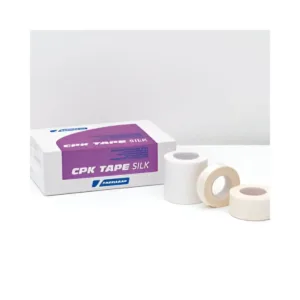
CPK Silk Tape silk surgical tape 2.5 cm × 9.1 m (CPK1431) – Cellulose acetate, hypoallergenic and tearable by hand | Box of 36 rolls
34,42 € In stockAdd to basket -
CPK Silk Tape silk surgical tape 1.25 cm × 9.1 m (CPK1430) – Cellulose acetate, biocompatible hot-melt adhesive, tearable by hand and latex-free | Box of 72 rolls
34,34 € In stockAdd to basket -
CPK Silk Tape silk surgical tape 5 cm × 9.1 m (CPK1432) – Cellulose acetate, hypoallergenic hot-melt adhesive and hand-tearable | Box of 18 rolls
34,30 € In stockAdd to basket -
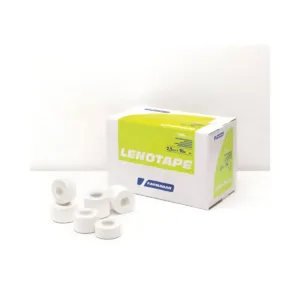
Lenotape Rigid Sports Surgical Tape 5 cm x 10 m – Inelastic Latex-free Cotton Tape with Zinc Oxide for Functional Bandaging and Taping (Ref. 1352)
69,70 € In stockAdd to basket -
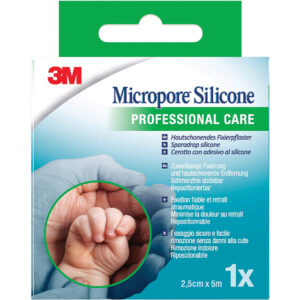
Surgical tape 3M™ Micropore™ S with silicone adhesive, sterile 2.5 cm x 5 m – Ref. 2775NP-1 | Gentle fixation for sensitive skin
8,55 € In stockAdd to basket -
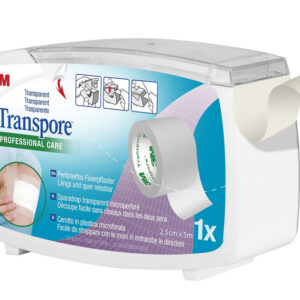
Sterile surgical tape 3M™ Transpore™ with dispenser – 2.5 cm × 5 m, white (Ref. 1527NP-1SD) | Fixation of dressings, hypoallergenic and latex-free
6,18 € In stockAdd to basket -
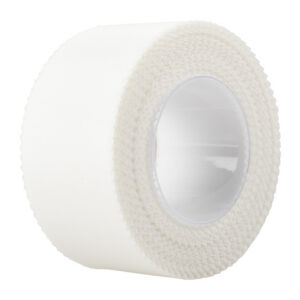
Silk surgical tape in roll of 10 m × 2.5 cm – White surgical tape for dressing fixation (Ref. 34787) | Box of 12 rolls
13,30 € In stockAdd to basket -
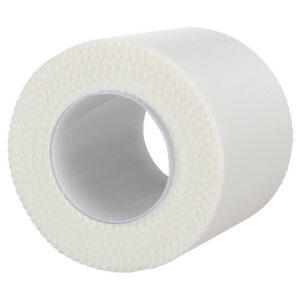
Silk surgical tape in roll 10 m × 5 cm – White surgical tape for dressing fixation (Ref. 34788) | Box of 6 rolls
13,30 € In stockAdd to basket