
Medical tape: buying guide
8 products in the catalogue
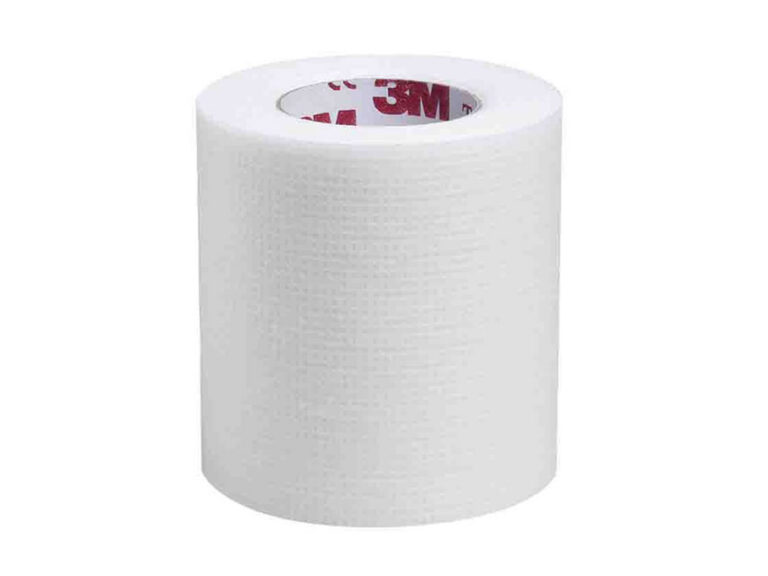
Medical tape, or adhesive surgical tape, is an adhesive tape used to secure dressings, gauze swabs, bandages and other devices to the skin. Depending on the backing it may be paper or non-woven fabric, plastic or acetate silk, and there is also rigid sports tape, which serves a different function.
The choice depends on the backing, the width and length of the roll and on the material being suitable for the user's skin. This guide summarises what is worth checking before ordering so that the tape fits your department's use.
Other related families
-
 Paper Surgical Tape
Paper or cellulose backing, white and tearable, for general fixation of dressings and bandages.
-
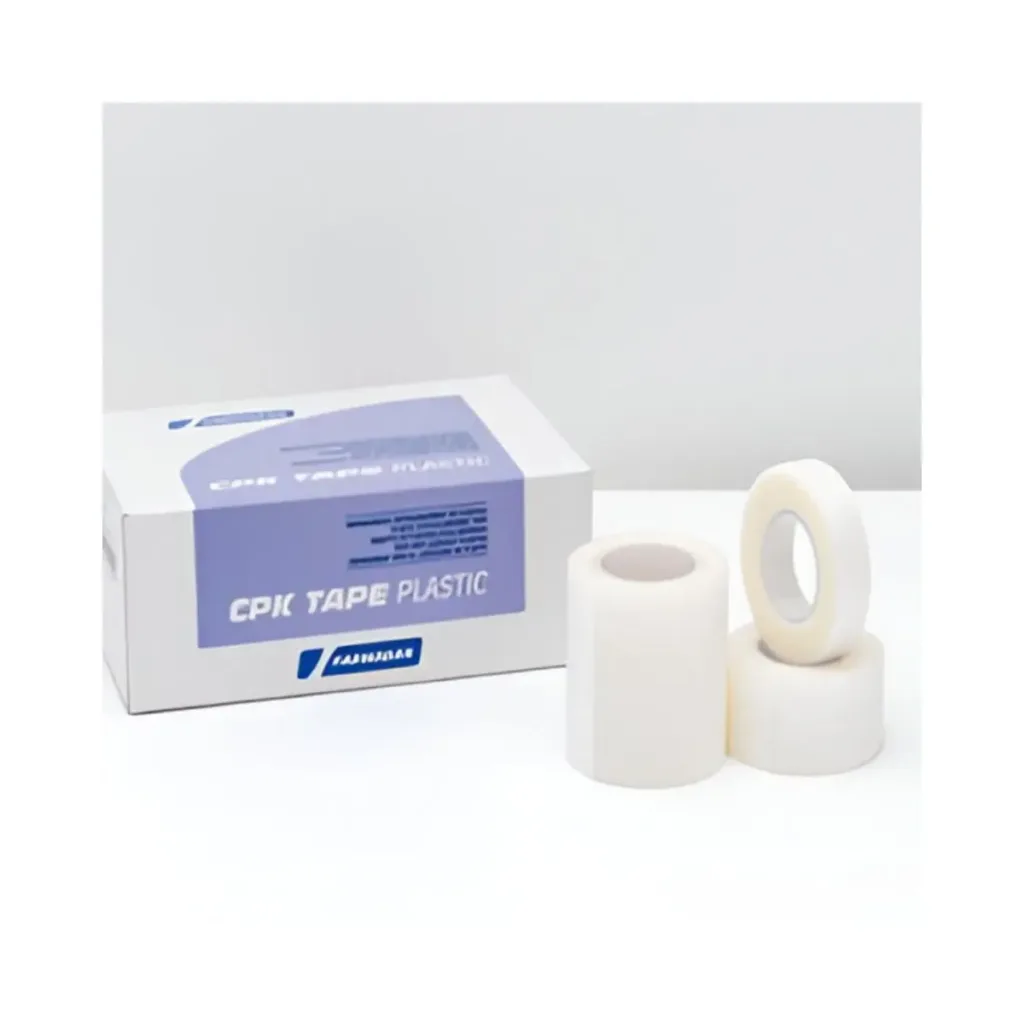
 Plastic Surgical Tape
Clear plastic backing, useful when you want to see the secured area without removing the tape.
-
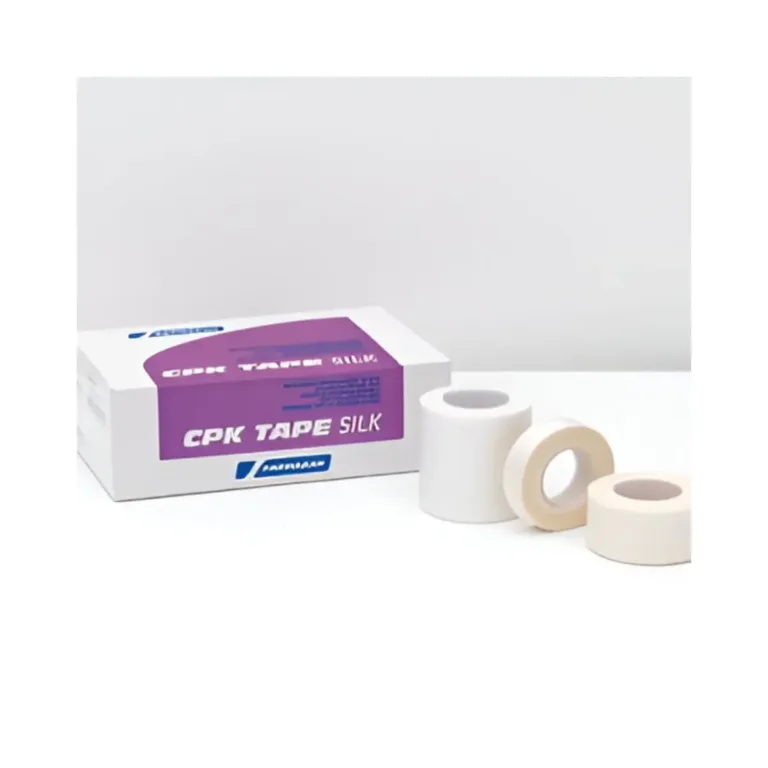
 Silk Surgical Tape
Cellulose acetate that does not fray, designed for quick wound care.
-
 Bandages
Groups rigid sports tape, designed for functional strapping and not for securing dressings.
Products in this guide
- Cellulose 2
- Silk 2
- Polyester 1
- Viscose 1
- Box OF 12 2
- Box OF 18 2
- Box OF 24 1
- Box OF 36 1
- Box OF 6 1
- Box OF 72 1
- Roll 1
- Roll OF 51 1
-
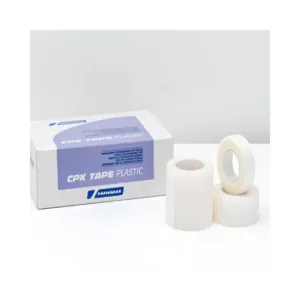
CPK Plastic Tape plastic surgical tape 1.25 cm × 9.1 m – Transparent, microperforated and tearable for dressing fixation (CPK1440)
19,81 € In stockAdd to basket -
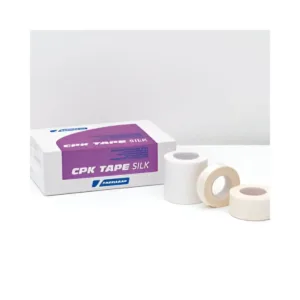
CPK Silk Tape silk surgical tape 2.5 cm × 9.1 m (CPK1431) – Cellulose acetate, hypoallergenic and tearable by hand | Box of 36 rolls
34,42 € In stockAdd to basket -
CPK Silk Tape silk surgical tape 1.25 cm × 9.1 m (CPK1430) – Cellulose acetate, biocompatible hot-melt adhesive, tearable by hand and latex-free | Box of 72 rolls
34,34 € In stockAdd to basket -
CPK Silk Tape silk surgical tape 5 cm × 9.1 m (CPK1432) – Cellulose acetate, hypoallergenic hot-melt adhesive and hand-tearable | Box of 18 rolls
34,30 € In stockAdd to basket -
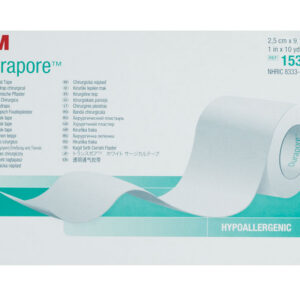
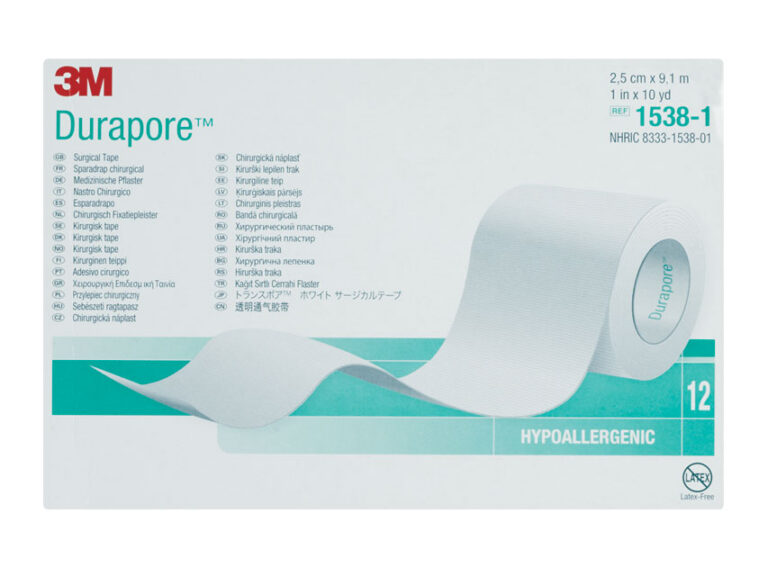
3M DURAPORE™ Silk Tape silk surgical tape 2.5 cm × 9.14 m – Hypoallergenic, latex-free and high strength (box of 12 rolls)
Price range: 25,65 € through 32,30 € In stockSelect options This product has multiple variants. The options may be chosen on the product page -
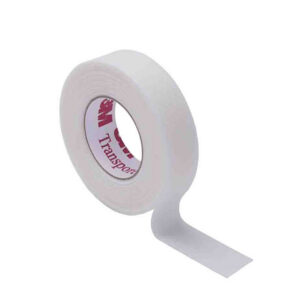
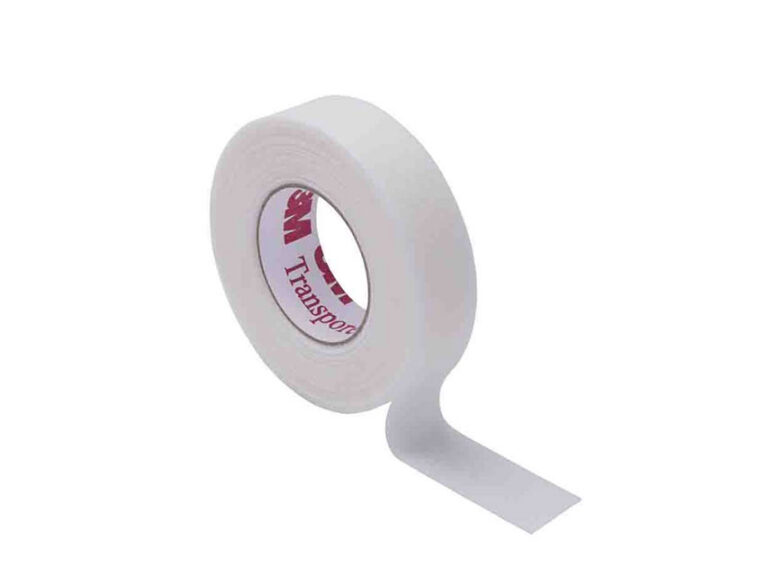
3M Transpore™ White Surgical Tape – 13 mm and 25 mm × 9.14 m rolls | Dressing fixation, hypoallergenic and breathable (Refs. 1534-0 and 1534-1)
Price range: 19,76 € through 29,93 € In stockSelect options This product has multiple variants. The options may be chosen on the product page -
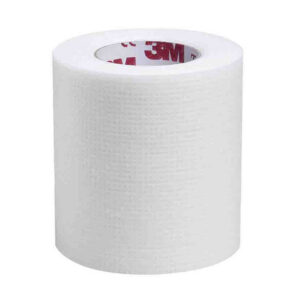
White surgical tape 3M Transpore™ Surgical Tape 51 mm × 9.14 m – Hypoallergenic, breathable and water-resistant (Ref. 1534-2, box of 6)
22,80 € In stockAdd to basket -
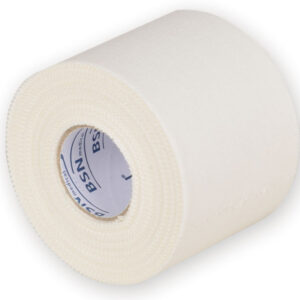
Rigid Sports Tape Strappal Sport Tape 5 cm x 10 m – Latex-free Inelastic Viscose Tape for Functional Bandaging and Taping (Ref. 59052 / BSN 71493-00)
139,65 € In stockAdd to basket
Buying and selection tips
-
Backing according to the type of fixation
Paper or non-woven fabric is used to secure dressings and bandages and tears easily; plastic is transparent and lets you see the secured area; silk, made of cellulose acetate, does not fray. Choose the backing according to what needs to be secured and whether you want to see the area.
-
Width according to the surface to be secured
1.25 cm rolls are for narrow, precise fixation, 2.5 cm is a versatile width for medium-sized dressings and 5 cm covers wide fixation. Working with a single width means overlapping strips when the surface gets larger.
-
Hand-tearability
Some backings, such as silk and non-woven fabric, tear by hand in both directions without needing scissors, which speeds up wound care and avoids ragged edges. Check in each reference whether it is described as tearable.
-
Sensitive skin and latex
Check in the description of each reference whether the tape is declared latex-free and hypoallergenic, and verify it reference by reference before standardising a department's purchase.
-
Roll length and real consumption
Rolls of fixation tape are 9.1 m or 9.14 m and sports tape is 10 m. Match the length and the number of rolls to the department's consumption so as not to run short at peak times.
-
Do not confuse sports tape with fixation tape
Rigid sports tape is a non-elastic fabric designed for functional strapping, with strong adhesion. It does not replace dressing-fixation tape, because its function is to limit movement.
Frequently asked questions
What is the practical difference between paper, plastic and silk tape?
Paper or non-woven cellulose tape is white, tearable and used for general fixation; plastic tape is transparent and useful when you want to see the area; silk tape is made of cellulose acetate and does not fray.
Can I tear the tape by hand or do I need scissors?
It depends on the backing: silk and non-woven fabric are described as tearable in both directions, so scissors are not needed. Check the description of the specific reference.
Does the same tape work for securing dressings and for sports strapping?
No. Rigid sports tape is a non-elastic fabric designed for functional strapping, whereas fixation tape is used to hold dressings, bandages and devices in place.
What tape width is worth keeping in a department with several uses?
Combining widths of 1.25, 2.5 and 5 cm covers narrow, medium and wide fixation. The roll length and number of units are matched to the department's consumption.
How do I check that a tape is suitable for delicate skin?
Check that the reference is declared latex-free and with a hypoallergenic adhesive, and that the fabric is permeable to air and moisture.
Common questions
Believing that all tape is elastic.
Rigid sports tape is a non-elastic fabric and its function is to limit movement; fixation tape only holds the dressing or device in place.
Confusing paper tape with cloth tape.
Paper tape has a cellulose backing, is white and tearable; cloth tape is a fabric, and there is also a silky cloth variant. They behave differently when torn and when conforming to areas with movement.
Thinking that the width does not matter as long as the fixation holds.
A 1.25 cm roll means overlapping strips on large surfaces and a 5 cm one is cumbersome for small fixations; that is why the different widths complement one another rather than replace one another.