
Rigid cervical collar: buying guide
6 products in the catalogue
The rigid cervical collar is an orthopaedic immobilisation device that surrounds the neck and keeps it aligned with the trunk. It is built on lightweight plastic structures, polyethylene in most models and polypropylene in some, and it is fastened with a hook-and-loop strap that lets it be adjusted to the circumference of the neck. It is used in emergencies and in the transfer of people who require cervical immobilisation.
The choice is not just about size. There are fixed-size collars and models that cover several adult sizes in a single piece; single-patient and reusable models; adult and paediatric versions; and differences in access points, such as the tracheal opening or the posterior opening. Radiolucency and compatibility with CT and MRI determine whether the device can stay in place during an imaging study.
Other related families
Products in this guide
- 30 1
- 37 1
-

Rigid Cervical Collar (Ref. 34600) – Emergency Immobilisation, Size 30-37 cm, Polyethylene with Synthetic Leather Support and Adjustable Height
19,29 € In stockAdd to basket -
Rigid Cervical Collar 37-43 cm – Polyethylene, Adjustable Height and Velcro Closure for Emergency Immobilisation (Ref. 34601)
19,29 € In stockAdd to basket -
Rigid Cervical Collar (Ref. 34602) – Neck Circumference 43-50 cm | Polyethylene, Comfort Support in Synthetic Leather, Adjustable Height and Velcro Closure
19,29 € In stockAdd to basket -
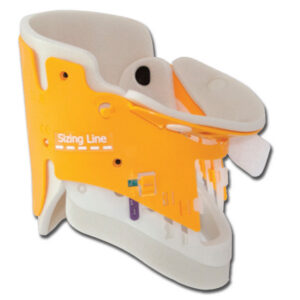
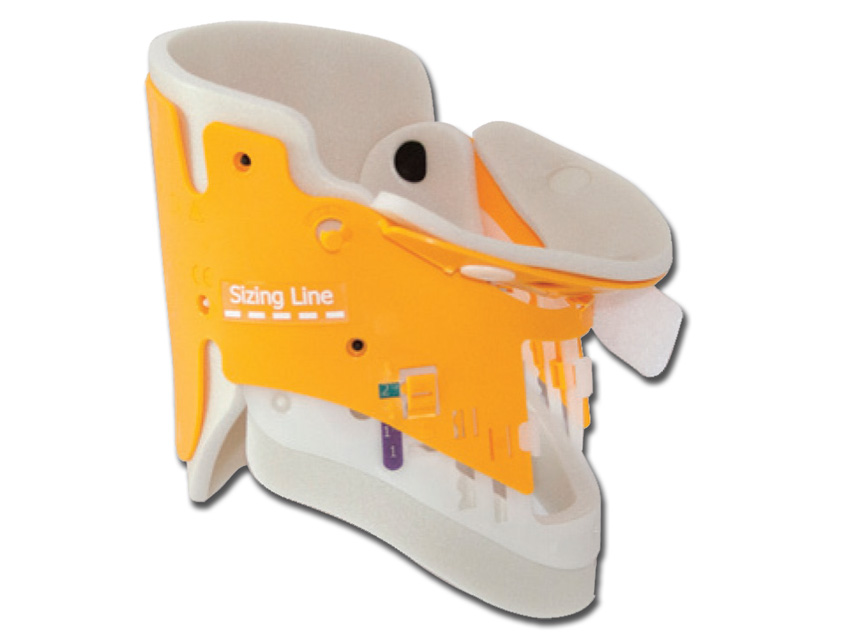
Disposable Rigid Cervical Collar Ambu® Redi-ACE™ – Cervical Spine Immobilisation, Radiotransparent and Latex-Free (Refs. GM34638 / GM34639)
10,45 € In stockSelect options This product has multiple variants. The options may be chosen on the product page -
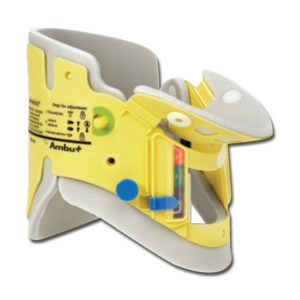
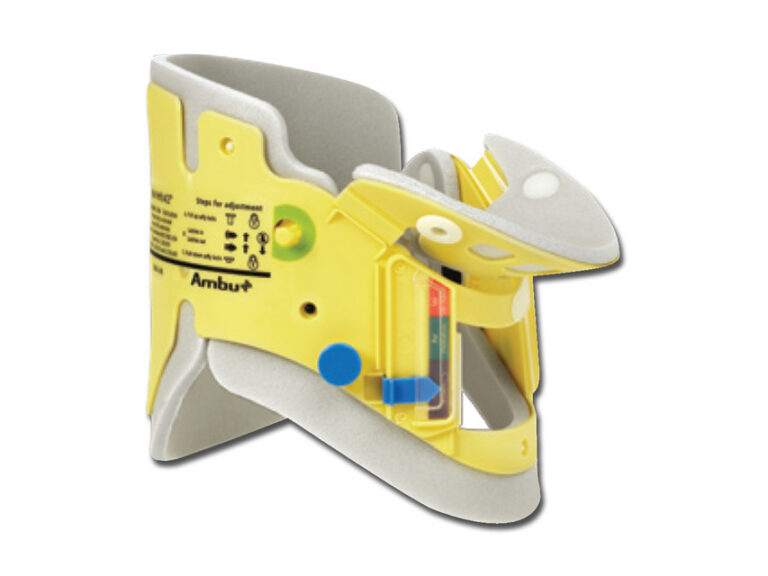
Ambu® Perfit™ ACE® Paediatric Cervical Immobilisation Collar – Rigid One-Piece, Radiolucent (CT/MRI), 12 Adjustments, Single-Use (Ref. GM34640)
16,63 € In stockSelect options This product has multiple variants. The options may be chosen on the product page -
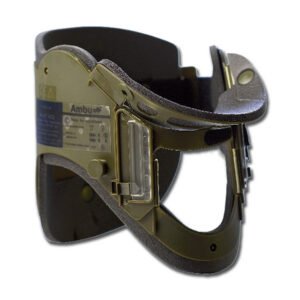
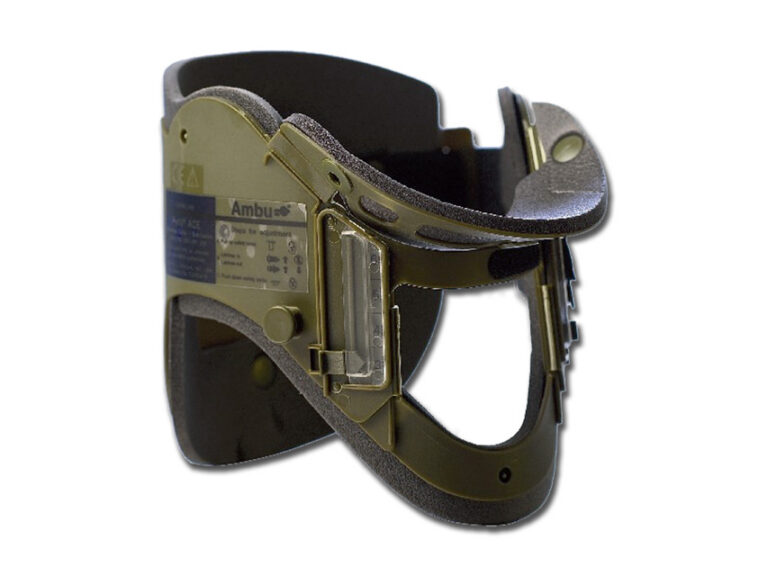
Ambu Perfit ACE Military Immobilisation Cervical Collar – Rigid One-Piece, Radiolucent (CT/MRI), 16 Adjustments, Single-Use (Ref. GM34642)
17,58 € On orderAdd to basket
Buying and selection tips
-
Adjustable size versus fixed size
Some models cover four adult sizes (tall, regular, short and no-neck) with quick locking of the selected size, which simplifies stock in ambulances and emergency departments. If you opt for a fixed size, you will need more than one size to cover the same range of users.
-
Radiolucency if CT or MRI is likely
Check whether the model is declared radiolucent and compatible with CT and magnetic resonance imaging, so that it does not have to be removed during imaging.
-
Single-use or reusable
Single-patient collars need no maintenance between uses; reusable ones require following the manufacturer's instructions for cleaning and checking before they are used again.
-
Adult and paediatric
There are adult models and paediatric models with specific sizes. Choose according to your department's users and do not substitute an adult model for a paediatric one.
-
Access points on the model
Some models include a tracheal opening and a posterior opening for cervical palpation. Check which access points each reference has.
-
Material, edges and ergonomics
Rigid collars are made of thermoplastic or polyethylene, with padded edges and an ergonomic design aimed at a neutral neck position.
Compatibility
- CT and magnetic resonance imaging equipment
- Before completing the purchase, check the compatibility of the specific model with CT and magnetic resonance imaging.
- Hook-and-loop closure
- Check that the closure holds securely and, on reusable models, the condition of the hook-and-loop fastener before reusing it.
Frequently asked questions
How do I choose the size of a rigid collar for an emergency department?
The most practical option is an adjustable-size model that covers several adult sizes with quick locking of the selected size, complemented by paediatric models if children are treated.
What is the difference between a disposable collar and a reusable one when buying?
The single-patient one avoids maintenance between uses; the reusable one requires following the manufacturer's instructions and checking the condition of the device.
Is it worth having a radiolucent collar if CT is expected?
Yes, if the department performs imaging studies: radiolucent models are compatible with CT and magnetic resonance imaging with the device in place.
What should I check on the hook-and-loop closure before approving a model?
That the closure holds securely and lines up with the hook-and-loop part on the front of the collar.
Can I reuse a single-patient collar?
No: single-patient models are discarded after use.
Common questions
Confusing soft, semi-rigid and rigid collars when comparing models
The soft one is made of foam and offers less restriction; the semi-rigid is made of dense foam or polyurethane; the rigid one, with a plastic structure, restricts head and neck movement the most. They are not equivalent.
Believing that the collar alone completes the immobilisation
The collar is part of the immobilisation, which is completed with other elements such as head blocks or an immobiliser and securing straps.
Thinking that a different collar is needed for each adult size
A single device can cover four adult sizes; what needs to be checked is that the chosen size is locked quickly and securely.
Assuming that a single-patient collar can be reused
Single-use models are discarded after use; cleaning the surface is no substitute for disposal when the device is marked as single-patient.