
Adult cervical collar: buying guide
10 products in the catalogue
The adult cervical collar is an immobilisation device that limits neck movement during transfer or initial care. It is used in emergency departments, ambulance transport, theatre, radiology and workplace and first-aid kits. Rigid one-piece models are fitted quickly and avoid loss of components; in two-piece ones the rear part is separate from the front.
Before buying, fix the intended use, the size, the material and the fastening system, and check practical aspects such as the tracheal opening, posterior access and radiolucency. Some references are adjustable, with several sizes in a single device, and others are fixed size. A paediatric-size reference is also included, so the size must be confirmed in each order.
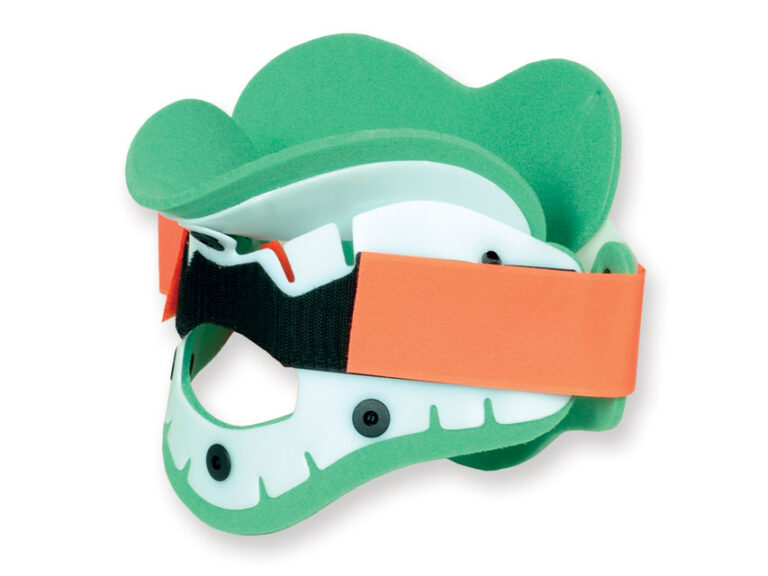
Other related families
Products in this guide
- Polyethylene 7
- Rubber 3
- Nylon / polyamide 1
- Plastic 1
- Adult 10
- Paediatric 2
- Single-use 4
- Reusable 1
-
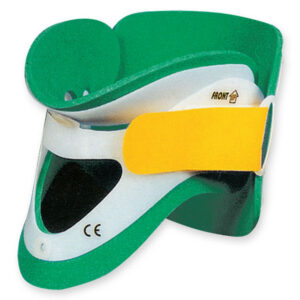
One-Piece Emergency Immobilisation Cervical Collar – Infant Size 44-48 cm Pink
23,47 € In stockSelect options This product has multiple variants. The options may be chosen on the product page -
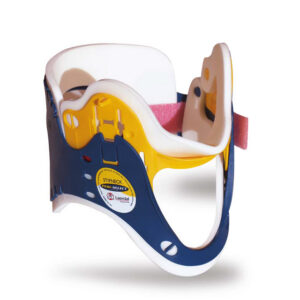
Laerdal Stifneck Select extraction cervical collar – Paediatric size, 4 sizes in 1 (Ref. GM34628, Ref. 34628)
28,22 € In stockSelect options This product has multiple variants. The options may be chosen on the product page -
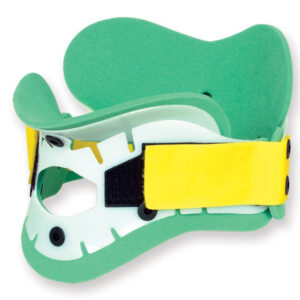
Two-piece first aid cervical collar – Short neck size (bull neck) 48-52 cm, yellow colour
30,40 € In stockAdd to basket -
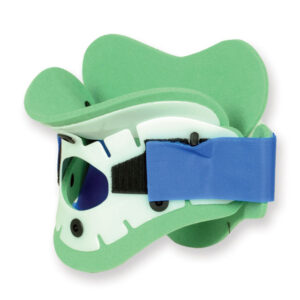
Two-piece first aid cervical collar – Small adult (50-54 cm) blue
30,40 € In stockAdd to basket -
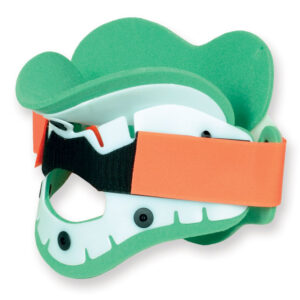
Two-Piece First Aid Cervical Collar – Medium Adult Size 54-58 cm, Orange (Ref. 34634 / SKU GM34634)
30,40 € In stockAdd to basket -
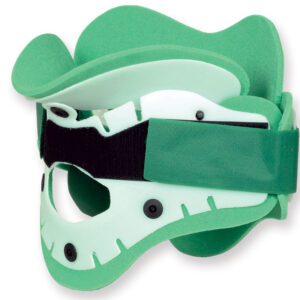
Two-Piece Cervical Immobilisation Collar – Adult Large / Long Neck Size 56-60 cm, Green (Ref. 34635)
30,40 € In stockAdd to basket -
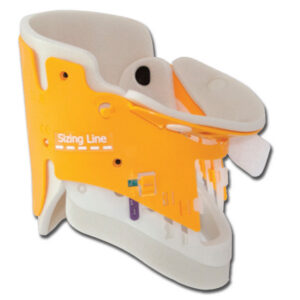
Disposable Rigid Cervical Collar Ambu® Redi-ACE™ – Cervical Spine Immobilisation, Radiotransparent and Latex-Free (Refs. GM34638 / GM34639)
10,45 € In stockSelect options This product has multiple variants. The options may be chosen on the product page -
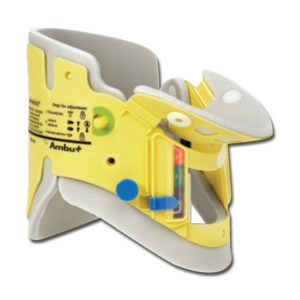
Ambu® Perfit™ ACE® Paediatric Cervical Immobilisation Collar – Rigid One-Piece, Radiolucent (CT/MRI), 12 Adjustments, Single-Use (Ref. GM34640)
16,63 € In stockSelect options This product has multiple variants. The options may be chosen on the product page
Buying and selection tips
-
Rigid emergency or first-aid
The references are split between rigid emergency collars and two-piece first-aid collars. They are not interchangeable: decide first which department will use them and then the material, the fastening and compatibility with imaging.
-
Adjustable does not mean universal
A collar with several sizes in one simplifies restocking, but each position has its own range and height. One model declares twelve configurations within three sizes. Before opting for the adjustable one, check that the range covers the size you need and that the lock is firm.
-
Tracheal opening and posterior access
Some models incorporate a large front opening and a rear opening for access to the cervical area. Not all have them in the same size, so check them in the description of each reference before finalising the order.
-
Radiolucency: check it, do not assume it
Some emergency collars declare that they are radiolucent and compatible with CT and magnetic resonance imaging; this is not a feature of all of them. If the device must stay in place during imaging, check this before buying.
-
Single-use or reusable depending on the workflow
The emergency references are mostly disposable, and one model is reusable. In that case the manufacturer's reprocessing procedure must be followed. Choose according to volume of use and the department's capacity to manage reprocessing.
Compatibility
- Head immobiliser and securing straps
- The collar covers only part of the immobilisation. It is completed with other securing elements that must be ordered separately and are worth assessing on their own.
- Nasal cannula holders
- One model includes holders for securing oxygen tubing. Check that the chosen reference has them, because they are not on all sizes.
Frequently asked questions
What range of sizes should I cover if I am buying collars for an emergency department?
An adjustable multi-size model in a single device reduces the number of references; if you opt for fixed size, you will need several references to cover from short neck to long. Check the length and height of each size before calculating units.
How do I know whether the collar I am buying allows imaging with the device in place?
Check in the reference description that it is listed as radiolucent and compatible with CT and MRI. Do not assume it from the look of the product: the information must be expressly stated.
One piece or two pieces for daily use in an ambulance?
A single piece simplifies fitting and avoids loss of components. Models with a separate rear part split the fitting of the two halves. Weigh the manoeuvre time and how many people are involved in the service.
Is a collar with an extra-large tracheal opening worth it?
It depends on the department: if the collar will stay on while other procedures are carried out, a larger opening offers more access. If the intended use is only support during a short transfer, a simpler model may be enough.
What is the difference between an emergency collar and a two-piece first-aid one?
The emergency one is rigid, one-piece and often radiolucent; the two-piece first-aid one is aimed at simpler use. Check material, fastening and compatibility with imaging before deciding.
Common questions
Thinking that an adjustable collar suits any adult
Adjustable means it covers several sizes within a range, not that it adapts to any neck. Each position has its length and height, and these must be checked against the size needed.
Believing that the collar alone immobilises the patient
The collar is only part of the immobilisation and is completed with other securing elements. When buying, assess all the equipment the department needs.
Assuming that every collar is radiolucent
It is not: some models declare it and others do not. If the device must stay in place in radiology, this data point affects the purchase.
More products in this guide
-
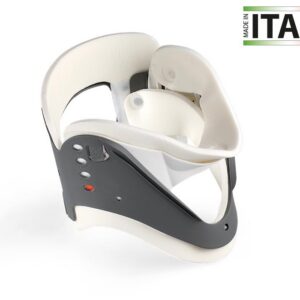
Adult FAST COLLAR Cervical Collar – Adjustable to Different Heights, Radiotransparent and Single-Use for Emergencies (Ref. 9015 / BRL9015)
17,30 € In stockAdd to basket -
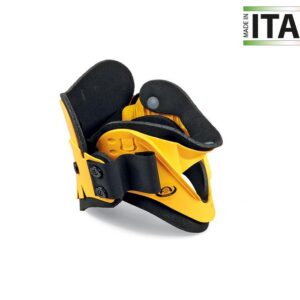
Emergency Cervical Collar Champion Collar Adult – Dual Valve Spinal Immobilisation, Radiotransparent (Ref. BRL9030)
37,75 € In stockAdd to basket