
Rectal catheters: buying guide
18 products in the catalogue
The rectal catheter is a straight intestinal tube with a semi-rigid wall and a closed tip with side eyes. It is used in hospitals and in digestive endoscopy units as a route for introducing air or contrast medium in double-contrast studies and colonoscopy examinations. References include versions with and without a balloon, paediatric and neonatal models, and some specific anorectal manometry or temperature probes.
The purchasing decision turns on four factors: tip type and gauge, material, length, and the type of connection or balloon. Versions with a balloon add a retention element, and some models include a non-return valve, a Luer lock connection or an air supply; others come with a syringe included and others without. In addition there are the presentation, sterility and the absence of latex and DEHP where the reference declares it.
Other related families
-
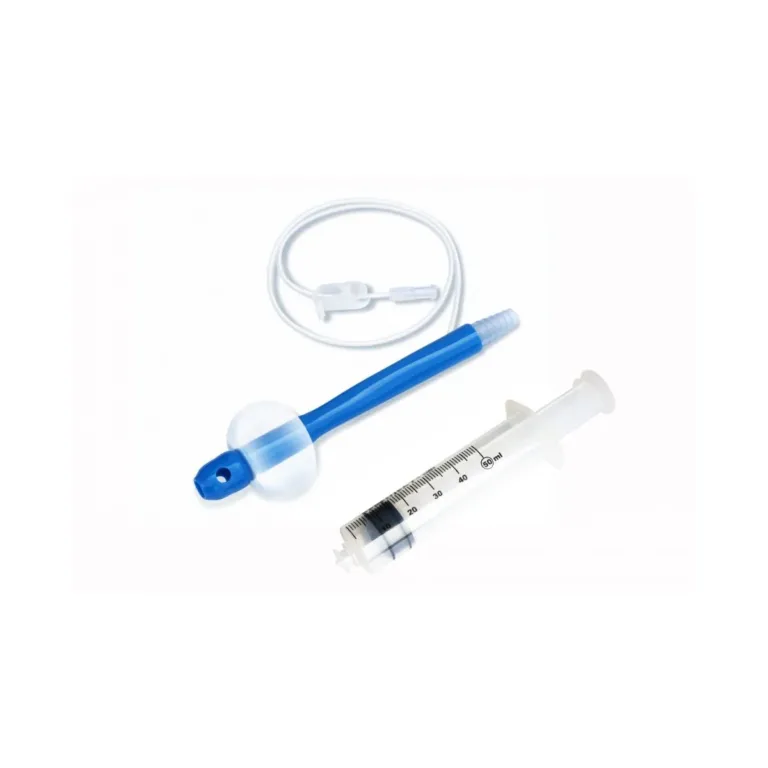
 Rectal Balloon Catheters for Colonoscopy
Concentrates the retention and sealing decision: models with a balloon, non-return valve and Luer lock connection, where presentation with or without a syringe changes the order.
-
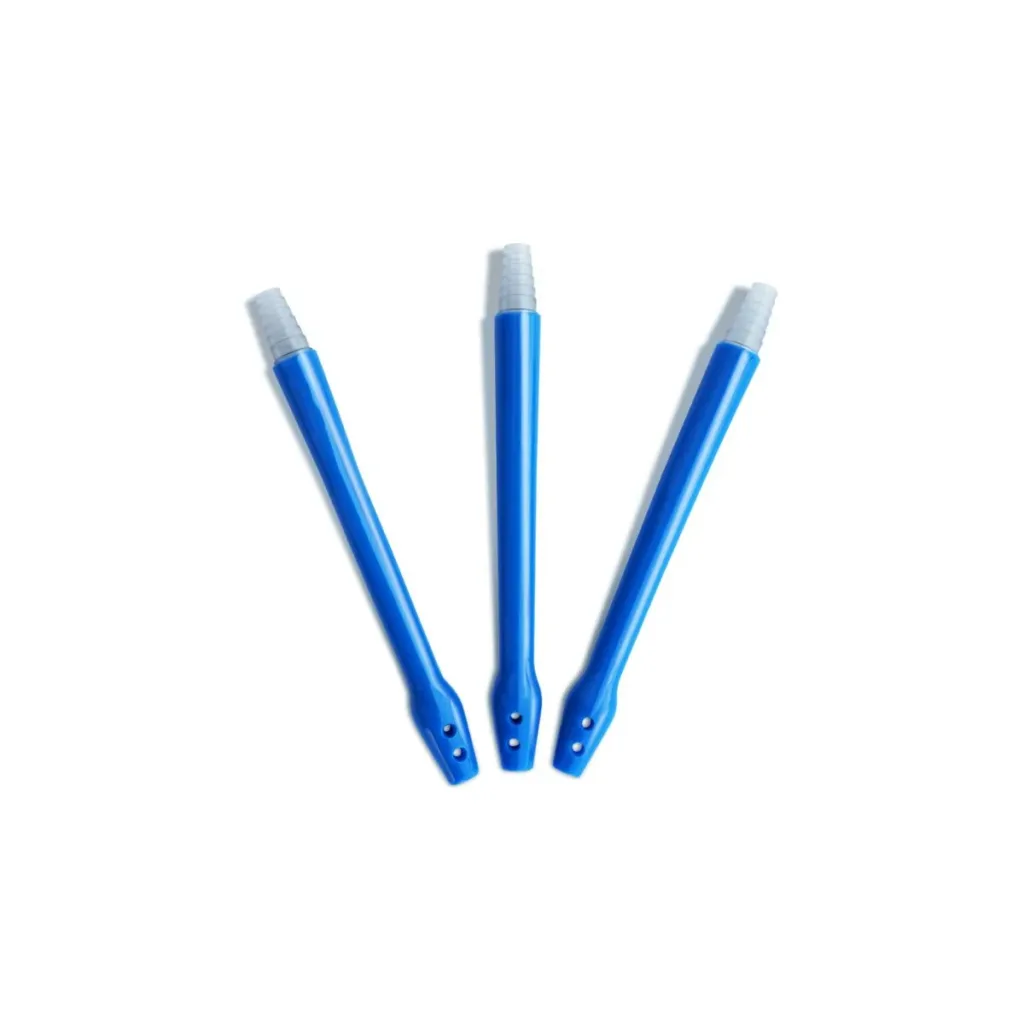
 Balloonless Rectal Catheters for Colonoscopy
A simple alternative for conveying air, contrast or liquid, with no inflation component to maintain.
-
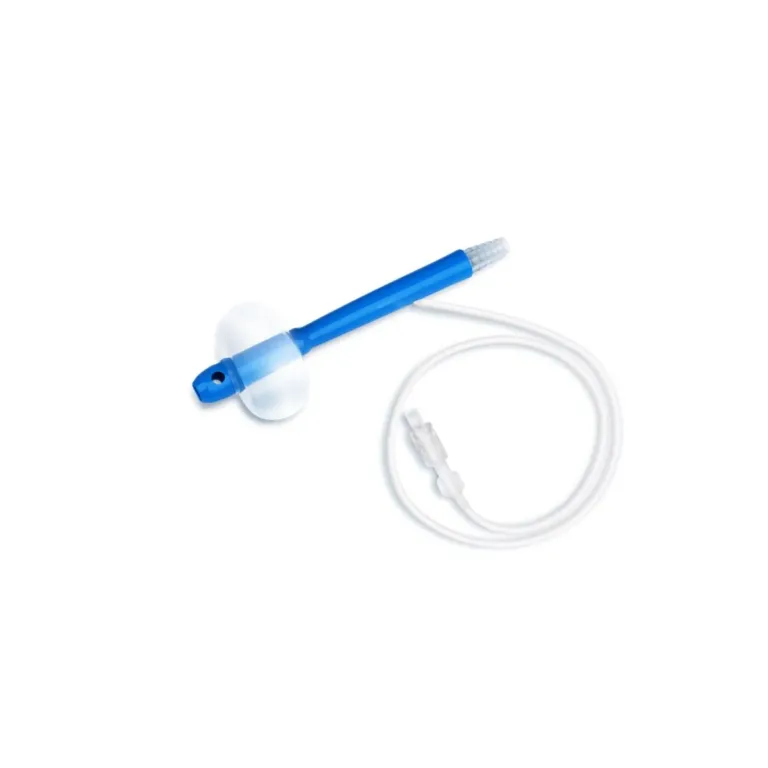
Paediatric and Neonatal Rectal Catheters for Colonoscopy
Covers the gauges and atraumatic tips for neonates and infants, with diameters smaller than adult ones.
-
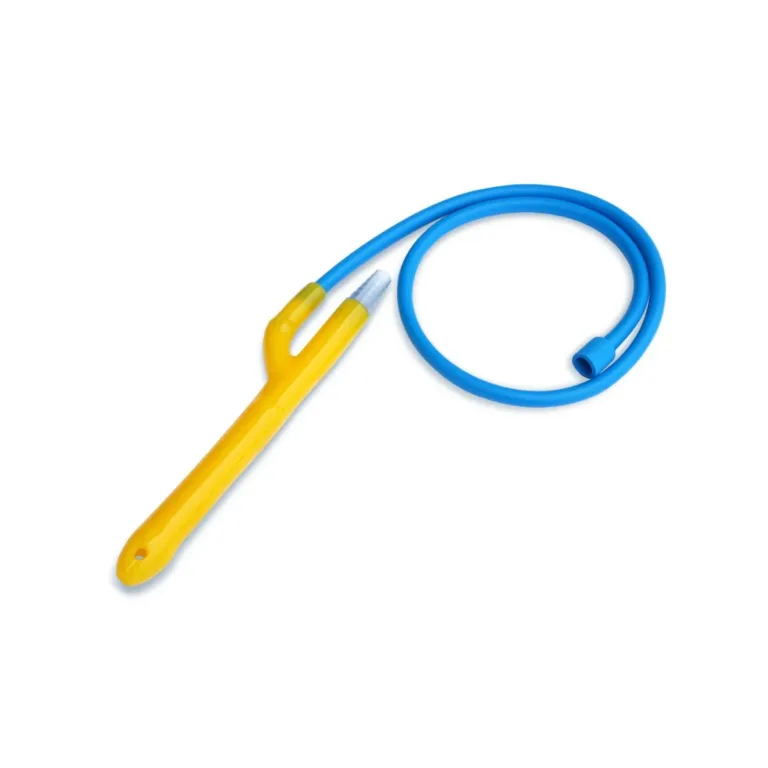
 GASTROENTEROLOGY AND ENDOSCOPY
Framework category for grouping the rest of the endoscopy consumables and avoiding one-off orders.
Products in this guide
- 1.6 cm 1
- 3.8 cm 8
- 15.5 cm 2
- 17 cm 1
- 18 cm 1
- PVC 8
- Silicone 1
- Box OF 100 14
- Unit 1
- I s 5
- II b 1
-
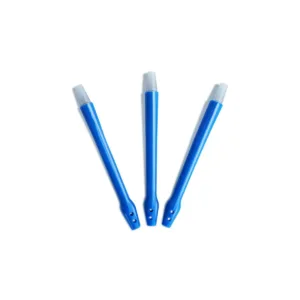
Balloonless rectal catheter for evacuation – Olive tip Ø16 mm, DEHP-free PVC, 160 mm | Box of 100 units (Ref. 20073)
177,10 € In stockAdd to basket -
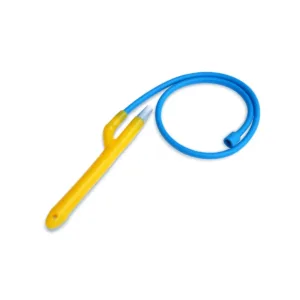
Adult rectal catheter with air supply for double contrast | Ø17 mm olive tip, DEHP-free PVC and insufflation connection (Ref. 21548)
369,60 € In stockAdd to basket -
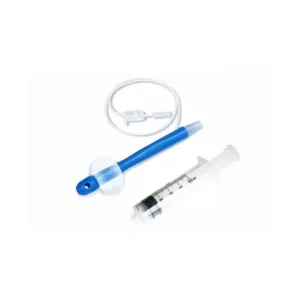
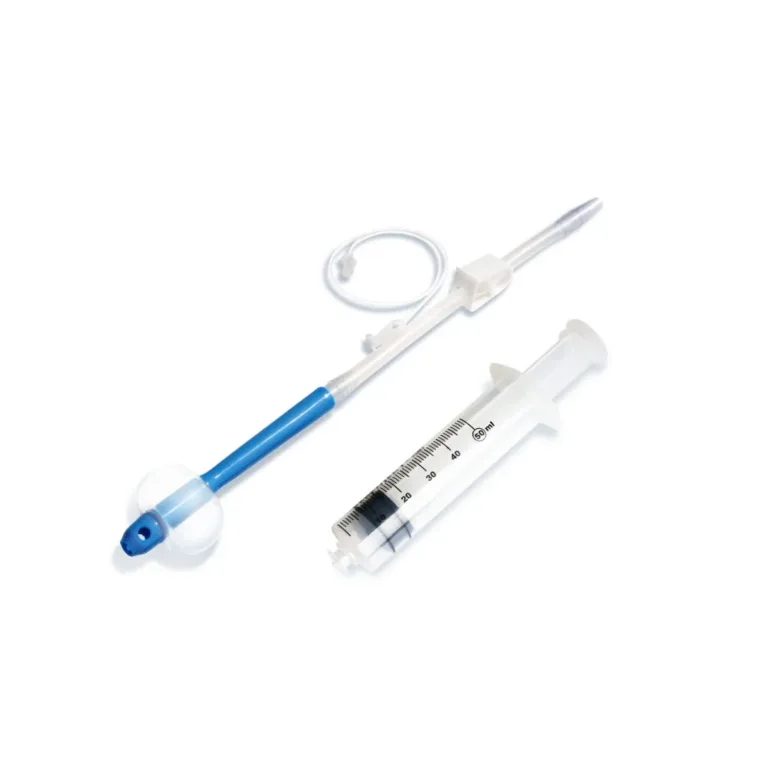
Rectal catheter with balloon for colonoscopy – Olive tip Ø16 mm, DEHP-free PVC, silicone balloon with Luer-Lock and syringe | Box of 100 units (Ref. 21546)
523,60 € In stockAdd to basket -
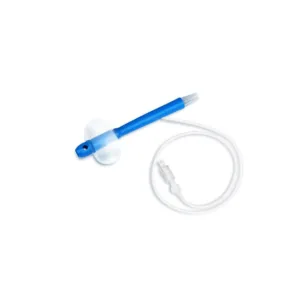
Rectal catheter with balloon and non-return valve | Olive tip Ø16 mm, DEHP-free PVC and Luer-Lock connector – Box of 100 units
485,10 € In stockAdd to basket -
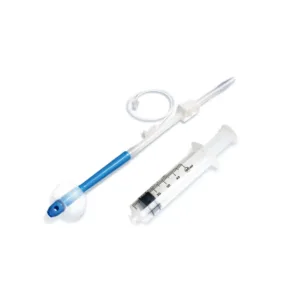
Long balloon rectal catheter for adults with included Luer-Lock syringe | Olive tip Ø16 mm, DEHP-free PVC and silicone balloon (Ref. 21545)
616,00 € In stockAdd to basket -
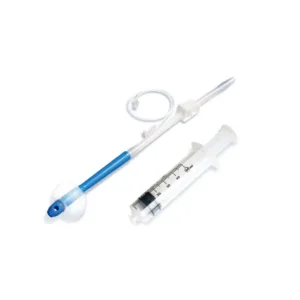
Long balloon rectal catheter for adults without syringe | Olive tip Ø16 mm, DEHP-free PVC and Luer-Lock connector (Ref. 20089)
577,50 € In stockAdd to basket -
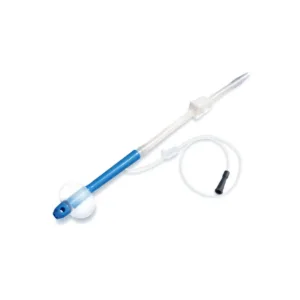
Adult long balloon rectal catheter with funnel connector – Ø16 mm olive tip, DEHP-free PVC, soft silicone (Ref. 20133)
577,50 € In stockAdd to basket -
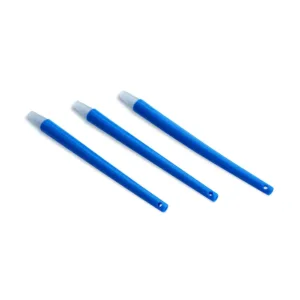
Paediatric rectal catheter for neonates and children | Atraumatic Ø8 mm tip, DEHP-free PVC and stepped connector (Ref. 21547)
200,20 € In stockAdd to basket
Buying and selection tips
-
With or without a balloon: decide the function first
The balloon is not a minor accessory: models with a balloon may include a retaining clamp, whereas models without one are limited to conveying liquid or gas. Decide before ordering whether you need retention and sealing or simple conveyance. The choice determines the type of connection.
-
The tip: olive, Nelaton or atraumatic
When comparing descriptions, look at the tip type and diameter and at the number of eyes, not just the gauge of the tube. Two catheters of the same gauge can differ if the tip is different.
-
Read the gauge on the pack, not just from the colour
Rectal tubes are graded by Ch/Fr gauge and the connector is colour-coded. Confirm the Ch printed on the pack before accepting delivery, especially on orders with several sizes.
-
Material
Check the material (for example PVC or silicone) and the finish in the description. Not all rectal catheters of the same size are equivalent.
-
Latex and DEHP: ask for the declaration
Where the reference declares the absence of latex and DEHP, that condition must appear in the description and on the labelling. Attach the supplier's declaration to the purchase file if it is a requirement of your institution.
-
Sterility and presentation
Check whether the reference is sterile and single-use, and how it is presented (single unit or box). Follow the manufacturer's instructions on storage and expiry.
Compatibility
- Luer lock syringe and Luer valves
- Some versions with a balloon fit a valve for Luer and Luer lock connectors. Check the catheter's connector type and whether the syringe is part of the presentation or has to be ordered separately.
Frequently asked questions
When is a rectal catheter with a balloon preferable and when one without?
The balloon is chosen when the catheter needs to be retained and sealed. If you only need to convey air, contrast or liquid, a catheter without a balloon avoids the inflation component and its accessories.
How do I check the catheter gauge before opening the pack?
From the Ch/Fr printed on it and the connector colour code. Do not rely on colour alone, because there are very similar shades for different sizes.
What length should I check in the description of each reference?
The length is declared alongside the gauge and may vary between models. Check it for each reference rather than taking it for granted.
Does the rectal catheter arrive sterile and can it be reused?
Sterile references are supplied in an individual pack and are single-use. Follow the manufacturer's instructions.
Do I need to order a syringe separately to inflate the balloon?
It depends on the presentation: there are versions with a syringe included and others that only have the connector. Check the contents of the box before placing the order.
Common questions
Calling a family of rectal catheters “Nelaton”
Nelaton names the shape of the tip, not the product. What changes between references is the balloon, the material, the gauge and the connector.
Assuming the connector colour is enough to identify the size
Colour codes look alike between neighbouring sizes. On deliveries with several sizes, check the Ch printed on the pack against the delivery note.
Confusing a rectal catheter with a measurement probe
Anorectal manometry probes and rectal temperature probes are different products from the colonoscopy rectal catheter. Check the intended purpose before comparing references.
More products in this guide
-
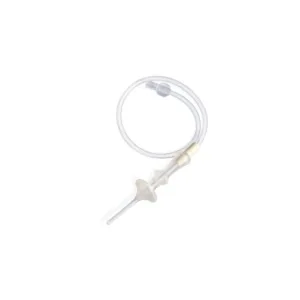
PRIREKTOSILK® silicone rectal catheter for premature infants, neonates and infants with 3.5 cm conical olive and Luer-Lock connection (Ref. 20693)
1.578,50 € In stockAdd to basket -
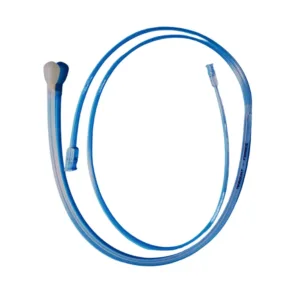
Bidirectional rectal compliance tube for rectometrogram and study of viscoelastic properties – 500 ml distension balloon (Ø 6.6 mm / 20 CH) | C55U
In stockRequest a quote -
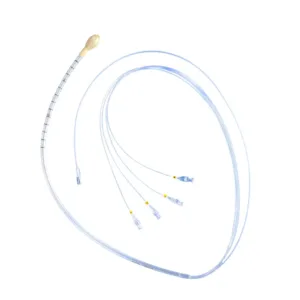
5-channel graduated anorectal manometry and compliance catheter with radiopaque markers – Perfusion catheter for rectal and sphincter pressure (L 120 cm, Ø 6.6 mm / 20 CV) | C56U
In stockRequest a quote -
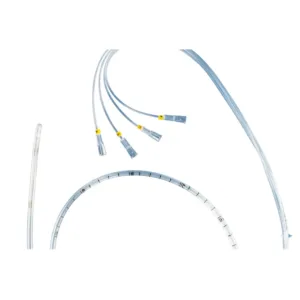
5-lumen anorectal manometry and compliance catheter – Perfusion catheter for rectal and anal pressure recording (L 120 cm, Ø 6.6 mm / 20 CH) | C74U
In stockRequest a quote -
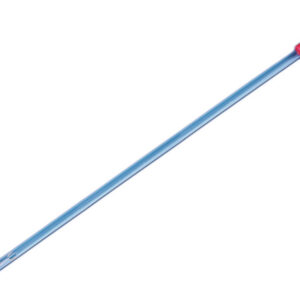
Rectal Catheter CH/Fr 22 – Sterile PVC Rectal Tube 38 cm, DEHP-Free with Conical Adapter (Box of 100 units)
30,40 € In stockAdd to basket -
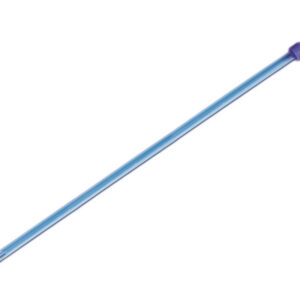
Rectal Catheter CH/Fr 24 – Sterile PVC Rectal Tube 38 cm, DEHP-Free with Conical Adapter (Box of 100 units)
30,40 € In stockAdd to basket -
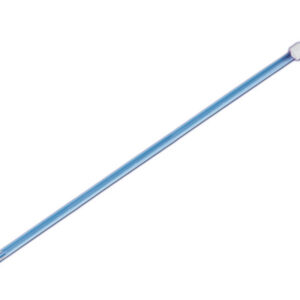
Rectal Catheter CH/Fr 26 – Sterile PVC Rectal Tube, 38 cm, DEHP-Free with Conical Adapter (Box of 100 units)
30,40 € In stockAdd to basket -
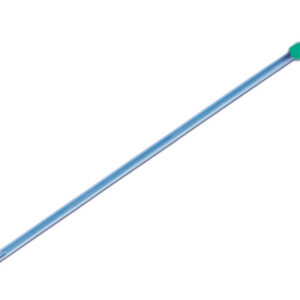
Rectal Catheter CH/Fr 28 – Sterile PVC Rectal Tube 38 cm, DEHP-Free with Conical Adapter (Box of 100 units)
30,40 € In stockAdd to basket