
Reagent strips: buying guide
24 products in the catalogue
Reagent strips are supports with pads impregnated with reagents that change colour on contact with the sample. Multiparameter urine strips are for professional use and are read visually, by comparing with the colour chart on the pack, or by instrument in an analyser. A single strip can combine several parameters, such as glucose, protein, pH, ketones, blood, bilirubin, nitrite, leukocytes, urobilinogen or specific gravity, to obtain several readings with a single dip.
Alongside urine strips there are other formats: glucose strips for glucose meters, and haemoglobin, lactate, cholesterol or saliva alcohol strips, each with its own sample type and reading instrument. Choosing well requires you to establish first the parameter combination, then the type of reading and, lastly, the pack and the protection against interference.

Other related families
-
 Analysers and Test Strips
This is the family that includes multiparameter urine strips and the glucose, lactate and haemoglobin strips that are ordered together with their analysers.
-
 Other Rapid Tests
Groups single-use rapid tests, such as the saliva alcohol strip, which are ordered as a complement to the main panels.
Products in this guide
- Box OF 25 11
- Box OF 100 8
- Box OF 50 4
- Box OF 150 3
- Box OF 5 2
- In vitro diagnostics 22
- Non-medical 1
-
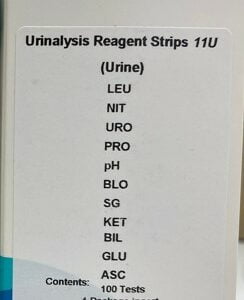
Uritop 11-parameter urine test strips – Box of 100 units (LEU, NIT, URO, PRO, pH, BLO, SG, KET, BIL, GLU, ASC) | Ref. 0933001
16,00 € In stockAdd to basket -
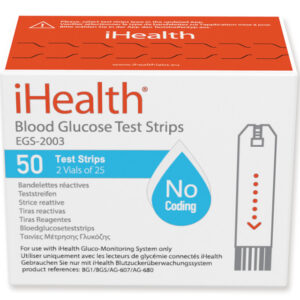
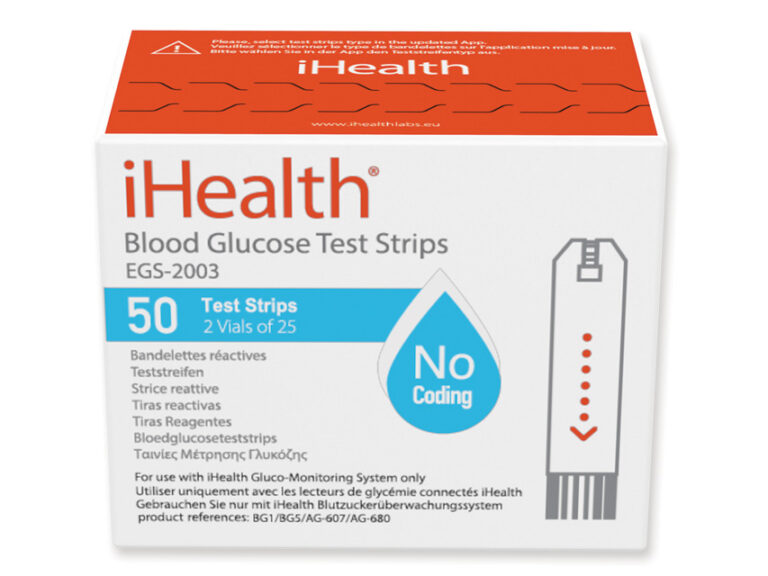
IHealth Glucose Test Strips (Ref. 23512) – Box of 50 units for iHealth Glucose Meters 23509, 23510 and 23514
22,80 € In stockAdd to basket -
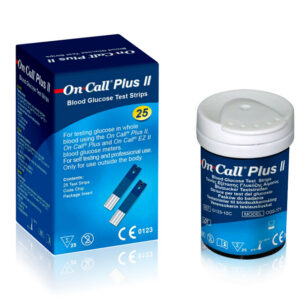
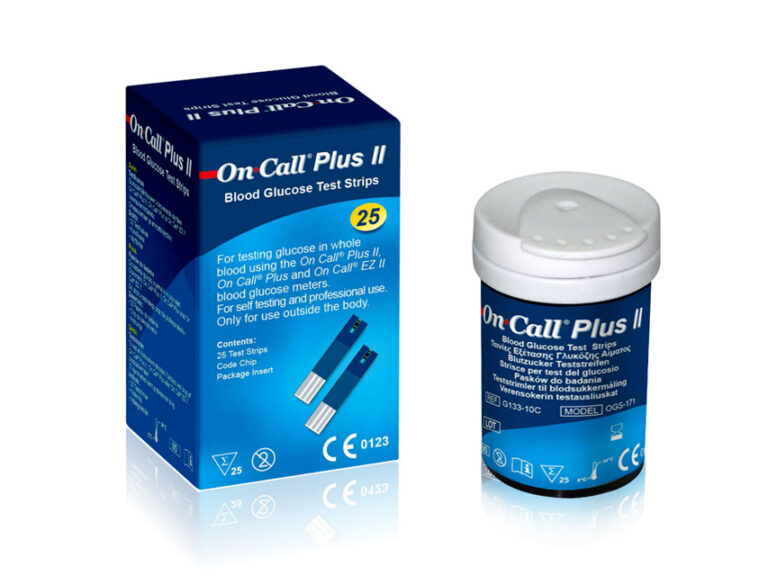
Glucose Test Strips for Blood Glucose Meters 23886–23897 | Ref. 23910 | Box of 25 units (IVD – Self Test)
12,35 € In stockAdd to basket -
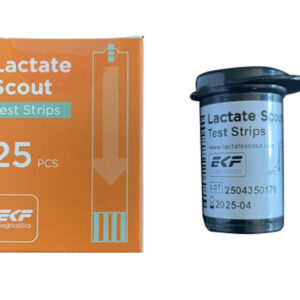
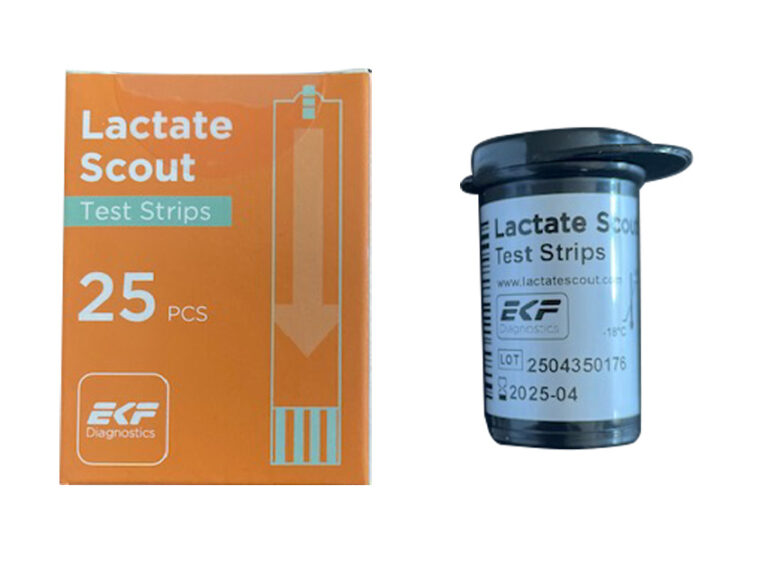
Lactate Test Strips for Lactate Scout+ and Lactate Scout 4 (Ref. 23993 / SKU GM23993), Tube of 25 Strips
116,85 € In stockAdd to basket -

Haemoglobin Test Strips for MISSION Hb System (Ref. 24022) – Box of 50 units + Code Chip | Ref. 24023 (SKU GM24023)
43,70 € In stockAdd to basket -
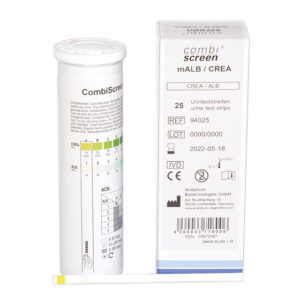
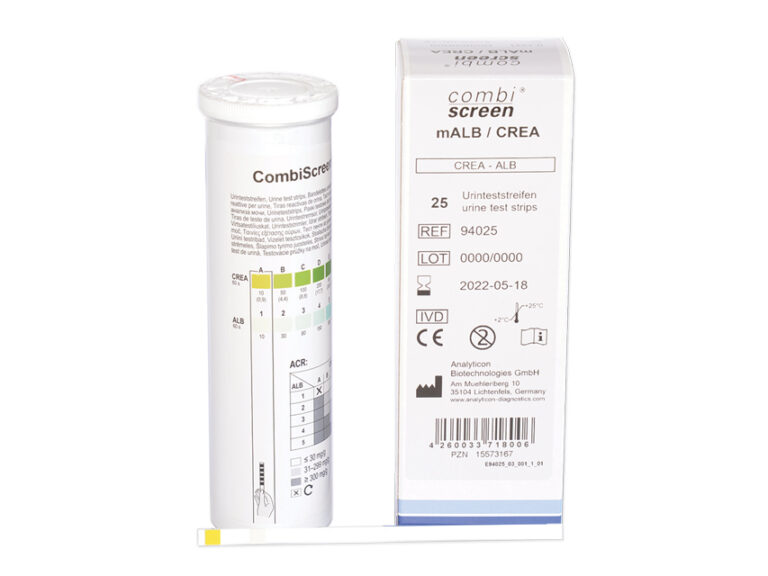
CombiScreen® mALB/CREA urine test strips – Detection of microalbuminuria by albumin/creatinine ratio (tube of 25)
21,38 € In stockAdd to basket -
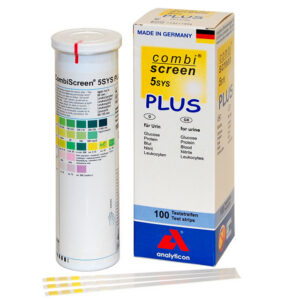
CombiScreen® 5SYS Plus urine test strips – 5 parameters with protection against ascorbic acid (100 units)
19,48 € In stockAdd to basket -
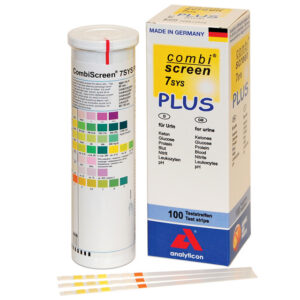
CombiScreen® 7SYS Plus urine test strips – 7 parameters with ascorbic acid protection (100 units)
22,80 € In stockAdd to basket
Buying and selection tips
-
Establish the parameter combination first
Each type of product corresponds to a specific combination of test elements. It is worth finalising the list of analytes to be reported before comparing formats or packs. A strip with parameters that are not reported only lengthens the reading, and a strip that is too short forces you to repeat the dip.
-
Consider protection against ascorbic acid
Ascorbic acid in urine can interfere with the reaction of some parameters, and for that reason certain strips include specific protection on the affected pads or a pad that indicates its level. If that interference is a concern in your laboratory, compare this feature between references. The difference lies not in the number of parameters but in how they behave with that substance.
-
Decide between visual and instrument reading
Strips can be read visually, by comparing the pads with the colour chart on the pack, or by instrument in an analyser. The results of the two types of reading may not agree, so it is worth fixing one method per workstation. If a reader is going to be used, the strip you choose is determined by what the device supports.
-
Check the measuring range you need
The range of each parameter varies between references and may differ between visual and instrument reading. Before deciding on the format, check up to which value each parameter of interest is reported and with which method it will be read.
-
Follow the sample and reading instructions
Each reference states how to collect the sample, how long to wait before reading and under what lighting conditions to compare with the colour chart. These details vary by product, so it is worth standardising them per workstation and always following the manufacturer's instructions.
-
Keep the strips in their original container
Keep the strips in their original container and close it immediately after removing each strip. Humidity, light and heat can alter the reactivity of the pads, and the specific storage conditions are those stated by the manufacturer.
Frequently asked questions
How do I decide between a 5-parameter strip and a 10- or 11-parameter one for the same workstation?
What matters is not the number but the list of analytes to be reported. Strips with more parameters include glucose, bilirubin, ketones, specific gravity, blood, pH, protein, urobilinogen, nitrite and leukocytes, and versions with fewer parameters exist. Adding parameters that are not reported lengthens the reading of each sample.
When is it worth choosing strips with protection against ascorbic acid?
When that interference may affect the reaction of parameters such as blood or glucose and you do not want to repeat the test. These versions include the protection on the affected pads and a pad that indicates the level of ascorbic acid in the urine, which helps to interpret the remaining results.
Can I change strip reference without changing reader?
Only if the device supports that specific combination. A reader may not cover all strips, so it is worth confirming compatibility with the manufacturer before fixing the reference.
Are urine strips and glucose, lactate or haemoglobin strips bought in the same way?
No, they are different systems. Urine strips are dipped in the sample and read by colour comparison, whereas blood strips are applied to the corresponding meter. Each format requires you to check the compatible instrument and its conditions of use.
Common questions
Accepting the expiry date on the pack even though the container has been open for months
These are two different periods: in addition to the printed expiry date, the container may have a period of use from first opening. Check the manufacturer's period and write the opening date on the container.
Using water as a negative control
Water does not reproduce the urine matrix. To verify the system, use the control materials specified by the manufacturer.
Reading the pads once the colour has completely changed
Each reference sets a maximum reading time, and later colour changes should not be taken into account. Follow the time and lighting conditions specified by the manufacturer.
More products in this guide
-
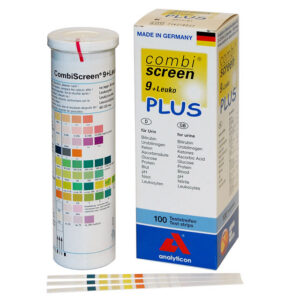
Urine test strips CombiScreen® 9+Leuko Plus – 9+1 parameters with protection against ascorbic acid (100 units)
22,80 € In stockAdd to basket -
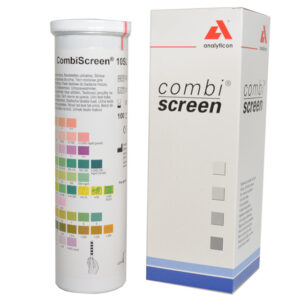
Urine Test Strips CombiScreen® 10SL Plus – 10 Parameters (100 units) with Protection against Ascorbic Acid
21,09 € In stockAdd to basket -
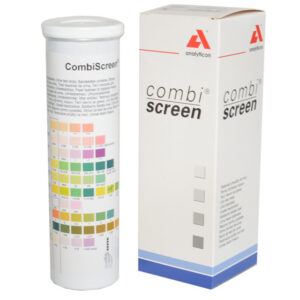
CombiScreen® 11SYS Classic Urine Test Strips – 11 Parameters (150 units) for Visual Test and Urilyzer®
28,03 € In stockAdd to basket -
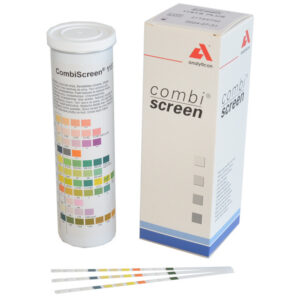
CombiScreen 11SYS Plus urine test strips – 11 parameters with protection against ascorbic acid
Price range: 25,65 € through 33,25 € In stockSelect options This product has multiple variants. The options may be chosen on the product page -
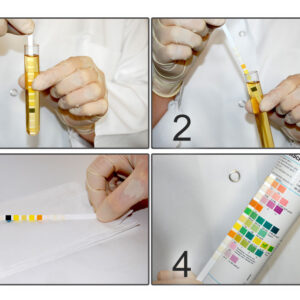
CombiScreen® 10SL Classic Urine Test Strips – 10 Parameters (Ref. 24068) | Box of 150 units
25,18 € In stockAdd to basket -
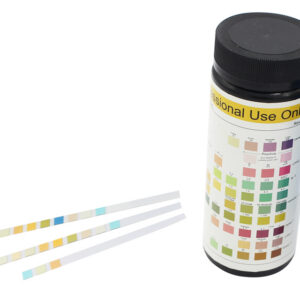
10-parameter urine test strips – Professional visual reading (IVD) – Tube with 100 strips | Ref. 24076 (SKU GM24076)
10,45 € In stockAdd to basket -
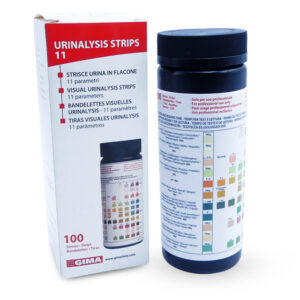
Urine test strips for 11 parameters – Professional use (IVD) – Tube with 100 strips | Ref. 24077 (SKU GM24077)
10,93 € In stockAdd to basket -
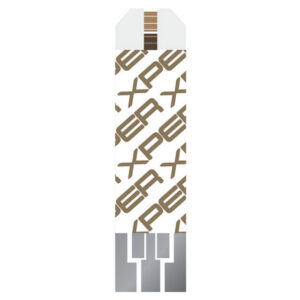
Glucose test strips in a vial for GIMACARE Multiparameter Monitor (Ref. 24128)
21,85 € In stockAdd to basket