
How to choose radiation protection by workstation
4 products in the catalogue
Radiation protection in a healthcare setting covers the lead-lined garments and shielding items placed between the professional or the patient and scattered radiation during examinations. The choice is approached as a set: coverage garments, protection for specific areas and accessories that protect the work area.
The products include front-only aprons and front-and-back coverage aprons, dental aprons, thyroid and gonad shields, gloves, leaded glasses, patient blankets and leaded curtains. Lead equivalence, coverage, the fastening system and the technical information for the model are the criteria that intersect in a real purchase; it is worth deciding them by workstation and not on impulse.

Other related families
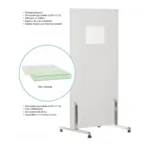
Products in this guide
-
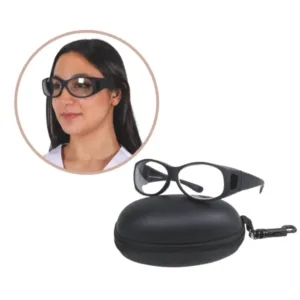
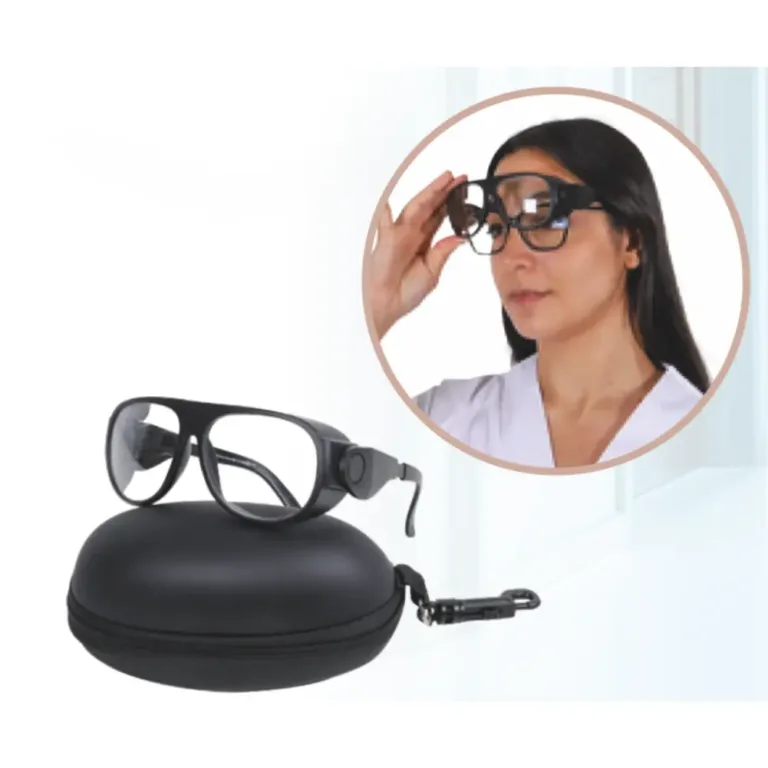
Lead Glasses RG33 for Radiological Protection 0.75 mm Pb Front and 0.50 mm Pb Lateral | Compatible with Prescription Glasses and Rigid Case (Ref. RXRG3300)
In stockRequest a quote -
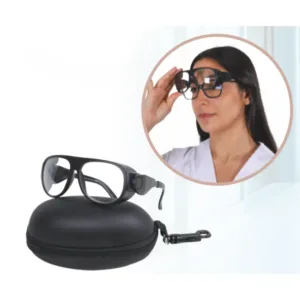
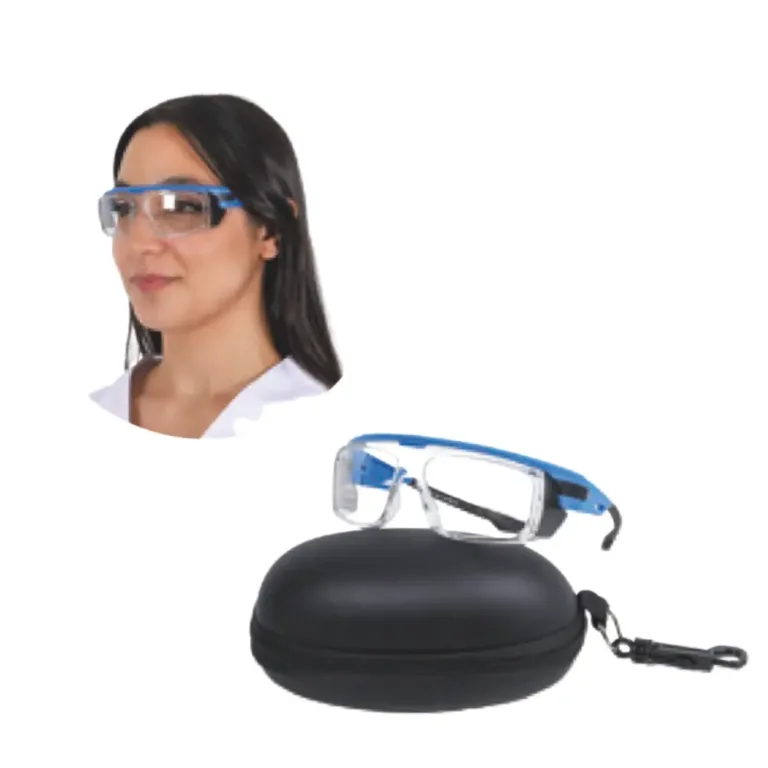
Adjustable Lead Glasses RG66 0.75 mm Pb Front / 0.50 mm Pb Lateral | Radiological Eye Protection for the Lens (Ref. RXRG6600)
In stockRequest a quote -
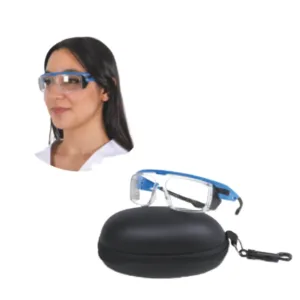
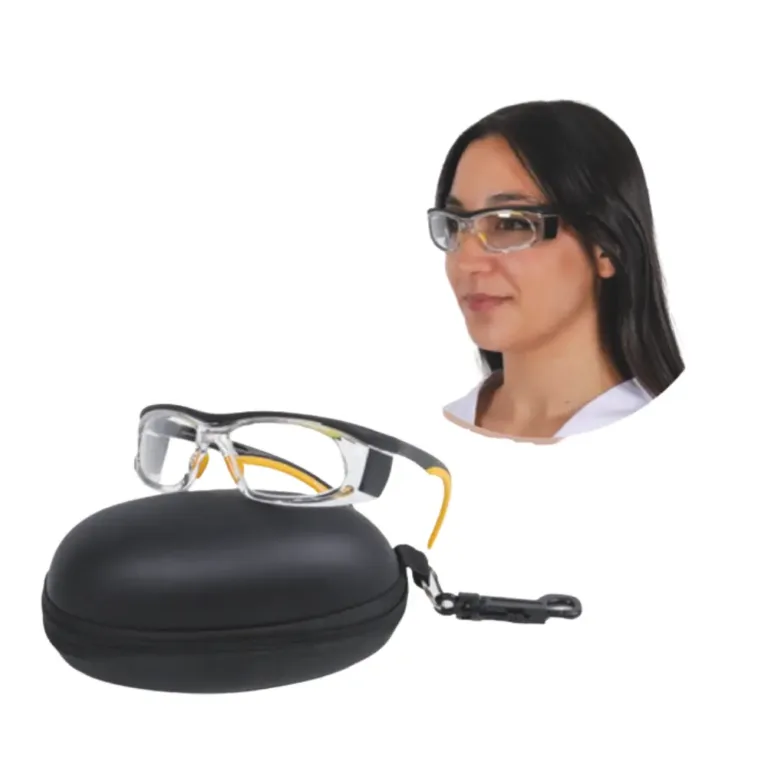
Lead Glasses for Radiological Protection 0.75 mm Pb Frontal and 0.50 mm Pb Lateral | Model RG200 (Ref. RXRG20000)
In stockRequest a quote -
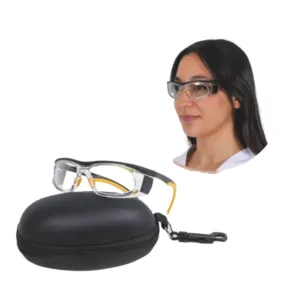
X-ray Lead Glasses 0.75 mm Pb Frontal and 0.50 mm Pb Lateral Model RG206 (Ref. RXRG20600) | Radiological Eye Protection PPE for the Lens
In stockRequest a quote
Buying and selection tips
-
Lead equivalence according to workstation
Garments are offered with equivalences in millimetres of lead (for example, from 0.25 to 0.50 mm Pb, depending on the model). That figure defines the stated level of attenuation, not the apparent thickness of the fabric. Settle the equivalence required by the department before comparing finishes.
-
Weight and material of the garment
Within the same lead equivalence there may be different material lines, lighter or heavier. If the garment is going to be worn for long periods or shared between several people, compare the stated weight of each reference.
-
Front coverage or front and back
A front apron covers the front of the body. Front-and-back models also cover the back. The choice depends on the real working position within the room.
-
Size and fastening system
Size and fastening affect comfort and fit. The products include Velcro fastenings, belts and buckles. Check the sizes available for each reference before ordering.
-
Documentation and certification
Ask for the technical information for each model, which must state the applicable standard and the lead equivalence. That is the information that distinguishes a radiation protection garment from a lead-lined garment that has not been tested.
-
Work area protection
Leaded curtains and other shielding items complete the protection of the room. They are chosen according to the type of barrier the workstation needs and the opening that has to be covered.
Frequently asked questions
What lead equivalence should I choose for an X-ray room apron?
The references offer different equivalences in mm Pb. The greater the thickness, normally the greater the weight. The criterion is what the department requires for each workstation, not a single answer valid for everyone.
How do I choose a size if the apron is shared by several professionals?
Check the sizes of each reference. With several users, an adjustable fastening, Velcro or belt, is worthwhile, along with a size that allows adjustment without being loose.
When is front-and-back protection worth it compared with front only?
When the professional is not always facing the source or moves around the equipment. If their position is fixed and oriented, a front apron may be enough.
Do I need to add a thyroid shield to the apron?
Front aprons do not cover the neck. If the workstation requires thyroid protection, there are specific shields with a front or rear Velcro fastening, and also dental models.
What accessories should I budget for in addition to the garments?
Depending on the workstation: leaded glasses, hand and forearm gloves, thyroid and gonad shields, and patient blankets. In rooms with several items of equipment, leaded curtains are added.
Common questions
Believing that the millimetre of lead is the thickness of the fabric
The figure indicates attenuation equivalence in lead, not physical thickness. Apparent thickness is no use for comparing protection.
Supposing that the back is protected in the same way as the front
In front-and-back models the protection on each side may differ. Review the technical information for each reference before comparing.
Assuming that a dental apron covers any workstation
Dental models are not equivalent to a room set. The choice depends on the professional's position relative to the equipment.