
Nasal oxygen: buying guide for nasal cannulas
24 products in the catalogue
Nasal oxygen is delivered by nasal cannulas, also called oxygen prongs, which connect to an oxygen source and direct the gas into the nostrils. They are supplied as single-use products, with a connecting tube and an end connector. The range includes American-style tie-on cannulas and references for adult, paediatric, infant and neonatal use.
To buy sensibly, first fix the tube length, the type of connection to the source, the size and the presentation. Then check verifiable details such as the material, the absence of DEHP, the design of the nasal prong and the construction of the tube. These details must appear on the specific reference and cannot be assumed to be equivalent between presentations.
Other related families
-
 Oxygen Therapy Nasal Cannulas
This is the main family of nasal cannulas for oxygen therapy; it allows lengths, materials and presentations to be compared.
-
 American-Type Nasal Cannulas
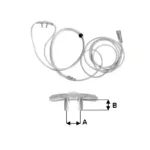
Groups the American-style tie-on format, found in adult, paediatric and neonatal references in the range.
-
 Neonatal Nasal Cannulas
Brings together neonatal nasal cannulas, a different size that must be located by reference.
Products in this guide
- 28 cm 2
- 160 cm 4
- 210 cm 3
- 1000 cm 1
- Conical ISO 15/22 mm 7
- Luer 1
- PVC 5
- Silicone 3
- M 2
- S 2
- XS 2
- L 1
-
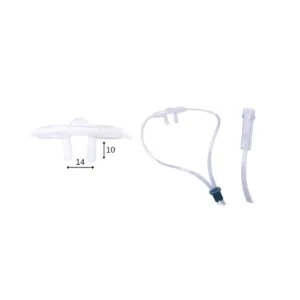
American-style tie nasal cannula for adult, flexible anti-crush safe-flow tube of 160 cm – Ref. OS/12AL (box of 100 units)
47,60 € In stockAdd to basket -
American-style tie nasal cannula with flexible 250 cm safe-flow tube, adults – Ref. OS/12AXT (box of 100 units)
45,90 € In stockAdd to basket -
Sale!
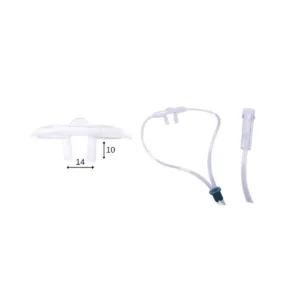
American tie-style nasal cannula with 160 cm flow tube for adults – Ref. OS/12A (box of 100 units)
Original price was: 49,60 €.35,95 €Current price is: 35,95 €. In stockAdd to basket -
DEHP-free American tie-type nasal cannula with 160 cm flow tube for adults – Ref. OS/12AD (box of 100 units)
39,10 € In stockAdd to basket -
American tie-type nasal cannula with 5 m flow tube, for adults – Ref. OS/12AT (box of 100 units)
74,80 € In stockAdd to basket -
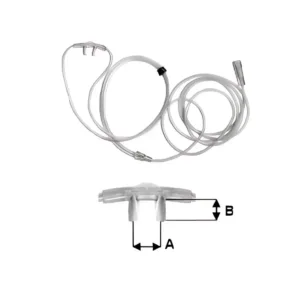
American-type tie nasal cannula with flexible flow tubing of 4.5 m for adults – Ref. OS/12ATL (box of 50 units)
38,25 € In stockAdd to basket -
American-type nasal cannula with 10 m flexible tube for adults – Ref. OS/12AVL (box of 50 units)
64,60 € In stockAdd to basket -
Paediatric nasal cannula American tie type, flexible 160 cm tube without DEHP – Ref. OS/12PED (box of 100 units)
42,50 € In stockAdd to basket
Buying and selection tips
-
Tube length
The references in this guide offer tubes of 160 cm, 210 cm and several metres. Check that the declared length matches the intended one and the connector.
-
Declared material
Some versions are identified as DEHP-free. If the purchase requires the absence of DEHP, this must be stated expressly on the reference.
-
Prong design
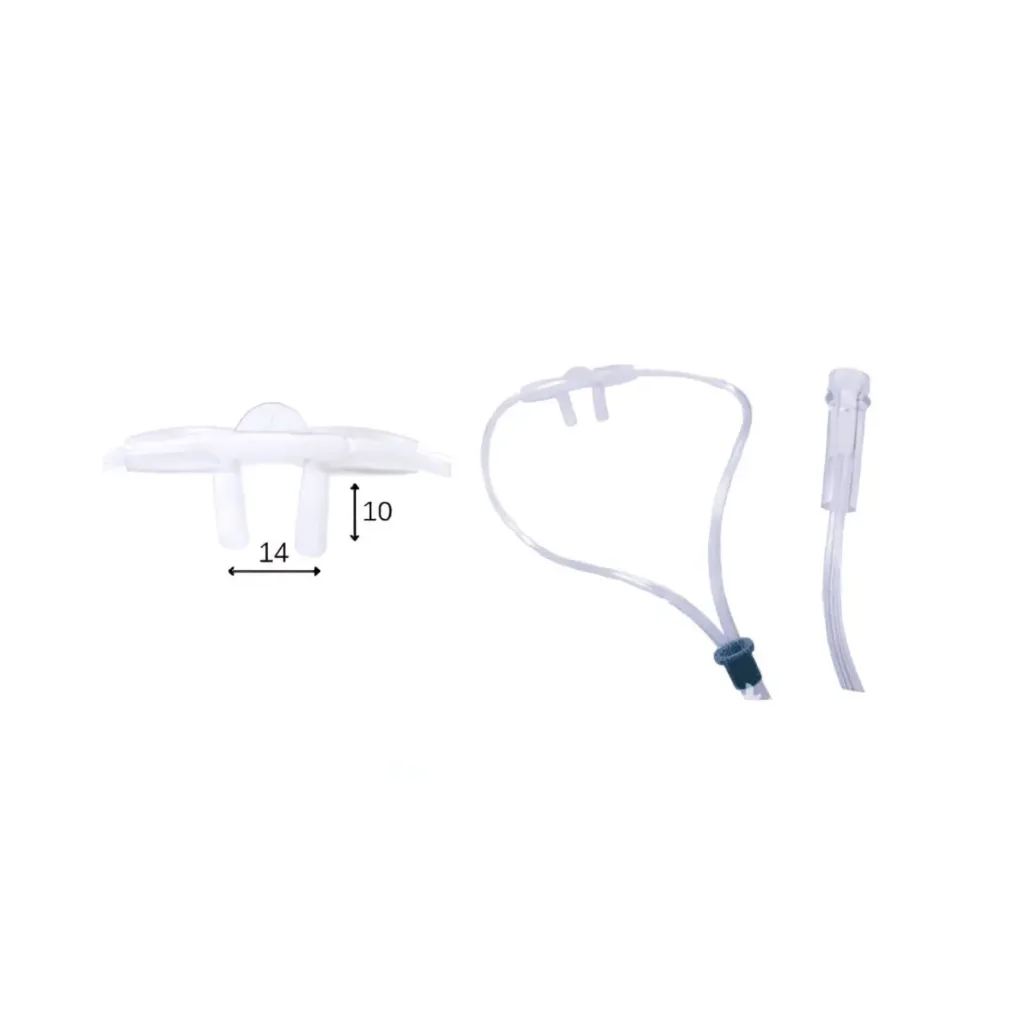
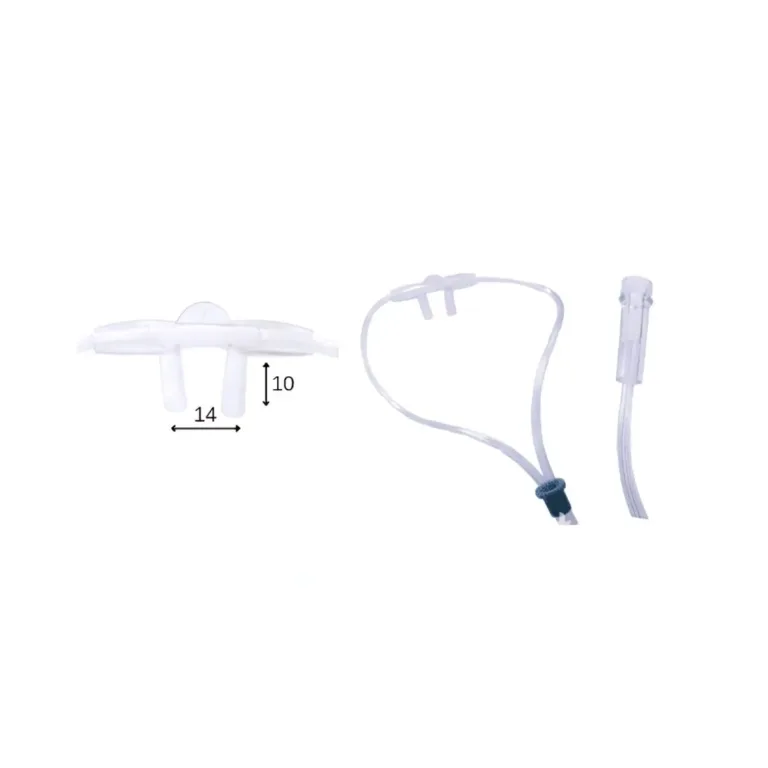
There are cannulas with flared prongs and others with a different prong design. This is a difference in configuration, not an automatic equivalence between references.
-
Construction and protection
Some neonatal cannulas are offered with a protective sleeve and others without; tubes may be of the anti-kink or flexible type. These details must appear on each reference.
-
Size
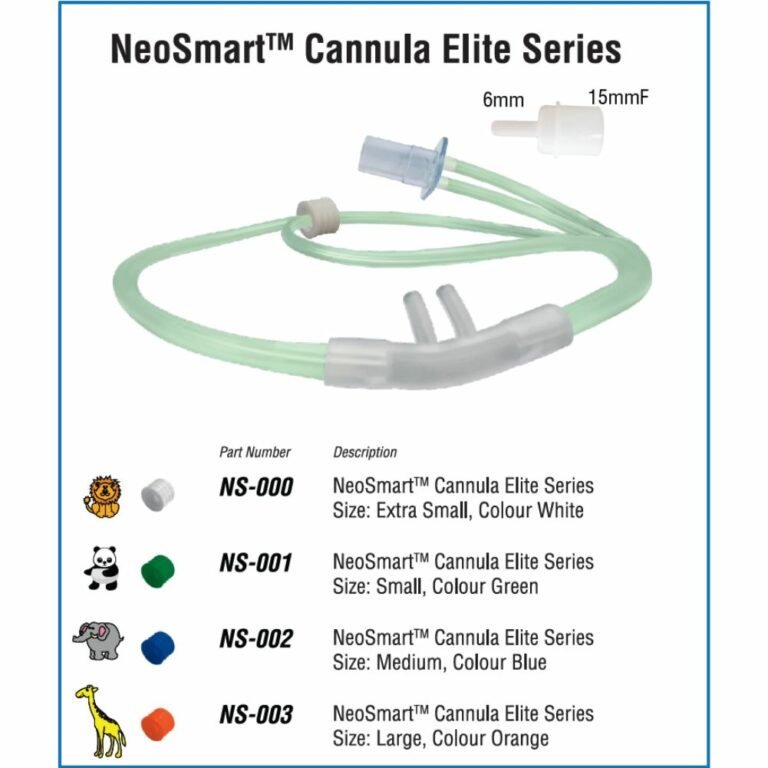
The family includes versions for adult, infant, paediatric and neonatal use, with sizes XS, S, M and L in the neonatal ones. The size forms part of the name of the reference: do not substitute one for another without checking it.
Frequently asked questions
How do I choose between a 160 cm and a 210 cm nasal cannula?
It depends on the intended distance to the oxygen source. The reference must state the exact length and the connector, because they are separate purchasing details.
How do I check whether a nasal cannula is for adult, paediatric or neonatal use?
The name of the reference distinguishes adult, paediatric, infant and neonatal; each reference is assigned to a size.
What should I look for if I need a DEHP-free cannula?
That the reference expressly declares the absence of DEHP; some nasal cannulas state this in their description.
How are nasal cannula presentations compared?
Compare the number of units per box for each reference, which may vary, and confirm the size and length before calculating the order.
Common questions
Believing that all nasal cannulas have the same connector
Not necessarily. Check the connector on each reference and that it is compatible with the oxygen source.
Assuming that the tube length is always the same
There are versions of 160 cm, 210 cm and several metres in the same family; the length must be stated on the reference and should not be assumed.
Confusing the oxygen therapy cannula with the CO2 sampling cannula
They are different products: the sampling cannula is designed to connect to a capnograph. Check the declared use of each reference before ordering.
More products in this guide
-
Neonatal American tie flow nasal cannula, flexible 160 cm DEHP-free tube – Ref. OS/12NEO (box of 50 units)
21,25 € In stockAdd to basket -
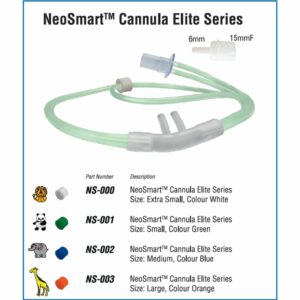
Neonatal Nasal Cannula Gafa NeoSmart Size XS without Cover · Low/High Flow Oxygen Therapy, Latex and DEHP Free, Connector 15/6 mm (Ref. NS000)
18,90 € In stockAdd to basket -
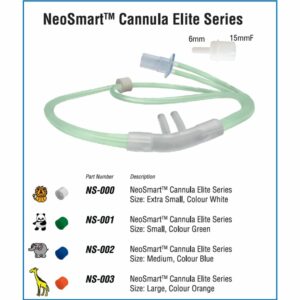
Neosmart Neonatal Spectacle Nasal Cannula, Size S, without Protective Cover – Latex-free and DEHP-free, Connector 15/6 mm (Ref. NS001)
18,90 € In stockAdd to basket -
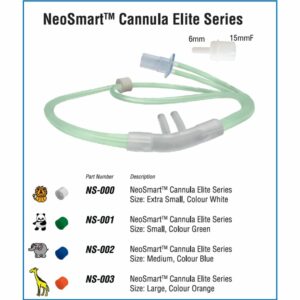
Neonatal Nasal Cannula Neosmart Goggle Size M without Protective Cover – Latex-Free and DEHP-Free, 15/6 mm Connector (Ref. NS002)
18,90 € In stockAdd to basket -
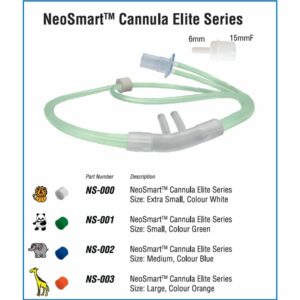
Neonatal Nasal Cannula Neosmart Size L without Protective Cover – Latex and DEHP Free, 15/6 mm Connector (Ref. NS003)
18,90 € In stockAdd to basket -
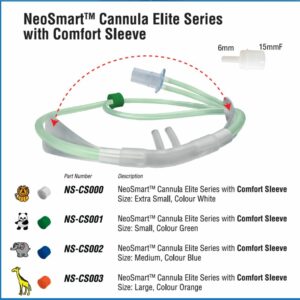
Neosmart Neonatal Nasal Cannula Size XS with Protective Cover – Latex and DEHP Free, 15/6 mm Connector (Ref. NS-CS000)
19,90 € In stockAdd to basket -
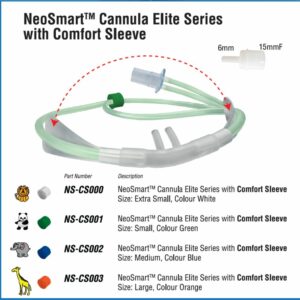
Neonatal Nasal Cannula Neosmart Gafa with Protective Cover Size S – Latex-free and DEHP-free, 15/6 mm Connector (Ref. NS-CS001)
19,90 € In stockAdd to basket -
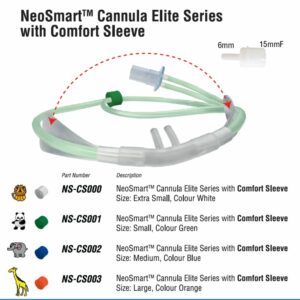
Neosmart Neonatal Nasal Cannula Spectacle Size M with Protective Cover · Latex-free and DEHP-free, 15/6 mm Connector · Box of 10 units (Ref. NS-CS002)
19,90 € In stockAdd to basket