
How to choose a medical face mask
4 products in the catalogue
Choosing a medical face mask means deciding, first of all, whom it protects and against what. A surgical mask acts as a physical barrier that minimises the direct transmission of infectious agents between staff and patient. A filtering facepiece respirator protects the wearer against particles. They are neither the same product nor the same regulatory framework: the surgical mask is a medical device conforming to standard EN 14683, whereas the filtering facepiece respirator is PPE conforming to standard EN 149.
Surgical masks are classified as Type I, Type II and Type IIR. The letter R stands for splash resistance. In the operating theatre Type II or IIR is required, while Type I is reserved for patients and other people. For respiratory protection, standard EN 149 sets the classes FFP1, FFP2 and FFP3; alongside the class you need to read the rest of the labelling: whether it has a valve, the NR or R marking, the letter D and the notified body number.

Other related families
-
 Surgical Mask
The reference family when the aim is source control and use in the operating theatre; within it the key decision is the EN 14683 type (I, II or IIR).
-
 FFP2 face mask
Covers the professional's own protection against particles; compared by EN 149 class, valve and type of fastening.
-
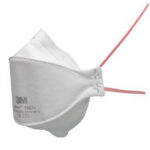 FFP3 face mask
For those seeking the highest filtration class under EN 149; you must also check the valve, NR/R marking and D on the labelling.
- Disposable Protection Groups the disposable protective material that is combined with the mask in the same procedure.
Products in this guide
- 3 1
- 5 1
- Glass 1
- Non-woven 1
- Box OF 10 1
- Box OF 20 1
- Box OF 25 1
- Box OF 50 1
- I 1
- III 1
-
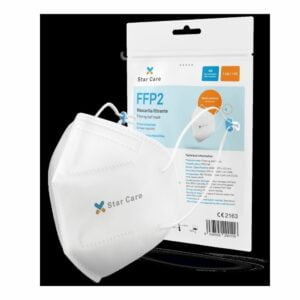
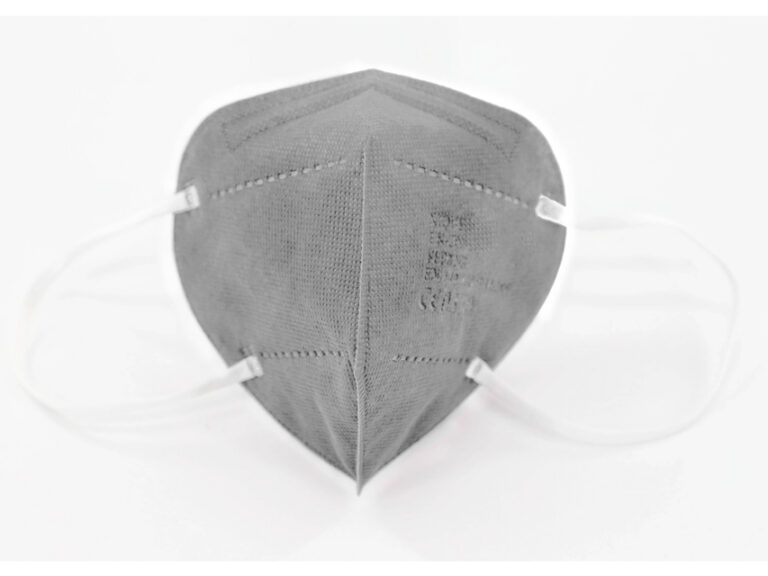
FFP2 NR Starcare face mask, rear fastening with elastic bands – Box of 10 units (EN 149:2001+A1:2009)
Out of stockRequest a quote -
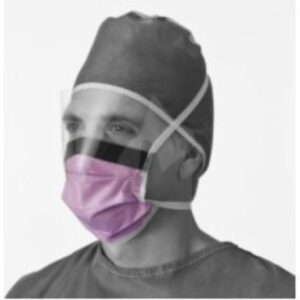
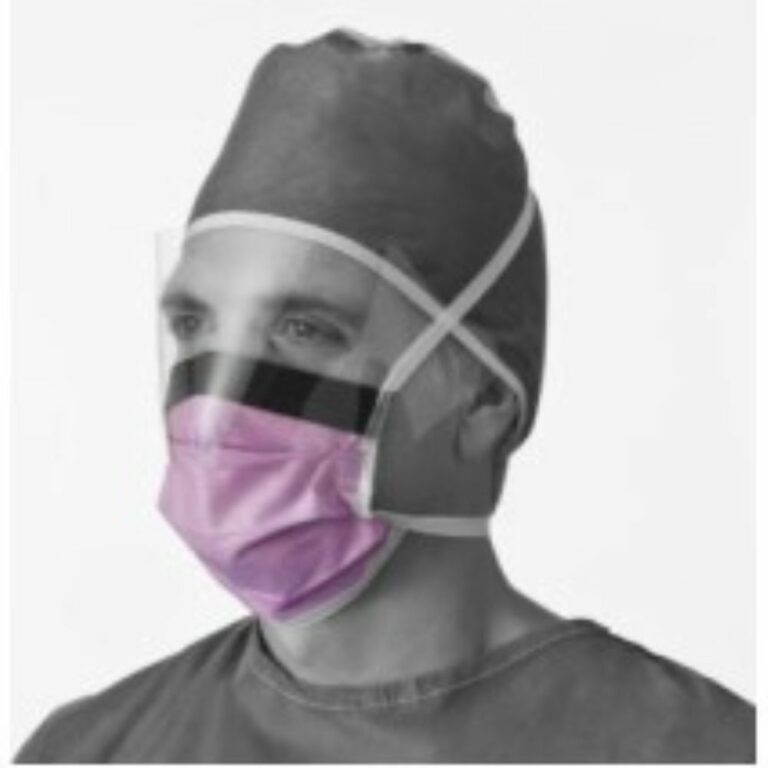
Type IIR Surgical Mask Resistant to Fluids with Polyester Face Shield and Elastic Straps – Box of 25 Units (Ref. NONE27710)
10,50 € In stockAdd to basket -

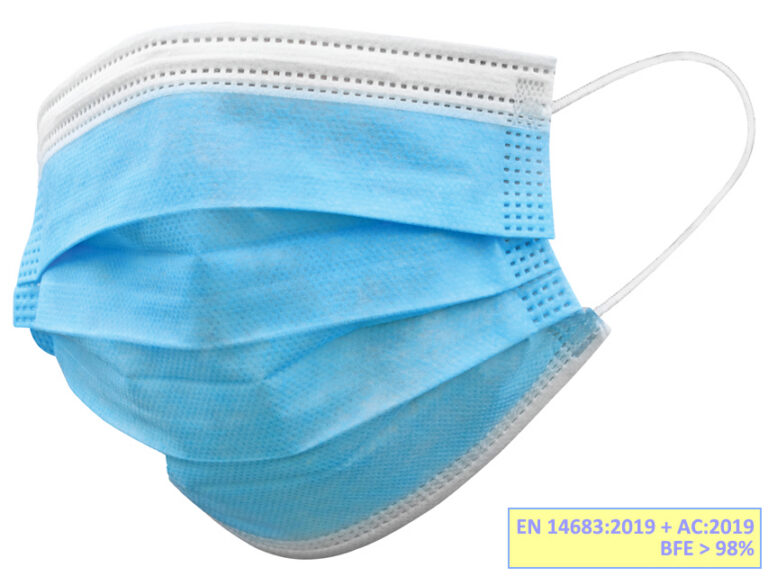
GISAFE Surgical Mask Type IIR 3-Layer with Ear Loops – BFE 98% Filtration – Adult Size
Price range: 4,56 € through 5,32 € In stockSelect options This product has multiple variants. The options may be chosen on the product page -
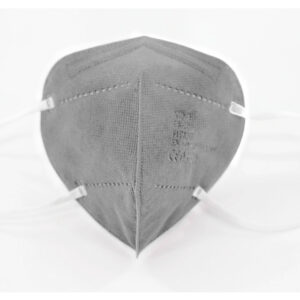
Value&Safe FFP2 face mask without valve, 5 layers, with ear loops, adult size – Box of 20 units (EN 149:2001+A1:2009)
Price range: 4,28 € through 9,41 € In stockSelect options This product has multiple variants. The options may be chosen on the product page
Buying and selection tips
-
Know whom it protects before comparing
A surgical mask protects the patient and the environment, whereas a filtering facepiece respirator protects the wearer. If you need both functions at once, the starting point is a surgical respirator, which combines EN 149 and EN 14683 Type IIR. Defining this first avoids comparing products that do not compete with each other.
-
Require the EN 14683 type, not just the word "surgical"
Type I is used for patients and other people; in the operating theatre Type II or Type IIR is required. If splashes are expected, the criterion is Type IIR, with splash resistance. Ask for the type to be stated explicitly in the product description.
-
Check the valve, NR/R, D and the notified body
On filtering facepiece respirators, the presence of a valve, the NR or R marking and the letter D are critical labelling fields, as is the four-digit notified body number. Check them before completing the purchase: it is not enough for the class to be correct.
-
Decide on the fastening with fit in mind
The shape (folded, cup or duckbill) and the type of fastening, with ear loops, ties or rear fastening with elastic straps, affect the fit. Also settle whether there is a nose clip, whether it is reusable or disposable and whether an anti-fog visor is needed.
Frequently asked questions
How do I tell a Type II surgical mask from a Type IIR before buying?
The difference is splash resistance: Type IIR requires it and Type II does not. If the intended use involves splashes, the correct choice is IIR. Ask for the type to be stated explicitly in the description.
Is an FFP2 mask enough to use in a surgical setting?
It is not enough. The FFP2 is a filtering facepiece respirator conforming to EN 149 and protects the wearer, not the patient. For dual use you need a surgical respirator, which combines EN 149 and EN 14683 Type IIR.
What is the difference between a surgical mask and a hygienic or barrier mask?
The surgical mask is a medical device conforming to EN 14683. The hygienic or barrier mask is neither a medical device nor PPE. They are therefore not interchangeable when the intended use is medical.
What should I check to make sure an FFP respirator can be sold as PPE in the European Union?
It must bear the CE marking in accordance with EN 149 or an equivalent specification assessed by a notified body, and state that body's four-digit number. Also check the actual class (FFP1, FFP2 or FFP3) and not just the commercial name.
What details should I require if staff wear the mask for many hours?
Settle the type of closure, with head ties or ear loops, because it affects comfort over long shifts, and check whether the description states that it is latex-free. All of this without giving up the EN 14683 type that the intended use requires.
Common questions
Assuming that an FFP2 and a Type II surgical mask are comparable
They are not. The surgical mask is a medical device conforming to EN 14683 and protects the patient and the environment; the FFP2 is PPE conforming to EN 149 that protects the wearer. Only a surgical respirator combines both functions.
Substituting a barrier mask for a surgical mask in a care area
A hygienic or barrier mask is neither a medical device nor PPE, so it does not replace a surgical mask or a filtering facepiece respirator in a healthcare setting.
Calling any three-layer mask "surgical"
The number of layers does not define the product: what defines it is meeting standard EN 14683 in the declared type (I, II or IIR).