
LED otoscopes: buying guide
17 products in the catalogue
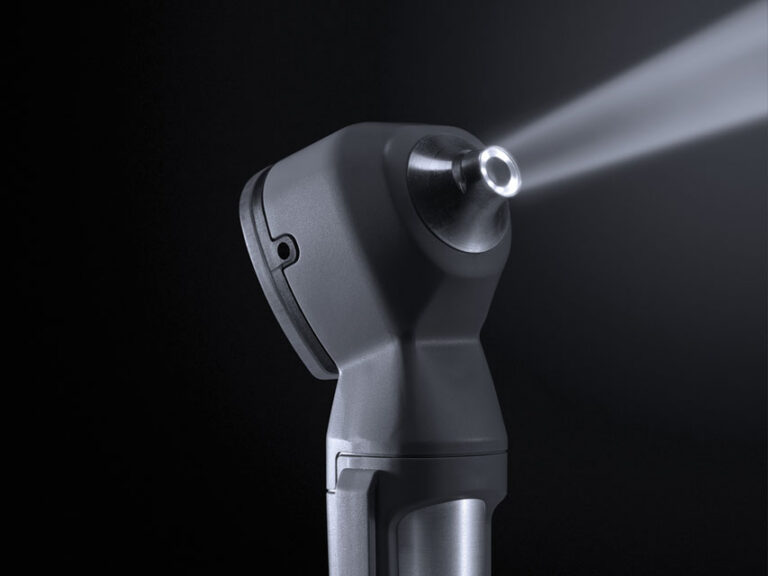
An LED otoscope is the instrument used to illuminate the external ear canal in consulting rooms, hospitals and specialist centres. LED light replaces the halogen or vacuum bulb and is available in two ways of reaching the speculum: direct illumination and fibre optic. A digital otoscope and otoscope sets with an ophthalmoscope are also included.
They differ in power supply (battery handles or handles with a USB rechargeable battery), voltage (2.5, 3.5 or 3.7 V), housing colour and contents: some kits include a bag or case and a set of specula. The purchasing decision rests on the lighting, the handle and the specula supplied. This guide sets out those criteria so that the choice suits the department's actual use.
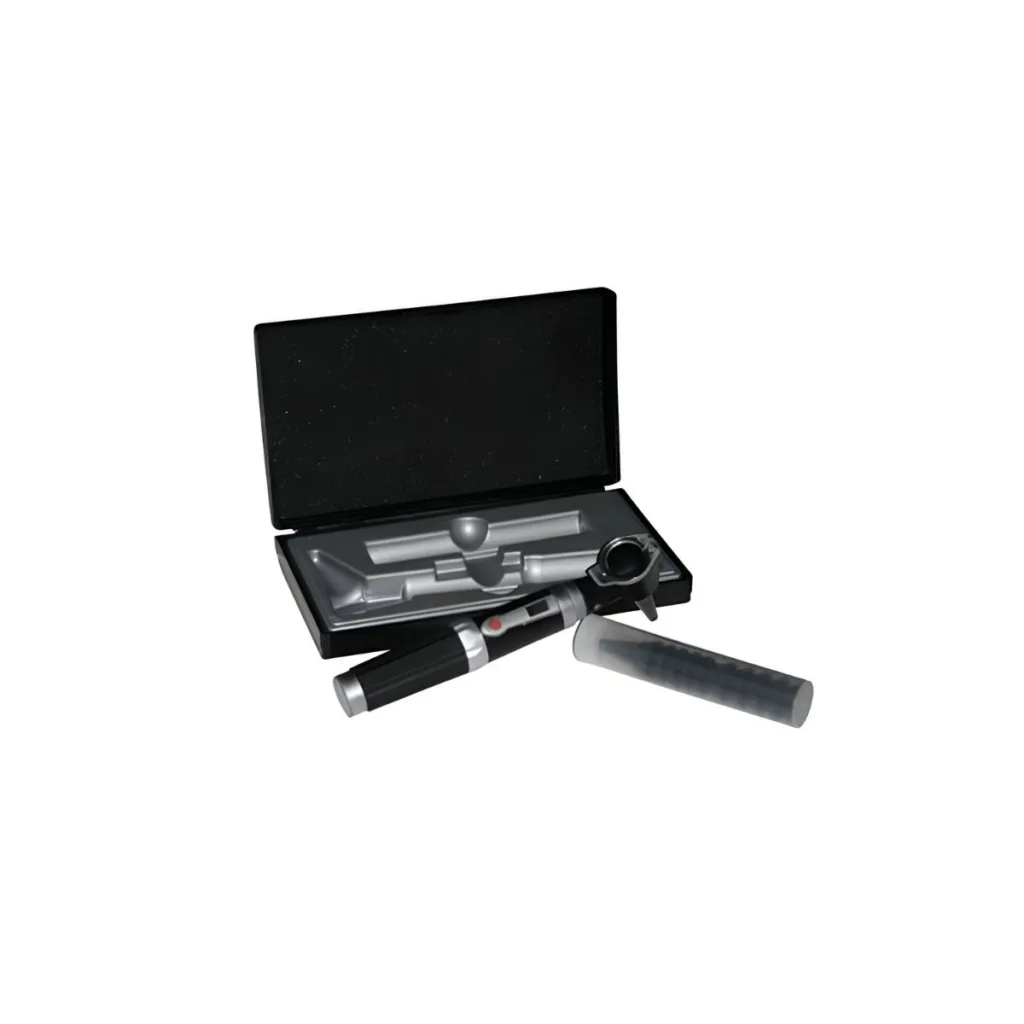
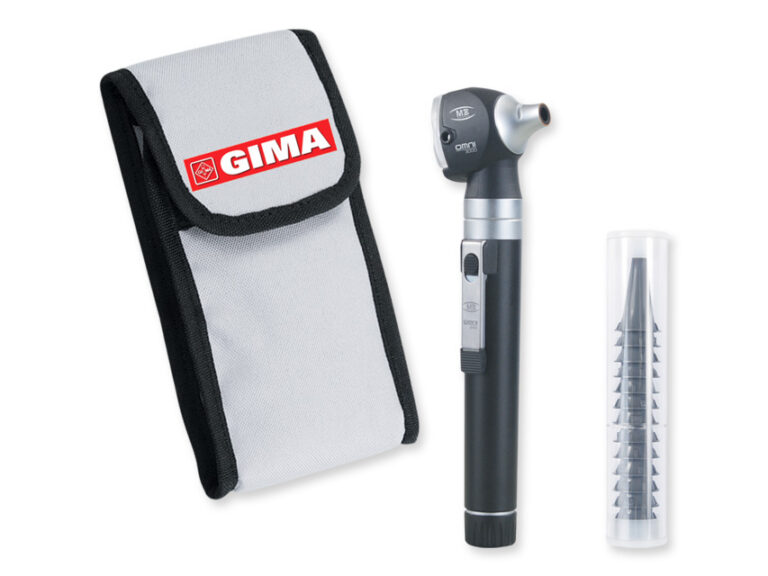
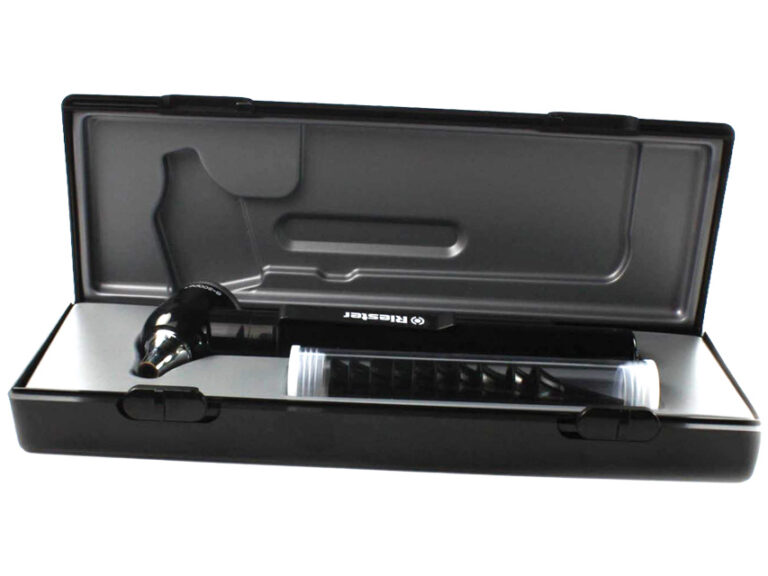
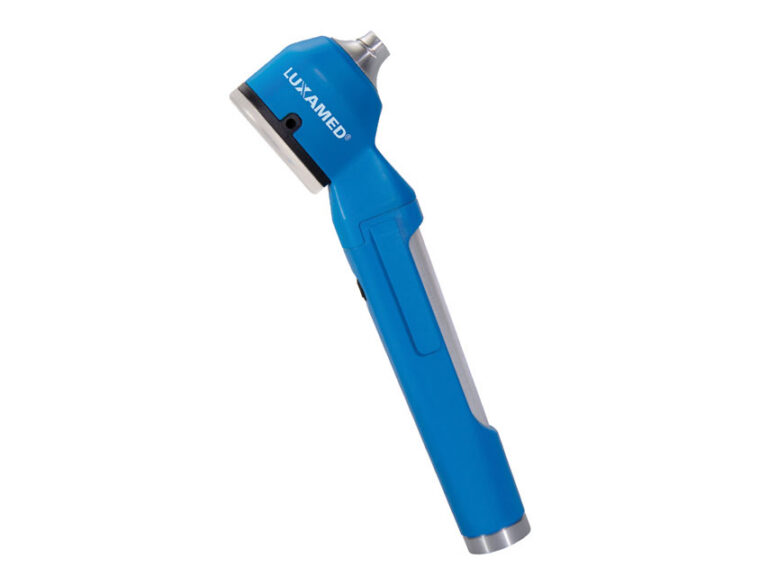
Other related families
-
 Otoscope Specula
Brings together the consumable that must be replenished continuously: otoscope specula.
- ENT Instruments Lets you complete the ENT examination kit alongside the otoscope.
-
 Oto-Ophthalmoscope Diagnostic Sets
Useful if you are looking for a set that combines otoscope and ophthalmoscope in the same case.
Products in this guide
- Batteries 5
- Rechargeable battery 3
- Unit 16
- Bag OF 14 3
- Medical device 12
- Sanitary kit 4
-
ComedLED FO Fibre Optic Otoscope with LED Light, Black, Rigid Case and 8 Reusable Specula – ENT Diagnosis
110,00 € In stockAdd to basket -
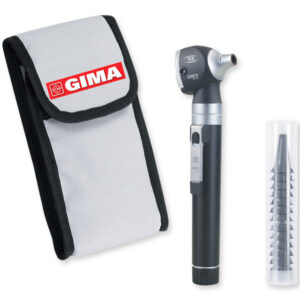
SIGMA F.O. 2.5 V LED otoscope with standard handle – Distal fibre optic, 3X lens and insufflation port (Ref. 31513, SKU GM31513-F)
Price range: 71,25 € through 85,50 € In stockSelect options This product has multiple variants. The options may be chosen on the product page -
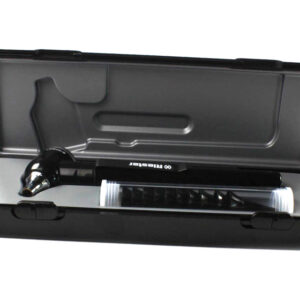
E-SCOPE® F.O. Otoscope. The manufacturer with 3.7 V LED illumination in rigid black case — Precision sealing optics with triple magnification (Ref. 31553)
118,75 € In stockAdd to basket -
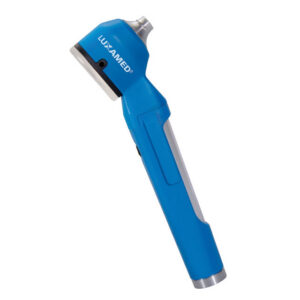
LUXAMED AURIS LED 2.5 V Otoscope – Ring LED illumination, two-colour handle and 3x magnifying lens (GM31570 Black / GM31571 Blue)
87,40 € In stockSelect options This product has multiple variants. The options may be chosen on the product page -
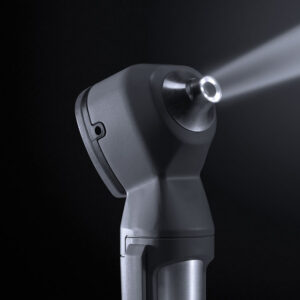
LUXAMED AURIS LED 3.7 V USB rechargeable otoscope – Black – LED ring 10,000 lux, 3X lens and insufflation port (Ref. 31572)
199,50 € In stockAdd to basket -
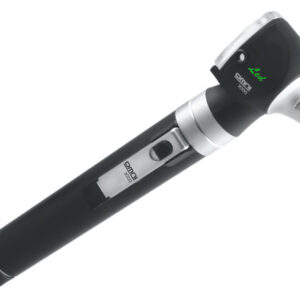
SIGMA F.O. LED otoscope 2.5 V with rechargeable handle and battery – Distal fibre optic, 3X lens, black (Ref. 31580, SKU GM31580-F)
Price range: 98,80 € through 133,00 € In stockSelect options This product has multiple variants. The options may be chosen on the product page -
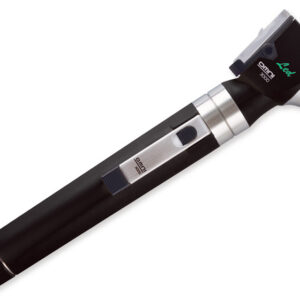
SIGMA-C LED otoscope black with bag and 14 specula – 25,000 lux illumination, 3X lens, ref. 31591 (SKU GM31591)
46,55 € In stockAdd to basket -
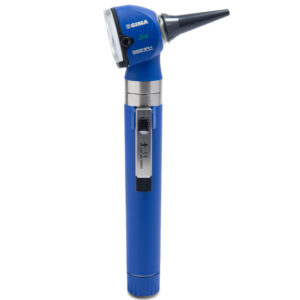
SIGMA-C LED otoscope in blue with pouch and 14 specula – 25,000 lux illumination, 3X lens, ref. 31592 (SKU GM31592)
46,55 € In stockAdd to basket
Buying and selection tips
-
Direct illumination or fibre optic
Direct illumination carries the light from a lamp located in the head; fibre optic carries it to the tip of the speculum. Compare which type of illumination each reference declares and consider which suits the department's use.
-
Ring LED versus conventional lighting
Some models declare annular LED lighting. Check in the description of each reference the type of light and the field of view it offers.
-
Magnification and lens swivel
Some otoscopes have a swivelling magnifying lens. Before deciding, check the declared magnification factor and that the swivel allows it to be operated with one hand.
-
Port for pneumatic testing
Some heads include a connection for pneumatic testing. Check whether the connector and bulb are included or ordered separately, as there are versions that only have the connection on the head.
-
Batteries, rechargeable battery and voltage
Some handles take C-type batteries and others have a USB rechargeable battery. The models in this guide declare voltages of 2.5, 3.5 and 3.7 V: check that head and handle share the same voltage and whether you need a specific charger.
-
Specula: diameter and contents
Some kits include a set of specula, for example 14 in some models, and others are ordered separately. Check how many each reference includes and their diameter, because the replenishment of consumables depends on it.
Frequently asked questions
What is the practical difference between fibre optic and direct illumination?
Fibre optic carries the light to the tip of the speculum; direct illumination uses a lamp in the head. Compare what each reference declares and consider which suits the department's use.
Can I reuse a handle I already have in the consulting room?
Only if the head and handle share the same voltage and coupling system. Confirm compatibility on the specific reference before combining them.
Is a rechargeable handle worth it compared with a battery one?
The rechargeable one avoids changing batteries, but requires its own battery and charger. The battery one works without a charging accessory. Consider the department's rate of use.
How many specula should I plan for daily work?
It depends on what the kit includes: some come with a set of specula and others do not. Calculate the department's consumption before fixing the presentation and the replacement specula.
What does the pneumatic port add when choosing the equipment?
It allows the components for pneumatic testing to be attached. If the equipment only has the connection on the head, those components will have to be added separately.
Common questions
Believing that the pneumatic port includes the bulb and connector
No: there are versions supplied with the connection for pneumatic testing but without the connector or bulb, which must be ordered separately.
Reusing single-use specula
Disposable specula are single-use. If the department prefers reusable specula, follow the manufacturer's instructions and order the corresponding reference.
Mixing handle and head voltages
Compatibility is determined by voltage: a head and a handle of different voltages are not compatible. Check the figure on each reference.
Assuming that any lamp will do as a spare
The lamp is chosen according to the specific device, because each type of otoscope uses its own. Confirm the reference before ordering.
More products in this guide
-
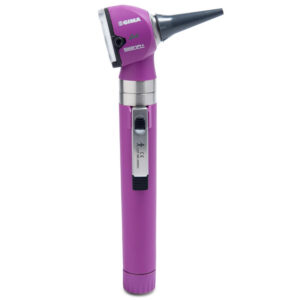
LED SIGMA-C otoscope with 14 specula included – Violet colour, with bag – Ref. 31593 (SKU GM31593)
46,55 € In stockAdd to basket -
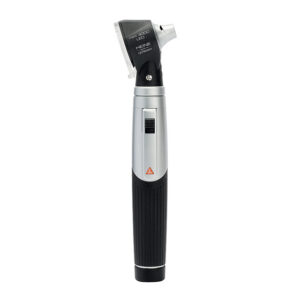
HEINE MINI 3000 LED otoscope with 2.5 V direct illumination – maintenance-free LEDHQ and battery handle (Ref. GM31660 / D-008.70.210)
Price range: 137,75 € through 196,65 € In stockSelect options This product has multiple variants. The options may be chosen on the product page -
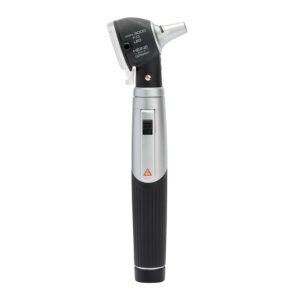
HEINE MINI 3000 F.O. LED otoscope – LEDHQ with fibre optics and reusable specula, battery handle (Ref. GM31674 / D-008.70.120)
Price range: 289,75 € through 308,75 € In stockSelect options This product has multiple variants. The options may be chosen on the product page -
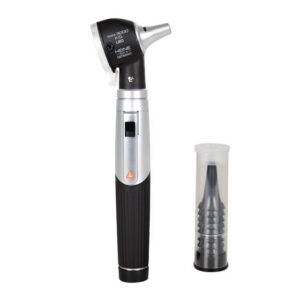
Otoscope HEINE MINI 3000 F.O. LED – LEDHQ with fibre optic and battery handle (Ref. GM31676 / D-008.70.110)
251,75 € In stockSelect options This product has multiple variants. The options may be chosen on the product page -
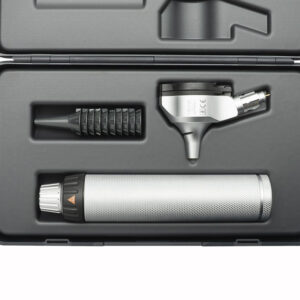
HEINE BETA 200 LED F.O. 2.5 V otoscope with battery handle and rheostat – Ref. B-141.10.118 (Ref. 31724)
612,75 € In stockAdd to basket -
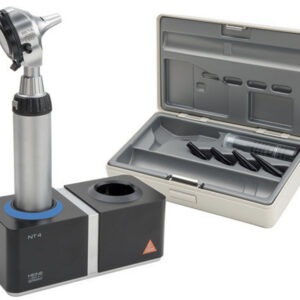
HEINE BETA 400 F.O. LED fibre-optic otoscope with rechargeable handle and NT4 charging base – Ref. B-143.24.420 (GM31728)
1.277,75 € In stockAdd to basket -
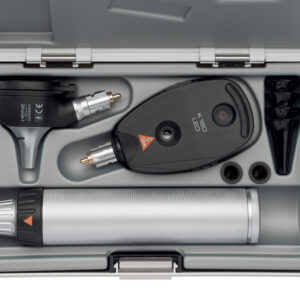
HEINE K 180 LED F.O. otoscope and ophthalmoscope set with BETA battery handle 2.5 V and single-use specula (Ref. A-279.10.118)
945,25 € In stockAdd to basket -
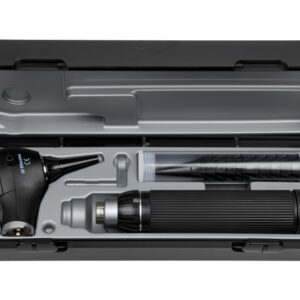
Otoscope LED Riester Ri-scope L2, 3.5 V, with type C handle for Ri-Accu L – References 3703-550 / 31830
213,75 € In stockAdd to basket