
Blue otoscope: buying guide
10 products in the catalogue
An otoscope is the diagnostic instrument used to examine the ear canal and the tympanic membrane. It consists of a head with optics and a light source, a power handle and a speculum that fits onto the tip. It is used in consulting rooms, in emergency departments and in paediatrics, always by staff trained in interpreting what they see.
The blue colour does not change the function of the device: it is a finish on the handle or head that allows the equipment to be identified by workstation, department or user. The same model may be offered in several colours and combined with different types of lighting, magnifying lenses and power systems, so colour is the last criterion and not the first. The purchase is decided mainly by compatibility between head, speculum and power supply, and by the type of lighting needed. The range includes otoscopes with halogen or LED light, with and without fibre optics, disposable specula and oto-ophthalmoscope sets.
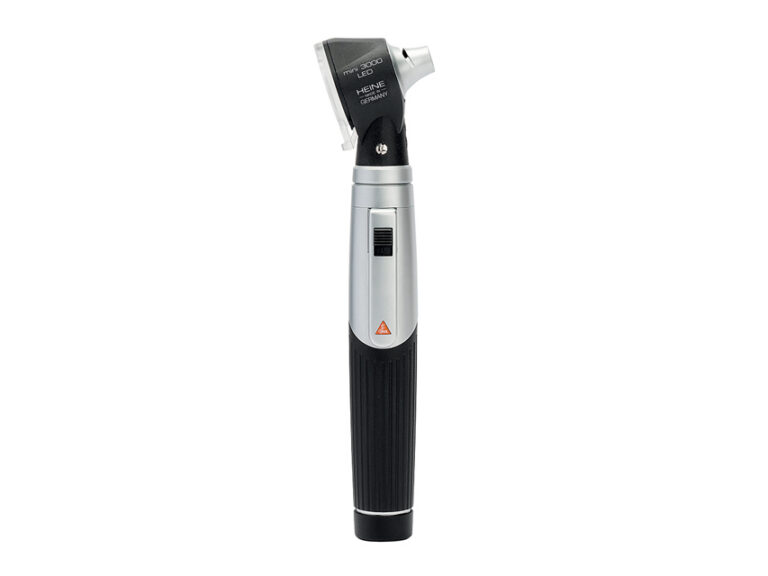
Other related families
- DIAGNOSTIC DEVICES Groups the diagnostic devices among which the otoscope is found, along with the rest of the examination equipment it is assembled with.
-
 Otoscope Specula
Specula are the consumable that is replaced most often and the one that determines compatibility with the tip of the head.
-
 Oto-Ophthalmoscope Diagnostic Sets
For those who need to cover ear and eye examination with a single case instead of two separate devices.
Products in this guide
- Unit 10
- Bag OF 14 1
- Medical device 5
- Sanitary kit 5
-
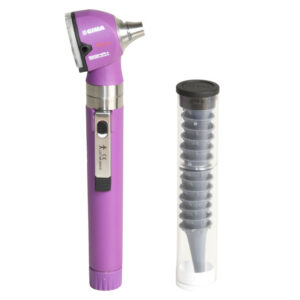
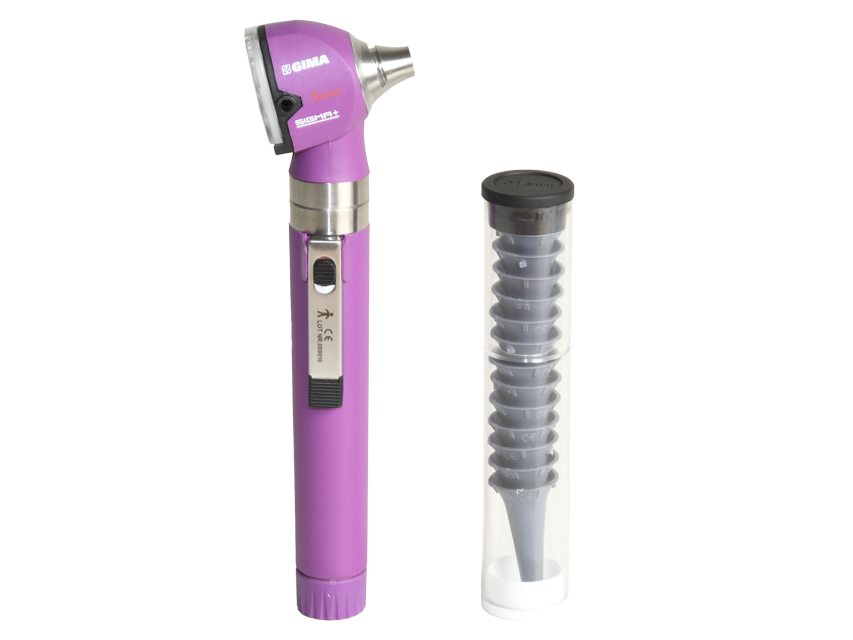
SIGMA F.O. 2.5 V otoscope with xenon-halogen light – Distal fibre optic, 3X lens and insufflation port (Refs. 31511, 31523, 31524, 31525)
Price range: 56,05 € through 65,55 € In stockSelect options This product has multiple variants. The options may be chosen on the product page -
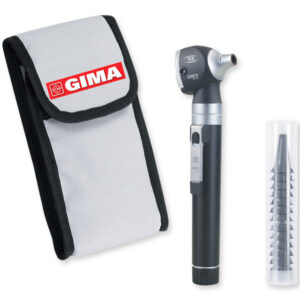
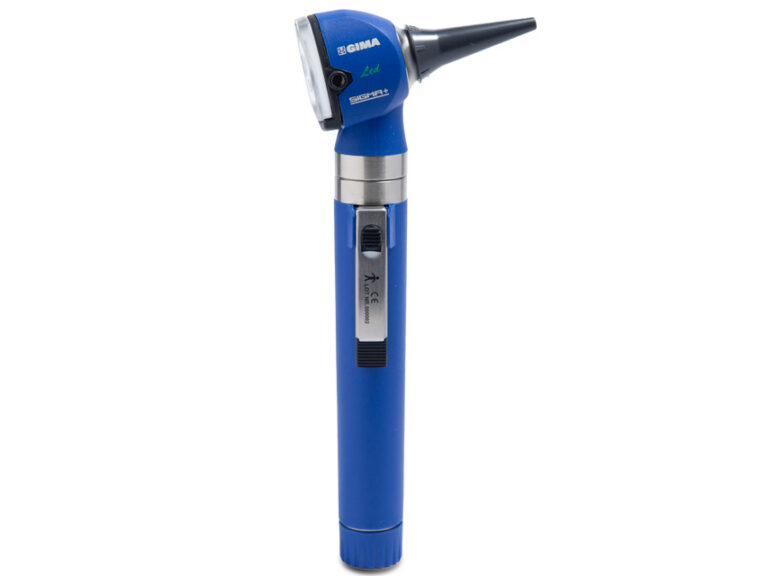
SIGMA F.O. 2.5 V LED otoscope with standard handle – Distal fibre optic, 3X lens and insufflation port (Ref. 31513, SKU GM31513-F)
Price range: 71,25 € through 85,50 € In stockSelect options This product has multiple variants. The options may be chosen on the product page -
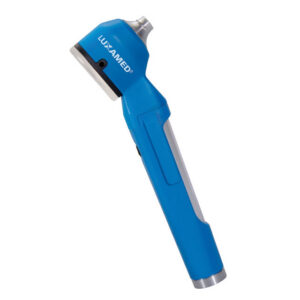
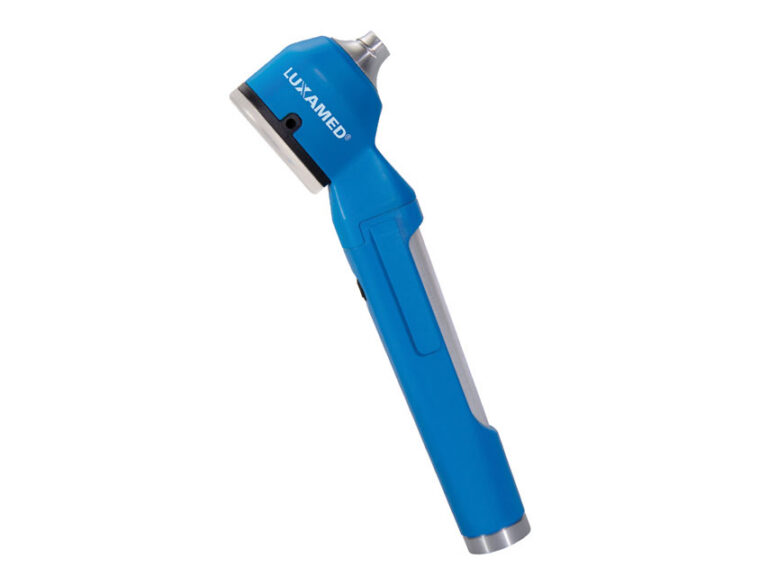
LUXAMED AURIS LED 2.5 V Otoscope – Ring LED illumination, two-colour handle and 3x magnifying lens (GM31570 Black / GM31571 Blue)
87,40 € In stockSelect options This product has multiple variants. The options may be chosen on the product page -
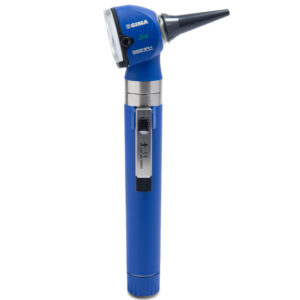
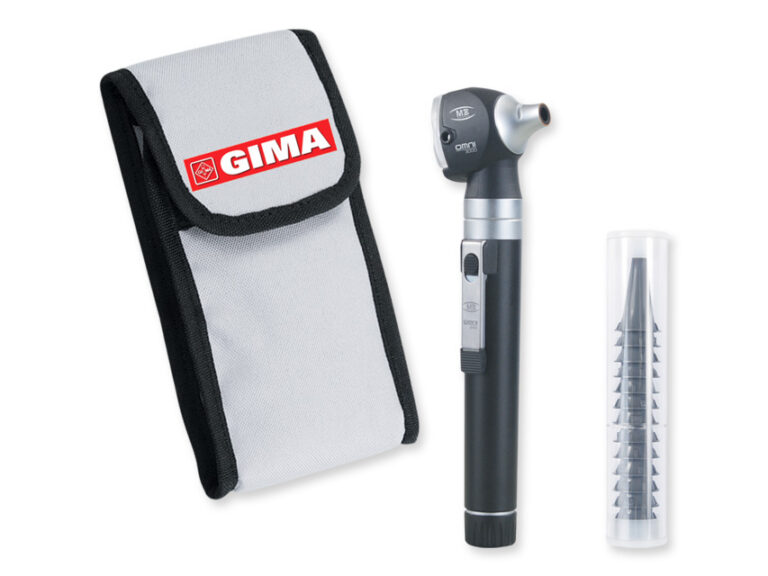
SIGMA-C LED otoscope in blue with pouch and 14 specula – 25,000 lux illumination, 3X lens, ref. 31592 (SKU GM31592)
46,55 € In stockAdd to basket -
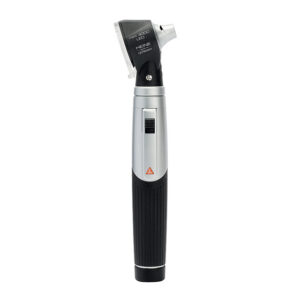
HEINE MINI 3000 LED otoscope with 2.5 V direct illumination – maintenance-free LEDHQ and battery handle (Ref. GM31660 / D-008.70.210)
Price range: 137,75 € through 196,65 € In stockSelect options This product has multiple variants. The options may be chosen on the product page -
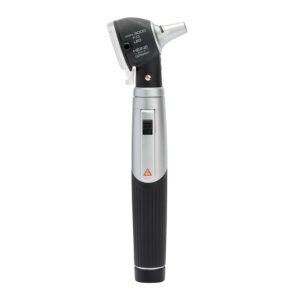
HEINE MINI 3000 F.O. LED otoscope – LEDHQ with fibre optics and reusable specula, battery handle (Ref. GM31674 / D-008.70.120)
Price range: 289,75 € through 308,75 € In stockSelect options This product has multiple variants. The options may be chosen on the product page -
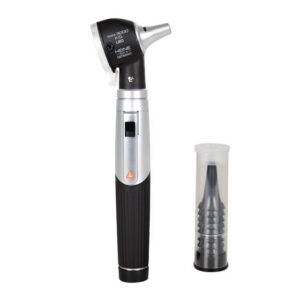
Otoscope HEINE MINI 3000 F.O. LED – LEDHQ with fibre optic and battery handle (Ref. GM31676 / D-008.70.110)
251,75 € In stockSelect options This product has multiple variants. The options may be chosen on the product page -
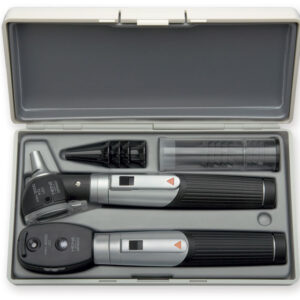
Diagnostic Oto-Ophthalmoscope Set HEINE MINI 3000 LED F.O. with LEDHQ Fibre-Optic Illumination – Pocket Ophthalmoscope and Otoscope with Rigid Case (Ref. GM31696 / GM31697 · HEINE Code D-886.11.021)
674,50 € In stockSelect options This product has multiple variants. The options may be chosen on the product page
Buying and selection tips
-
Choose the speculum diameter before the colour
Ear specula are made in several diameters, for example 2, 2.5, 3, 4, 5, 6 and 9 mm depending on the manufacturer, and some equipment accepts the 9 mm one as a nasal speculum. Having several sizes allows you to adapt to different users. The colour of the speculum is an aid to identification, not a measurement.
-
A disposable speculum is single-use
The manufacturer of disposable specula states that they are single-use per person and recommends using a different one for each ear and patient. Calculate speculum consumption when sizing the order.
-
Direct illumination, fibre optic or LED ring
Direct illumination concentrates the light with reduced reflection; fibre optic carries the light to the distal end and spreads the beam evenly; and LED ring systems dispense with traditional optics. Each solution changes the look of the field of view and the power consumption, so it is advisable to decide the type of light first and the finish afterwards. There are models with a vacuum lamp, xenon-halogen or LED.
-
Magnifying lens and field of view
Some heads have swivelling magnifying lenses, for example 3x or 4x, that move to one side to make viewing easier. Check whether the lens is fixed, swivelling or detachable, because this affects use and replacement.
-
Pneumatic testing: check the port and the bulb
Pneumatic otoscopy requires a head with a sealed system and a specific port, as well as the bulb that generates the pressure. Some otoscopes are supplied without a connector or bulb, even though the head is ready for the test. If you are going to use this test, confirm that the set includes both parts.
-
Power: batteries or rechargeable handle
Depending on the model, handles take C-type batteries, nickel-metal hydride or lithium-ion rechargeable batteries, or mains power via a plug-in handle. Some pocket mini-otoscopes run on AA batteries, which simplifies carrying but means planning for replacements. The handle voltage must match that of the head.
Compatibility
- Disposable specula of 2.5 mm and 4 mm
- Some fibre-optic otoscopes come with disposable specula of 2.5 mm and 4 mm; check that the fitting diameter matches the tip of the head before buying the bag.
- Reusable and disposable specula of the same diameter
- The same diameter may exist in a reusable version and a disposable version; the disposable one is single-use. For reusable ones, follow the manufacturer's instructions.
Frequently asked questions
What is the difference between a direct-illumination otoscope and a fibre-optic one?
With direct illumination the light is projected onto the canal with reduced reflection; with fibre optics the light is transmitted to the distal end and creates a more uniform beam with fewer reflections. It is advisable to compare them according to the intended use.
How many disposable specula should I reorder for a very busy department?
The disposable speculum is single-use and one per ear and patient is recommended, so consumption grows with activity. Calculate reorders according to the number of examinations and check the diameter that each otoscope accepts.
Which speculum diameters should I have available in the consulting room?
Ear specula are made in diameters such as 2, 2.5, 3, 4, 5, 6 and 9 mm; the 9 mm one is intended for nasal examinations on equipment that accepts that tip. Having at least two sizes allows you to see different users.
Is a battery handle or a rechargeable one better for an otoscope in daily use?
It depends on the workstation: there are handles for C-type batteries, plug-in mains handles with a rechargeable battery and AA-battery mini-otoscopes. If the device moves between rooms, the rechargeable one avoids depending on replacements; if it is fixed, the mains handle is an option.
What does an oto-ophthalmoscope diagnostic set offer compared with buying just the otoscope?
The set brings together in one case an ophthalmoscope for eye examination and an otoscope for the ear, with a reinforced plastic casing. It is the option when both examinations need to be covered with a single piece of equipment.
Common questions
Believing that the colour blue identifies a specific model
Colour is a finish: the same model may be offered in several colours and the same colour may correspond to models with different lighting, lenses and power supply. Fix the performance first and the finish afterwards.
Assuming that any speculum fits any otoscope
The speculum fixes onto the tip of the head and must match in diameter and in fixing system; some heads use their own locking mechanism operated by turning. A speculum of a different size may not stay attached.
Assuming that the pneumatic test is included
Not always: there are otoscopes suitable for pneumatic testing that are supplied without a connector or bulb, and the bulb may be ordered separately. It is advisable to check the contents of the set before deciding.
Reusing a disposable speculum
The disposable speculum is single-use and is not intended to be reused. If a reusable speculum is needed, choose it expressly and follow the manufacturer's instructions.
Choosing a single speculum diameter for all users
Several diameters are available and not all equipment accepts all tips. Check which sizes each otoscope includes and whether you need to complete them with a separate order.
More products in this guide
-
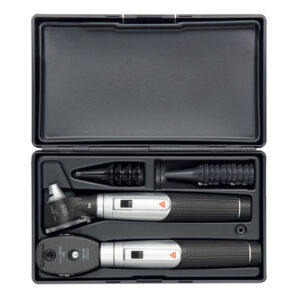
HEINE MINI 3000 LED Direct Illumination LEDHQ Oto-Ophthalmoscope Diagnostic Set – Pocket Ophthalmoscope and Otoscope with Rigid Case (Ref. GM31698 / GM31699 · HEINE Code D-872.11.021)
518,70 € In stockSelect options This product has multiple variants. The options may be chosen on the product page -
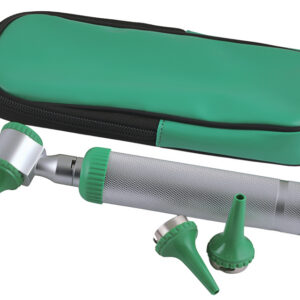
Parker Colour diagnostic otoscope in green – Bayonet connection, 2.5 V lamp and 3x magnifying lens (Ref. 31435 | SKU GM31435-F)
57,95 € In stockSelect options This product has multiple variants. The options may be chosen on the product page