
Gauze swabs: buying guide
91 products in the catalogue
Gauze is a widely used medical device in wound care, clinics and operating theatres. It is used for cleaning and covering wounds and for absorbing exudate, and its presentation ranges from the sachet with a few units to high-volume boxes designed for facilities with heavy consumption. Most cotton gauze is made from absorbent cotton, although non-woven versions (TNT) also exist, with differences in softness and absorption.
Before deciding on a purchase, settle four variables: material, sterility, number of layers and format. The layers determine thickness and retention: a 4-ply gauze swab is not the same as a folded 8-ply pad. The format includes open size, folded size and units per sachet, and for theatre swabs it is also worth considering the radiopaque thread.
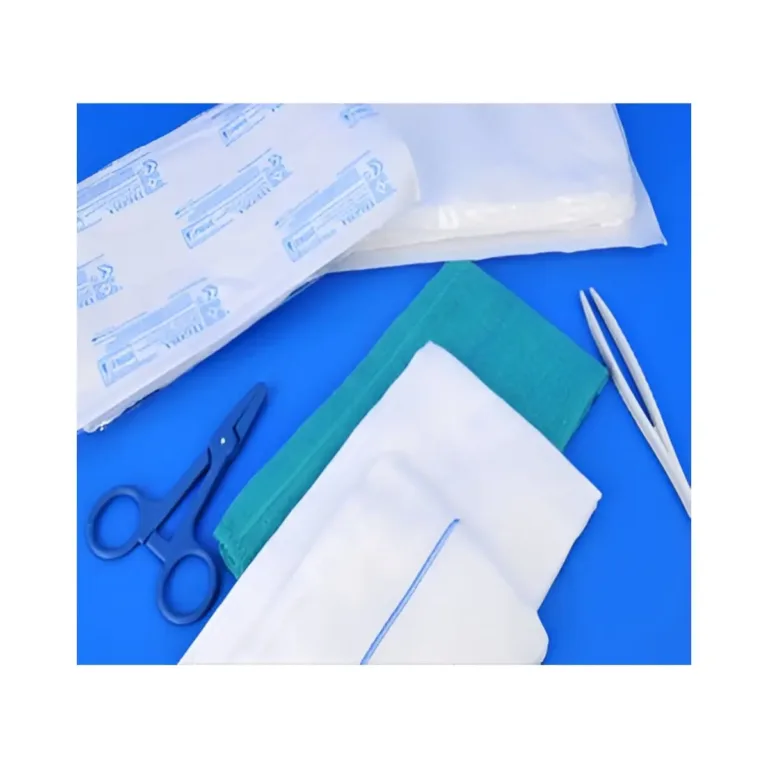
Other related families
-
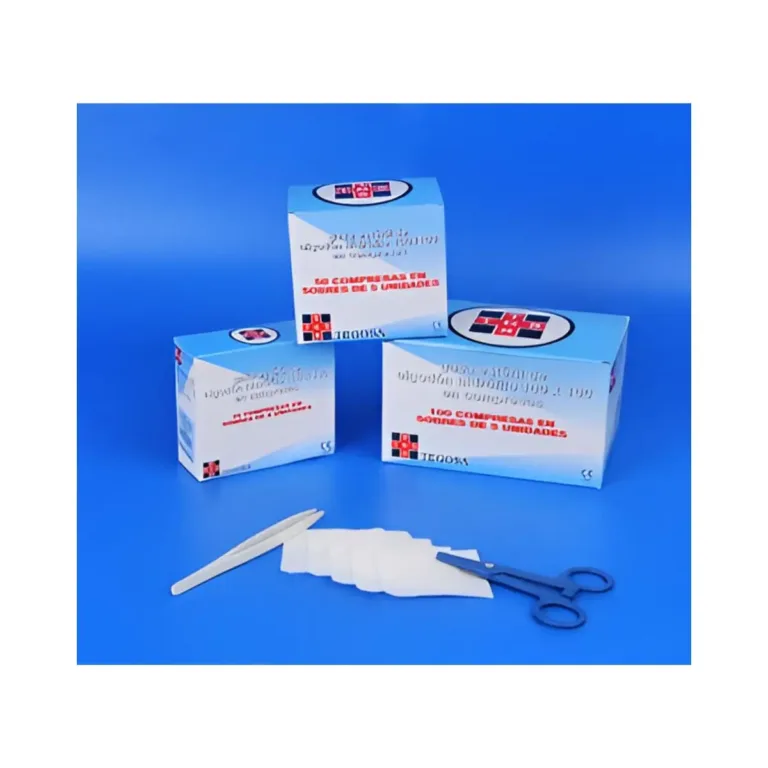
 Wound Dressings
Groups the wound care material with which gauze is combined in daily practice.
-
 Cotton
Brings together absorbent cotton gauze, the main material in this family.
-
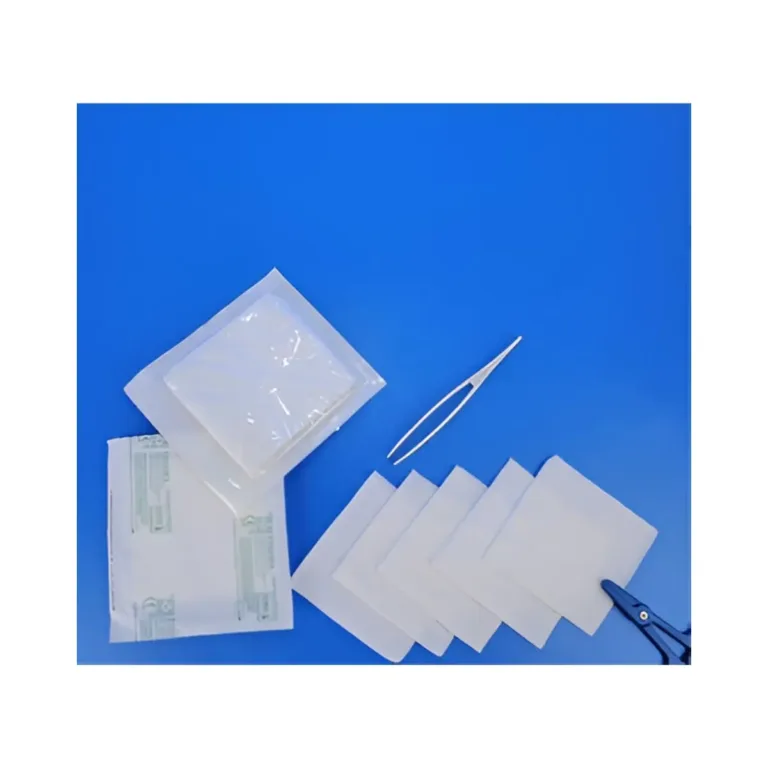
 Sterile Gauze Pack
Case formats with sterile gauze already prepared for wound care.
-
 Non-woven Gauze
A non-woven alternative to traditional cotton.
-
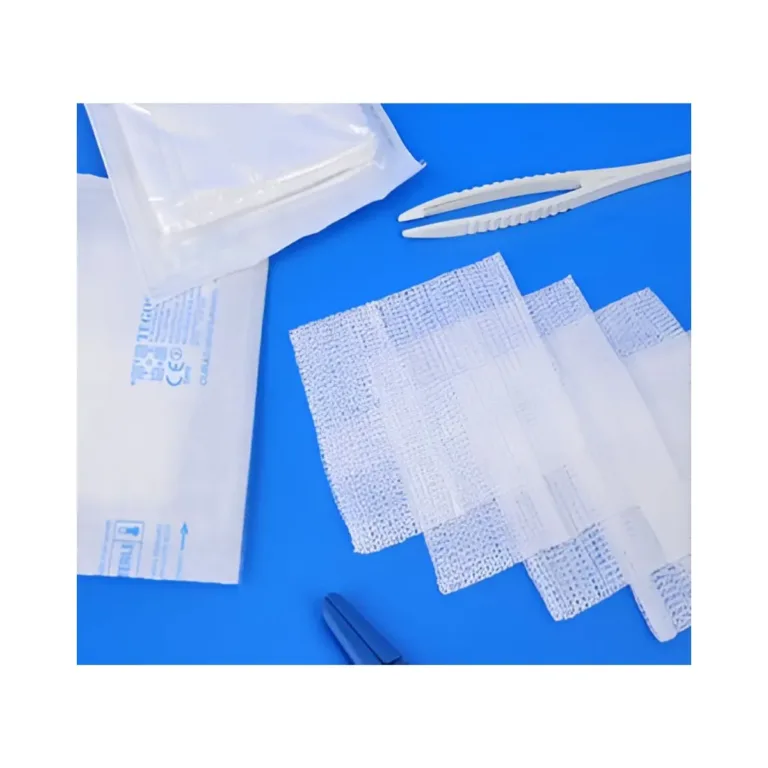
 17-Thread Gauze Pad Pack
17-thread gauze swabs in sachets, with and without X-ray contrast.
-
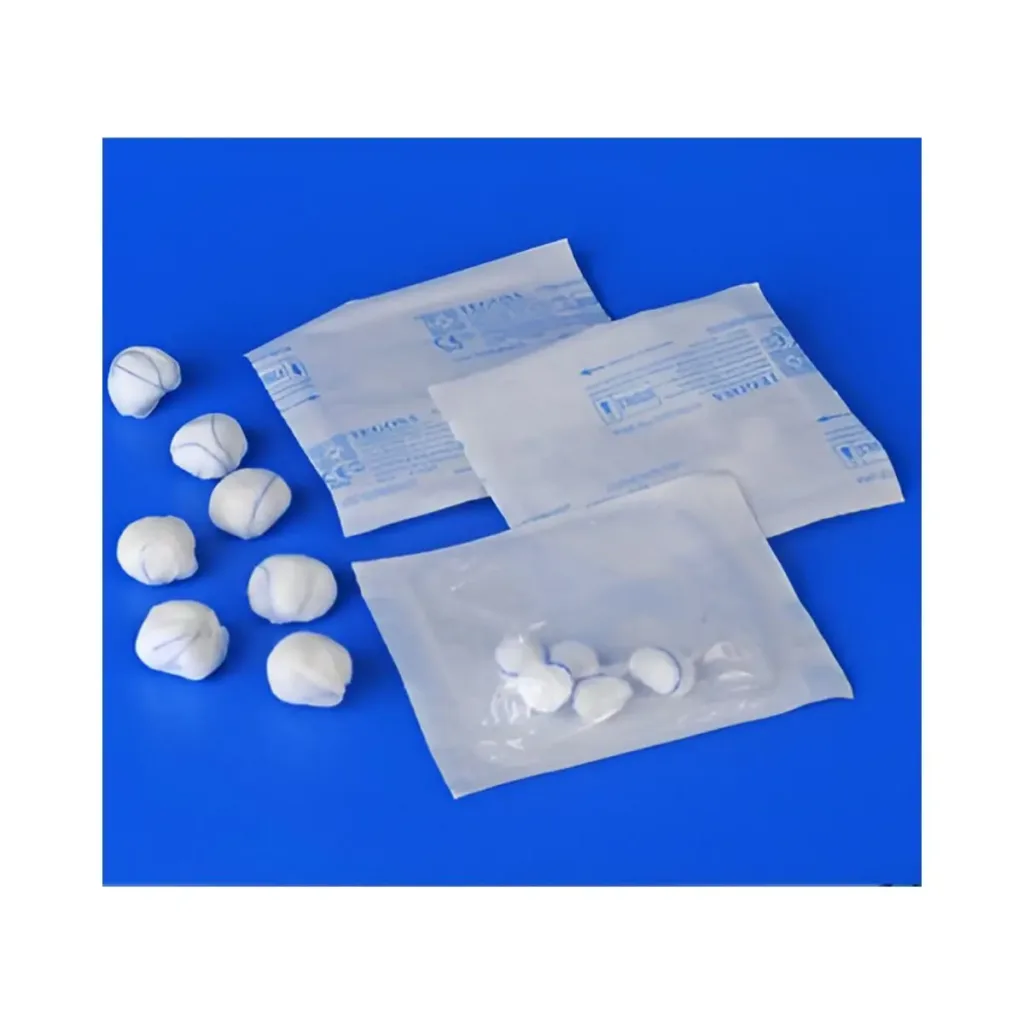
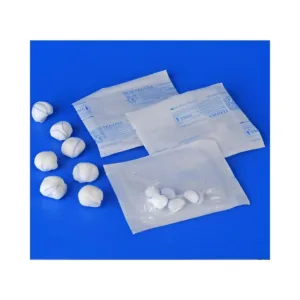
 Gauze Ball
Gauze balls, a surgical product that shares its raw material with flat gauze.
Products in this guide
- Cotton 78
- Non-woven 11
- Polyester 10
- Viscose 9
- Cellulose 1
- Paper 1
- Polypropylene 1
- Sterile 45
- Non-sterile 24
- Box OF 1000 11
- Box OF 100 10
- Box OF 12 10
- Box OF 50 5
- Box OF 60 4
- Bag OF 25 3
- Box OF 150 3
- Box OF 2000 3
- 4 6
- 6 1
- 8 6
- 12 5
- 16 4
-
Gauze swab with radiopaque contrast thread (X-ray) 20 x 20 cm – 100% hydrophilic cotton, surgical globular dressing | Box of 100 units | Ref. 51103
14,14 € In stockAdd to basket -
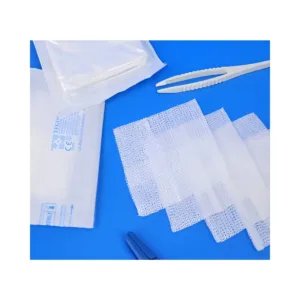
Pouch with 5 Sterile Mesh 1 Gauze Swabs 20 × 20 cm with Radiopaque Thread (RX) – Ladder-Resistant Hydrophilic Cotton | Ref. 32904
12,74 € In stockAdd to basket -
Gauze swab 15 x 15 cm with radiopaque thread (RX) – 100% hydrophilic cotton, globular dressing – Box of 100 units | Ref. 51102
12,91 € In stockAdd to basket -
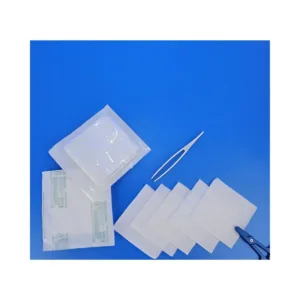
Sterile non-woven gauze swabs (TNT) 20 × 20 cm, folded 10 × 10 cm, 4 layers · Reference 1186.01 · SKU 0237151
30,75 € In stockAdd to basket -
Sterile gauze swabs of non-woven fabric (NWF) 15 x 15 cm – 4 layers, folded 7.5 x 7.5 cm | Sachet of 5 units (SKU 51351)
35,48 € In stockAdd to basket -
Sachet with 10 Mesh 1 Cotton Gauze Swabs 20 × 20 cm, Sterile with Radiopaque Thread (RX) – Ref. 32906
64,89 € In stockAdd to basket -
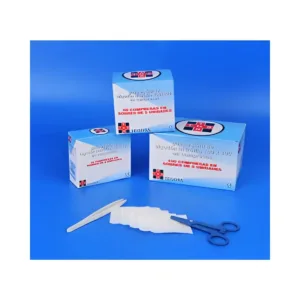
Dressings of sterile gauze 6 × 8 cm · Straight gauze 20 threads · 8 layers · 100% hydrophilic cotton · 400 cm² (16 × 25 cm) · Box of 20 cases × 100 units (2,000 units) · Ref. 50015
68,13 € In stockAdd to basket -
Afteratos sterile gauze 6 × 8 cm (rectilinear gauze 20 threads · 8 layers · 400 cm²) – Box of 25 cases of 50 units | Ref. 50016
46,92 € In stockAdd to basket
Buying and selection tips
-
Sterility: individual sachet or non-sterile pack
Sterile gauze is supplied in sachets of a few units (2, 5 or 10) or in dispenser boxes, so that the pack is opened at the time of use. Non-sterile versions are intended for cleaning and basic general use. Checking this before completing the order avoids mixing the two formats on the same shelf.
-
Open size and folded size
The same gauze has two measurements: that of the open swab and that of the folded pack. Some 20 x 20 cm gauze is supplied folded to 9 x 10 cm, and some 20 x 40 cm with a fold of 8 x 10 cm. Knowing both figures tells you whether the sachet fits the dressing trolley.
-
Absorbent cotton or non-woven fabric
Absorbent cotton gives absorption and a soft texture, and is the main material in wound care gauze. Non-woven fabric (TNT) is offered in 4-ply versions with folded edges. The choice depends on whether you want textile behaviour or a single-use non-woven.
-
Pack format and units per sachet
Formats range from sachets of a few units to packs of 100 units, and the outer packaging is organised in packs per box. The larger the volume per pack, the fewer openings, but the more material is exposed if it is not used in time. Matching the format to the real pace of the clinic or theatre suite avoids stock-outs and waste.
Compatibility
- Gauze balls
- Balls of cotton gauze shaped into a globular form, with or without radiopaque contrast thread. They share their raw material with flat gauze, but do not replace it.
Frequently asked questions
How do I decide between sterile and non-sterile gauze for the clinic?
It depends on whether the use requires a sterile barrier: sterile gauze comes in sterile sachets or dispensers, and non-sterile gauze is intended for cleaning and basic general use. If both uses exist in the same facility, keep the two formats separate.
What is the difference between thread count and number of layers?
They are two different figures: threads describe the density of the gauze weave, while layers indicate how many fabrics make up the swab. A 17-thread gauze can be supplied in 8 layers.
When is gauze with radiographic contrast worthwhile?
When the product is going to be used in the operating theatre and needs to be located by X-ray, as with laparotomy swabs. In clinic wound care there are sterile gauze swabs without X-ray detection.
What sachet format suits a clinic with many dressings a day?
Sachets of a few units limit the material opened, while packs of 100 units and outer packaging by the box are designed for high consumption. Cross-check the number of daily dressings against the units per sachet before settling the quantity.
What technical details should I ask the supplier for on cotton gauze before buying?
Weight per square metre, warp and weft thread count and breaking load, as well as sterility and number of layers. Requesting them in writing allows equivalent products to be compared.
Common questions
Confusing folded size with open size
They are not the same figure: a 20 x 20 cm gauze can be supplied folded to 9 x 10 cm, and a 20 x 40 cm one with a fold of 8 x 10 cm. If only one of the two measurements is looked at, the order may not fit the trolley or the intended sachet.
Assuming that all sterile gauze is radiopaque
X-ray detection is a characteristic separate from sterility: there are sterile 12-ply gauze swabs that are not X-ray detectable. If it is needed for surgical counts, look for it expressly in the specifications.
Using a gauze ball as if it were flat gauze
The ball is made from absorbent cotton gauze, but is shaped into a globular form, with or without radiopaque contrast thread. It does not replace flat gauze.
Believing that non-woven and cotton behave the same
TNT gauze is offered in 4 layers with folded edges, while absorbent cotton provides absorption. They are two different materials and are best not interchanged on the same order line.
More products in this guide
-
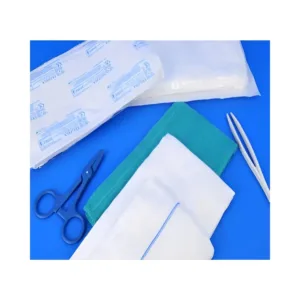
S/5 Sterile straight gauze pad 17 threads 45×45 cm – 2 layers sewn with radiological thread RX, 100% hydrophilic cotton UNE-EN 14079 (SKU 37094, box of 50 sachets × 5 units)
65,42 € In stockAdd to basket -
S/4 Sterile Gauze Pad 17 Threads 45×45 cm with Radiopaque Thread RX – 2 Sewn Layers, 100% Absorbent Cotton UNE-EN 14079 | Box of 50 Sachets × 4 units (SKU 37093)
53,25 € In stockAdd to basket -
S/5 Sterile gauze pad 17 threads 45×45 cm – 4 layers sewn with radiopaque RX thread, 100% hydrophilic cotton UNE-EN 14079, class IIa medical device (SKU 37374, box of 50 pouches × 5 units)
104,72 € In stockAdd to basket -
S/2 Gauze Pad 17 Threads 45×45 cm Sterile with X-ray Thread – 4 Plies Stitched and Overlocked, 100% Hydrophilic Cotton UNE-EN 14079, Class IIa (SKU 37371)
44,62 € In stockAdd to basket -
Gauze pad 17 threads 45×45 cm sterile with RX – S/4, 4 stitched layers, 100% absorbent cotton
84,80 € In stockAdd to basket -
Gauze Compress 17 Threads 45×45 cm Sterile with Radiopaque Thread RX – S/2, 2 Sewn Layers, 100% Hydrophilic Cotton (SKU 37091)
44,50 € In stockAdd to basket -
Sterile gauze compress 17 threads 45×45 cm with radiopaque RX thread – S/1, 4-ply stitched, 100% hydrophilic cotton (SKU 37370)
23,29 € In stockAdd to basket -
Gauze Pad 17-Ply 45×45 cm Sterile with X-Ray Detectable Thread – S/1, 2 Layers Stitched, 100% Absorbent Cotton (SKU 37090)
15,42 € In stockAdd to basket