
Blood glucose lancets: buying guide for capillary sampling
12 products in the catalogue
The blood glucose lancet is a single-use device with a very fine needle or blade, used to prick the skin and obtain a micro-sample of capillary blood. It is used in clinics, on hospital wards and in home care.
The supply range includes lancets with a safety housing and self-destruct mechanism, lancets for lancing devices and flat stainless steel blade versions. The gauge, depth of penetration, identification colour, activation type and packaging all vary, so two similar references may differ considerably. The criteria to check are gauge and depth, sterilisation, safety mechanism and fit in the lancing device.



Other related families
-
 Safety Blood Lancets
Brings together lancets with a safety housing and self-destruct mechanism for capillary sampling by healthcare staff.
-
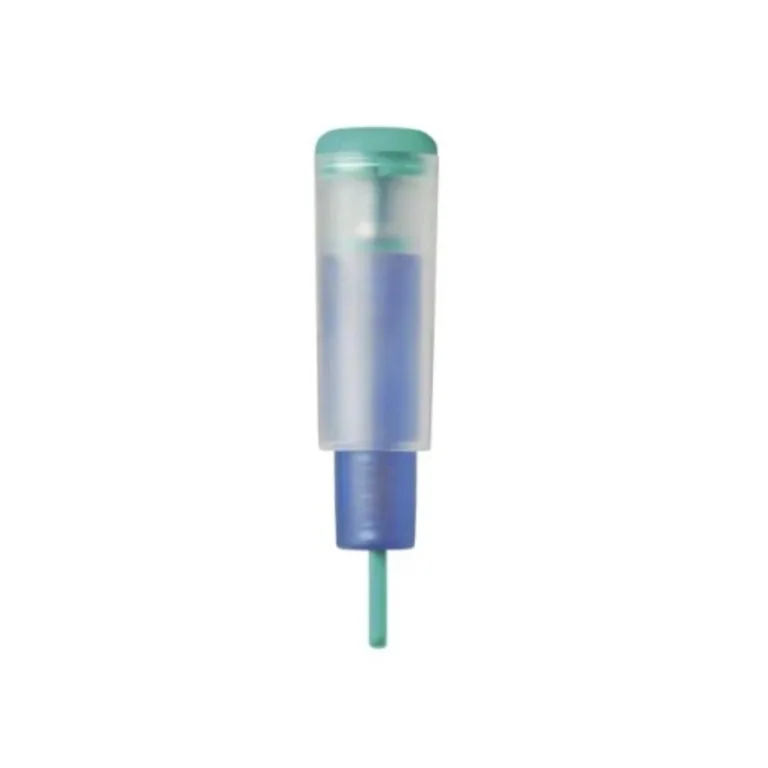
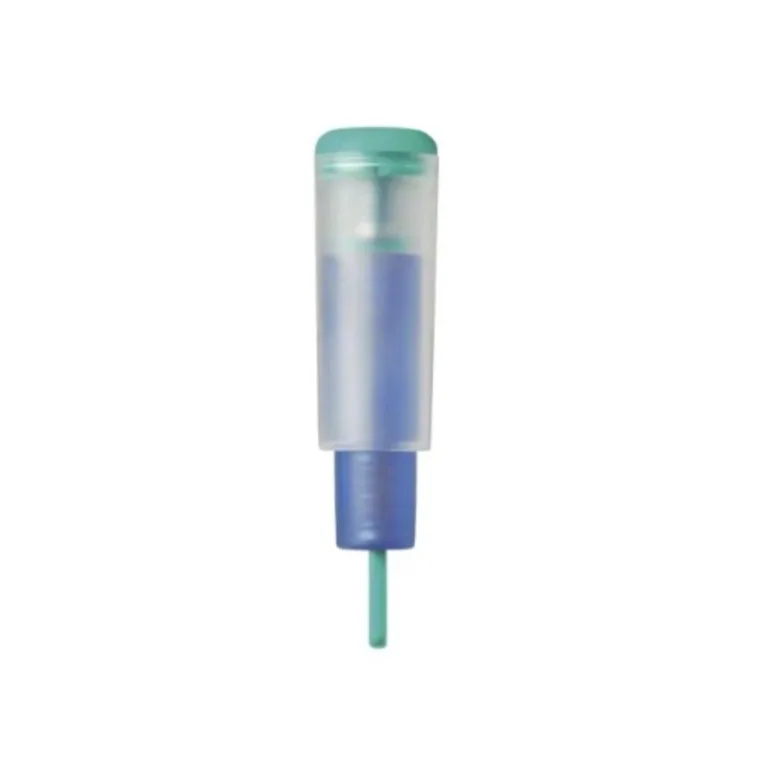
 Braun Safety Lancets
Groups references from the same manufacturer in several gauges and a neonatal format, useful if you want to concentrate your supply with a single supplier.
-
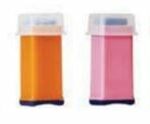 Rectangular Blood Lancets
Rectangular-profile models with different penetration depths.
-
Lancing Devices
These are the devices that hold the lancet; it is worth reviewing them before settling on the model to buy.
-
 Economy Blood Lancets
A flat stainless steel blade option, nickel-free, for high volumes of capillary sampling.
Products in this guide
- 18 g 1
- 21 g 1
- 25 g 1
- 26 g 1
- 28 g 1
- 30 g 1
- 32 g 1
- Box OF 100 8
- Box OF 200 4
-
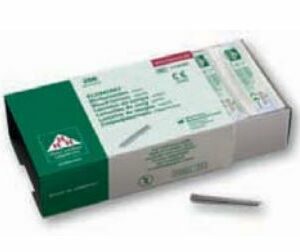
Sterile Economy Blood Lancet – Flat Blade in Nickel-Free Stainless Steel for Capillary Puncture and Blood Glucose, German Manufacture | Box of 200 units (Ref. 1110101)
4,30 € In stockAdd to basket -
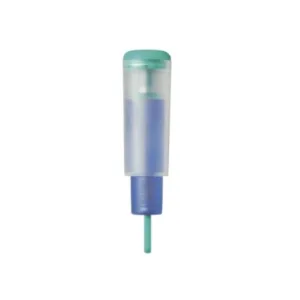
Safety Lancet Solofix Safety Universal 21G × 1.8 mm Braun – Sterile Single-Use Capillary Puncture | Ref. 6183000
43,60 € In stockAdd to basket -
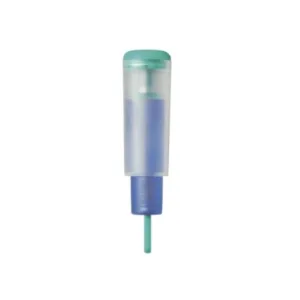
Solofix Safety Fine Safety Lancet 25G × 1.5 mm Braun – Sterile Single-Use Capillary Puncture | Ref. 6183010
43,60 € In stockAdd to basket -
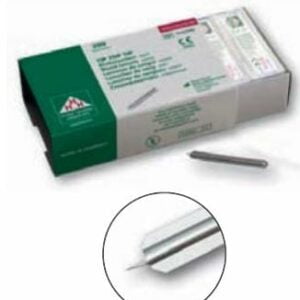
Sterile Blood Lancet Tip Top Tip – Special Tip and Anatomical Shape, German Manufacture, Single Use (Ref. 0658015)
8,44 € In stockAdd to basket -
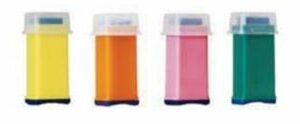
Rectangular sterile safety blood lancet 26G (0.45 mm) × 1.8 mm yellow – Capillary puncture for blood glucose, box of 100 units. Ref. 1110130
17,34 € In stockAdd to basket -
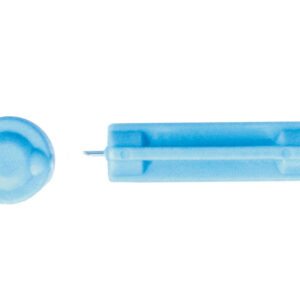
Sterile 28G Lancets for Lancing Device – Capillary Puncture for Blood Glucose Monitoring, Box of 100 units (Ref. 23916)
2,57 € In stockAdd to basket -

Sterile 30G Blood Lancets for Lancing Devices – Box of 100 units (Ref. 23918)
2,57 € In stockAdd to basket -
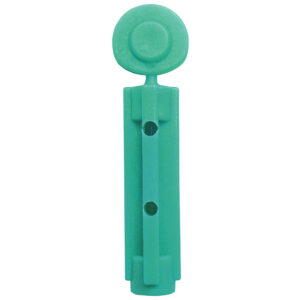
Sterile 32G Lancets for Lancing Device – Capillary Puncture for Blood Glucose Meter, Box of 100 units (Ref. 23921)
2,57 € On orderAdd to basket
Buying and selection tips
-
Separate gauge from penetration depth
The gauge in G units describes the thickness of the needle, whereas depth is expressed in millimetres and measures how far the tip goes in. They are independent figures: there are 21 G models with 1.8 mm penetration and others of 25 G with 1.5 mm. Cross-checking both values before deciding avoids ordering a model that does not match what you are looking for.
-
Check the colour and flow code
In some ranges, capillary lancets are grouped into high flow, normal flow and micro flow, and each group has an identification colour. Knowing that correspondence in the chosen range lets you quickly find the equivalent reference, but it must be confirmed for each manufacturer.
-
Check sterilisation and needle protection
In some models the needle is sterilised by gamma radiation and protected by a sterility cap. On receipt, check that the pack is intact, the cap is undamaged and the housing is closed.
-
Consider the closed housing and self-destruct mechanism
In safety models, a closed needle housing keeps the tip hidden and the self-destruct mechanism prevents the device from being reused. Both are designed to reduce the risk of needlestick injury and are relevant in units with high staff turnover.
-
Confirm the fit in the lancing device
The lancet for a device sits in the lancet holder, and not all models are interchangeable. Before committing to a bulk order, it is worth testing the fit with the device used in the unit.
-
Standardise the activation system
Some safety models are activated by a push button and others by contact. If several systems coexist in the same unit, staff alternate between different actions; standardising the activation type by trolley or by department simplifies handling.
Compatibility
- Lancing device with lancet holder
- Check that the lancet sits firmly in the lancet holder of the device used in the unit.
Frequently asked questions
How do I tell a high-flow lancet from a micro-flow one in the order?
By the gauge and identification colour declared by the chosen range. Confirm the correspondence in the specifications of each reference before ordering.
What is the difference between a safety lancet and one for a lancing device?
The safety lancet has its own integrated housing and activation, whereas the lancet for a lancing device sits in a lancing device. When choosing one or the other, you need to decide whether your institution already has compatible devices.
What should I check before confirming the order?
The gauge, depth of penetration, identification colour, packaging and form of the puncture system, which may be a needle or a blade. Add sterilisation and the activation type.
What should I check when receiving a sterile lancet?
That the pack is intact, the sterility cap is still in place and the housing remains closed. If anything is wrong, that unit must not be used.
What does the self-destruct mechanism offer in a high-consumption institution?
In the models that have it, it prevents the device from being reused, which simplifies control of supplies and staff safety in units with high turnover.
How do I organise the store so the correct reference is found without errors?
Rely on the colour code of the range and label each box with gauge and penetration, not just colour. Keep safety references separate from those used with a lancing device.
Common questions
Believing the colour of the lancet identifies the manufacturer.
The colour is an identification code for size and flow within each range, not for the brand. It must be checked in the specific range.
Assuming any lancet fits any lancing device.
The fit depends on the lancet holder. Some manufacturers publish a list of devices with which certain lancets have been verified, so check compatibility before a bulk order.
Assuming depth can be deduced from the gauge.
Gauge and depth are different parameters and each reference declares its own; both values must be read separately.
More products in this guide
-
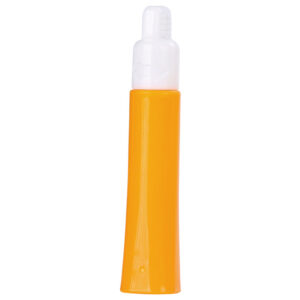
Round Automatic Safety Lancets – Sterile Capillary Puncture (18G–28G) | Box of 100 units
12,83 € In stockSelect options This product has multiple variants. The options may be chosen on the product page -
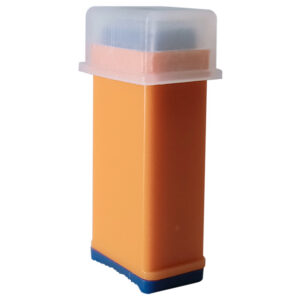
Square automatic safety lancets (SQUARE SAFETY LANCETS) · 21G, 23G and 28G · Box of 100 units · Refs. GM24461 / GM24463 / GM24465
14,73 € In stockSelect options This product has multiple variants. The options may be chosen on the product page -
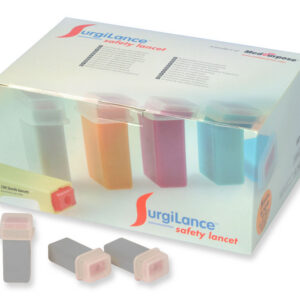
Automatic Safety Lancet Surgilance™ 23G – Capillary Puncture 1.8 mm, Grey Colour | Box of 100 units (Ref. 24514)
19,95 € In stockAdd to basket -
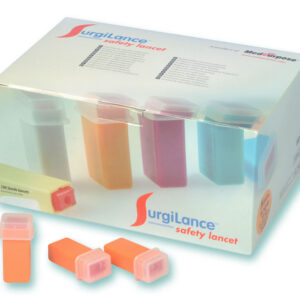
Automatic Safety Lancet Surgilance™ 22G – Capillary Puncture 2.2 mm, Orange | Box of 100 units (Ref. 24515)
19,95 € In stockAdd to basket