
Description
1. Commercial Introduction
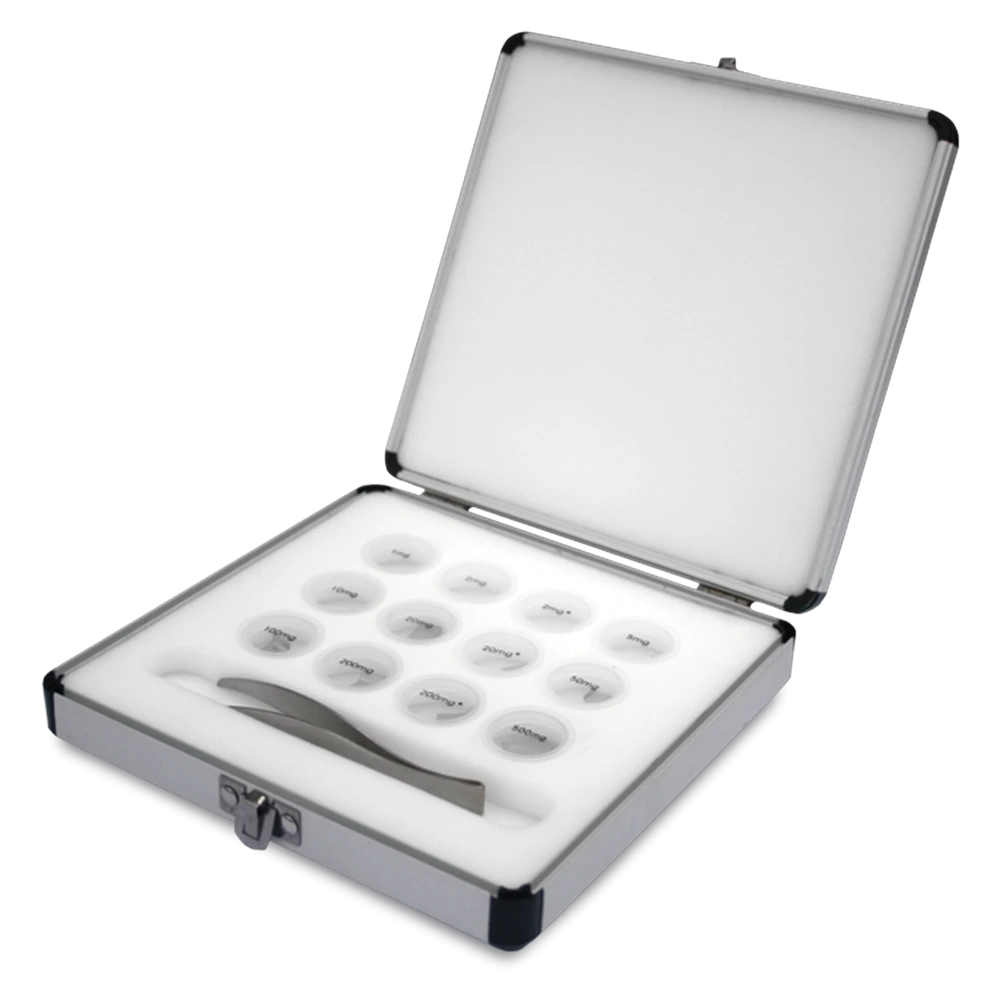
Complete your metrology equipment with the class F1 standard weight fraction set, the usual reference for the calibration and verification of precision and analytical balances. This set of 12 units, with values from 1 mg to 500 mg, allows you to cover the lower points of the weighing scale, where tolerances are most stringent, ensuring exact weight combinations together with the whole-value weights.
At Cahnos we supply it as a complete set, with the option of adding an ENAC calibration certificate to ensure the official traceability of your process and facilitate compliance with quality standards such as ISO 9001, ISO 17025, GLP or GMP.
2. Technical explanation
Standard weight fractions are reference masses with nominal values below 1 gram, designed to complete weight combinations together with whole-value weights. Their role is critical in verifying the low calibration points of the scale, where any deviation compromises the accuracy of analytical results.
Class F1 is characterised by very strict maximum permissible errors, defined in the international recommendation OIML R111, which makes it the reference class for precision balances with readings from 0.1 mg to 1 mg. To preserve their class, it is essential to handle the fractions with forceps, gloves or a technical cloth, avoiding manual contact that would alter the mass, and to keep them protected from dust, moisture and surface contamination.
3. Technical Specifications
| Field | Detail |
|---|---|
| Description | Precision fraction set, class F1, range 1 mg – 500 mg. |
| Family | Precision fractions |
| Class | F1 |
| Range | Class | Presentation |
|---|---|---|
| 1–500 mg | F1 | Set of 12 units |
Maximum permissible tolerances class F1 (OIML R111):
| Nominal value | Maximum permissible error (±) |
|---|---|
| 1 mg | ± 0.020 mg |
| 2 mg | ± 0.020 mg |
| 5 mg | ± 0.020 mg |
| 10 mg | ± 0.025 mg |
| 20 mg | ± 0.03 mg |
| 50 mg | ± 0.04 mg |
| 100 mg | ± 0.05 mg |
| 200 mg | ± 0.06 mg |
| 500 mg | ± 0.08 mg |
| Aspect | Detail |
|---|---|
| Reference standards | OIML R111 |
| Optional documentation | ENAC calibration certificate |
4. Equivalences and Cross-References
Class F1 in accordance with OIML R111 is a recognised international standard, so this fraction set is directly comparable to the standard mass series of the main weighing instrument manufacturers on the market (Kern, Sartorius, Ohaus, Adam Equipment, Radwag, PCE, Troemner and similar), as well as to the specifications of ASTM E617 in applications where the customer works with that standard.
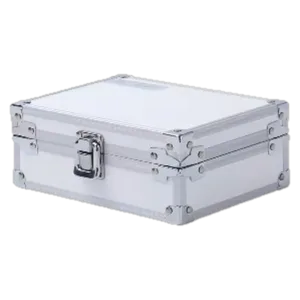
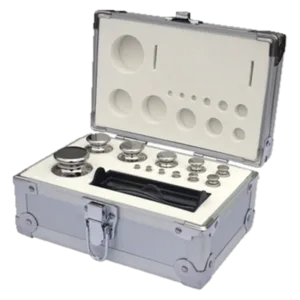
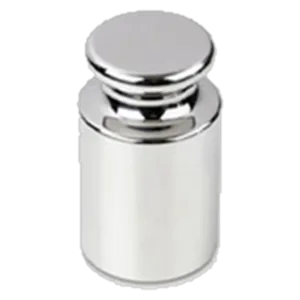
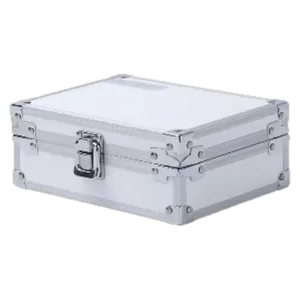
Within the Cahnos catalogue, this fraction set is complemented by the class F1 standard weight in stainless steel (PESA-F1INOX) and in chrome-plated brass (PESA-F1LATON) for the whole values, as well as by the complete F1 set with chrome-plated brass fractions (JX-F1-LATON-CF). If greater accuracy is required, it can be combined with class E2 (FRACCIONES-E2, PESA-E2INOX); for scale verification and industrial control, with classes M1 (FRACCIONES-M1, PESA-M1LATON, PESA-M1HIERRO) and M2 (PESA-M2LATON, JX-M2-LATON-SF). For storage and transport, the aluminium cases from the accessories range are recommended (ACC-MALETIN-ALUMINIO-100G and higher capacities).
5. Selection tips and variants of interest
- Combine this fraction set with the class F1 standard weights of whole values (PESA-F1INOX or PESA-F1LATON) to cover the entire calibration range of your balance, from 1 mg up to the equipment’s capacity.
- Select the verification points according to the instrument’s capacity: it is recommended to calibrate at least at 10%, 50% and 100% of the load, and to check the low values with these fractions.
- If your process requires audits or official traceability, request the optional ENAC calibration certificate: each piece is issued with its conventional mass value, expanded uncertainty (k=2) and corrections.
- Always handle the fractions with forceps, gloves or a technical cloth and keep them in their case, in a dry, protected place, to preserve their precision class.
- For readings of 0.01 mg or lower, class E2 or E1 may be required (check availability); for scale verification and industrial control, classes M1 and M2 are more economical alternatives.
Our technical-commercial team can advise you on the most suitable configuration for your laboratory or metrology service.
Reviews
There are no reviews yet.