
Description
1. Commercial Introduction
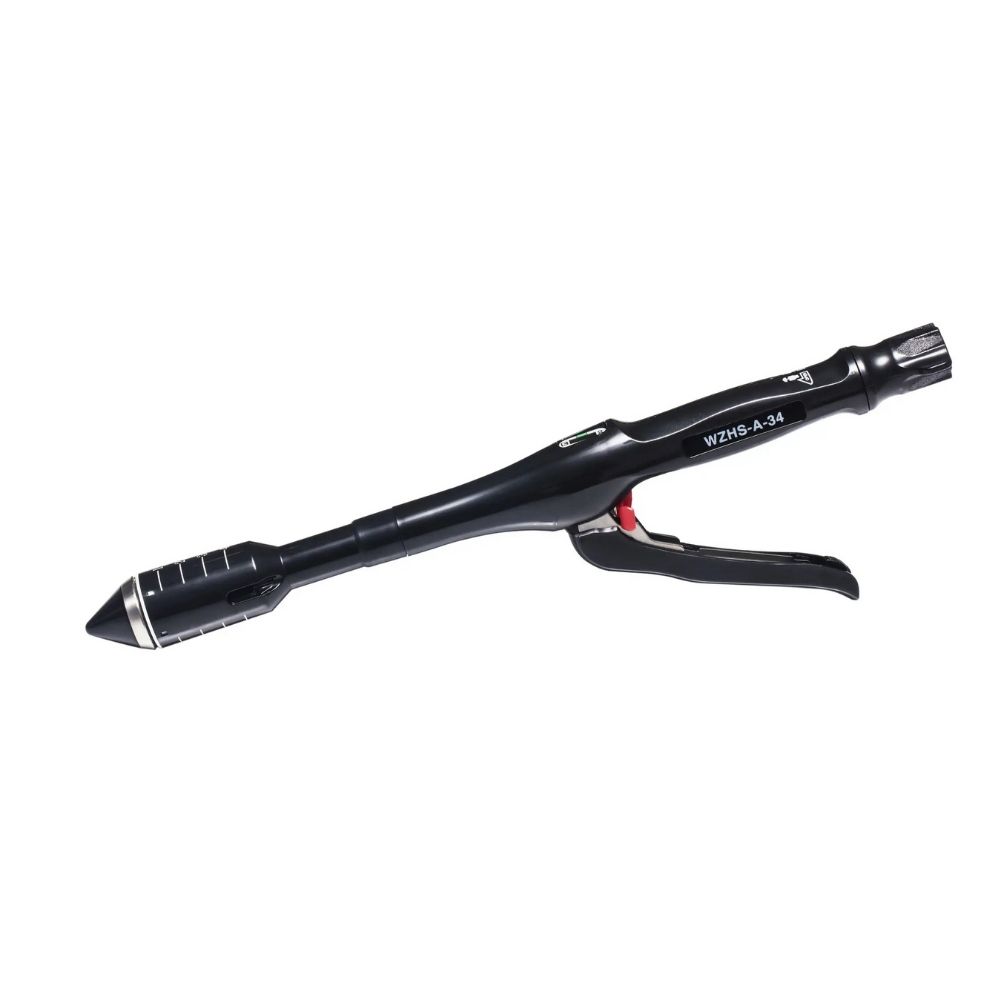
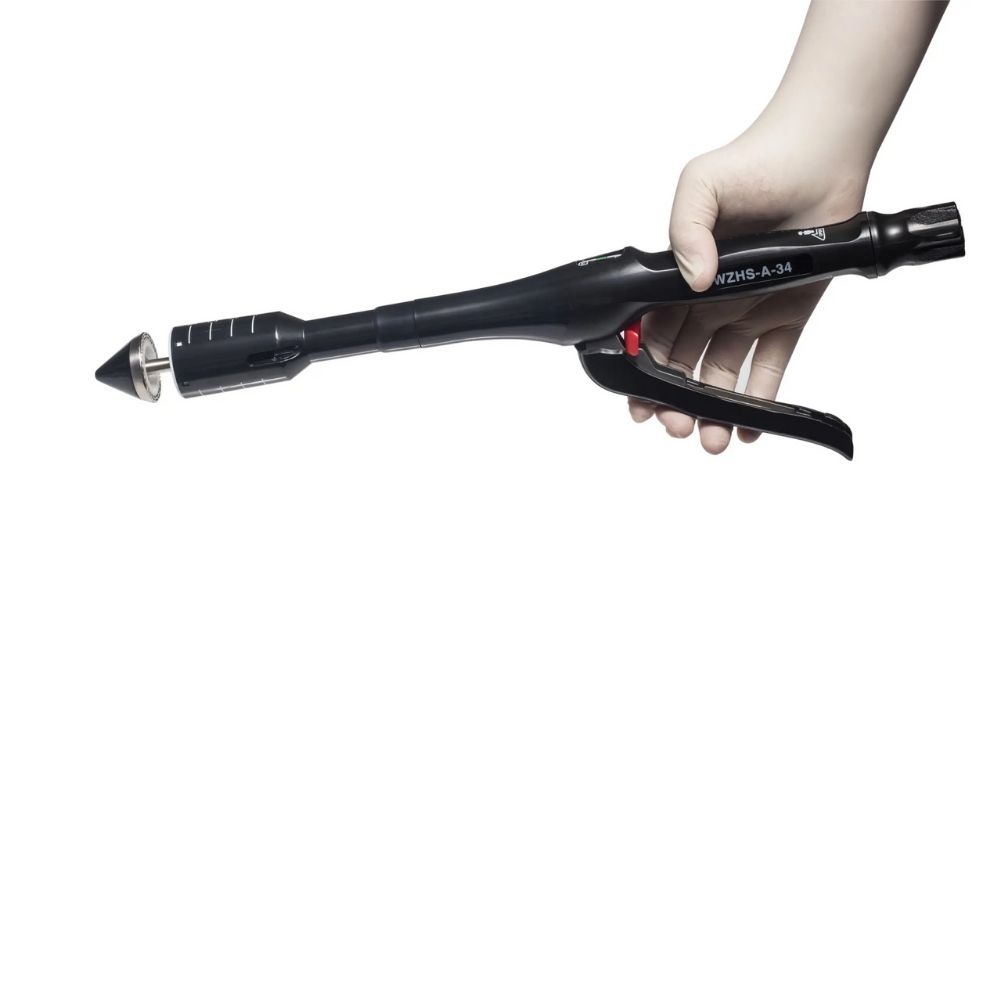
The disposable haemorrhoidal stapler KHPH-33 is a single-use circular mechanical suturing instrument, designed for haemorrhoidopexy and selective mucosal resection at the dentate line (haemorrhoidal prolapse surgery). With a total length of 395 mm and an external diameter of 33.5 mm, it offers ergonomic handling and adequate reach for the anal canal, both in elective surgery and in emergency procedures of the general and digestive surgery department.
Each unit is supplied sterile and ready for the operating theatre, eliminating the risks of cross-contamination and simplifying the logistics of the surgical block. It is an excellent value-for-money alternative to the premium PPH sets on the market, maintaining the same technical principle: double circular row of staples with integrated annular blade.
2. Technical explanation of the equipment and procedure
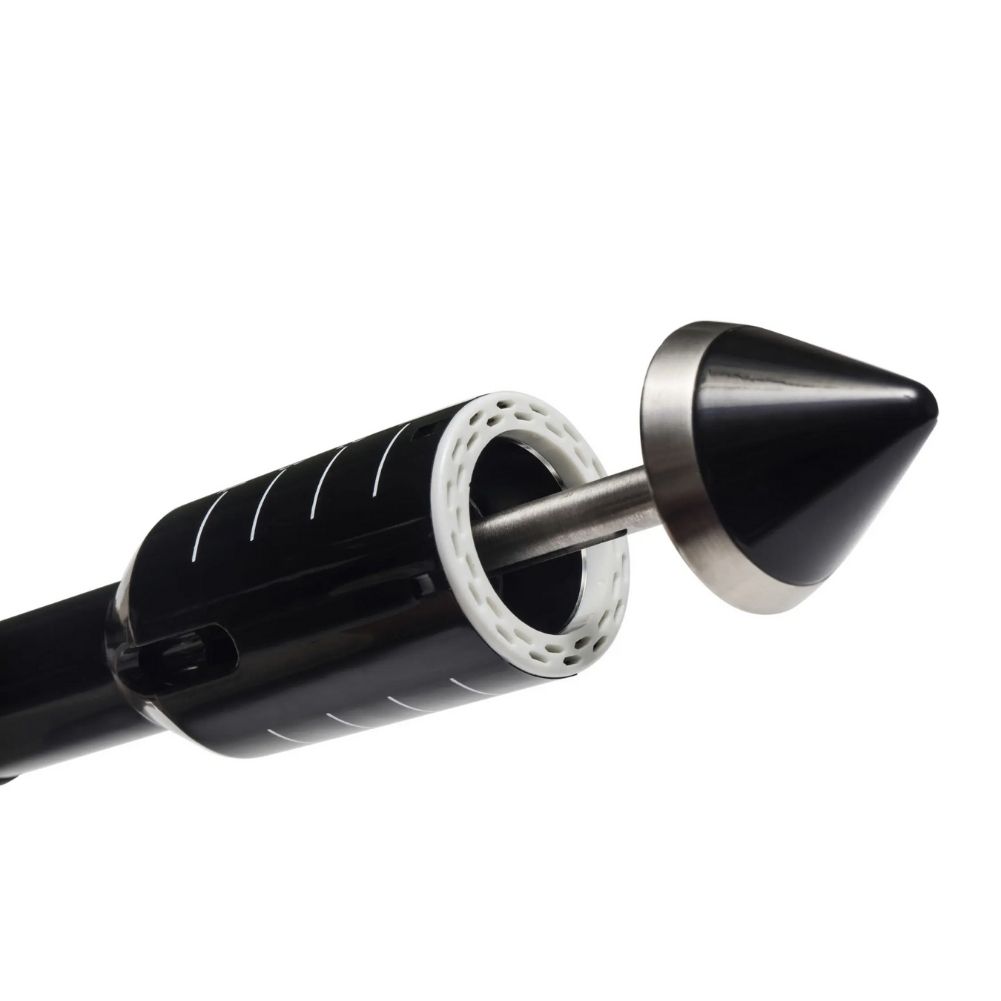
The KHPH-33 stapler is based on the principle of the PPH technique (Procedure for Prolapse and Haemorrhoids). The instrument provides two interlocking staple loops that form a secure circular seam; then, the internal annular blade cuts the excess tissue, creating a clean and homogeneous circular anastomosis.
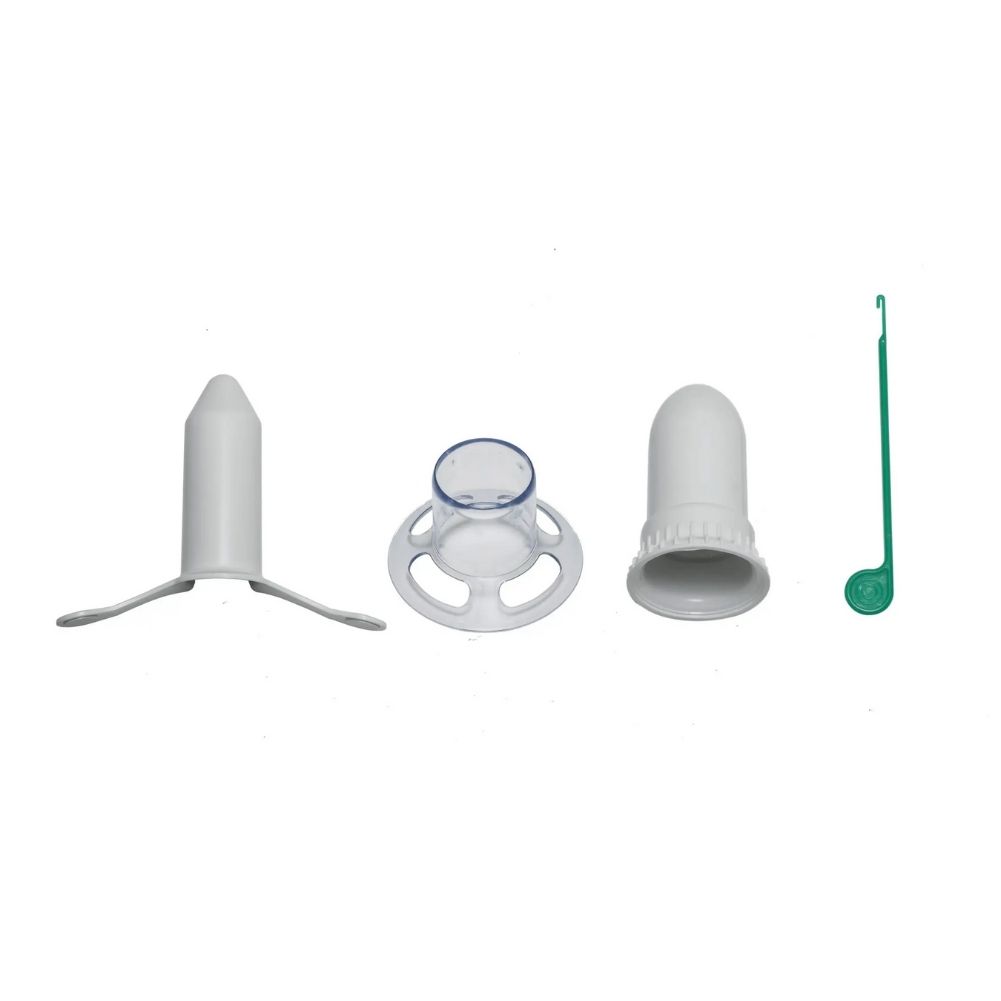
Its mechanism allows an adjustable closure height via the adjustment nut, ensuring a minimal suture gap adapted to the mucosal thickness and preventing injuries from excessive pressure. The staple density is optimised to reduce postoperative bleeding and promote faster and more comfortable patient recovery. The PPH-type set is usually completed with an anoscope, anal dilator and purse-string suture (purse-string) for proper traction and positioning of the mucosa before firing.
3. Technical Specifications
Features of the disposable haemorrhoidal stapler KHPH-33 (data from the distribution data sheet; always verify the batch label):
| Parameter | Value |
| Reference / SKU | KHPH-33 |
| Type | Disposable circular haemorrhoidal stapler (PPH technique) |
| Total length | 395 mm |
| Outer diameter | 33.5 mm |
| Staple height | 3.8 mm |
| Staple diameter (wire) | 0.28 mm |
| Staple arrangement | Two interlocking circular loops/rows (double staggered) |
| Staple material | Titanium |
| Cutting system | Internal annular blade |
| Closure adjustment | Adjustable closure height according to tissue thickness |
| Number of staples | 32 (usual format in the PPH range of calibre 33–34 mm; confirm on the batch label) |
| Use | Single-use (disposable) |
| Sterilisation | Sterile, individually packaged |
| Application | Haemorrhoidopexy; selective mucosal resection at the dentate line (haemorrhoidal prolapse) |
KHPH family table (calibre variants available at Cahnos):
| Reference | External diameter (mm) | Length (mm) | Staple height (mm) | Staple wire Ø (mm) |
| KHPH-32 | 32 | 395 | 3.8 | 0.28 |
| KHPH-33 | 33.5 | 395 | 3.8 | 0.28 |
| KHPH-34 | 34 | 395 | 3.8 | 0.28 |
4. Equivalences and Cross-References
There is no equivalence table validated by the manufacturer that cross-references this code with the codes of major brands. The KHPH-33 code is a proprietary distribution reference of Cahnos for the 33.5 mm PPH range; the following references are offered as functional category comparison verified against public sources from each manufacturer, never as 1:1 interchangeable:
| Manufacturer / Brand | Model / Reference | Diameter | Main characteristics | Equivalence level | Technical differences / Remarks |
| Ethicon (J&J MedTech) | PROXIMATE™ PPH03 (PPH033) | 33 mm | 28 staples; closed height 0.75–1.5 mm; blade Ø 24.4 mm; PPH set with anoscope | Comparable by category | Ø 33 vs 33.5 mm; premium set with dilator and purse-string suture |
| Medtronic (Covidien) | EEA™ Hemorrhoid & Prolapse Set HEM3335 | 33 mm | 32 DST™ titanium staples; staple height 3.5 mm | Comparable by category | Ø 33 vs 33.5 mm; staple height 3.5 vs 3.8 mm; shaft 12 cm |
| GoldenStapler | PPHD34 | 34 mm | Blade Ø 26 mm; 32 titanium staples; set with anoscopes | Functionally comparable | External Ø close (34 vs 33.5 mm); verify staple height and IFU |
| Frankenman (Chex™) | CPH34HV (high volume) | 34 mm | 32 titanium staples; open height 4.2 mm / closed 0.75–1.5 mm | Comparable by category | Greater open height (4.2 vs 3.8 mm) and high-volume housing |
| Lantex | CPH34 (PPH03 format) | 34 mm | PPH-type haemorrhoidal set of 34 mm | Functionally comparable | Verify number of staples and closed height in the IFU |
| Cousin (France) | CPH | — | Circular stapler for rectal and haemorrhoidal prolapse | Comparable by category | European range; consult references and set accessories |
Important: there is no equivalence table validated by the manufacturer that declares these models interchangeable 1:1; consult the technical department before using in tenders. Before substituting in a procedure, the surgical department must verify diameters, staple height, number of staples and accessories in the official technical data sheet and in the IFU of each manufacturer: exact dimensions, staple material, open/closed height, single-use and regulatory classification of the actual product.
5. Selection tips and variants of interest
- Calibre selection: for anal canals with smaller lumen, the smaller diameters of the same family are recommended: KHPH-32 (32 mm) and KHPH-33 (33.5 mm), all with a length of 395 mm and staples of 3.8 mm / 0.28 mm. The KHPH-34 (34 mm) model is indicated for patients with a larger anatomical calibre.
- Mucosal thickness: always regulate the closed height using the adjustment nut according to tissue thickness; a staple that is too high in thin tissue can cause excessive pressure, while one that is too low compromises haemostasis.
- Accessory set: confirm that the presentation includes anoscope, dilator and purse-string suture if your PPH protocol requires it; if not, consider purchasing them separately.
- Pre-firing verification: check the sterility seal, the safety button and the correct attachment of the anvil before closing. The device is single-fire and does not allow reloading.
- Regulations: confirm the CE marking and MDR classification on the batch label before use in technical specifications; the regulatory classification must be verified on the actual product, not assumed.
Reviews
There are no reviews yet.