
Description
1. Safe ventilation in anaesthesia and paediatric emergencies
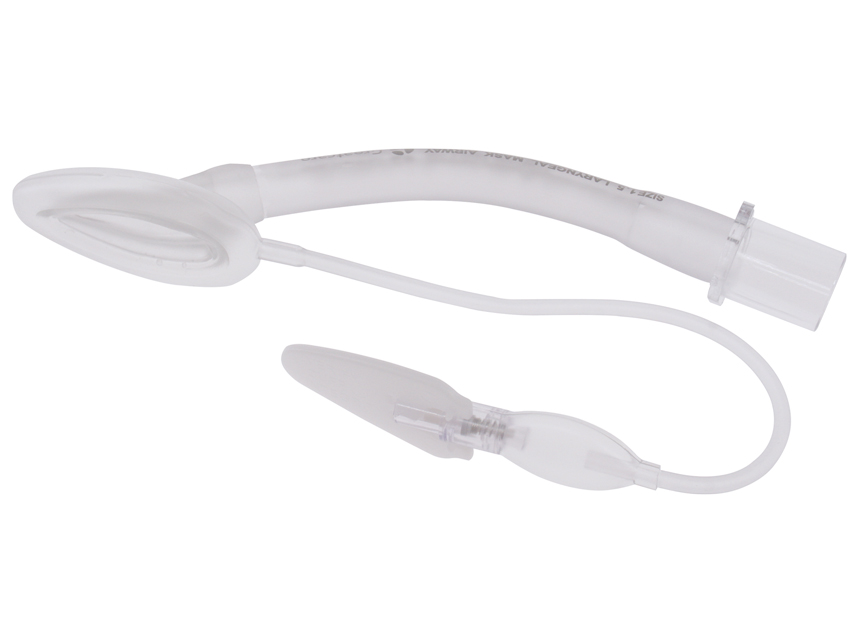
The disposable PVC laryngeal mask size 1.5 is the reference solution for securing the airway quickly, atraumatically and reliably in paediatric patients of small build (approximately 5 to 10 kg). It is the supraglottic device of choice for anaesthesia departments, paediatric intensive care units, emergency services and medical transport services that need to ensure spontaneous or controlled ventilation with a single-use, sterile, ready-to-use product.
It is supplied in a box of 50 units for continuous service supply, with an excellent balance between patient safety and cost per procedure.
2. What a laryngeal mask is and how it works
Unlike endotracheal intubation, the laryngeal mask is a supraglottic device that rests in the hypopharynx and seals around the laryngeal inlet by means of an inflatable cuff, without passing through the glottis. This allows faster placement, better tolerance at lighter anaesthetic planes and less pain and coughing for the patient, proving especially useful in difficult airways as it does not require laryngoscopy.
The disposable PVC laryngeal mask is composed of an airway tube, laryngeal mask, connector, inflation tube, valve, pilot balloon and deflation valve. The cuff is inserted into the pharynx and inflated using the pilot balloon with self-sealing valve, sealing the laryngeal inlet. Its use is indicated for anaesthesia and emergency medicine, providing rapid airway access and spontaneous or controlled ventilation. It is a sterile, latex-free product.
3. Technical Specifications
| Parameter | Specification |
|---|---|
| Product type | Disposable laryngeal mask (supraglottic airway device) |
| Manufacturer | GIMA |
| Size | 1.5 (Paediatric) |
| Patient weight | 5 – 10 kg |
| Cuff inflation volume | 7 ml |
| Tube length | 100 mm |
| Material | PVC |
| Sales unit | Box of 50 units |
| Sterility | Sterile, latex-free |
| Use | Single-use (disposable) |
| Device type | Medical device |
| Device class | II A |
| CND | R01020199 |
| EAN | 6972091921899 |
| Manufacturer reference | 57581 |
Product data
| Sales unit | box of 50 units |
|---|---|
| Device type | Medical device |
| Device class | II A |
| CND | R01020199 |
| EAN | 6972091921899 |
4. Equivalences and Cross-References
Available references:
| Reference | Size |
|---|---|
| 57580 | PVC laryngeal mask No. 1 |
| 57581 | PVC laryngeal mask No. 1.5 (this product) |
| 57582 | PVC laryngeal mask No. 2 |
| 57583 | PVC laryngeal mask No. 2.5 |
| 57584 | PVC laryngeal mask No. 3 |
| 57585 | PVC laryngeal mask No. 4 |
Size 1.5 in the series (ref. 57581) matches the clinical indication, weight range (5-10 kg) and cuff volume (7 ml) of reference 833315 (Grupo Unidix) marketed by Cahnos as LM0015101, although they differ in presentation (box of 50 units vs. box of 10 units) and tube length (100 mm vs. 120 mm), so they must be verified before substituting one for the other in a tender.
There is no equivalence table validated by the manufacturer against brands such as Ambu, Teleflex (LMA®) or Intersurgical (i-gel); consult the technical department at Cahnos before using this reference as a direct substitute in tender specifications or bids.
5. Selection tips and variants of interest
The main selection criterion should be patient weight, not age: size 1.5 is indicated for patients from 5 to 10 kg. Before insertion, check the integrity of the pilot balloon and the inflation valve, and confirm the seal once the cuff has been inflated by monitoring the expired volume.
At Cahnos the complete range of the series is available in boxes of 50 units: sizes 1 (57580), 1.5 (57581), 2 (57582), 2.5 (57583), 3 (57584) and 4 (57585), as well as the same paediatric size in other families and presentations (e.g. LM0015101, box of 10 units, or the double-lumen version LM1115015 with gastric drainage channel, recommended if regurgitation and aspiration are anticipated). Always check the integrity of the sterile packaging and the expiry date before use; the device is single-use and must be disposed of after the procedure as clinical waste in accordance with current local regulations.
Reviews
There are no reviews yet.